
Hermógenes Cayo (Imaginero)
1969-01-30 · 68 min · ★ 7.8
IMAGINERO is an ethnobiography of Hermogenes Cayo, a self-taught woodcarver and painter who lives on the high Andean plateau of Argentina. The film portrays Hermogenes, his wife Aurelia Kilpe, and their children in their Andean lifestyle, as well as Hermogenes' passion for painting, carving, building, and his devotion to the Virgin Mary. Devout, austere and dedicated to craftsmanship, he can make anything from religious figures carved from cactus wood to a working harmonium. Inspired by a trip to Buenos Aires to advocate for land rights, Hermogenes has labored to replicate the style of the capital's grand cathedral and shrine to the Virgin with resourcefulness and skill.
Trailers are previews, not full movies.
No authorized playback source configured. Use the legal watch options below.
Production details
- Directors
- Jorge Prelorán
- Production companies
- Unavailable
- Countries
- Argentina
- Status
- Released
Top Cast
Title information and images are supplied by TMDb. Explore our discovery guide for advice on comparing metadata and legal viewing options.
Where to watch
Availability provided by JustWatch via TMDb. Offers can change. Provider links are listed on TMDb; full playback requires a separately authorized source.
Availability not listed for this country.
Seasons & episodes
Recommendations

In an intimate and joyful story of love in the face of loss, celebrated poets Andrea Gibson and Megan Falley find strength—and unexpected hilarity—in what might be their final year together.
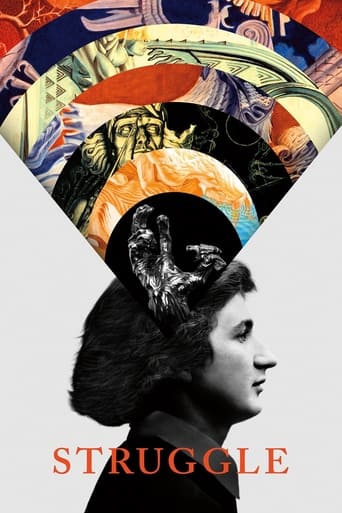
Artists in LA discover the work of forgotten Polish sculptor Stanislav Szukalski, a mad genius whose true story unfolds chapter by astounding chapter.

The life and career of an actor, artist, and icon. His own journey through his own camera.

Through deeply personal interviews with her siblings and an examination of the photographs, letters, and belongings left behind, Mariska assembles a new portrait of her mother Jayne Mansfield, an extraordinary and complex woman.

A compilation of over 30 years of private home movie footage shot by Lithuanian-American avant-garde director Jonas Mekas, assembled by Mekas "purely by chance", without concern for chronological order.

A string of threatening emails escalates into a revenge plot involving a newly married US marshal and his ex-girlfriend.
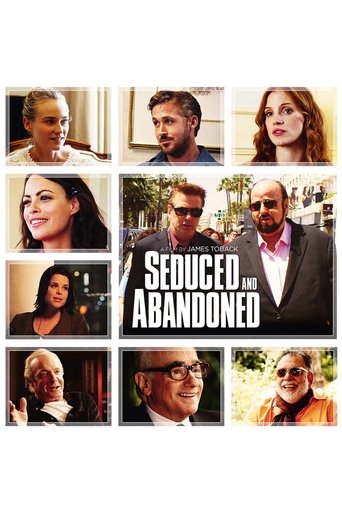
SEDUCED AND ABANDONED combines acting legend Alec Baldwin with director James Toback as they lead us on a troublesome and often hilarious journey of raising financing for their next feature film. Moving from director to financier to star actor, the two players provide us with a unique look behind the curtain at the world's biggest and most glamourous film festival, shining a light on the bitter-sweet relationship filmmakers have with Cannes and the film business. Featuring insights from directors Martin Scorsese, 'Bernando Bertolucci' and Roman Polanski; actors Ryan Gosling and Jessica Chastain and a host of film distribution luminaries.
The Making-of James Cameron's Avatar. It shows interesting parts of the work on the set.

A documentary about how a dominant cultural and demographic institution both sustains their traditional activities and adapts to the digital revolution.

An inside look at one of the most anticipated movie sequels ever with James Cameron and cast.
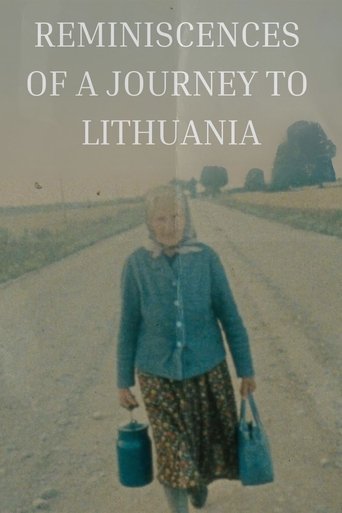
Jonas Mekas weaves an elegiac diary film from his 1971–72 return to Lithuania, chronicling a visit to his birthplace of Semeniškiai after decades in exile. Blending personal memory with documentary observation, the film becomes both a portrait of homecoming and a meditation on displacement, family, and the passage of time.
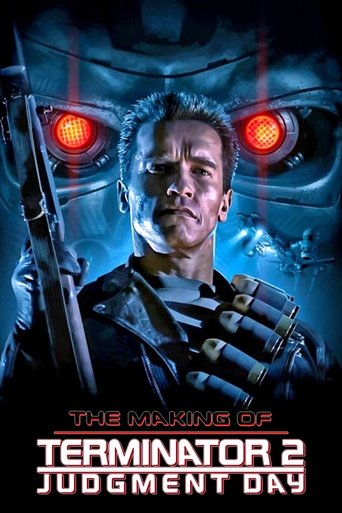
Documentary of the making of the sequel to the popular Schwarzenegger film, The Terminator.

Featuring interviews with filmmakers and industry legends, discover the origins and evolution of The Joker, and learn why The Clown Prince of Crime is universally hailed as the greatest comic-book supervillain of all time.

A documentary about the making of season five of the acclaimed AMC series Breaking Bad.
Go behind the scenes with stars, puppeteers and creators as they bring Jim Henson's magical world of Thra back to life in a sweeping fantasy series.

The life of Mr. Spock, as well as that of Leonard Nimoy, the actor who played him for almost fifty years, written and directed by his son: Adam.
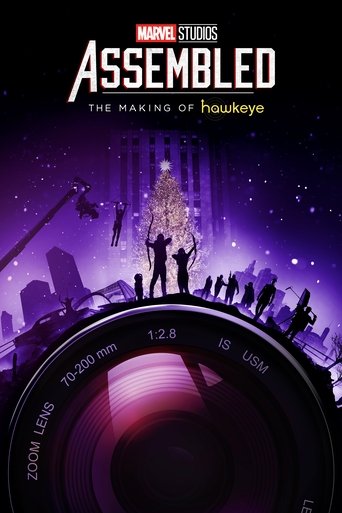
Join the likes of Jeremy Renner, Hailee Steinfeld, Florence Pugh, and Vincent D’Onofrio as they reveal how Marvel Studios’ “Hawkeye” was conceived and created. Witness firsthand what it took to pull off the show’s pulse-pounding action set pieces, and discover how iconic characters from the pages of Marvel Comics such as Kate Bishop were adapted and brought to life for the six-episode series.

In 2001 Jack Cardiff (1914-2009) became the first director of photography in the history of the Academy Awards to win an Honorary Oscar. But the first time he clasped the famous statuette in his hand was a half-century earlier when his Technicolor camerawork was awarded for Powell and Pressburger's Black Narcissus. Beyond John Huston's The African Queen and King Vidor's War and Peace, the films of the British-Hungarian creative duo (The Red Shoes and A Matter of Life and Death too) guaranteed immortality for the renowned cameraman whose career spanned seventy years.
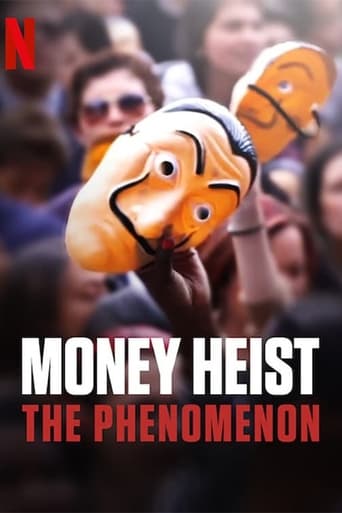
A documentary on why 'Money Heist' sparked a wave of enthusiasm around the world for a lovable group of thieves and their professor.

Film adaptation of French economist Thomas Piketty's ground-breaking global bestseller of the same name: an eye-opening journey through wealth and power.
Similar titles
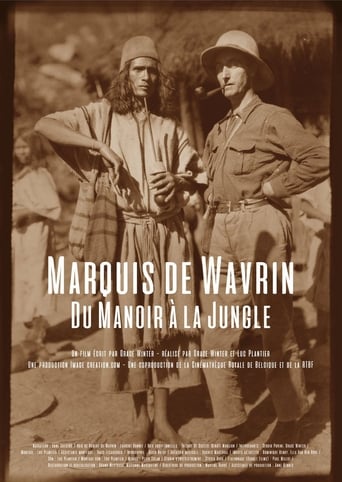
A documentary that invites us to discover the strange path led by the explorer-ethnographer Marquis de Wavrin who, in the 1920s and 1930s, made ethnographic films in several countries of Latin America.
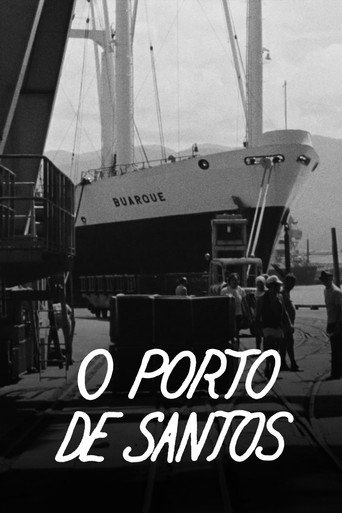
A portrait of Santos Port, its geography, workers and the life that surrounds it, including the poor, prostitutes and the night life inhabitants.

Living among the percebeiros of the Coast of Death (Galicia), this documentary shows a unique relationship between man and his surroundings, man and the sea. At the end of Europe, years after the Prestige oil spill disaster, these fishermen face an uncertain future.

Mateo (5), Nadia (9), Mati (4) and Isabella (5), are neighbors of a settlement located in the middle of an open-air garbage dump. These little protagonists appropriate the space they inhabit from the playful reflecting what it means to grow up in La Favela.
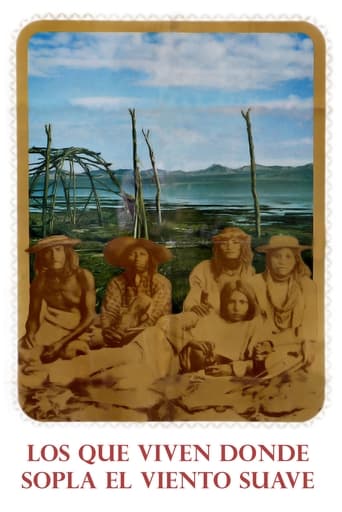
Documentary that collects various oral testimonies about the life of the Seris, a small ethnic group in the state of Sonora, Mexico.

Quatre altitudes bosniaques is an exercise in topographic cinema shot in Bosnia-Herzegovina. The document draws on the geography of the city of Sarajevo, from which the filmmakers construct a visual ethnography fragmented into four levels of elevation.
The words of the women and the rhythm of their lives in the seclusion of family compounds suggests both the satisfying and the limiting aspects of a woman's role in a rural Afghan community. Filmed in the Balkh Province, an area inhabited by Tajik and other Central Asian peoples. The town of Aq Kupruk is approximately 320 miles northwest of Kabul. The theme of the film focuses on women. The film and accompanying instructor notes examine the economic, political, religious, and educational status of women, their legal and customary rights, and the degree of change in their actual and perceived roles.
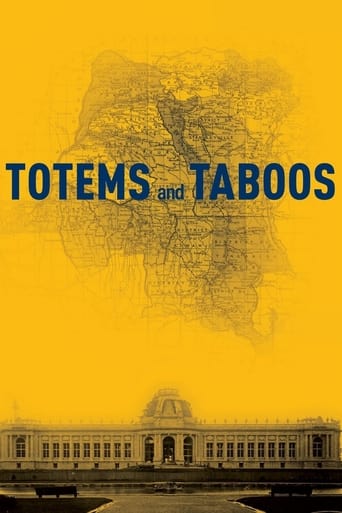
In Brussels, Belgium, the Royal Museum of Central Africa is undertaking a radical renovation, both physical and ethical, to show with sincerity, crudeness and open-mindedness the reality of the atrocities perpetrated against the inhabitants of the Belgian colonies in Africa, still haunted and traumatized by the ghost of King Leopold II of Belgium, a racist and genocidal tyrant.
At a 2005 Carnival night, something mysterious happens at Porto Formoso bay, leaving the fishing boats wrecked. Fishermen decide to build bigger boats, but at the small village harbor it is impossible to deck them. They demand the construction of a new harbor, but many inhabitants are opposed due to a Castle ruins that lay there. If to some residents ruins look worthless, for others they are the village soul and future, as a lot of tourists would like to visit them...While the landscape transforms, we follow the Director voice through the story of the last seven years of this community.

Real testimonials from five Latin American immigrants who share their experiences and challenges, recounting what it has been like to build a new life in Brazil from their different perspectives in the city of Foz do Iguaçu. Individual experiences are revealed and reflect on belonging, identity, and the constant reinvention of those who cross territories in search of new opportunities.
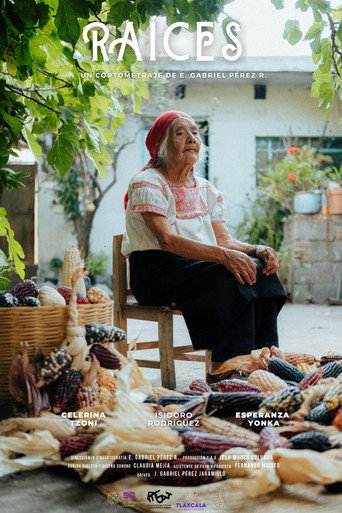
Through the stories of three older adults from Tlaxcala, we learn about the childhoods of Nahuatl and Otomí speakers who were forced to leave their native languages behind in order to adapt to a society alien to their worldview, and who now face the threat of extinction despite their efforts to preserve their languages.
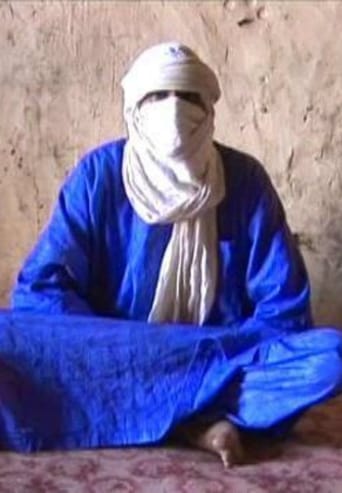
Amanar Tamasheq parts from the exciting adventure of the director on a trip with the Tuaregs rebels in the desert of Mali, to convert the camera into the most powerful weapon. The terrible history of this people, always under threat, is built through their own words in a text that, from their own statements reworked, overlaps in the form of subtitles to images. These, far in the highest degree of language that normally tells the violent, they gain political power and radical rarely seen.
The Siekopaai Nation embarks on a quest across the borders that divide its ancestral territory to connect its communities. With the help of CEFO Indígena and the Popular Free Media Lab, they install new Community Internet Networks that bring their families together and project their culture to the whole world, after an 8 decade struggle. Along the way, they learn how to use this new tool from the globalized world, and harness it to strengthen their elders' vision and begin a new era in the fight for their sovereignty.

Between Africa and the catalonian Penedés stands the distance of a videocamera. A cut. What is what, where are we, where did the songs we sang while we worked go, where is the group, the colective, the community?
On the island of Tanna, a part of Vanuatu, an archipelago in Melanesia, strange rites are enacted and time passes slowly while the inhabitants await the return of the mysterious John.
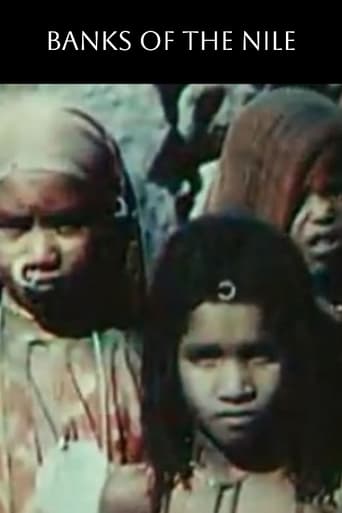
With a dual motion a cruise ship and a fishing boat pass one another on the Nile and butlers in turbans set up a wooden gangway. Thanks to a rope and pulley system cows climb skywards then disappear into the hold of the sailing vessel. On the bank, black-haired women rock back and forth, bursting out laughing and showing the first signs of going into a state of trance. Never-before filmed gestures and faces of the people of the Nile succeed one another, uprooted to an unknown, magical world. The Banks of the Nile is one of the first experiments of film in colour that uses the Kinemacolor process.


A sensory record of the relationships of affinity and enmity with fire in the conservation of the Cerrado biome. In the company of local residents hired to act as brigadiers and, more recently, as management agents, the short film explores the affections established with fire in the midst of combat pyrophobias and management pyrophilias. In addition to documenting fire fighting and manipulation techniques, the cinematographic experiment points to a more than human visual anthropology, where environmental forces such as heat, vegetation and wind make up an alterity whose condition remains ambiguous.