
The Forgotten Force
1994-04-04 · 56 min · ★ 6.0
After the atomic obliteration of Hiroshima and Nagasaki, over 36,000 Australian men and women, part of the British Commonwealth Occupation Force (BCOF), marched onto Japanese soil. They were assigned the toughest and most dangerous area of Japan: Hiroshima Prefecture, which included the atom-bombed city. The Forgotten Force tells for the first time the story of Australia's role in Japan. Rare archival and private footage, photographs and eyewitness accounts from both sides vividly recreate the atmosphere of post-war Japan - the horror of Hiroshima and its aftermath; the struggle to build a new "democratic" society while under the heel of military rule; the growth from suspicion and fear to friendship and trust between foes.
Trailers are previews, not full movies.
No authorized playback source configured. Use the legal watch options below.
Production details
- Directors
- Raymond Quint
- Production companies
- Film Australia, Australian Broadcasting Corporation, The Japan Foundation
- Countries
- Australia
- Status
- Released
Top Cast
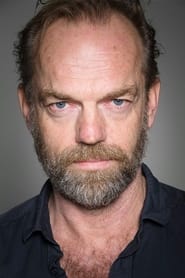 Hugo WeavingNarrator
Title information and images are supplied by TMDb. Explore our discovery guide for advice on comparing metadata and legal viewing options.
Where to watch
Availability provided by JustWatch via TMDb. Offers can change. Provider links are listed on TMDb; full playback requires a separately authorized source.
Seasons & episodes
Recommendations

Prelude to War was the first film of Frank Capra's Why We Fight propaganda film series, commissioned by the Pentagon and George C. Marshall. It was made to convince American troops of the necessity of combating the Axis Powers during World War II. This film examines the differences between democratic and fascist states.
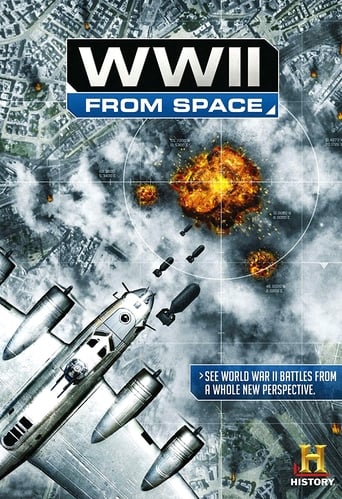
WWII from Space delivers World War II in a way you've never experienced it before. This HISTORY special uses an all-seeing CGI eye that offers a satellite view of the conflict, allowing you to experience it in a way that puts key events and tipping points in a global perspective. By re-creating groundbreaking moments that could never have been captured on camera, and by illustrating the importance of simultaneity and the hidden effects of crucial incidents, HISTORY presents the war's monumental moments in a never-before-seen context. And with new information brought to the forefront, you'll better understand how a nation ranked 19th in the world's militaries in 1939 emerged six years later as the planet's only atomic superpower.
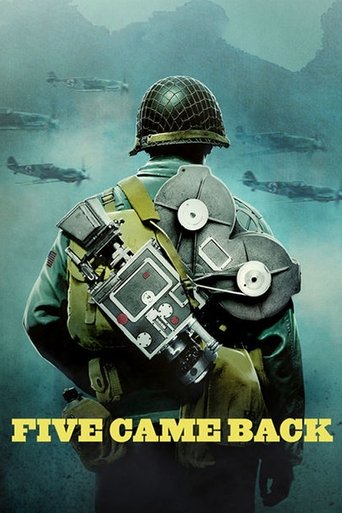
The extraordinary story of how Hollywood changed World War II – and how World War II changed Hollywood, through the interwoven experiences of five legendary filmmakers who went to war to serve their country and bring the truth to the American people: John Ford, William Wyler, John Huston, Frank Capra, and George Stevens. Based on Mark Harris’ best-selling book, “Five Came Back: A Story of Hollywood and the Second World War.”

Marcel Ophuls' riveting film details the heinous legacy of the Gestapo head dubbed "The Butcher of Lyon." Responsible for over 4,000 deaths in occupied France during World War II, Barbie would escape—with U.S. help—to South America in 1951, where he lived until a global manhunt led to his 1983 arrest and subsequent trial.
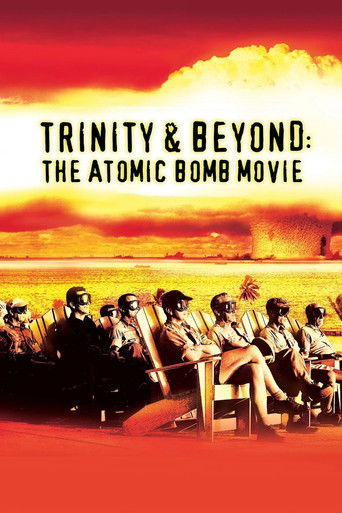
"Trinity and Beyond" is an unsettling yet visually fascinating documentary presenting the history of nuclear weapons development and testing between 1945-1963. Narrated by William Shatner and featuring an original score performed by the Moscow Symphony Orchestra, this award-winning documentary reveals previously unreleased and classified government footage from several countries.
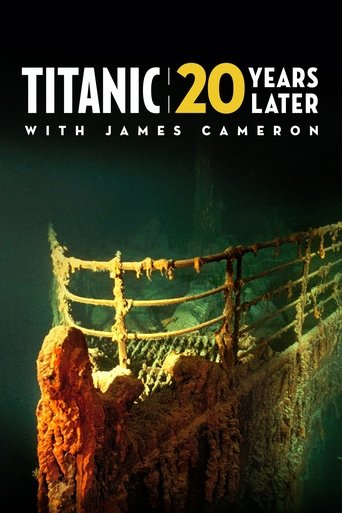
For the 20th anniversary of "Titanic," James Cameron reopens the file on the disaster.
Five broken cameras – and each one has a powerful tale to tell. Embedded in the bullet-ridden remains of digital technology is the story of Emad Burnat, a farmer from the Palestinian village of Bil’in, which famously chose nonviolent resistance when the Israeli army encroached upon its land to make room for Jewish colonists. Emad buys his first camera in 2005 to document the birth of his fourth son, Gibreel. Over the course of the film, he becomes the peaceful archivist of an escalating struggle as olive trees are bulldozed, lives are lost, and a wall is built to segregate burgeoning Israeli settlements.
During the chaotic final weeks of the Vietnam War, the North Vietnamese Army closes in on Saigon as the panicked South Vietnamese people desperately attempt to escape. On the ground, American soldiers and diplomats confront a moral quandary: whether to obey White House orders to evacuate only U.S. citizens.

The history of cinematic sound, told by legendary sound designers and visionary filmmakers.
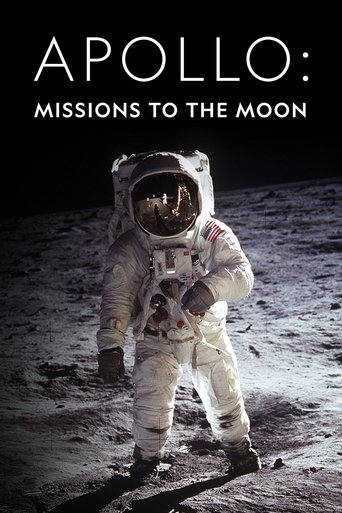
National Geographic's riveting effort recounts all 12 crewed missions using only archival footage, photos and audio.
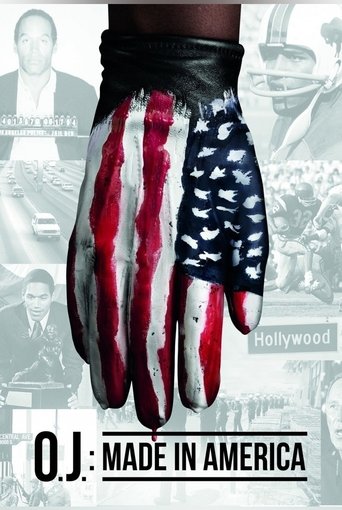
A chronicle of the rise and fall of O.J. Simpson, whose high-profile murder trial exposed the extent of American racial tensions, revealing a fractured and divided nation.

David Attenborough brings to life, in unprecedented detail, the last days of the dinosaurs. Palaeontologist Robert DePalma has made an incredible discovery in a prehistoric graveyard: fossilised creatures, astonishingly well preserved, that could help change our understanding of the last days of the dinosaurs. Evidence from his site records the day when an asteroid bigger than Mount Everest devastated our planet and caused the extinction of the dinosaurs. Based on brand new evidence, witness the catastrophic events of that day play out minute by minute.

Oliver Stone charts the history of the United States from the Second World War to the present.
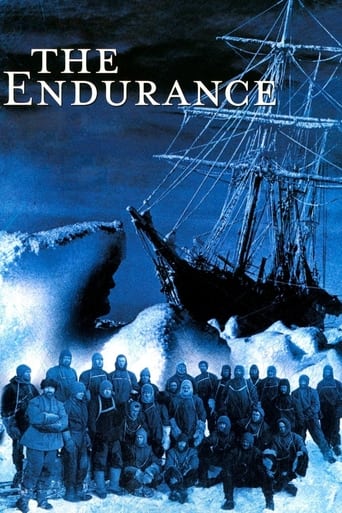
Documentary on the Shackleton Antartic expedition. A retelling of Sir Ernest Shackleton's ill-fated expedition to Antarctica in and the crew of his vessel 'The Endurance', which was trapped in the ice floes and frigid open ocean of the Antarctic in 1914. Shackleton decided, with many of his crew injured and weak from exposure and starvation, to take a team of his fittest men and attempt to find help. Setting out in appalling conditions with hopelessly inadequate equipment, they endured all weather and terrain and finally reached safety. Persuading a local team of his confidence that the abandoned team would still be alive, he set out again to find them. After almost 2 years trapped on the ice, all members of the crew were finally rescued.

Filmed over 14 months with unprecedented access into the inner circle of the man and the sport, this is the first official and fully authorised film of one of the most celebrated figures in football. For the first time ever, the world gets vividly candid and un-paralleled, behind-closed-doors access to the footballer, father, family-man and friend in this moving & fascinating documentary. Through in-depth conversations, state of the art football footage and never before seen archival footage, the film gives an astonishing insight into the sporting and personal life of triple Ballon D'Or winner Cristiano Ronaldo at the peak of his career. From the makers of ‘Senna’ and ‘Amy’, Ronaldo takes audiences on an intimate and revealing journey of what it’s like to live as an iconic athlete in the eye of the storm.

A documentary highlighting the Soviet Union's legendary and enigmatic hockey training culture and world-dominating team through the eyes of the team's Captain Slava Fetisov, following his shift from hockey star and celebrated national hero to political enemy.

The epic life story of Alice Guy-Blaché (1873–1968), a French screenwriter, director and producer, true pioneer of cinema, the first person who made a narrative fiction film; author of hundreds of movies, but banished from history books. Ignored and forgotten. At last remembered.
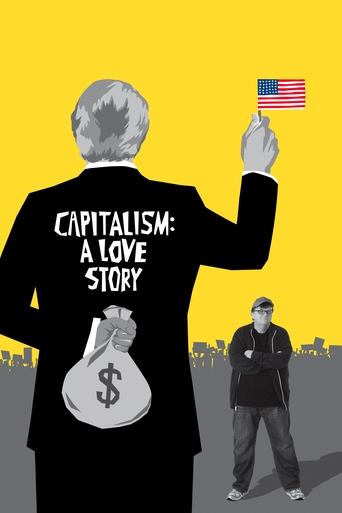
Michael Moore comes home to the issue he's been examining throughout his career: the disastrous impact of corporate dominance on the everyday lives of Americans (and by default, the rest of the world).
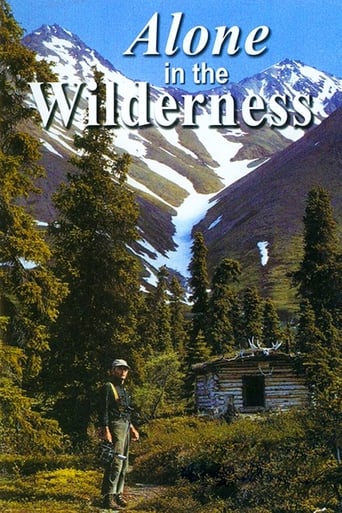
Dick Proenneke retired at age 50 in 1967 and decided to build his own cabin in the wilderness at the base of the Aleutian Peninsula, in what is now Lake Clark National Park. Using color footage he shot himself, Proenneke traces how he came to this remote area, selected a homestead site and built his log cabin completely by himself. The documentary covers his first year in-country, showing his day-to-day activities and the passing of the seasons as he sought to scratch out a living alone in the wilderness.

This WW2 documentary centers on the crew of the American B-17 Flying Fortress Memphis Belle as it prepares to execute a strategic bombing raid on Nazi submarine pens in Wilhelmshaven, Germany.
Similar titles
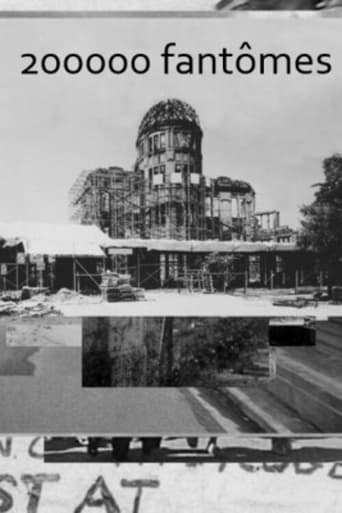
In 1914, the Czech architect Jan Letzel designed in the Japanese city of Hiroshima Center for the World Expo, which has turned into ruins after the atomic bombing in August 1945. “Atomic Dome” – all that remains of the destroyed palace of the exhibition – has become part of the Hiroshima memorial. In 2007, French sculptor, painter and film director Jean-Gabriel Périot assembled this cinematic collage from hundreds of multi-format, color and black and white photographs of different years’ of “Genbaku Dome”.
The documentary recounts the world's first nuclear attack and examines the alarming repercussions. Covering a three-week period from the Trinity test to the atomic bombing of Hiroshima, the program chronicles America's political gamble and the planning for the momentous event. Archival film, dramatizations, and special effects feature what occurred aboard the Enola Gay (the aircraft that dropped the bomb) and inside the exploding bomb.

In 1945, the second- and third-year students of a Hiroshima girls' school are taken away to work in war factories. The remaining 220 girls of the first year try to make the best of their new-found status as the only teenagers in an almost deserted town, even amid the deprivations of wartime. On the seventh of August, an American bomber changes their lives forever. Broadcast on the 43rd anniversary of Hiroshima in memory of "the girls who lost their lives to the atom bomb." (Source: Anime Encyclopedia)
Combining personal accounts with archive footage, this film features the voices of some of the only people left on earth to have survived a nuclear bomb.
A racist sergeant stationed in post-war Japan finds himself softening towards the children and falling for a local woman.
Brand new documentary marking the 70th anniversary of the Hiroshima and Nagasaki bombings which ended WWII and began the nuclear age. Features interviews with survivors from both sides.
The research, development, and deployment of the first atomic bomb, as well as the bombing of Hiroshima, are detailed in this docudrama.
Japan, 1954. A legend emerges from the ashes of Hiroshima and Nagasaki, devastated by atomic bombs in 1945. The creature's name is Godzilla. The film that tells its story is the first of kaiju eiga, the giant monster movies.
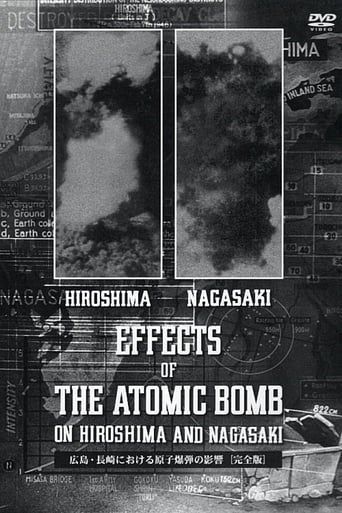
This was the only documentary made in the aftermath of the atomic bombings of 1945. Japanese filmmakers entered the two cities intent on making an appeal to the International Red Cross, but were promptly arrested by newly arriving American troops. The Americans and Japanese eventually worked together to produce this film, a science film unemotionally displaying the effects of atomic particles, blast and fire on everything from concrete to human flesh. No other filmmakers were allowed into the cities, and when the film was done the Americans crated everything up and shipped it to an unknown location. That footage is now lost. However, an American and a Japanese filmmaker each stole and hid a copy of the film, fearful that the reality of Hiroshima and Nagasaki would be hidden from history. Eventually, these prints surfaced and became our only precious archive of the aftermath of nuclear warfare -- a film that everyone knows in part, yet has rarely seen in its entirety.

Historical fiction about the aftermath of the atomic bombing of Hiroshima, Japan, on 6 August 1945, and its effects on various civilians, especially children, of that city.
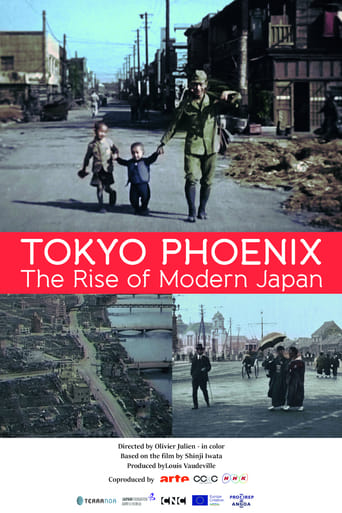
In 150 years, twice marked by total destruction —a terrible earthquake in 1923 and incendiary bombings in 1945— followed by a spectacular rebirth, Tokyo, the old city of Edo, has become the largest and most futuristic capital in the world in a transformation process fueled by the exceptional resilience of its inhabitants, and nourished by a unique phenomenon of cultural hybridization.

In the black market, a war orphan is confronted with the struggles of people living in the immediate aftermath of WWII.

At 89, Doctor Hida, a survivor of the 1945 atomic bomb at Hiroshima, continues to care for some of the other quarter of a million survivors. Atomic Wounds retraces his dedicated journey and highlights how the terrible danger of radiation was concealed by successive American administrations in the 50's - 70's so that nuclear power could be freely developed, with no concern for public health.
A personal documentary that tracks the construction of America's collective memory (or lack of one) of the bombings of Hiroshima and Nagasaki. It follows the obscure histories of specific photos and photographers, both Japanese and American, who visited Nagasaki and Hiroshima in the aftermath of the bombings, counterposing this visual legacy with the stories of survivors, whose practice of speaking to small groups of students offers a modest but powerful counter-history to the official record.
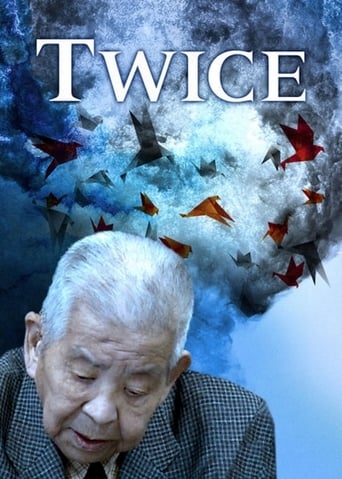
Tsutomu Yamaguchi is a hibakusha. A survivor of both atomic bomb blasts in 1945. First at Hiroshima, then again at Nagasaki. Now nearing 90, Yamaguchi finally speaks out. Breaking taboos of shame and sorrow, he responds to a call to fight for a world without nuclear weapons by telling his story, so that no one else will ever have to tell one like it again. Twice reconstructs Yamaguchi’s experiences in 1945 Japan, interviews him on the after-effects of exposure and documents the last five years of the late-blooming activist’s life.

Postwar Japan as it is described by Etsuko, the manager of a bar catering to foreigners in Yokosuka. The way of life of a woman brimming with vitality, who skipped the countryside right after the war and, with her womanhood as a weapon, lived through atomic bombings, black markets, prostitution aimed at American soldiers and the Korean War. Inserting newsreels, Shohei Imamura depicts the history of twenty-five years in the Japanese postwar by way of the female body. (doclisboa)

Under the charred veil of Hiroshima, Nagasaki and Chernobyl, survivors bear treachery's shroud, hunting redemption through a generational silence that shrieks with ghosts of the forgotten.
Shigematsu Shizuma, who lives with his family in a village near Fukuyama, was in Hiroshima with his wife and niece just after the devastating atomic bombing, a tragedy that cruelly took the lives of thousands of people and forever marked the harsh existence of the survivors.
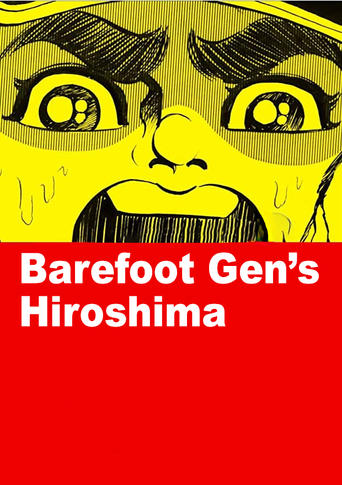
With the passing of Nakazawa Keiji in December 2012, Barefoot Gen’s Hiroshima now stands as the manga artist’s last message of peace to the world. Mr. Nakazawa recounts his life, from the aftermath of the atomic bombing up until the days he created his acclaimed manga series Barefoot Gen (Hadashi no Gen), by exploring sites of painful memories in Hiroshima. Through Mr. Nakazawa’s story, and his original art work, Barefoot Gen’s Hiroshima illuminates the nature of war and nuclear weapons, urging us not to repeat the past.