
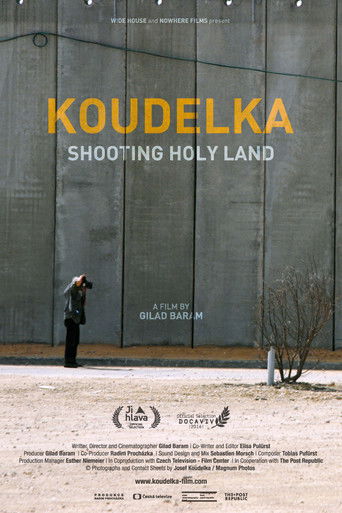
Koudelka Shooting Holy Land
2017-01-05 · 72 min · ★ 6.4
Czech Photographer Josef Koudelka grew up behind the Iron Curtain and always wanted to know "what was on the other side". Forty years after capturing the iconic images of the Soviet invasion of Prague in 1968, the legendary Magnum photographer arrives in Israel and Palestine. On first seeing the nine-meter-high wall built by Israel in the West Bank, Koudelka is deeply shaken and embarks on a four-year project in the region which will confront him once again with the harsh reality of violence and conflict. Director Gilad Baram, Koudelka's assistant at the time, follows him on his journey through the Holy Land from one enigmatic and visually spectacular location to another.
Trailers are previews, not full movies.
No authorized playback source configured. Use the legal watch options below.
Production details
- Directors
- Gilad Baram
- Production companies
- Nowhere Films, Produkce Radim Procházka
- Countries
- Czech Republic, Germany
- Status
- Released
Top Cast
Title information and images are supplied by TMDb. Explore our discovery guide for advice on comparing metadata and legal viewing options.
Where to watch
Availability provided by JustWatch via TMDb. Offers can change. Provider links are listed on TMDb; full playback requires a separately authorized source.
Availability not listed for this country.
Seasons & episodes
Recommendations
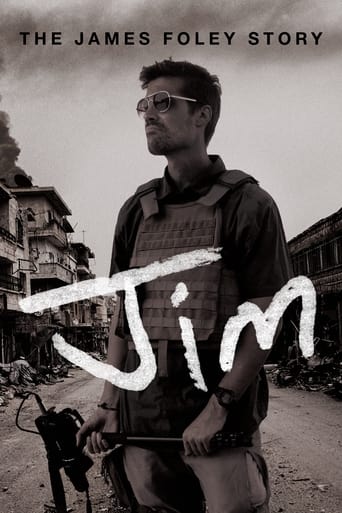
In August, 2014, a video of the public execution of American photojournalist James Foley rippled across the globe. Foley wore an orange jumpsuit as he knelt beside an ISIS militant dressed in black. That image challenged the world to deal with a new face of terror. And it tested one American family. Seen through the lens of filmmaker Brian Oakes, Foley’s close childhood friend, Jim takes us from small-town New England to the adrenaline-fueled front lines of Libya and Syria, where Foley pushed the limits of danger to report on the plight of civilians impacted by war.
Five broken cameras – and each one has a powerful tale to tell. Embedded in the bullet-ridden remains of digital technology is the story of Emad Burnat, a farmer from the Palestinian village of Bil’in, which famously chose nonviolent resistance when the Israeli army encroached upon its land to make room for Jewish colonists. Emad buys his first camera in 2005 to document the birth of his fourth son, Gibreel. Over the course of the film, he becomes the peaceful archivist of an escalating struggle as olive trees are bulldozed, lives are lost, and a wall is built to segregate burgeoning Israeli settlements.

As a visually radical memoir, CAMERAPERSON draws on the remarkable footage that filmmaker Kirsten Johnson has shot and reframes it in ways that illuminate moments and situations that have personally affected her. What emerges is an elegant meditation on the relationship between truth and the camera frame, as Johnson transforms scenes that have been presented on Festival screens as one kind of truth into another kind of story—one about personal journey, craft, and direct human connection.

A love letter from a young mother to her daughter, the film tells the story of Waad al-Kateab’s life through five years of the uprising in Aleppo, Syria as she falls in love, gets married and gives birth to Sama, all while cataclysmic conflict rises around her. Her camera captures incredible stories of loss, laughter and survival as Waad wrestles with an impossible choice– whether or not to flee the city to protect her daughter’s life, when leaving means abandoning the struggle for freedom for which she has already sacrificed so much.
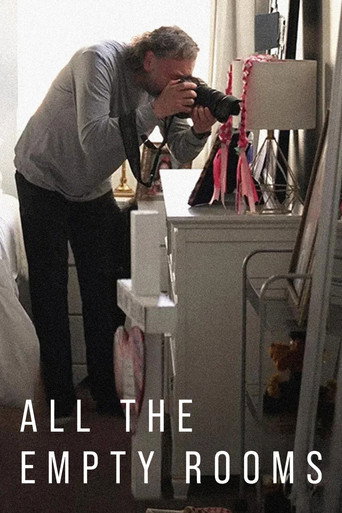
A journalist and a photographer set out to memorialize the bedrooms left behind by children killed in school shootings.
The life of internationally renowned artist and activist Nan Goldin is told through her slideshows, intimate interviews, ground-breaking photography, and rare footage of her personal fight to hold the Sackler family accountable for the overdose crisis.

Documentary filmmaker Amy Berg investigates the life of 30-year pedophile Father Oliver O'Grady and exposes the corruption inside the Catholic Church that allowed him to abuse countless children. Victims' stories and a disturbing interview with O'Grady offer a view into the troubled mind of the spiritual leader who moved from parish to parish gaining trust ... all the while betraying so many.

When Allied forces liberated the Nazi concentration camps in 1944-45, their terrible discoveries were recorded by army and newsreel cameramen, revealing for the first time the full horror of what had happened. Making use of British, Soviet and American footage, the Ministry of Information’s Sidney Bernstein (later founder of Granada Television) aimed to create a documentary that would provide lasting, undeniable evidence of the Nazis’ unspeakable crimes. He commissioned a wealth of British talent, including editor Stewart McAllister, writer and future cabinet minister Richard Crossman – and, as treatment advisor, his friend Alfred Hitchcock. Yet, despite initial support from the British and US Governments, the film was shelved, and only now, 70 years on, has it been restored and completed by Imperial War Museums under its original title "German Concentration Camps Factual Survey".
An intimate documentary delving into Rian Johnson's process as he comes in as a director new to the Star Wars universe.

An unprecedented and intimate look at the life, work and enduring legacy of British actress Audrey Hepburn (1929-1993).

In the Realms of the Unreal is a documentary about the reclusive Chicago-based artist Henry Darger. Henry Darger was so reclusive that when he died his neighbors were surprised to find a 15,145-page manuscript along with hundreds of paintings depicting The Story of the Vivian Girls, in What is Known as the Realms of the Unreal, of the Glodeco-Angelinnian War Storm, Cased by the Child Slave Rebellion.

From the heights of her modeling fame to her tragic death, this documentary reveals Anna Nicole Smith through the eyes of the people closest to her.
In 2019, Nepalese mountain climber Nirmal “Nims” Purja set out to do the unthinkable by climbing the world’s fourteen highest summits in less than seven months. (The previous record was eight years). He called the effort “Project Possible 14/7” and saw it as a way to inspire others to strive for greater heights in any pursuit. The film follows his team as they seek to defy naysayers and push the limits of human endurance.

A documentary on the expletive's origin, why it offends some people so deeply, and what can be gained from its use.
In 1975, Ryszard Kapuściński, a veteran Polish journalist, embarked on a seemingly suicidal road trip into the heart of the Angola's civil war. There, he witnessed once again the dirty reality of war and discovered a sense of helplessness previously unknown to him. Angola changed him forever: it was a reporter who left Poland, but it was a writer who returned…

A compilation of over 30 years of private home movie footage shot by Lithuanian-American avant-garde director Jonas Mekas, assembled by Mekas "purely by chance", without concern for chronological order.

A string of threatening emails escalates into a revenge plot involving a newly married US marshal and his ex-girlfriend.
BBC Arena's documentary on the Dames of British Theatre and film featuring Maggie Smith, Eileen Atkins, Judi Dench and Joan Plowright on screen together for the first time as they reminisce over a long summer weekend in a house Joan once shared with Sir Laurence Olivier.
As his life comes to its end, famous Hollywood director Orson Welles puts it all on the line at the chance for renewed success with the film The Other Side of the Wind.
Alex Gibney explores the charged issue of pedophilia in the Catholic Church, following a trail from the first known protest against clerical sexual abuse in the United States and all way to the Vatican.
Similar titles

Documentary celebrating the life and career of world-renowned Magnum photographer David Hurn, possibly Wales's most important living photographer.
This film made by a Palestinian-Israeli collective shows the destruction of the occupied West Bank's Masafer Yatta by Israeli soldiers and the alliance which develops between the Palestinian activist Basel and Israeli journalist Yuval.
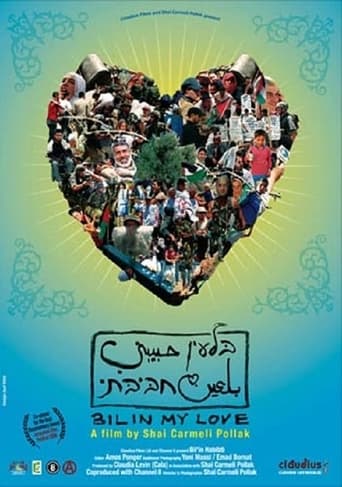
The Israeli filmmaker Shai Corneli Polak records the building of the 'security wall' through Palestinian territory at the village of Bil'in. The villagers protest mostly peacefully, while the Israeli army doesn't react peacefully. By now the Israeli High Court has ruled that the building of the wall was illegal.
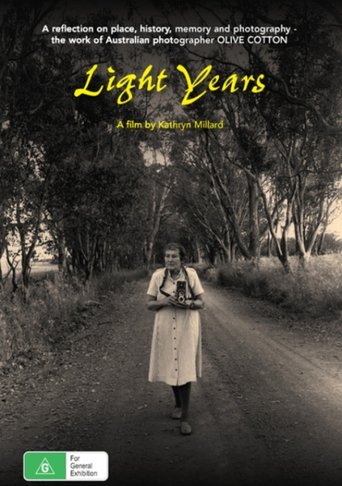
A unique record of the life and work of eminent Australian photographer, Olive Cotton.
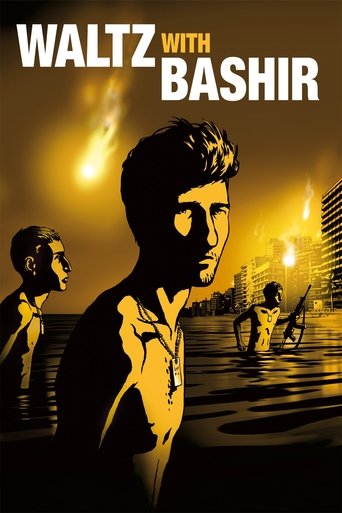
A film director from Israel interviews fellow veterans of the 1982 invasion of Lebanon to reconstruct his own memories of his term of service in that conflict.

The NFL has staged 48 Super Bowls. Four photographers have taken pictures at every one of them. In KEEPERS OF THE STREAK, director Neil Leifer tells the story of this exclusive club, made up of John Biever, Walter Iooss, Mickey Palmer and Tony Tomsic. With their cameras, they have captured football's biggest game of the year for almost five decades.

Documentary charting the fascinating life and work of Lee Miller, a model for Vogue in 1920s New York who became the only female photojournalist to cover the Second World War. Having given up photography in later life and virtually disowned her own work, Miller's extraordinary archive of 40,000 negatives was only rediscovered after her death. George Melly, David Hare, friends, colleagues and her only son, Tony Penrose, trace the story of her unconventional life through her own remarkable pictures and photographs, as well as rarely seen archive footage.
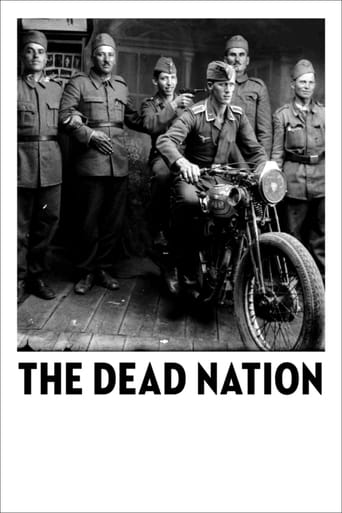
A documentary-essay which shows Costică Axinte's stunning collection of pictures depicting a Romanian small town in the thirties and forties. The narration, composed mostly from excerpts taken from the diary of a Jewish doctor from the same era, tells the rising of the antisemitism and eventually a harrowing depiction of the Romanian Holocaust.
A poetic and intimate look at the life and work of photographer Luis Humberto.
This new documentary will look at how Hamas has used rape and sexual terror as weapons of war, inflicting physical, emotional and psychological trauma on women, children and men. The terrorist group’s attack on Israel on Oct. 7 resulted in approximately 1,200 deaths and 250 hostages. During and after the attack, countless cases of sexual violence, particularly against women and girls, were reported and documented at the Supernova Music Festival, as well as the kibbutzims and villages. The documentary will delve into these events though research and investigation, while following the victims’ journeys to recovery.

An account of the life and work of the multidisciplinary Spanish artist Mariano Fortuny Madrazo (1871-1949), textile and fashion designer, set designer, photographer, painter and engraver, known as the Leonardo Da Vinci of the 20th century.
Documentary examines the different paths taken by brothers Edward & Asahel Curtis in their photographs of Northwest Indians and Yukon explorers, as well as their influence on Seattle & Washington state
A chronicle which provides a rare window into the international perception of the Iraq War, courtesy of Al Jazeera, the Arab world's most popular news outlet. Roundly criticized by Cabinet members and Pentagon officials for reporting with a pro-Iraqi bias, and strongly condemned for frequently airing civilian causalities as well as footage of American POWs, the station has revealed (and continues to show the world) everything about the Iraq War that the Bush administration did not want it to see.
The film returns to the origins of the creation of the State of Israel (from 1896 to 1948) and highlights the responsibility of the Western World.
A thought-provoking documentary on the current and historical causes of the Israeli-Palestinian conflict and U.S. political involvement.
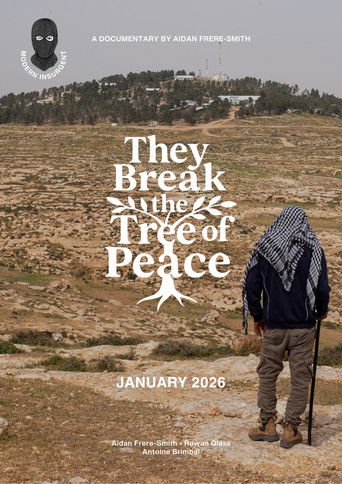
They Break the Tree of Peace explores the reality of life under military occupation in Masafer Yatta, documenting the violence, intimidation, and demolitions carried out and coordinated by illegal settlers and Israeli occupation forces against Palestinian communities.
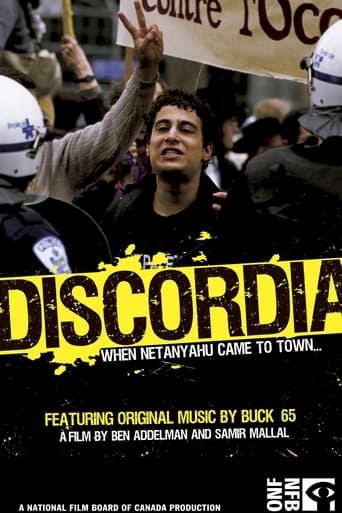
In the fall of 2002, it was announced that Benjamin Netanyahu would deliver a speech at Concordia University in Montreal, and reaction from the student body was swift and sudden.
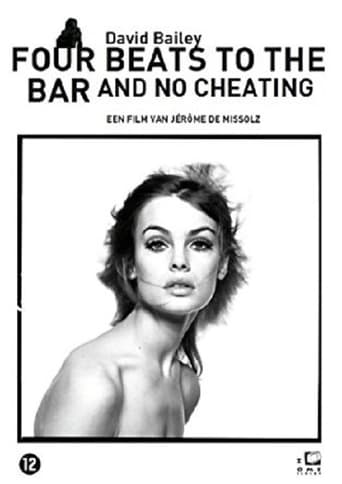
From Vogue magazine fashion photographer to filmmaker, painter and sculptor, Bailey is the working-class Londoner who befriended the stars, married his muses (Jean Shrimpton, Catherine Deneuve, Marie Helvin) and captures the spirit and elegance of his times with his refreshingly simple approach and razor-sharp eye. He is also the man whose life and work inspired one of the cult movies of the sixties, Michelangelo Antonioni's Blow-Up, and who has constantly travelled the globe either with the most beautiful models or chronicling the contemporary reality of Papua New Guinea, Brazil, Vietnam, Afghanistan and other countries with ground-breaking reportages. Above all, Bailey is a romantic with a delightful sense of humour approaching his 73rd year and showing no sign of slowing up. Director Jérôme de Missolz has created an engaging portrait of this very private man who bared the soul of the swinging sixties and seventies with his photographs and films.
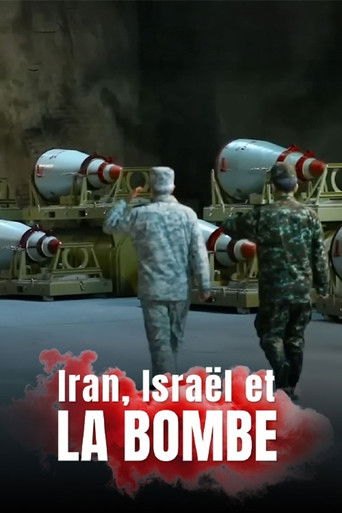
On February 28, 2026, the US and Israel launched massive strikes on Iran, claiming an imminent nuclear threat. This film traces how the world reached this point after more than three decades of shadow war over “the bomb”. Israel has tried to block Tehran’s nuclear drive with sabotage, assassinations and cyberwar – from the Stuxnet virus wrecking Natanz centrifuges to the AI-assisted killing of nuclear programme “father” Mohsen Fakhrizadeh, and a commando raid stealing 1.5 tonnes of secret nuclear archive files. Iran insists uranium enrichment is its sovereign right and key to national identity and regional power. As Israel pounded Iran’s nuclear facilities in June 2025 and systematically weakened its allies in Gaza, Lebanon, Syria and Yemen, nuclear talks continued in Geneva. Iran was edging towards diluting weapons-grade uranium – but Israel wasn’t prepared to wait, and pulled Washington into open war whose global consequences are only now beginning to unfold.
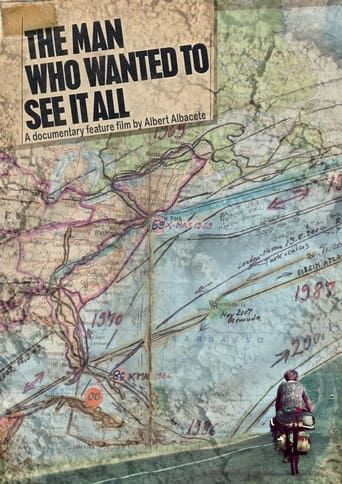
Heinz Stücke left Germany in 1962 with a bike, a tent and a goal: to see everything in the world. Now for the first time in 50 years, he's come home.