
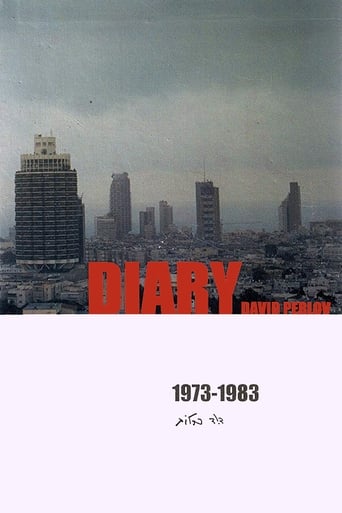
Diary
1983-06-11 · 330 min · ★ 7.1
A film diary in which Perlov films the minutiae of his and his family's day-to-day life. From these small bits, he builds up a broad picture of life in Israel in the '70s and '80s.
Trailers are previews, not full movies.
No authorized playback source configured. Use the legal watch options below.
Production details
- Directors
- David Perlov
- Production companies
- Unavailable
- Countries
- Israel
- Status
- Released
Top Cast
 David Perlov
 Yael Perlov
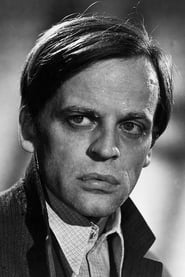 Klaus Kinski(archive footage)
Title information and images are supplied by TMDb. Explore our discovery guide for advice on comparing metadata and legal viewing options.
Where to watch
Availability provided by JustWatch via TMDb. Offers can change. Provider links are listed on TMDb; full playback requires a separately authorized source.
Availability not listed for this country.
Seasons & episodes
Recommendations

A compilation of over 30 years of private home movie footage shot by Lithuanian-American avant-garde director Jonas Mekas, assembled by Mekas "purely by chance", without concern for chronological order.

Director Michael Apted revisits the same group of British-born adults after a 7 year wait. The subjects are interviewed as to the changes that have occurred in their lives during the last seven years.

Director Michael Apted revisits the same group of British-born adults after a 7 year wait. The subjects are interviewed as to the changes that have occurred in their lives during the last seven years.
Documentarian Ross McElwee originally set out to make a travelogue of sorts tracing General William T. Sherman's infamous scorched-earth march through the Confederacy in the latter stages of the Civil War. Instead, haunted by a recent breakup with a girlfriend, McElwee ends up documenting his progress -- or lack thereof -- in starting a new relationship. His journey then becomes one of self-reflection and self-discovery rather than a historical/sociological exploration.

Ranjit, a farmer in India, takes on the fight of his life when he demands justice for his 13-year-old daughter, the victim of a brutal gang rape. His decision to support his daughter is virtually unheard of, and his journey unprecedented.

A documentary about how a dominant cultural and demographic institution both sustains their traditional activities and adapts to the digital revolution.
A portrait of the day-to-day operations of the National Gallery of London, that reveals the role of the employees and the experiences of the Gallery's visitors. The film portrays the role of the curators and conservators; the education, scientific, and conservation departments; and the audience of all kinds of people who come to experience it.

Alexander McQueen's rags-to-riches story is a modern-day fairy tale, laced with the gothic. Mirroring the savage beauty, boldness and vivacity of his design, this documentary is an intimate revelation of McQueen's own world, both tortured and inspired, which celebrates a radical and mesmerizing genius of profound influence.

A documentary about the life and films of director John Ford.
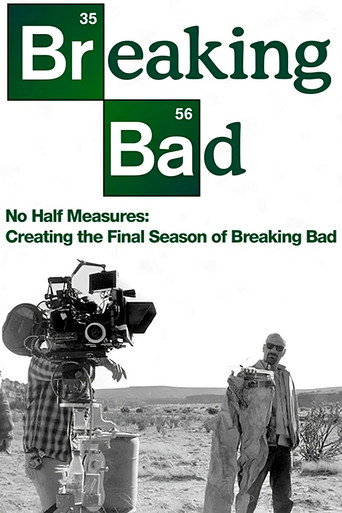
A documentary about the making of season five of the acclaimed AMC series Breaking Bad.

Told through performances, TV interviews, home movies, family photographs, private letters and unpublished memoirs, the film reveals the essence of an extraordinary woman who rose from humble beginnings in New York City to become a glamorous international superstar and one of the greatest artists of all time.

From the heights of her modeling fame to her tragic death, this documentary reveals Anna Nicole Smith through the eyes of the people closest to her.
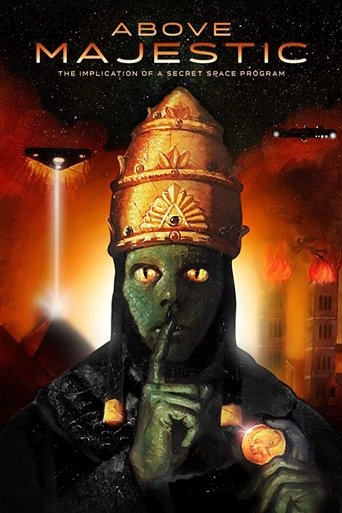
A look at the origins, history and conspiracies behind the "Majestic 12", a clandestine group of military and corporate figureheads charged with reverse-engineering extraterrestrial technology.

Brilliant, long in-the-works story of the life and art of the world's greatest comedian and the cinema's first genius, Charlie Chaplin. Produced, written and directed by renowned film critic Richard Schickel.

Just two years away from turning 30, participants in Michael Apted's documentary series are facing serious questions of identity and purpose, wondering whether they've found their place in the world.
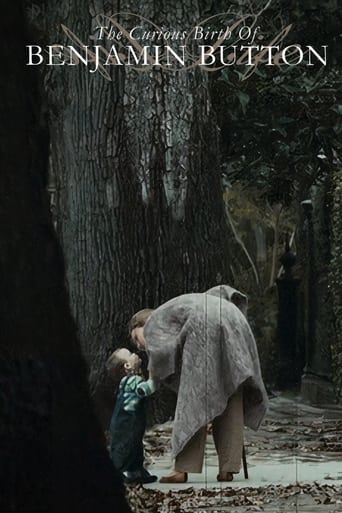
A documentary about the making of David Fincher's 2008 film THE CURIOUS CASE OF BENJAMIN BUTTON. Virtually every element in the evolution of the Fincher's film is documented here, from the project's attachment to numerous other directors during the 1990s, to its shoot in 2006 and 2007 in New Orleans, to its complex, CGI-intensive postproduction process.
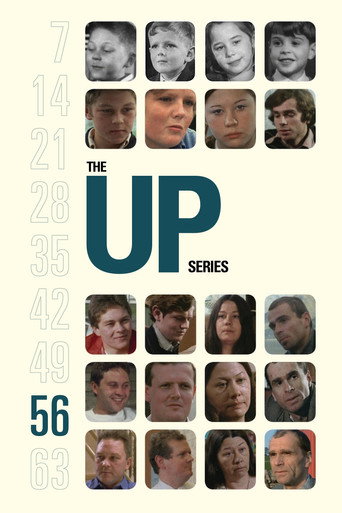
When a cross-section of seven-year-olds were interviewed for 7 Up in 1964 it was immediately evident that their social backgrounds influenced their attitudes towards life. While the upper class children were confident and self-assured, those from middle and working class backgrounds were resigned to a challenging life of hard work. This premise was put to the test every seven years when the same group were interviewed about the progression of their lives. 49 years in the making, the changes that occurred to the original 14 make for fascinating television and are in many ways the stories of all our lives. From success and disappointment, marriage and childbirth, to poverty and illness, nearly every facet of life has been captured on film. Now, at the age of 56, the group are once more brought together and, with the benefit of hindsight, assess whether their lives have been ruled by circumstance or self-determination.
Thirty-four days before she's sent to prison, notorious Silicon Valley founder Elizabeth Holmes invites a skeptical film crew to document her every move. What begins as an intimate portrait of an enigmatic felon becomes a mind-bending three-year journey into the abyss.

This revealing documentary honors the legendary Sidney Poitier—iconic actor, filmmaker, and civil rights activist. Featuring interviews with Denzel Washington, Spike Lee, Halle Berry, and more.

Over 35 years after Bob Lazar's revelations, this documentary exposes secrets of a facility the government still denies. Featuring Lazar's testimony, recreations, and new evidence, it reopens a case that continues to spark global curiosity
Similar titles
Five women – Palestinian, American, Muslim, Christian, and Jewish – tell stories of humiliation and harassment by Israeli border guards and airport security officials.
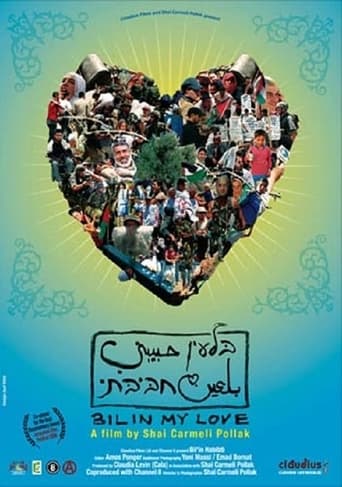
The Israeli filmmaker Shai Corneli Polak records the building of the 'security wall' through Palestinian territory at the village of Bil'in. The villagers protest mostly peacefully, while the Israeli army doesn't react peacefully. By now the Israeli High Court has ruled that the building of the wall was illegal.
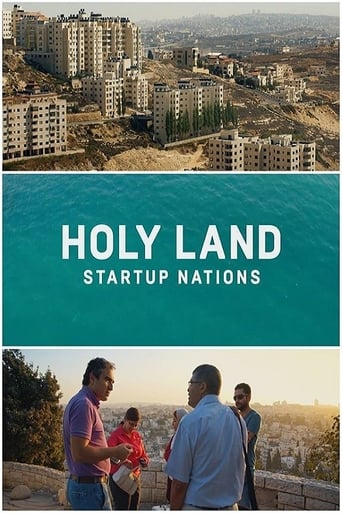
With the most tech startups and venture capital per capita in the world, Israel has long been hailed as The Startup Nation. WIRED’s feature-length documentary looks beyond Tel Aviv’s vibrant, liberal tech epicenter to the wider Holy Land region – the Palestinian territories, where a parallel Startup Nation story is emerging in East Jerusalem, Nazareth, Ramallah and other parts of the West Bank, as well as in the Israeli cybersecurity hub of Be’er Sheva. And we will learn how the fertile innovation ecosystem of Silicon Wadi has evolved as a result of its unique political, geographical and cultural situation and explore the future challenges – and solutions – these nations are facing.
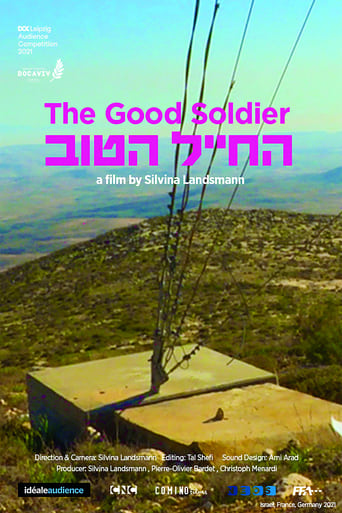
A look inside the work of Breaking the Silence, an organization of former IDF combat soldiers who collect and publish testimonies of soldiers who served in the occupied territories. For six months, director Silvina Landsmann, camera in hand, accompanied the staff of the organization. The many hours of footage have been refined into a film that dives into the heart of Breaking the Silence’s work: guided tours of Hebron and the surrounding area, public lectures and house meetings, internal staff meetings and media strategy. All the while the organization is forced to justify its very existence, both internally and to the broader public, and to justify its place in the political debate. The Good Soldier raises questions about Israel’s dynamic mainstream and the challenges of confronting it.

In 1961, history was on trial... in a trial that made history. Just 15 years after the end of WWII, the Holocaust had been largely forgotten. That changed with the capture of Adolf Eichmann, a former Nazi officer hiding in Argentina. Through rarely-seen archival footage, The Eichmann Trial documents one of the most shocking trials ever recorded, and the birth of Holocaust awareness and education.

The life story of Ogg, a male wolf living in the northern mountains of Israel.
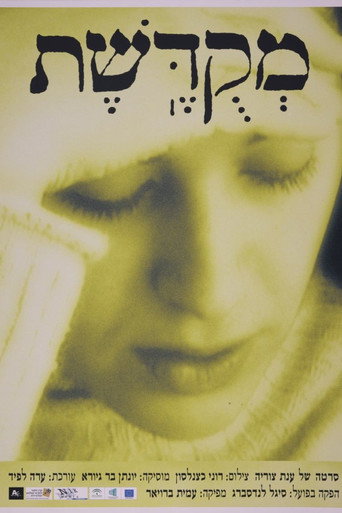
A documentary focusing on the stories of three Israeli women seeking a divorce through religious courts.
“Everyone here is an artist, there is no problem with art movements” – this is the approach in the painting classes for adults and children at Kibbutz Naan. Footage from the Mishkan La’Omanut established in Ein Harod, from the graduation ceremony of the IDF officers’ course, a comedic ballet show inspired by Swan Lake in Kibbutz Naan, documentation of the construction of the new kibbutz institutions, photos of the ship “Palmach”, and the inauguration ceremony of the monument in memory of the fighters of the Harel Brigade in 1951.
Kibbutz Ein Harod hosts the 18th conference of the United Kibbutz. It is attended by representatives of the kibbutzim, Prime Minister David Ben-Gurion, and representatives of the government and the Knesset.
Documentation of the innovative and strange agricultural technology in Kibbutz Hulata, footage from the dining room in Givat Brenner and the pantomime show based on it, and documentation of the twins’ conference of “The Kibbutz Family” exhibition in Tel Aviv.
The tenth annual camp of the members of the United Kibbutz in HaNoar HaOved VeHaLomed is set up in Tarshiha, where the youth of the kibbutz get up early for group activities and sports games, until night, when they dance around the fire. And in Naan, the mature members set up a court to hold a hearing, comparing municipal education and kibbutz education. Finally, the acceptance ceremony to the kibbutz takes place.
The celebration of the 85th birthday of the sculptor Yaakov Luchansky, in the kibbutz where he lives, Givat Brenner. In the film, footage of the sculptors work process and his sculptures in the workshop at Luchanskis home.

A tour of the small kibbutz Gadot, whose location, on the banks of the pastoral Jordan River, demands its residents be alert at all times to bombings by the Syrian army. However, the life of the kibbutz is not harmed – the children play, the youth of the kibbutz dance, and the work in the orchards and the farm does not stop.

An Israeli tour in the Golan Heights landscapes immediately after the Six Day War in which the area was occupied. The visitors go by a variety of interesting places, from the Syrian city of Quneitra to the inviting Ram Pool, to the Hermon-Banias River and Pan Cave.

What is the reality of daily life in Gaza, along the border of Israel? Can the religious organization of Hamas, rivals to the PLO, move from international pariah to meaningful political player with citizens' interests at heart? Developed over two years and with unprecedented access to this 'terrorist' organization, this documentary uncovers the deeper issues defining life in Gaza under Hamas.

Peter Maffay and his wife explore Israel.
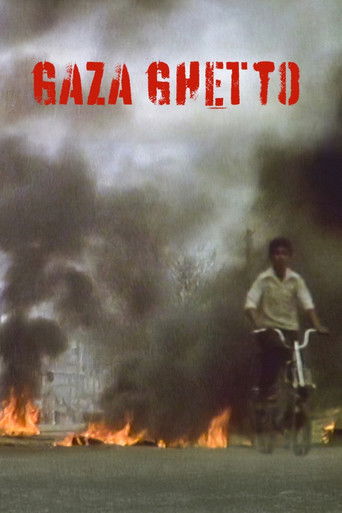
Gaza Ghetto: Portrait of a Family, 1948 – 1984 is a documentary film about the life of a Palestinian family living in the Jabalia refugee camp. The film, created by Joan Mandell, Pea Holmquist, and Pierre Bjorklund in 1984 is believed to be the first documentary ever made in Gaza. The film features Ariel Sharon, Binyamin Ben-Eliezer and soldiers on patrol "candidly discuss[ing] their responsibilities." The film follows a refugee family from the Gaza Strip who visit the site of their former village, now a Jewish town in Israel. As the grandfather and great-grandfather point out an orchard and sycamore fig that belonged to Muhammed Ayyub and Uncle Khalil, an Israeli resident appears and tells them to leave, claiming they need a permit to be there. The mother tells him that, "We work in Jaffa and Tel Aviv and that's not forbidden," to which he replies, "Here it's forbidden."

Guy Ben-Ner, one of Israel's foremost video artists, gained international recognition with a series of low-tech films, starring his family in absurdist settings carved out of their intimate spaces and their everyday surroundings. Many of his videos are inspired by screenplays for films, folktales and novels. Analyzing these literary and cinematographic passages allows him to exploit the conventions of film narrative: how to tell a story, captivate an audience through a tale, sustain a degree of tension and entertainment, and so on. At the same time, he corrupts the magic of fiction by openly showing us the entrails of everything he records, without worrying about revealing the tricks of the trade. A large part of his filmic oeuvre features a conglomeration of cinematic and literary references which the artist quotes, adapts or interprets. Ben-Ner self-referentially links the great themes and their literary, cinematic and artistic realization.

Four souls trapped within Tel Aviv’s red-light district, entangled in sex trafficking and addiction, embark on spiritual journeys to transcend their personal ghettos. Olga, abducted by traffickers at 17; Dave, an American who founded a shelter for homeless women in prostitution; Yana, a recovering addict and struggling mother of five; and Ohad, a former sex-trafficker chasing redemption. Holy Ghetto is a story of hope and transformation, asking: Can they rise above what they became? And in turn, can we?
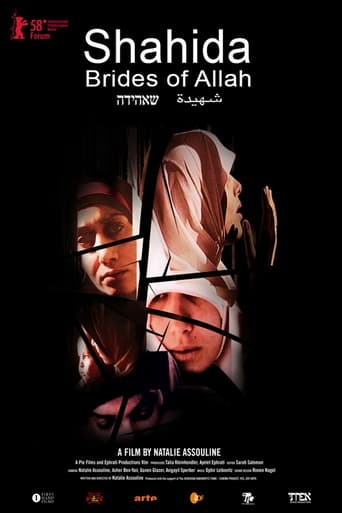
Israeli director Natalie Assouline chronicles the lives of women, mostly young mothers, in prison for involvement in failed suicide attacks/terrorists attacks in Israel. Filmed over two years, this portrait strives to unearth the motivations behind their crimes. With the women's heads and feelings firmly covered, the film reveals no answers, just the heart-breaking tension between humanity and ideology.