
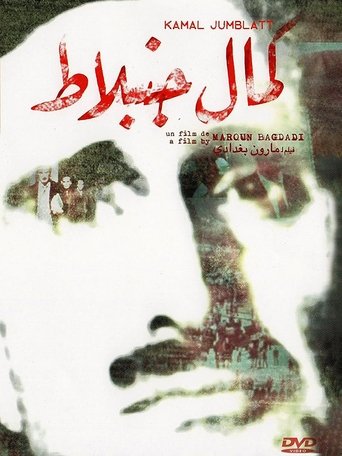
Greetings to Kamal Jumblatt
1977-01-01 · 57 min · ★ 6.4
Tribute to the Druze Kamal Jumblatt, Minister of Economy and Agriculture (1946) and founder of the Progressive Socialist Party (PSP) in 1949. He was one of the architects of the departure of President Bechara el-Khoury (1952), before playing a major role in the events of 1958. From 1960 to 1964, Kamal Jumblatt assumed, under the presidency of Fouad Chehab, various ministerial functions . . After the conflict of June 1967, he gradually approached the Palestinian organizations. In 1969 he became Minister of the Interior; in August 1970, he supported the election of Soleiman Frangié as President of the Republic. Following the Lebanese-Palestinian clashes of May 1973, he took sides against the head of state, established himself as the leader of the National Movement in 1975 and engaged in a revolutionary armed struggle against the Lebanese Front. Hostile to Syria's intervention in Lebanon, he broke with it (March 1976). He was assassinated near a Syrian checkpoint in 1977.
Trailers are previews, not full movies.
No authorized playback source configured. Use the legal watch options below.
Production details
- Directors
- Maroun Bagdadi
- Production companies
- Lebanese National Movement, The
- Countries
- Lebanon, France, Canada
- Status
- Released
Top Cast
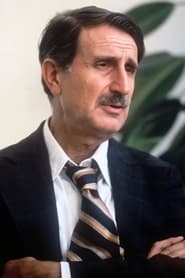 Kamal JoumblattHimself (archive footage)
 Yasser ArafatHimself
Title information and images are supplied by TMDb. Explore our discovery guide for advice on comparing metadata and legal viewing options.
Where to watch
Availability provided by JustWatch via TMDb. Offers can change. Provider links are listed on TMDb; full playback requires a separately authorized source.
Availability not listed for this country.
Seasons & episodes
Recommendations

In the Realms of the Unreal is a documentary about the reclusive Chicago-based artist Henry Darger. Henry Darger was so reclusive that when he died his neighbors were surprised to find a 15,145-page manuscript along with hundreds of paintings depicting The Story of the Vivian Girls, in What is Known as the Realms of the Unreal, of the Glodeco-Angelinnian War Storm, Cased by the Child Slave Rebellion.
A road trip across five countries to explore the social and political movements as well as the mainstream media's misperception of South America while interviewing seven of its elected presidents.
Hollywood veteran Bing Russell creates the only independent baseball team in the country—alarming the baseball establishment and sparking the meteoric rise of the 1970s Portland Mavericks.

An inside look at one of the most anticipated movie sequels ever with James Cameron and cast.
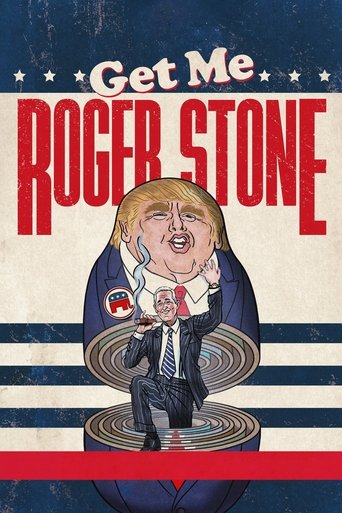
From his days of testifying at the Watergate hearings to advising recent presidential candidate Donald Trump, Roger Stone has long offended people on both sides of the political fence as a force in conservative America. Outspoken author, pundit, ahead of his time election strategist, this is his story.

A look at the events leading up to the Taliban's attack on the young Pakistani school girl, Malala Yousafzai, for speaking out on girls' education and the aftermath, including her speech to the United Nations.

Ten of Muhammad Ali's former rivals pay tribute to the three-time world heavyweight champion.

Al Pacino's deeply-felt rumination on Shakespeare's significance and relevance to the modern world through interviews and an in-depth analysis of "Richard III."
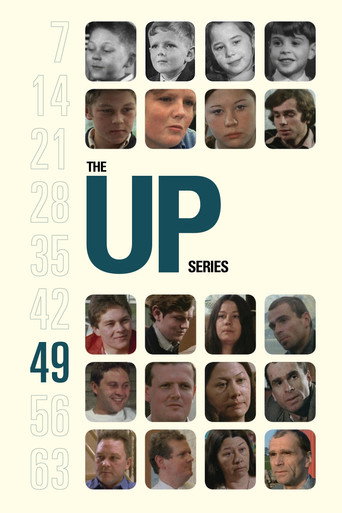
49 Up is the seventh film in a series of landmark documentaries that began 42 years ago when UK-based Granada's World in Action team, inspired by the Jesuit maxim "Give me the child until he is seven and I will give you the man," interviewed a diverse group of seven-year-old children from all over England, asking them about their lives and their dreams for the future. Michael Apted, a researcher for the original film, has returned to interview the "children" every seven years since, at ages 14, 21, 28, 35, 42 and now again at age 49.In this latest chapter, more life-changing decisions are revealed, more shocking announcements made and more of the original group take part than ever before, speaking out on a variety of subjects including love, marriage, career, class and prejudice.

The definitive 3½-hour documentary about the troubled creation and enduring legacy of the science fiction classic 'Blade Runner', culled from 80 interviews and hours of never-before-seen outtakes and lost footage.

Martin Scorsese, Robert De Niro, Joe Pesci, and Al Pacino in conversation about The Irishman.

In an intimate and joyful story of love in the face of loss, celebrated poets Andrea Gibson and Megan Falley find strength—and unexpected hilarity—in what might be their final year together.
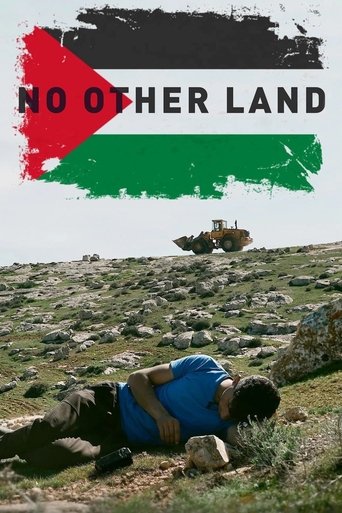
This film made by a Palestinian-Israeli collective shows the destruction of the occupied West Bank's Masafer Yatta by Israeli soldiers and the alliance which develops between the Palestinian activist Basel and Israeli journalist Yuval.

Ranjit, a farmer in India, takes on the fight of his life when he demands justice for his 13-year-old daughter, the victim of a brutal gang rape. His decision to support his daughter is virtually unheard of, and his journey unprecedented.

A 1993 documentary film about Bruce Lee. The film includes interviews from some of his fellow students and opponents who worked alongside him in his movies.

A backstage and on-stage look at Justin Bieber during his rise to super stardom.

Through deeply personal interviews with her siblings and an examination of the photographs, letters, and belongings left behind, Mariska assembles a new portrait of her mother Jayne Mansfield, an extraordinary and complex woman.

A documentary on the expletive's origin, why it offends some people so deeply, and what can be gained from its use.

A detailing of the rise to prominence and global sporting superstardom of six supremely talented young Manchester United football players (David Beckham, Nicky Butt, Ryan Giggs, Paul Scholes, Phil and Gary Neville). The film covers the period 1992-1999, culminating in Manchester United's European Cup triumph.
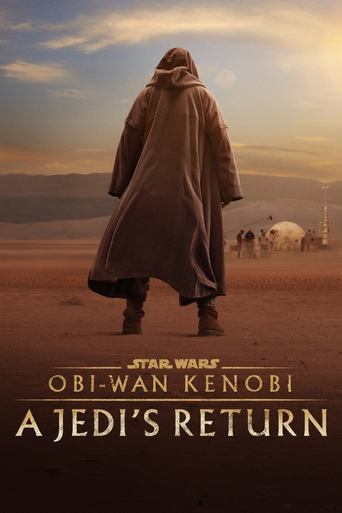
This special explores the return of Obi-Wan Kenobi and Anakin Skywalker to the screen, as well as Ewan McGregor and Hayden Christensen to their classic roles. Director Deborah Chow leads the cast and crew as they create new heroes and villains that live alongside new incarnations of beloved Star Wars characters, and an epic story that dramatically bridges the saga films.
Similar titles
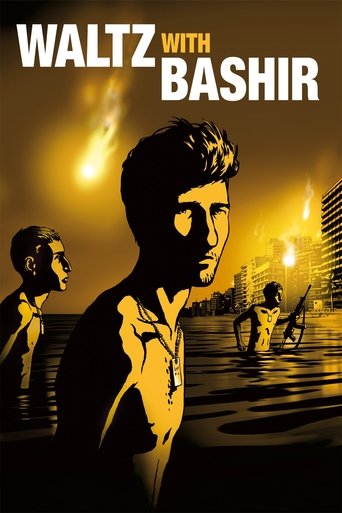
A film director from Israel interviews fellow veterans of the 1982 invasion of Lebanon to reconstruct his own memories of his term of service in that conflict.
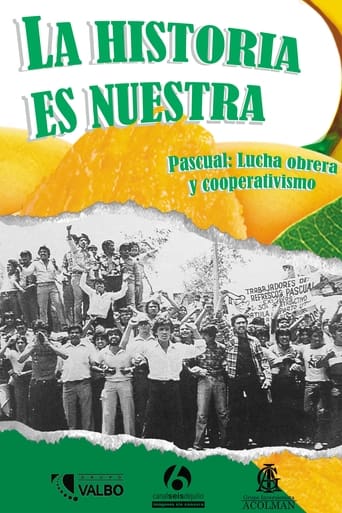
History is Ours narrates the struggle of the workers of the Refrescos Pascual soft-drink company against its owner, Rafael Jiménez, the official trade unionism of the CTM and the labor authorities of the governments of José López Portillo and Miguel de la Madrid, between 1982 and 1985. It documents the workers' difficult struggle to take over the company, when justice, which had been elusive, finally proved them right, and opened the possibility that these brave, tenacious workers would become collective owners of the company. Today, these soft-drink fighters resist a system that hits Mexican companies in favor of the monopolistic transnationals. The film is an account of one of the most brilliant episodes of the contemporary Mexican labor movement, an example of unity and class consciousness, embodied by men and women who make their struggle a tribute to comrades Concepción Jacobo García and Alvaro Hernández García, tragically fallen at the beginning of this historic event.

Guy Hircefeld, a veteran who served in the Israeli military at the start of its occupation of Palestine in the 1980s, now fights against the Israeli occupation. His only weapon is a camera.

Pierre Clément, student and photographer of René Vauthier, first accompanied him to Tunisia to make a film on the country's independence in 1957. Destiny led him to Algeria and his presence in February 1958 at the Tunisian-Algerian border changed his life. . Forever. He took his camera and photographed the attacks on Sakia Sidi Youssef before committing himself body and soul to the Algerian cause. Shortly after, he directed the film “Algerian Refugees” before being arrested, tortured and imprisoned, while his third film, “The National Liberation Army in Almaki”, was not finished. Abdel Nour Zahzah, a director who commemorates Pierre Clément, the director who risked his life, the brother of the Algerian resistance, who disappeared in 2007.
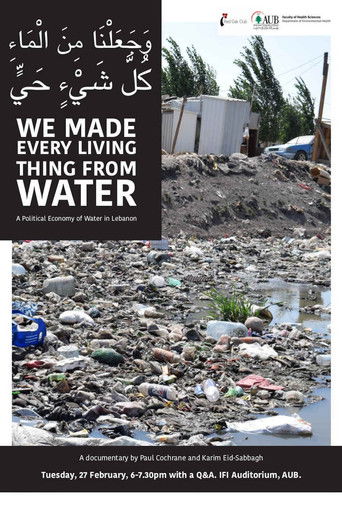
Directors Karim Eid-Sabbagh and Paul Cochrane investigate the political economy of water in Lebanon after the country's trash crisis began in 2015.
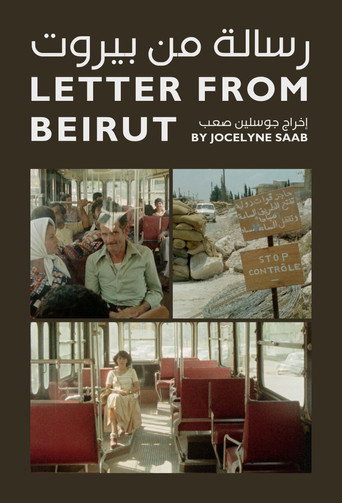
Letter from Beirut documents the filmmaker's return to Beirut during one of the lulls, three years after the outbreak of the civil war, animated by the urge to return. She is confronted by the physical, emotional and psychological ravages of the war, terrified and sorrowful, she cannot find her place in the city. In that quest, she communicates with everyday people, friends, neighbors, people riding the bus across the city's eastern and western flanks. To pace her journeying and dramatic unraveling of the film, Saab borrows the guise of a letter read in a voice-over, written by world-renowned poet Etel Adnan. A rare document from the civil war, Letter from Beirut lays bare and spontaneously how people make sense of their everyday in the midst of chaos, violence, terror and sorrow.

Poetry is everywhere, even in the refugee camps where absolute misery reigns. In front of old plastic advertising posters on which are drawn in giant format the big icons of luxury and consumerism that make up their shelters, refugee children stand like kings. Symbols of life at the heart of war, fragility, and death, these children are shown by Jocelyne Saab as precious notes of hope in the heart of a dehumanized world. One Dollar a Day was filmed in the Syrian refugee camps of the Bekaa plain, Lebanon in 2015, with text by Etel Adnan.
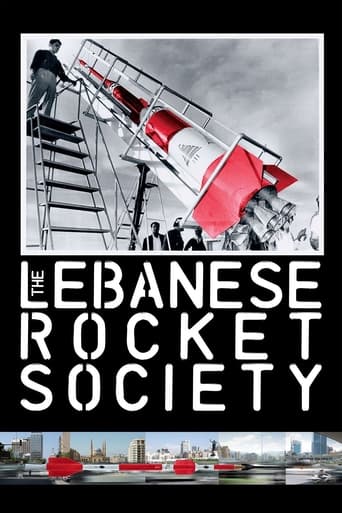
Lebanon's brief flirtation with space travel in the 1960s becomes a poignant metaphor for the Arab world's utopian dreams in this riveting documentary.
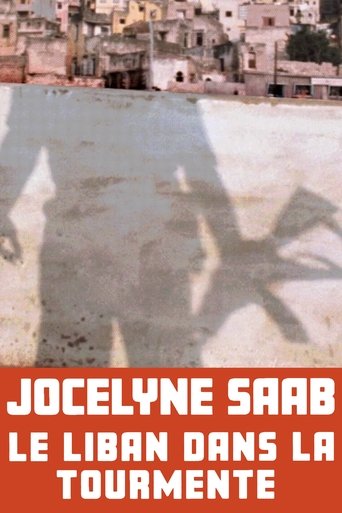
A few months after the incident of April 13, 1975, during which Palestinian civilians were machine-gunned by Phalangist militiamen, the toll is most tragic: six thousand dead, twenty thousand wounded, incessant kidnappings, a semi-destroyed capital. This film traces the origins of the Lebanese conflict, the perception of a society that goes to war while singing. A unique document on the Lebanese civil war. Beyond the religious war, the painting of a social and political reality that has not changed much, more than four decades later.

Lebanese director Angie Obeid embarks on a road trip with her father, Mansour, retracing a journey he made 42 years ago. She tries to reach out to the young Mansour, understand the decisions he made when he was her age, and find common ground. The film explores the challenges and opportunities that arise when navigating the boundaries between tradition and modernity, family and individuality, home and the wider world.
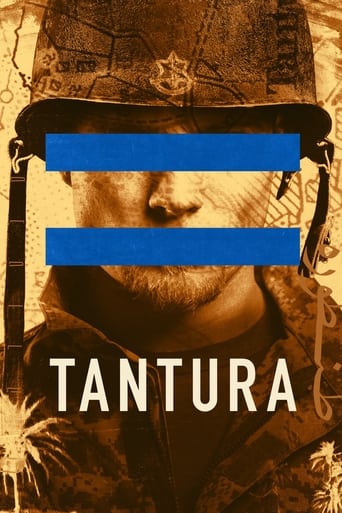
When, in the late 1990s, Israeli student Teddy Katz exposed the massacre of Palestinian civilians by Israeli forces in the village of Tantura, in May 1948, during the first Arab-Israeli war, he was initially praised for his pioneering work; but he was soon infamous and branded a traitor. Decades later, incendiary new evidence emerges that corroborates Teddy's findings.
Filmed in Beirut in the Spring of 1984, in many ways a letter about warfront.

In 1954, Daniel Vérin, a young schoolteacher of Algerian descent, made a radical decision: he turned his back on colonial France and joined the Algerian insurgents. He enlisted in the FLN, then the ALN, and became "Ali," a soldier in the struggle for independence. At the end of the war in 1962, he became an Algerian citizen. But the long-awaited independence did not bring Ali the taste of victory. On a scholarship, he went to study in the United States. Upon his return, the Algerian administration forbade him from entering his homeland. Rejected by the country he had defended, he obtained American citizenship in 1969. Condemned by France for his activism and ignored by Algeria for more than forty years, Ali was not officially recognized as a mujahid, a fighter of the Revolution, until 2004.
Documentary tracing Hezbollah’s emergence in southern Lebanon after years of Israeli occupation, focusing on its social base, resistance activities, and the return of displaced villagers.
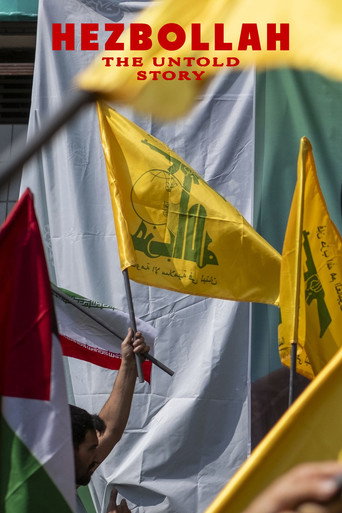
Born from war and shaped by conflict, the Lebanese resistance has endured decades of battles, invasions, and geopolitical shifts. This documentary traces its rise, its defining moments, and the sacrifices that kept it standing. But with the region in turmoil and Syria fallen and one question remains—how much longer can the resistance hold its ground?
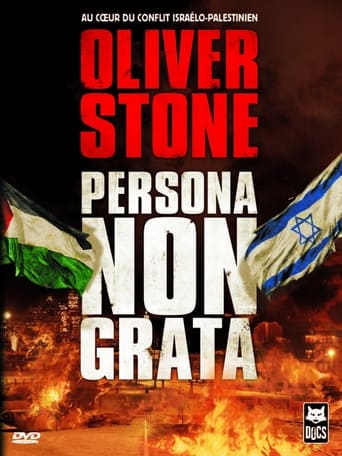
2003 documentary film produced by Oliver Stone for the HBO series America Undercover about the conflict in occupied Palestine. He speaks with Ehud Barak and Benjamin Netanyahu, former prime ministers of Israel, Yasser Arafat, late president of the Palestinian National Authority, and various Palestinian activists resisting the oppression of the zionist regime.
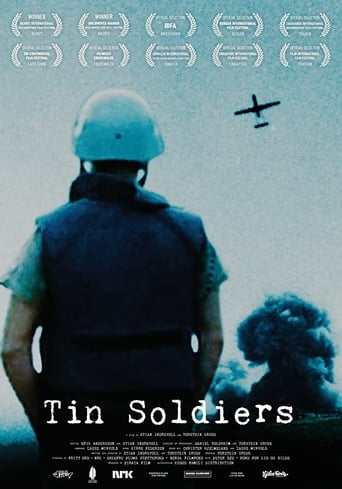
A group of young UN soldiers in Lebanon enters service with pro-Israeli views and a naive outlook on war. They go through a radical change of heart as they witness and film the Qana massacre. They secure video evidence indicating that Israel deliberately bombed a UN camp killing 106 refugees.
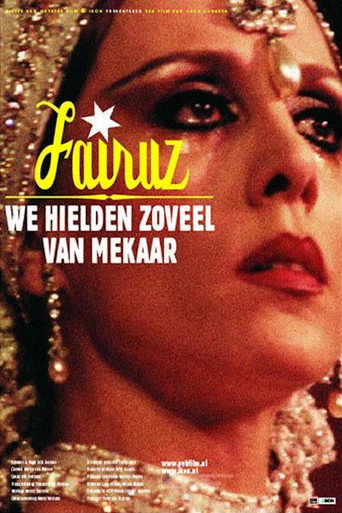
Inhabitants of Beirut talk about their love for the singer Fairuz.