
Le Grand Paradis
2013-01-01 · 52 min · Not rated
The Grand paradis is said to be one of the easiest four-thousanders and that is the one choosen by Carole Dechantre to share with the famous alpinist Jean Troillet.
Trailers are previews, not full movies.
No authorized playback source configured. Use the legal watch options below.
Production details
- Directors
- Sébastien Devrient
- Production companies
- Vertiges Prod
- Countries
- France
- Status
- Released
Top Cast
 Carole DechantreCarole Dechantre
Title information and images are supplied by TMDb. Explore our discovery guide for advice on comparing metadata and legal viewing options.
Where to watch
Availability provided by JustWatch via TMDb. Offers can change. Provider links are listed on TMDb; full playback requires a separately authorized source.
Availability not listed for this country.
Seasons & episodes
Recommendations
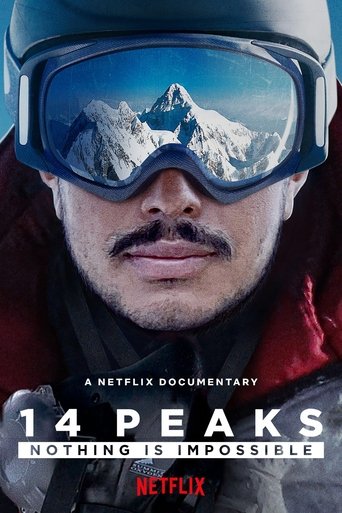
In 2019, Nepalese mountain climber Nirmal “Nims” Purja set out to do the unthinkable by climbing the world’s fourteen highest summits in less than seven months. (The previous record was eight years). He called the effort “Project Possible 14/7” and saw it as a way to inspire others to strive for greater heights in any pursuit. The film follows his team as they seek to defy naysayers and push the limits of human endurance.
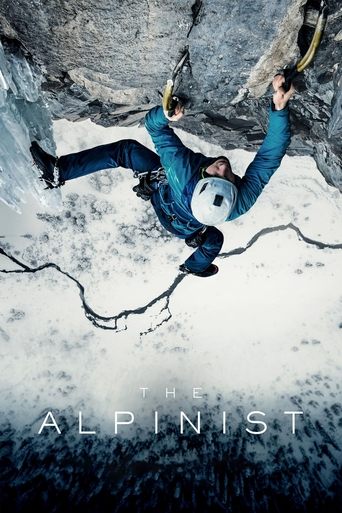
The life of Canadian mountain climber Marc-André Leclerc as he pushes the boundaries of climbing while on an expedition to Patagonia.

The film follows adventurer Jeff Johnson as he retraces the epic 1968 journey of his heroes Yvon Chouinard and Doug Tompkins to Patagonia.

In an intimate and joyful story of love in the face of loss, celebrated poets Andrea Gibson and Megan Falley find strength—and unexpected hilarity—in what might be their final year together.

An intimate portrait of the small shops and shopkeepers of the Rue Daguerre in Paris, a picturesque street that has been the filmmaker’s home for more than 50 years.
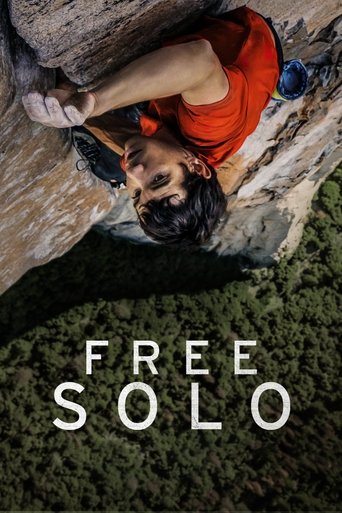
Follow Alex Honnold as he attempts to become the first person to ever free solo climb Yosemite's 3,000 foot high El Capitan wall. With no ropes or safety gear, this would arguably be the greatest feat in rock climbing history.

Through deeply personal interviews with her siblings and an examination of the photographs, letters, and belongings left behind, Mariska assembles a new portrait of her mother Jayne Mansfield, an extraordinary and complex woman.

While in San Francisco for the promotion of her last film in October 1967, Agnès Varda, tipped by her friend Tom Luddy, gets to know a relative she had never heard of before, Jean Varda, nicknamed "Yanco". This hitherto unknown uncle lives on a boat in Sausalito, is a painter, has adopted a hippie lifestyle and loves life. The meeting is a very happy one.

Just two years away from turning 30, participants in Michael Apted's documentary series are facing serious questions of identity and purpose, wondering whether they've found their place in the world.
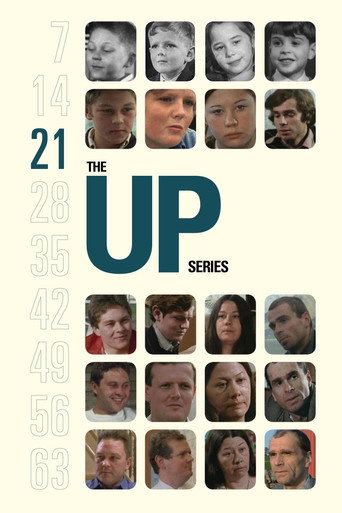
After another 7 year wait, director Michael Apted revisits the same group of British-born children from Seven Up! and 7 Plus Seven. The subjects are interviewed as to the changes that have occurred in their lives during the last seven years.

An inside look at one of the most anticipated movie sequels ever with James Cameron and cast.

Director Michael Apted revisits the same group of British-born adults after a 7 year wait. The subjects are interviewed as to the changes that have occurred in their lives during the last seven years.
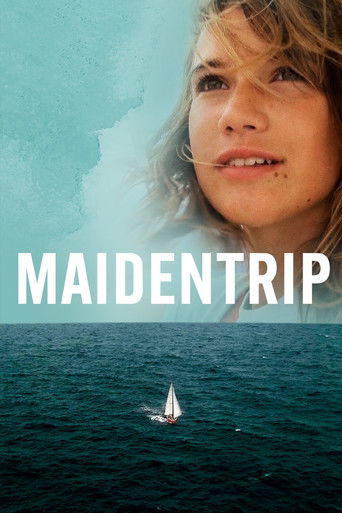
14-year-old Laura Dekker sets out on a two-year voyage in pursuit of her dream to become the youngest person ever to sail around the world alone.
An epic cinematic and musical collaboration between SHERPA filmmaker Jennifer Peedom and the Australian Chamber Orchestra, that explores humankind's fascination with high places.

This documentary revisits the French football team's controversial 2010 World Cup and the bus strike that sparked global headlines and national outrage.

Director Michael Apted revisits the same group of British-born adults after a 7 year wait. The subjects are interviewed as to the changes that have occurred in their lives during the last seven years.

This revealing documentary honors the legendary Sidney Poitier—iconic actor, filmmaker, and civil rights activist. Featuring interviews with Denzel Washington, Spike Lee, Halle Berry, and more.
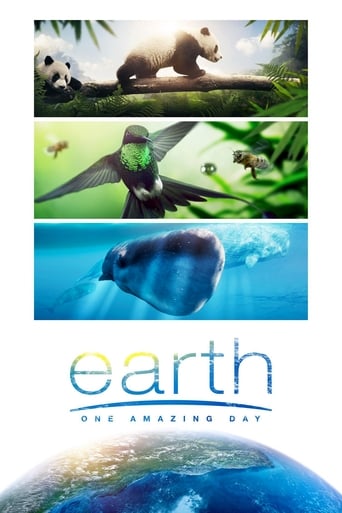
An astonishing journey revealing the awesome power of the natural world. Over the course of one single day, we track the sun from the highest mountains to the remotest islands to exotic jungles.

A documentary about the making of season five of the acclaimed AMC series Breaking Bad.
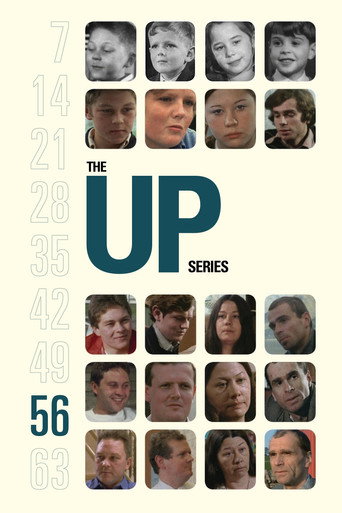
When a cross-section of seven-year-olds were interviewed for 7 Up in 1964 it was immediately evident that their social backgrounds influenced their attitudes towards life. While the upper class children were confident and self-assured, those from middle and working class backgrounds were resigned to a challenging life of hard work. This premise was put to the test every seven years when the same group were interviewed about the progression of their lives. 49 years in the making, the changes that occurred to the original 14 make for fascinating television and are in many ways the stories of all our lives. From success and disappointment, marriage and childbirth, to poverty and illness, nearly every facet of life has been captured on film. Now, at the age of 56, the group are once more brought together and, with the benefit of hindsight, assess whether their lives have been ruled by circumstance or self-determination.
Similar titles
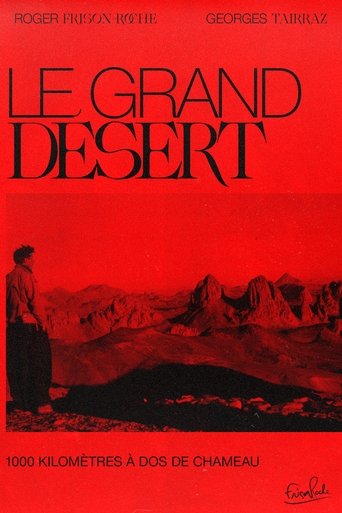
In 1950, the explorer Roger Frison-Roche made a crossing of more than a thousand kilometers on the back of a camel with the photographer Georges Tairraz II, in the heart of the Sahara, from Hoggar then Djanet in Algeria to Ghat in Libya. From their journey they brought back a large number of color films and documents. Among thousands of photos, they selected 47 images which reflect the various aspects of these immense spaces which occupy a third of Africa in the book "The Great Desert". “The Great Desert, 1000 kilometers on camelback” is the eponymous 85-minute documentary of this epic, released in 1950.
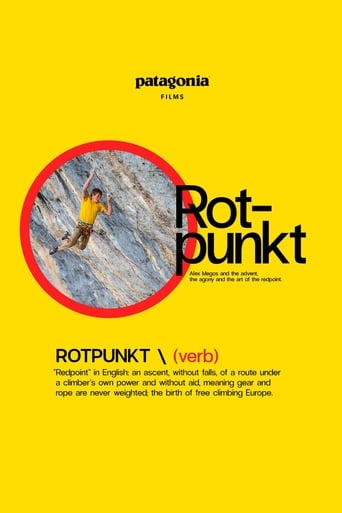
Rotpunkt documents the advent, the agony and the art of the redpoint through Alex Megos’s efforts to redefine the boundaries of the form. The film traces the redpoint—which transformed rock climbing from an engineering problem into a brilliant test of mental and physical strength—from its origins with a ragtag bunch of tights-wearing revolutionaries in rural Bavaria, to its golden era with Wolfgang Güllich, to its new ideal in the German phenom Megos as he battles to unlock new levels of human potential.

Two of the world’s most accomplished ski mountaineers, Christina Lustenberger and Guillaume Pierrel, have carved their names into history with bold first descents across the globe. Now, turning their sights on Mount Robson, the highest and most formidable peak in the Canadian Rockies, they retrace the steps of pioneering alpinists who came before them, pushing the line between past and present. Battling towering walls of ice, snow and rock, unpredictable weather, and the weight of a dream that has challenged generations, their journey becomes as much about resilience and legacy as it is about the pursuit of a descent few have ever dared to imagine.
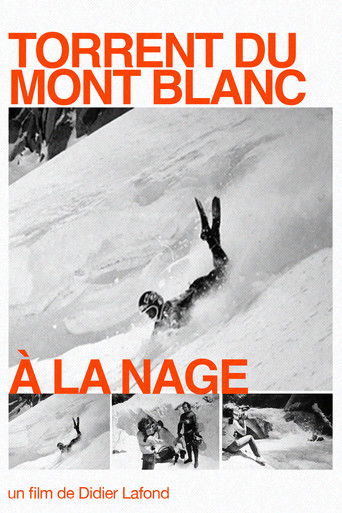
A documentary about André Payraud's descent of the Mont Blanc torrent by swimming down it. "I've always had a thirst for adventure. At 19, I was in a diving club and I loved Jacques Martin's show, 'Incroyable mais vrai' (Incredible but True). I dreamed of participating in this hit program." After careful consideration, André Payraud had the idea of the century, an idea that would attract media attention: to descend the Grands-Montets glacier on his stomach, wearing a full wetsuit (mask, snorkel, fins, and neoprene suit). A crazy idea that drew a flood of press coverage. The film, "Swimming Down the Mont Blanc Torrent," directed by Didier Lafond, was broadcast twice on France 2 and even won an award.

André Payraud, born in 1948 in Passy, Haute-Savoie, nicknamed "the swimmer of the impossible," is a major figure in French whitewater swimming, known by the nickname "Dédé the Carpet." He is renowned for his daring descents of large mountain rivers and for having helped popularize the sport from the 1980s onward. His achievements include swimming down the Mont Blanc torrent in 1980, the first in a long series of filmed feats: swimming Everest in 1982; the Ganges in 1985; the Colorado; Annapurna; the Jordan River—no river can stop Dédé in his quest for adventure. For his whitewater exploits, André Payraud was made a Knight of the National Order of Merit and received the Silver Medal for Youth and Sports. Alongside his exploits around the world, Dédé set up the first rafting company in Haute-Savoie in 1982, in Domancy, Session Raft, Aventures Payraud mont-Blanc..

André Payraud, a pioneer and specialist in torrents and raging rivers, is nicknamed "the highest swimmer in the world." In October 1999, after the great monsoon, he swam down the Khumbu-Khola, a torrent that originates at 4,807 meters at the foot of Mount Everest, over five days. Furthermore, André Payraud wanted to connect with the people and culture of Nepal.

Adventure in Bleau is a documentary about bouldering that takes place in Fontainebleau. Directed by Jean-Paul Janssen in 1980 and produced by Antenne 2, it is part of the series "Les Carnets de l'Aventure" and broadcast on the same television channel. It features different generations of the finest free climbing artists of the time: Patrick Edlinger, Catherine Destivelle, Lucien Bérardini, Jean Pierre Bouvier, and Bertrand Roche 'Zébulon'.

The story of the ascent of the Aiguille de la République by mountaineers Jacques Fromentin and Michel Bastien. The Aiguille de la République, in the Mont-Blanc massif, culminates at an altitude of 3,305 meters among the Aiguilles de Chamonix group of summits. In the Fontainebleau forest, children learn mountaineering techniques on the bouldering climbing site. In 1954, rock climbing was also practiced in the Chamonix valley. The Montenvers train crosses the viaduct taking tourists or athletes to the Mer de Glace viewpoint. The two climbers take an approach step and reach the Envers des Aiguilles refuge. They then climb this steep and smooth wall, progressing along the ridge. On the platform, a rope throw allows them to climb up and sit at the top to dominate the panorama. Then the return: abseiling from the summit block.

The word Pyreneism was invented by the writer Henri Beraldi at the end of the 19th century. Its definition did not come down to a simple practice of mountaineering in the Pyrenees. To be recognized as a Pyrenean, it was necessary to “ascend, write and feel”. An approach to the mountains, according to him, necessarily accompanied by an artistic or intellectual activity. This documentary looks back at the Pyrenees who have left their mark on history, before interviewing contemporary mountain dwellers who, through their mountain practice, consider themselves, or not, Pyreneanists. What prompted Beraldi to coin this term? Does it result from a Pyrenean complex facing the Alps? Chauvinism or a demand for identity? And today, does this word still have meaning? Beyond the reflection on the subject, this film is a wonderful tribute to the massif.

Three years after the 1959 expedition, abandoned 350m from the summit, Lionel Terray leads a new assault on Jannu, one of the most demanding peaks in the Himalayas. At the base camp, equipment and food rations are prepared. The conditions are optimal and the ascent can begin. The camera follows the progress of the mountaineers and Sherpas as closely as possible, from one high-altitude camp to another: installing fixed ropes, progressing over crevasses, in the middle of frozen towers, vertically down immense ice falls or along the edge of sharp ridges. From 7000m, oxygen bottles become essential, as the difficulty of the climb prevents acclimatization. The expedition is a total success: the majority of its members reach the 7710m summit.
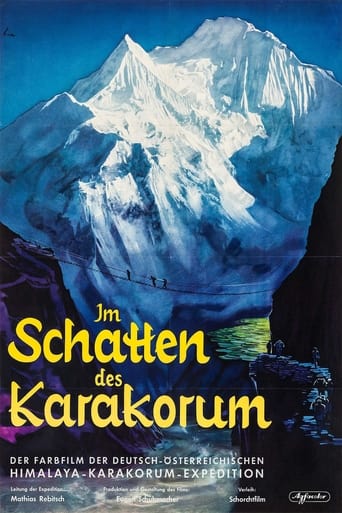
In 1954, a German-Austrian expedition led by Mathias Rebitsch set off for the difficult-to-access Karakoram Mountains, geographically north of the Himalayas. They come across the Hunza, a people who live in the valley of the same name and believe they are descended from the soldiers of Alexander the Great. The documentary conveys impressions of the poor life of the Hunza people, the harvest, a court hearing, festivals and the children's everyday school life. Finally, the expedition sets off again and sets up its main camp on the moraine ridge of a glacier, where they measure the glacier and the earth's magnetic field. Finally, some men from the research community set off for a sub-peak of Batura.
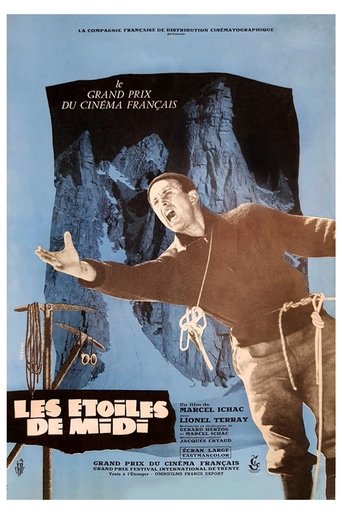
Les Etoiles de Midi is an engaging docudrama about some of the more spectacular exploits of French mountain climbers over the last several decades. In one re-enacted story, there is a wartime escape through the mountains, and in another, a daring rescue of a pair of climbers who had been missing. The actors themselves are adept at the sport of climbing, and they give the scenes an immediacy and real daring that brings the stories alive. A combination of their acrobatics and skill and the outstanding episodes in the history of French climbing creates a winning 78 minutes.

The climbing couple Heinz Mariacher and Luisa Iovane abandon their usual winter training spot to go in search of places more conducive to free climbing in Algeria in the Sahara desert, more precisely in the Hoggar massif, which saw pass the cream of world climbing Lionel Terray, Roger Frison-Roche, Lucien Bérardini, Michel Vaucher, Pierre Mazeaud, Guido Monzino, Patrick Edlinger, Patrick Berhault and many others. Their objective, to climb the east face of Garet El Djenoun, 500 m high, failed because the wall was too smooth and the cracks unstable. The journey continues in the Hoggar massif towards other peaks, where they find the climbing conditions they were hoping for. An overhang in the face of Tizouyag Nord will prove to be a major challenge for Heinz Mariacher.

The north face of Chamlang, nearly 2,000 meters high and culminating at 7,200 meters, is one of the last great unclimbed faces in the Himalayas. Benjamin Védrines, who had scouted the face during a previous ascent of Chamlang in 2019 with Nicolas Jean via the northeast couloir, decided to tackle it with Charles Dubouloz, a very strong mountaineer but a novice at high altitude. Snow slides, suspended bivouacs, pitches of mixed climbing and vertical ice… The gamble paid off for the Frenchmen, who opened a new route, "À l'ombre du mensonge" (1,600m, 5+, m5+, 90°), after four intense days on the north face—a magnificent first ascent of a coveted summit, as a duo, in alpine style.

The best films of the European Outdoor Film Tour 11/12.
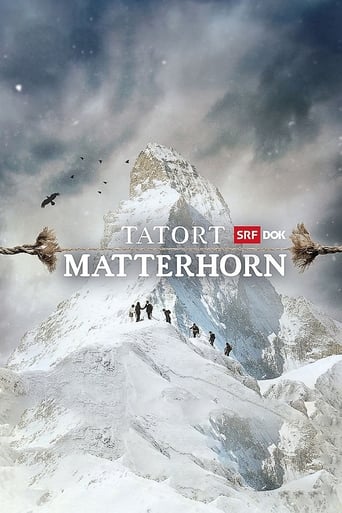
The first ascent of the Matterhorn was made on July 14, 1865 by Edward Whymper, Francis Douglas, Charles Hudson, Douglas Hadow, Michel Croz and two guides from Zermatt, Peter Taugwalder father and son. Douglas, Hudson, Hadow and Croz are killed on the descent after Hadow slips and drags the other three men down the north face. Whymper and the two Taugwalders, who survive, are later accused of having cut the rope that connected them to the rest of the group so as not to be dragged into the fall, but the ensuing investigation finds no evidence of their guilt and they are acquitted. The Matterhorn is the last great peak in the Alps to be conquered and its ascent marks the end of the golden age of mountaineering. One hundred and fifty years later, a team undertakes the same expedition in order to unravel the mystery.
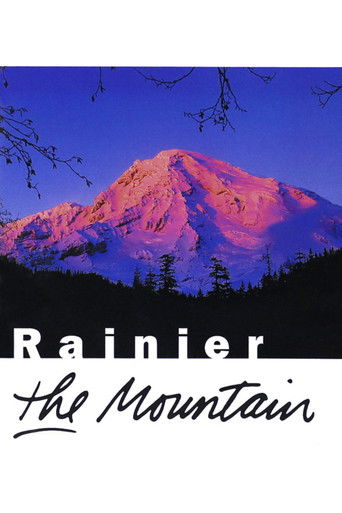
In this retrospective tribute, acclaimed filmmaker Jean Walkinshaw hails the 100th anniversary of Mount Rainier National Park in Washington by talking to those who know it best: the scientists, naturalists, mountain climbers and artists whose lives have been touched by the peak's far-reaching shadow. The result is a harmonious blend of archival material and high-definition footage celebrating an icon of the Pacific Northwest.
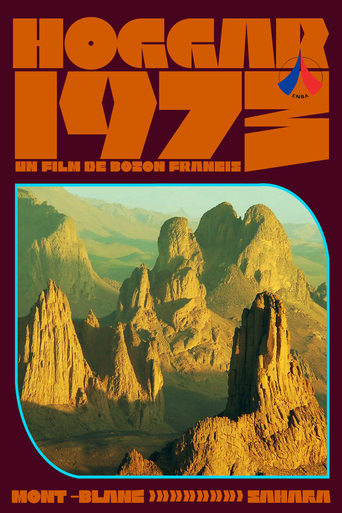
In 1973, 6 guides from the National Ski and Mountaineering School (ENSA), including Charles Daubas and Walter Cecchinel, left by truck from Chamonix to Tamanrasset in the desert in Algeria with the aim of climbing some peaks of the Atakor massif including Adaouda and Tizouyag where they do the first of "La Voie de l'ENSA".

In 1975, Raymond Renaud, Yves Pollet-Villard, Maurice Gicquel, Maurice Cretton, Jean Coudray, Yvon Masino, Walter Cecchinel, all teacher guides at ENSA in Chamonix, with the help of the Indian Mountaineering Foundation, set out to cross the 2 peaks of the highest mountain in India. After 43 hours in a truck, 10 days of slow and difficult approach walking, helped by goats for the portage due to lack of sherpas, the base camp is set up on the Nanda Devi glacier. Two groups share the two eastern and western slopes, 3 kilometers separate them: the goal being to meet between the two summits by the ridge. But on the big day, with the monsoon, bad weather arrives with wind and snow, we will have to give up. Like the French expedition of 1951 which lost two mountaineers, Roger Duplat and Gilbert Vigne, to whom Paul Gendre and Louis Dubosc pay tribute.

A documentary about the Liechtenstein football team, one of the Europe's ultimate underdogs.