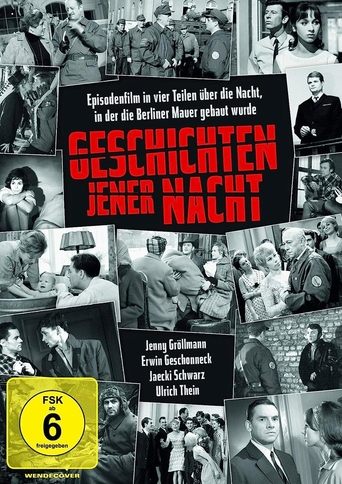
Geschichten jener Nacht
1967-06-07 · 109 min · ★ 6.7
Four directors - four styles - four episodes, all relating the events of a single night which has entered the history books: August 12-13, 1961. There are thousands of complex narratives connected with the frontier drawn through the middle of Berlin, and each episode relates the story of a difficult decision made on that night...
Trailers are previews, not full movies.
No authorized playback source configured. Use the legal watch options below.
Production details
- Directors
- Karl-Heinz Carpentier, Gerhard Klein, Ulrich Thein, Frank Vogel
- Production companies
- DEFA-Studio für Spielfilme
- Countries
- Germany, East Germany
- Status
- Released
Top Cast
 Hans Hardt-HardtloffCommander
 Peter ReusseYoung Karl
 Dieter MannRobert Wagner
 Jenny GröllmannJutta Huth
 Ulrich TheinMaterna
 Angelika WallerHanna
 Erwin GeschonneckWilli Lenz
 Jaecki SchwarzWilfried Zank
 Peter Sindermann
 Gerry Wolff
 Raimund Schelcher
 Werner Lierck
 Horst Schulze
 Inge Keller
 Eberhard Esche
 Regina Beyer
 Norbert Speer
Title information and images are supplied by TMDb. Explore our discovery guide for advice on comparing metadata and legal viewing options.
Where to watch
Availability provided by JustWatch via TMDb. Offers can change. Provider links are listed on TMDb; full playback requires a separately authorized source.
Availability not listed for this country.
Seasons & episodes
Recommendations
Inspired by true events, Olympic swimmer Harry Melchior defects from East Germany in the 1960s and hatches a daring plot to help his sister and others flee East Berlin through a 145-yard underground tunnel.
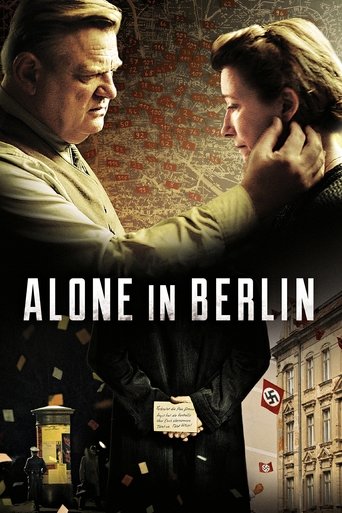
Berlin in June of 1940. While Nazi propaganda celebrates the regime’s victory over France, a kitchen-cum-living room in Prenzlauer Berg is filled with grief. Anna and Otto Quangel’s son has been killed at the front. This working class couple had long believed in the ‘Führer’ and followed him willingly, but now they realise that his promises are nothing but lies and deceit. They begin writing postcards as a form of resistance and in a bid to raise awareness: Stop the war machine! Kill Hitler! Putting their lives at risk, they distribute these cards in the entrances of tenement buildings and in stairwells. But the SS and the Gestapo are soon onto them, and even their neighbours pose a threat.
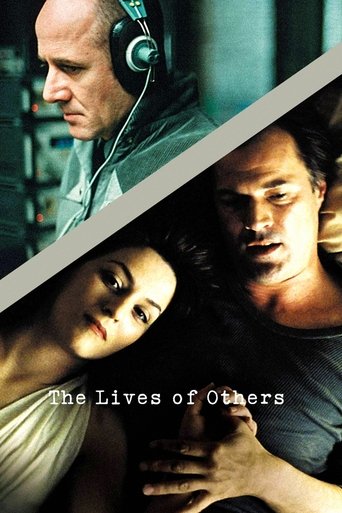
In 1984 East Berlin, dedicated Stasi officer Gerd Wiesler begins spying on a famous playwright and his actress-lover Christa-Maria. Wiesler becomes unexpectedly sympathetic to the couple, and faces conflicting loyalties when his superior takes a liking to Christa-Maria.
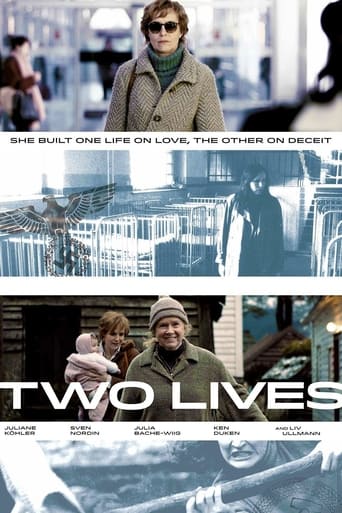
Europe 1990, the Berlin wall has just crumbled: Katrine, raised in East Germany, but now living in Norway for the last 20 years, is a “war child”; the result of a love relationship between a Norwegian woman and a German occupation soldier during World War II. She enjoys a happy family life with her mother, her husband, daughter and granddaughter. But when a lawyer asks her and her mother to witness in a trial against the Norwegian state on behalf of the war children, she resists. Gradually, a web of concealments and secrets is unveiled, until Katrine is finally stripped of everything, and her loved ones are forced to take a stand: What carries more weight, the life they have lived together, or the lie it is based on?
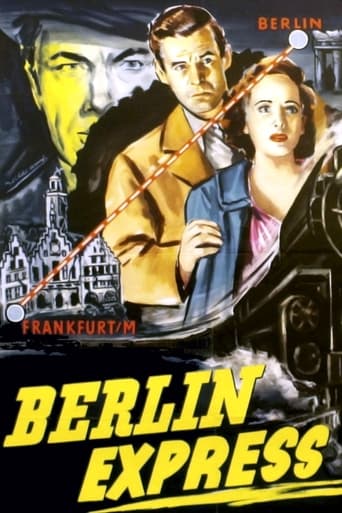
In post-war Europe, a diverse group of passengers aboard a U.S. Army train to bombed-out Frankfurt becomes involved in a Nazi assassination plot.

The film follows Kaspar Hauser, who lived the first seventeen years of his life chained in a tiny cellar with only a toy horse to occupy his time, devoid of all human contact except for a man who wears a black overcoat and top hat who feeds him.
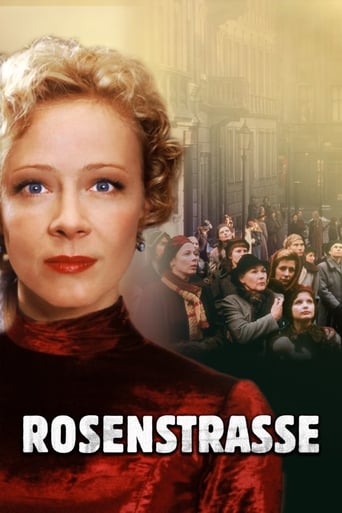
When Ruth's husband dies in New York, in 2000, she imposes strict Jewish mourning, which puzzles her children. A stranger comes to the house - Ruth's cousin - with a picture of Ruth, age 8, in Berlin, with a woman the cousin says helped Ruth escape. Hannah, Ruth's daughter engaged to a gentile, goes to Berlin to find the woman, Lena Fisher, now 90. Posing as a journalist investigating intermarriage, Hannah interviews Lena who tells the story of a week in 1943 when the Jewish husbands of Aryan women were detained in a building on Rosenstrasse. The women gather daily for word of their husbands. The film goes back and forth to tell Ruth and Lena's story. How will it affect Hannah?
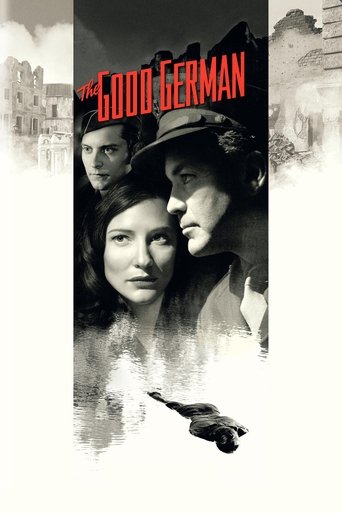
An American journalist arrives in Berlin just after the end of World War Two. He becomes involved in a murder mystery surrounding a dead GI who washes up at a lakeside mansion during the Potsdam negotiations between the Allied powers. Soon his investigation connects with his search for his married pre-war German lover.

Andreas Dresen's adaptation of Clemens Meyer's novel about a group of East German friends right after the fall of the Wall.
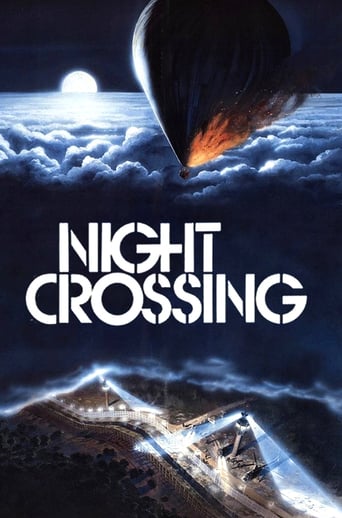
Two men want to escape from East Germany (under Communist rule) but they will only go if they can take their families with them. Based on a true story.

Two families attempt a daredevil plan to escape the GDR with a homemade hot air balloon, but it crashes just before the border. The Stasi finds traces of this attempt to escape and immediately starts investigations, while the two families are forced to build a new escape balloon. With each passing day the Stasi is closer on their heels – a nerve-wracking race against time begins.

Sunny is the singer of a band trying to establish itself in the East Berlin music scene. They play regular gigs in small towns, but Sunny feels out of touch with the audience and with her life as a whole. She begins a relationship with Ralph, an amateur saxophonist and philosophy student, who writes her a very personal song—but his obsession with death and unfaithful lifestyle are not for her. After getting into a quarrel with a band member who harasses her and telling off a show host, she is thrown out of the band. Abandoned, she struggles to regain control over her life.
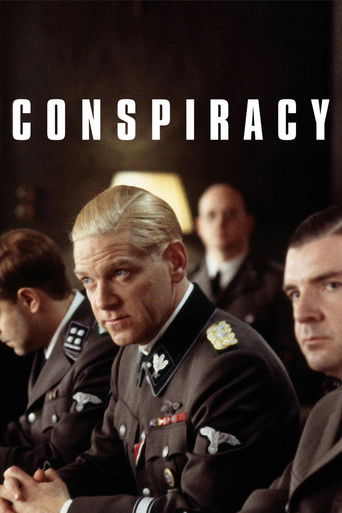
At the Wannsee Conference on January 20, 1942, senior Nazi officials meet to determine the manner in which the so-called "Final Solution to the Jewish Question" can be best implemented.

In 2015, thirty year old refugee Francis, the sole survivor of a boat that illegally crossed the Mediterranean, is drawn into Berlin's seedy underbelly.

It's 1989 in East Berlin: Suzie is kicked out of school shortly before she graduates from high school and has to defend herself as a worker in the cable factory. However, a randomly taken photo leads her to the fashion world of the GDR. The editor-in-chief Elsa Wilbrodt put her on the cover of Sibylle, the fashion magazine of the GDR. In the Berlin underground scene she made the acquaintance of the gay fashion designer Rudi and the photographer Coyote. Suzie must decide if she's brave enough to leave the old strands behind forever.
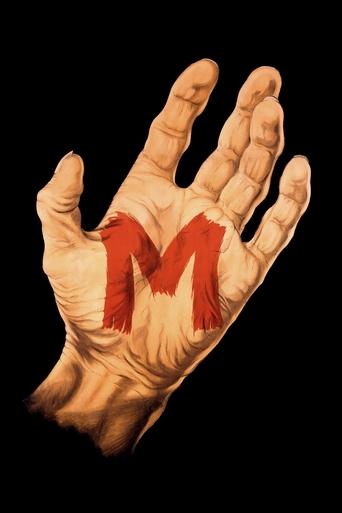
In this classic German thriller, Hans Beckert, a serial killer who preys on children, becomes the focus of a massive Berlin police manhunt. Beckert's heinous crimes are so repellant and disruptive to city life that he is even targeted by others in the seedy underworld network. With both cops and criminals in pursuit, the murderer soon realizes that people are on his trail, sending him into a tense, panicked attempt to escape justice.
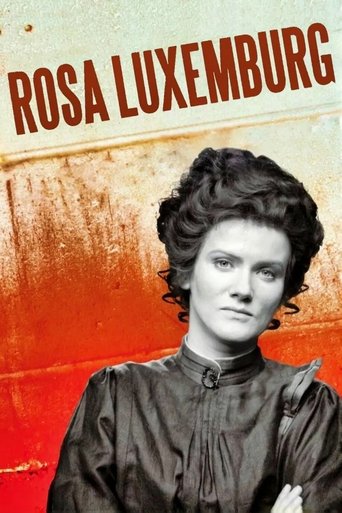
Polish socialist and Marxist Rosa Luxemburg works tirelessly in the service of revolution in early 20th century Poland and Germany. While Luxemburg campaigns for her beliefs, she is repeatedly imprisoned as she forms the Spartacist League offering a new vision for Germany.

A teen girl in 1970s Berlin becomes addicted to heroin. Everything in her life slowly begins to distort and disappear as she befriends a small crew of junkies and falls in love with a drug-abusing male prostitute.
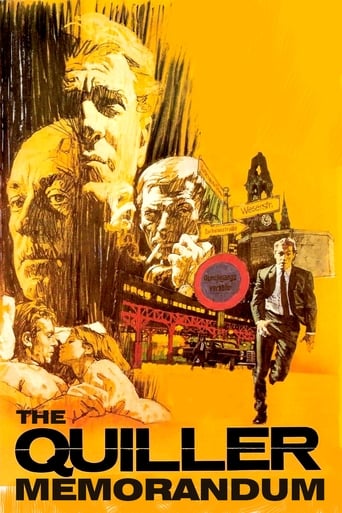
After two British Secret Intelligence Service agents are murdered at the hands of a cryptic neo-Nazi group known as Phoenix, the suave agent Quiller is sent to Berlin to investigate.

Lola receives a phone call from her boyfriend Manni. He lost 100,000 DM in a subway train that belongs to a very bad guy. She has 20 minutes to raise this amount and meet Manni. Otherwise, he will rob a store to get the money. Three different alternatives may happen depending on some minor event along Lola's run.
Similar titles

The true story of Charlotte Salomon, a young German-Jewish painter who comes of age in Berlin on the eve of the Second World War. Fiercely imaginative and deeply gifted, she dreams of becoming an artist. Her first love applauds her talent, which emboldens her resolve. When anti-Semitic policies inspire violent mobs, she escapes to the safety of the South of France. There she begins to paint again, and finds new love. But her work is interrupted, this time by a family tragedy that reveals an even darker secret. Believing that only an extraordinary act will save her, she embarks on the monumental adventure of painting her life story.

Director helmut Dietls and Patric Susskinds illustrate a legendary story of two lovers who cant keep themselves away from death.
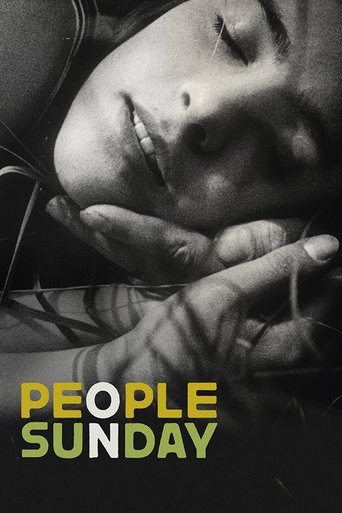
A semi-documentary experimental 1930 German silent film created by amateurs with a small budget. With authentic scenes of the metropolis city of Berlin, it's the first film from the later famous screenwriters/directors Billy Wilder and Fred Zinnemann.
Lola receives a phone call from her boyfriend Manni. He lost 100,000 DM in a subway train that belongs to a very bad guy. She has 20 minutes to raise this amount and meet Manni. Otherwise, he will rob a store to get the money. Three different alternatives may happen depending on some minor event along Lola's run.
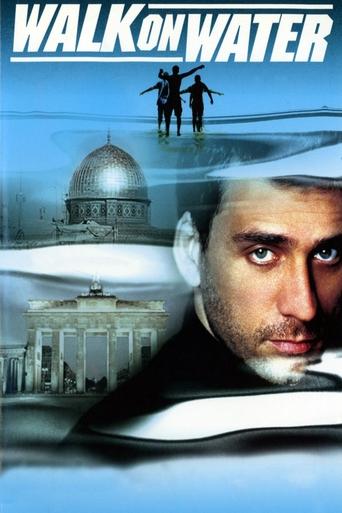
Eyal, an Israeli Mossad agent, is given the mission to track down and kill the very old Alfred Himmelman, an ex-Nazi officer, who might still be alive. Pretending to be a tourist guide, he befriends his grandson Axel, in Israel to visit his sister Pia. The two men set out on a tour of the country, during which Axel challenges Eyal's values.
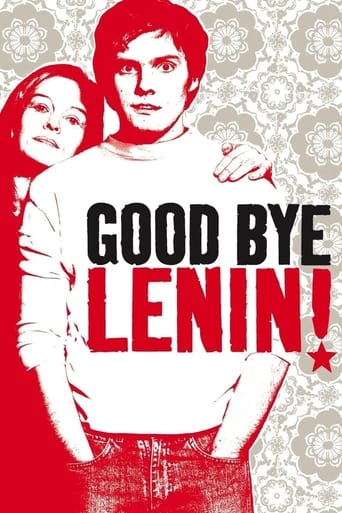
Alex Kerner's mother was in a coma while the Berlin wall fell. When she wakes up he must try to keep her from learning what happened (as she was an avid communist supporter) to avoid shocking her which could lead to another heart attack.

An intimate study of two women friends who come to each other because of troubles with everyday life and with men and thus try to enjoy a life based on their ideas.

A group of angels look longingly upon the life of humans. Berlin now is a very different place: unified in name but overrun with crime, corruption, and—in what turns out to be a key theme here—Americans.

Flanders, a famous female author, travels in 1989 after the fall of the Berlin wall into the German capital. She is deeply depressed by the events because she saw the communist state as a very good thing that has now ended. In the joy of these days she finds no one to understand her, so she has to travel back to Munich. After meeting several people, known and unknown, it seems as if there will be no way to go.

August 13, 1961: The passengers on the interzonal train from Munich to East Berlin learn 3½ hours before crossing the border that the Wall is being built in Berlin. They have 3½ hours to make a life-changing decision: to get off the train or keep going.

Ingo Hasselbach, whose parents were Communist Party members in East Germany during his childhood, has lived at both ends of the political seesaw. The question of how people reach a change of heart is a profound one; Hasselbach describes the external forces that led to his founding Germany's first neo-Nazi political party and the internal ones that led him away from it five years later.
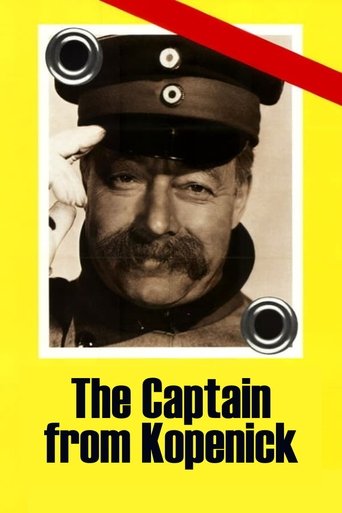
A young shoemaker is arrested for stealing a small amount of money, and is jailed for fifteen years. Upon his release, he wants to get a permit to get a job and start anew, but finds that without a job he can't get a permit, and without a permit he can't get a job. Ensnared in the absurd net of Prussian bureaucracy, he can't see any way out. That is, until he enters a thrift shop and spots a Prussian officer's uniform that fits him like a second skin...

Germany 1982: The country is divided into two parts. Nele, coming from West-Germany, travels to East-Germany where she meets Captain, singer of a band. They fall in love with each other, but the regime "takes care" of their relationship, meaning: They can not see each other again. Germany 1990: The country is reunited. Nele starts searching their lost love...
In this biopic, Marlene Dietrich leaves Berlin for Hollywood, where she establishes herself as an international star through various film roles.
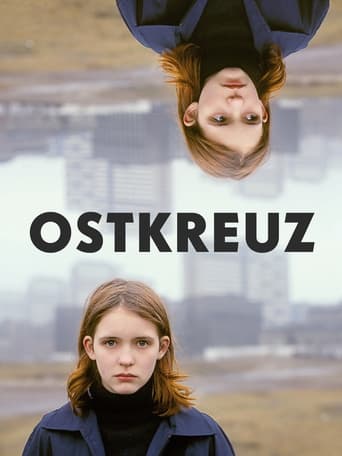
15-year-old Elfie literally and metaphorically inhabits a no-man’s-land between the two Germanies shortly after the fall of the Berlin Wall. The film deploys a neorealist aesthetic to reinforce the difficulties confronting the girl, and by inference, Germany.

Inside the Kit Kat Club of 1931 Berlin, starry-eyed singer Sally Bowles and an impish emcee sound the clarion call to decadent fun, while outside a certain political party grows into a brutal force.

Brothers Franz and Erich Sass grew up poor. Together with his brother Franz, Erich specializes in cracking safes. Erich spends the money with his hands full. In the meantime, the police have also become aware of the brothers. Pursued by Detective Fabich, they get deeper and deeper into criminal circles. A man called Adolf demands that the Sass brothers work for him. He blackmails them and has their father beaten to death. The brothers then agree to work together. However, Adolf plans to have them killed after the coup. The two brothers manage to escape; they are also able to flee from the police, who catch them while they are still breaking into the bank.


A troubled rock star descends into madness in the midst of his physical and social isolation from everyone.

David, a recently fired scrapyard worker and Marie, a prostitute, both about 20 years old, meet on New Year's Eve in Berlin and decide to run away together. As David's arm is plastered from an accident Marie continues to prostitute herself to finance their restless journey through the Ruhr area. Their love and their will to survive guide them though all problems.