Picture Perfect Pyramid
2013-11-21 · 5 min · ★ 9.0
Picture Perfect Pyramid is a 16mm film which in counter-clockwise spirals, circles a large pyramid structure that was built on the outskirts of Vienna in 1983. Using twenty-four positions the film was shot over the course of an entire day, with one shot per hour. The camera moves continuously and almost imperceptibly, covering the surrounding area while the landmark remains centered in the frame. Today the building, a former indoor swimming pool, serves as a venue for various events; from right wing party gatherings to an erotic fair that presents a live show with lights visible even from the outside of the pyramid. In filming the building, a structural approach focused on geometry was used in order to achieve less subjectively motivated images.
Trailers are previews, not full movies.
No authorized playback source configured. Use the legal watch options below.
Production details
- Directors
- Johann Lurf
- Production companies
- Sixpack Film
- Countries
- Austria
- Status
- Released
Top Cast
Cast unavailable.
Title information and images are supplied by TMDb. Explore our discovery guide for advice on comparing metadata and legal viewing options.
Where to watch
Availability provided by JustWatch via TMDb. Offers can change. Provider links are listed on TMDb; full playback requires a separately authorized source.
Availability not listed for this country.
Seasons & episodes
Recommendations
Filmed over nearly five years in twenty-five countries on five continents, and shot on seventy-millimetre film, Samsara transports us to the varied worlds of sacred grounds, disaster zones, industrial complexes, and natural wonders.
In Manhattan's Central Park, a film crew directed by William Greaves is shooting a screen test with various pairs of actors. It's a confrontation between a couple: he demands to know what's wrong, she challenges his sexual orientation. Cameras shoot the exchange, and another camera records Greaves and his crew. Sometimes we watch the crew discussing this scene, its language, and the process of making a movie. Is there such a thing as natural language? Are all things related to sex? The camera records distractions - a woman rides horseback past them; a garrulous homeless vet who sleeps in the park chats them up. What's the nature of making a movie?
Nothing is as it seems when a woman experiencing misgivings about her new boyfriend joins him on a road trip to meet his parents at their remote farm.

Cecilia is a waitress in New Jersey, living a dreary life during the Great Depression. Her only escape from her mundane reality is the movie theatre. After losing her job, Cecilia goes to see 'The Purple Rose of Cairo' in hopes of raising her spirits, where she watches dashing archaeologist Tom Baxter time and again.

A boy haunted by visions of a parallel world aids its disillusioned guardian in preventing the destruction of the nexus of universes known as the Dark Tower.
Three friends discover a mysterious machine that takes pictures 24 hours into the future and conspire to use it for personal gain, until disturbing and dangerous images begin to develop.
A nameless drifter navigates a barren landscape punctuated by satellite dishes, radio towers and droning airplanes. Stopping periodically in anonymous hotel rooms, she makes attempts to connect to an unidentified second party.
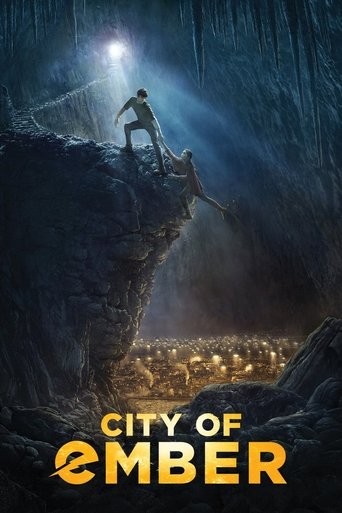
For generations, the people of the City of Ember have flourished in an amazing world of glittering lights. But Ember's once powerful generator is failing and the great lamps that illuminate the city are starting to flicker. Now, two teenagers, in a race against time, must search Ember for clues that will unlock the ancient mystery of the city's existence, before the the lights go out forever.
Experimental short uses Ray Charles' “What'd I Say” as accompaniment to constantly shifting collage of female nude, cartoons, and newsreels of atomic bomb explosions.
As his life comes to its end, famous Hollywood director Orson Welles puts it all on the line at the chance for renewed success with the film The Other Side of the Wind.
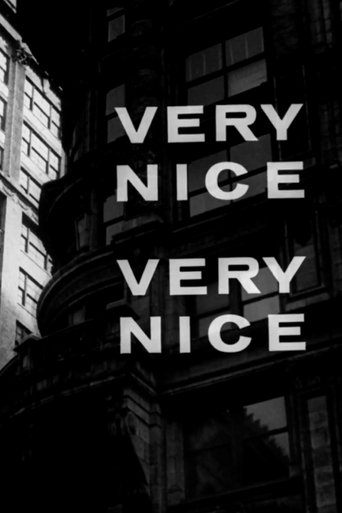
Arthur Lipsett's first film is an avant-garde blend of photography and sound. It looks behind the business-as-usual face we put on life and shows anxieties we want to forget. It is made of dozens of pictures that seem familiar, with fragments of speech heard in passing and, between times, a voice saying, "Very nice, very nice." The film was nominated for an Oscar for Best Live Action Short Film.
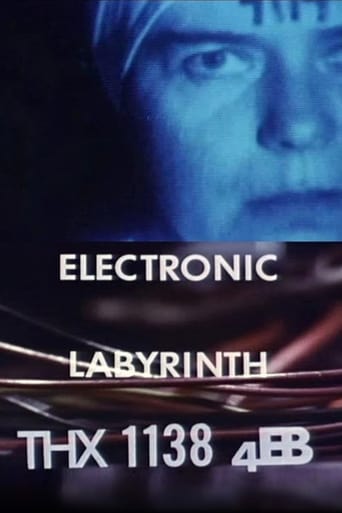
In an underground city in a dystopian future, the protagonist, whose name is "THX 1138 4EB", is shown running through passageways and enclosed spaces. It is soon discovered that THX is escaping his community. The government uses computers and cameras to track down THX and attempt to stop him; however, they fail. He escapes by breaking through a door and runs off into the sunset. The government sends their condolences to YYO 7117, THX's mate, claiming that THX has destroyed himself. Electronic Labyrinth: THX-1138 4EB is a 1967 science fiction short film written and directed by George Lucas while he attended the University of Southern California's film school.
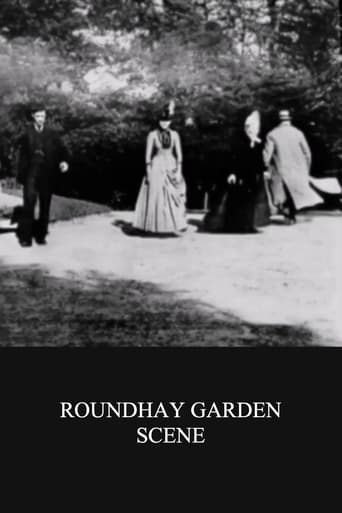
The earliest surviving motion-picture film, and believed to be one of the very first moving images ever created, was shot by Louis Aimé Augustin Le Prince using the LPCCP Type-1 MkII single-lens camera. It was taken on paper-based photographic film in the garden of Oakwood Grange, the Whitley family house in Roundhay, Leeds, West Riding of Yorkshire (UK), on 14 October 1888. The film shows Adolphe Le Prince (Le Prince’s son), Mrs. Sarah Whitley (Le Prince’s mother-in-law), Joseph Whitley, and Miss Harriet Hartley walking around in circles, laughing to themselves, and staying within the area framed by the camera. Roundhay Garden Scene is often associated with a recording speed of around 12 frames per second and runs for about 2 to 3 seconds.

A computer hacker's goal to discover the reason for human existence continually finds his work interrupted thanks to the Management; this time, they send a teenager and lusty love interest to distract him.
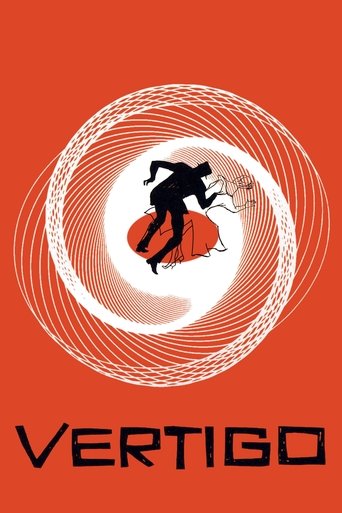
A retired San Francisco detective suffering from acrophobia investigates the strange activities of an old friend's wife, all the while becoming dangerously obsessed with her.

Paolo, an Italian tour bus driver living in Paris, has just summoned up the courage to propose marriage to his German girlfriend Greta. However, a chance encounter with a French woman on a bicycle the very next day turns Paolo's life upside down.

With a torrid past that haunts him, a movie theatre owner is hired to search for the only existing print of a film so notorious that its single screening caused the viewers to become homicidally insane.

The film goes behind the scenes of the 1999 sci-fi movie The Matrix.

Megan Quinn, an aspiring architect, faces multiple tasks – developing her hometown lake into a commercialized entertainment center, forcing Mrs. Frances Figgins, her childhood mentor, out of her family’s home, and helping out at her family café after her father breaks his leg, all while also dealing with the return of her childhood sweetheart, Joe, who broke her heart.
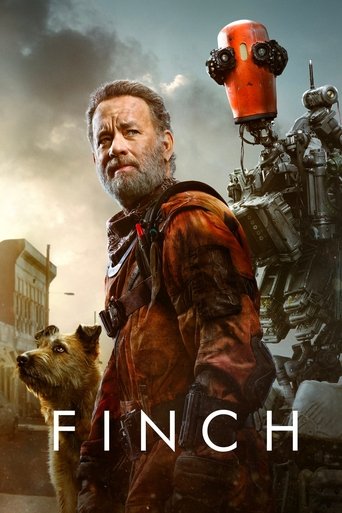
On a post-apocalyptic Earth, a robot, built to protect the life of his dying creator's beloved dog, learns about life, love, friendship, and what it means to be human.
Similar titles

Hallo Mabuse captivates through its reduction, in which a conspiratorial narrative takes place, but even more so, the images themselves appear ambiguous, obscure, untrustworthy. A nod of the head, which seems treacherous in its mechanical repetition, meets the profile of a bearded man who does not appear to react at all in a suggested counter shot. The slight flickering of the image further intensifies the impression of an illicit agreement, of witnessing a crooked handshake. The ringing of the unseen telephone and the constant ticking of a clock lend the events a limited temporality. Something is running out, and in doing so, is also already reaching its end, a ghostly final act, which is anticipated by an explosion and breaks off with the sound of a falling guillotine.
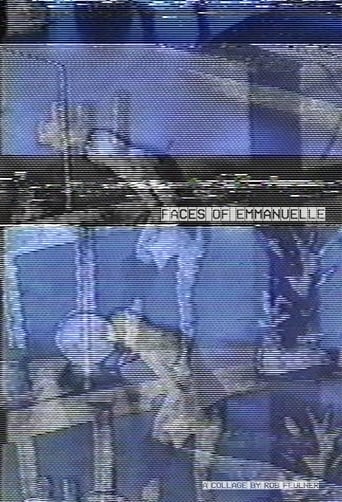
An exploration of the VHS medium and the subterranean trash which thrived in it. Using source material from Emmanuelle 6, this DVD-R/VHS further blurs the line between low and high art. Beautiful cinematography coupled with smut. Strategic pauses and tracking errors guides the viewer to discover the true depth and sadness of the seemingly one-dimensional Emmanuelle. Soaring arpeggio synths and pulsating rhythms by Rob Feulner. The utter destruction of arguably the most beautiful film never seen, lost and forgotten on the shelf of your local video store, behind the cowboy doors or dangling beads. Written off as pornography by most, written off as too soft by creeps. This is the plight of Emmanuelle.

The winner of the Miss World Virginity contest marries, escapes from her masochistic husband and ends up involved in a world of debauchery.
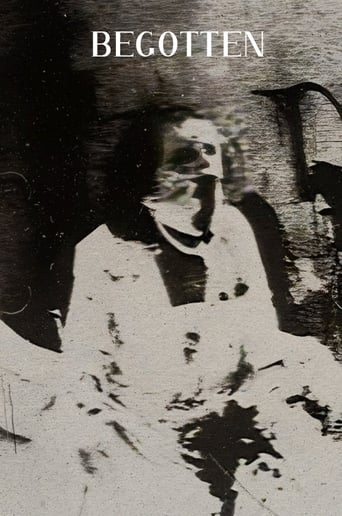
Begotten is the creation myth brought to life, the story of no less than the violent death of God and the (re)birth of nature on a barren earth.

In the small town of Kansk, the Krasnoyarsk Territory many years in a row there is an international festival of short experimental films, which has a strong reputation throughout the world. "Russia as a dream" is an international project, shot by a team of authors and united directors, artists, poets. Each of the guests of the 14th International Kan Video Festival held in 2015 was invited to participate in the creation of a general film, the theme of which was the relationship of man and landscape, civilization and nature, reality and sleep.
An interstellar teleportation device, found in Egypt, leads to a planet with humans resembling ancient Egyptians who worship the god Ra.

In this story set in near future, a group of young rebels, hippies and 1968 protesters want to cede and make an independent Island from the Mainland. A journalist who came to the Island to make a report about political summit that takes place there gets involved in the clash between young rebels and establishment.
An experimental documentary about the intertwining of bodies and lives in a cattle ranch in Les Avins, Belgium, with cattle of the breed Blanc Bleu Belge, known for its fascinating musculature.

A young man goes through his everyday routine until he realizes that he is completely alone.

An unknown future. A boy confesses to the murder of another in an all-boy juvenile detention facility. More an exercise in style than storytelling, the story follows two detectives trying to uncover the case. Homosexual tension and explosive violence drives the story which delivers some weird and fascinating visuals.

This fantastical movie inspired by the music of Michael Jackson features imaginative interpretations of hit tracks from the iconic 1987 album “Bad”.
A look at the various modes of transportation made for the Expo '86 World Fair in Vancouver, Canada.
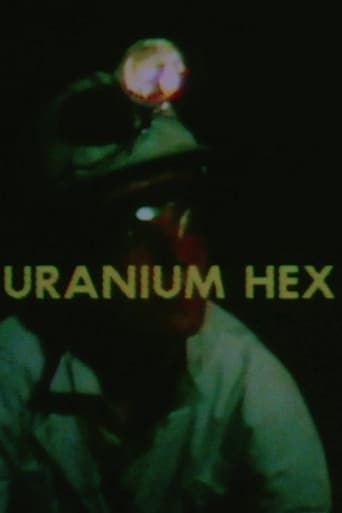
A memory-using location film of a stay with a uranium mining community. Using a kaleidoscopic array of experimental techniques, this film explores uranium mining in Canada and its destructive effects on both the environment and the women working in the mines. A plethora of images ranging from the women at work to spine-chilling representations of cancerous bodies are accompanied by unnerving industrial sounds and straightforward information from some of the women.
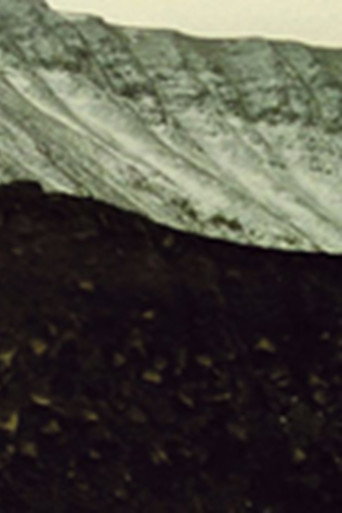
"Adrift" is shot on the arctic island of Spitzbergen and in Norway. It combines time-lapse photography with stop-motion animation of the landscape. Through camera-angles and framing the film gradually dislocates the viewer from a stable base where one loses the sense of scale and grounding.
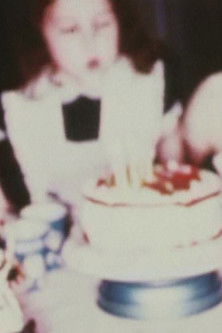
"Like a Dream That Vanishes" continues Sternberg’s work in film both thematically and formally: the ephemerality of life echoed in the temporal nature of film, as the stuff of life echoed on the energy, life-force in rhythmic light pulses (Your life is like a candle burning). Imageless emulsion is inter-cut with brief shots of natural elements and mise-en-scene of the stages of human life: a little boy runs and falls; teens hang out together at night smoking; sun shines through tree branches; men pace, waiting; flashes of lightning; an elderly man speaks philosophically about miracles.
This film describes a psychological state "kin to moonstruck, its images emblems (not quite symbols) of suspension-of-self within consciousness and then that feeling of falling away from conscious thought. The film can only be said to describe or be emblematic of this state because I cannot imagine symbolizing or otherwise representing an equivalent of thoughtlessness itself. Thus the actors in the film, Jane Brakhage, Tom and Gloria Bartek, Williams Burroughs, Allen Ginsberg, Peter Olovsky and Phillip Whalen are figments of this 'Thought-Fallen Process', as are their images in the film to find themselves being photographed."
Author and activist Jane Jacobs talks about the problems and virtues of North American cities.