
National Geographic: Untold Stories of World War II
1998-01-01 · 53 min · ★ 7.5
Showcases 3 major events during World War 2 involving both the Europeans & Pacific conflicts. The Raids to destroy Nazi Germany's heavy water production based in Norway, plus the final desperate act to deny them what had already been stockpiled. The Japanese midget submarines role and participation in the attack on Pearl Harbor, December 7, 1941. What they achieved plus what was their ultimate fate. The attacks on United States warships in the Pacific late in World War 2 by the Japanese Kamikaze and Okha Squadrons. The Kamikaze attacks were in whatever planes the Japanese forces were able to gather. The Okha attacks were made in specially built flying bombs that were towed by larger and usually slower aircraft that were not suitable for fighter work.
Trailers are previews, not full movies.
No authorized playback source configured. Use the legal watch options below.
Production details
- Directors
- Stephen Burns
- Production companies
- National Geographic
- Countries
- United States of America
- Status
- Released
Top Cast
Title information and images are supplied by TMDb. Explore our discovery guide for advice on comparing metadata and legal viewing options.
Where to watch
Availability provided by JustWatch via TMDb. Offers can change. Provider links are listed on TMDb; full playback requires a separately authorized source.
Availability not listed for this country.
Seasons & episodes
Recommendations
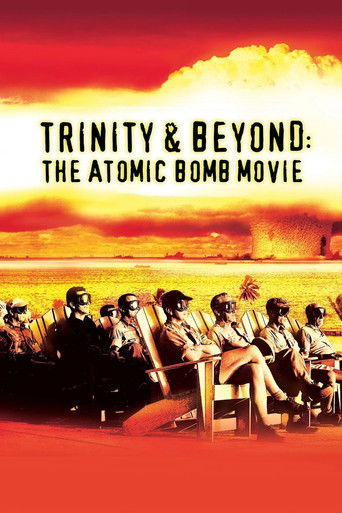
"Trinity and Beyond" is an unsettling yet visually fascinating documentary presenting the history of nuclear weapons development and testing between 1945-1963. Narrated by William Shatner and featuring an original score performed by the Moscow Symphony Orchestra, this award-winning documentary reveals previously unreleased and classified government footage from several countries.

Prelude to War was the first film of Frank Capra's Why We Fight propaganda film series, commissioned by the Pentagon and George C. Marshall. It was made to convince American troops of the necessity of combating the Axis Powers during World War II. This film examines the differences between democratic and fascist states.
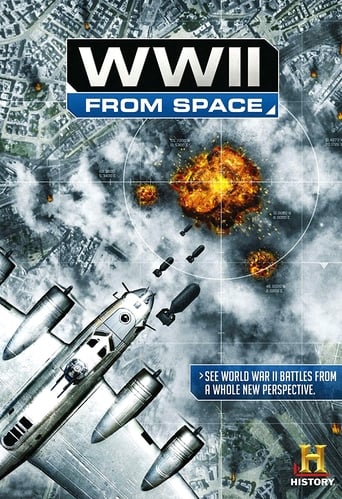
WWII from Space delivers World War II in a way you've never experienced it before. This HISTORY special uses an all-seeing CGI eye that offers a satellite view of the conflict, allowing you to experience it in a way that puts key events and tipping points in a global perspective. By re-creating groundbreaking moments that could never have been captured on camera, and by illustrating the importance of simultaneity and the hidden effects of crucial incidents, HISTORY presents the war's monumental moments in a never-before-seen context. And with new information brought to the forefront, you'll better understand how a nation ranked 19th in the world's militaries in 1939 emerged six years later as the planet's only atomic superpower.

This WW2 documentary centers on the crew of the American B-17 Flying Fortress Memphis Belle as it prepares to execute a strategic bombing raid on Nazi submarine pens in Wilhelmshaven, Germany.

A documentary highlighting the Soviet Union's legendary and enigmatic hockey training culture and world-dominating team through the eyes of the team's Captain Slava Fetisov, following his shift from hockey star and celebrated national hero to political enemy.

Marcel Ophuls' riveting film details the heinous legacy of the Gestapo head dubbed "The Butcher of Lyon." Responsible for over 4,000 deaths in occupied France during World War II, Barbie would escape—with U.S. help—to South America in 1951, where he lived until a global manhunt led to his 1983 arrest and subsequent trial.
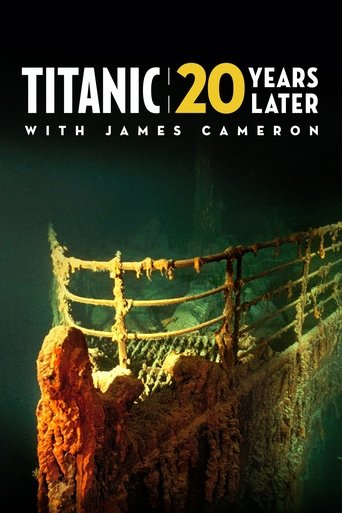
For the 20th anniversary of "Titanic," James Cameron reopens the file on the disaster.

Oliver Stone charts the history of the United States from the Second World War to the present.

The history of cinematic sound, told by legendary sound designers and visionary filmmakers.
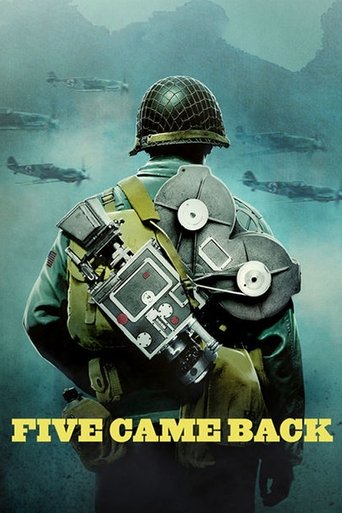
The extraordinary story of how Hollywood changed World War II – and how World War II changed Hollywood, through the interwoven experiences of five legendary filmmakers who went to war to serve their country and bring the truth to the American people: John Ford, William Wyler, John Huston, Frank Capra, and George Stevens. Based on Mark Harris’ best-selling book, “Five Came Back: A Story of Hollywood and the Second World War.”
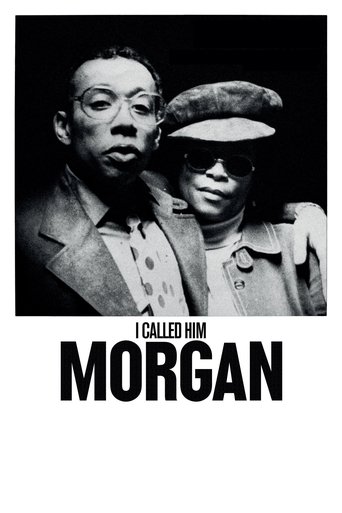
Part jazz history, part true-crime tale, Kasper Collin’s new documentary employs extensive archival footage and new interviews to tell the tragic story of the magnificently talented trumpeter Lee Morgan and his common-law wife Helen, who murdered him in a New York bar in 1972.
Five broken cameras – and each one has a powerful tale to tell. Embedded in the bullet-ridden remains of digital technology is the story of Emad Burnat, a farmer from the Palestinian village of Bil’in, which famously chose nonviolent resistance when the Israeli army encroached upon its land to make room for Jewish colonists. Emad buys his first camera in 2005 to document the birth of his fourth son, Gibreel. Over the course of the film, he becomes the peaceful archivist of an escalating struggle as olive trees are bulldozed, lives are lost, and a wall is built to segregate burgeoning Israeli settlements.
During the chaotic final weeks of the Vietnam War, the North Vietnamese Army closes in on Saigon as the panicked South Vietnamese people desperately attempt to escape. On the ground, American soldiers and diplomats confront a moral quandary: whether to obey White House orders to evacuate only U.S. citizens.
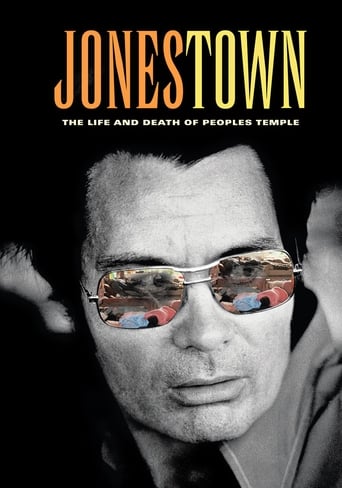
Featuring never-before-seen footage, this documentary delivers a startling new look at the Peoples Temple, headed by preacher Jim Jones who, in 1978, led more than 900 members to Guyana, where he orchestrated a mass suicide via tainted punch.

Michael Moore comes home to the issue he's been examining throughout his career: the disastrous impact of corporate dominance on the everyday lives of Americans (and by default, the rest of the world).

An investigative and powerfully emotional documentary about the epidemic of rape of soldiers within the US military, the institutions that perpetuate and cover up its existence, and its profound personal and social consequences.
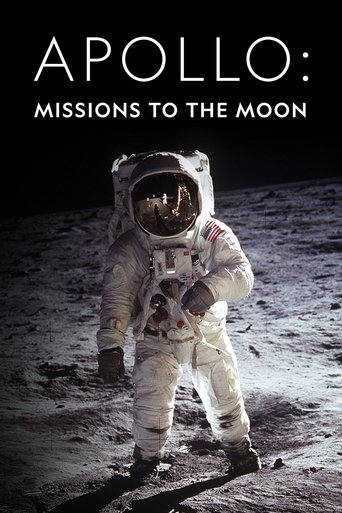
National Geographic's riveting effort recounts all 12 crewed missions using only archival footage, photos and audio.
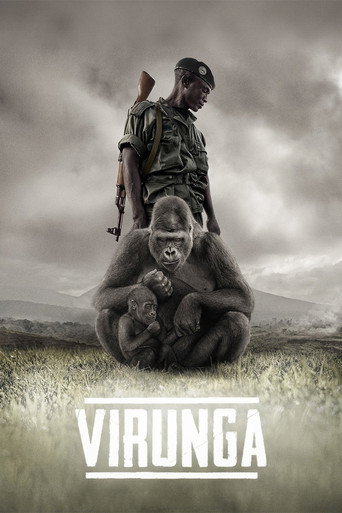
Virunga in the Democratic Republic of the Congo is Africa's oldest national park, a UNESCO world heritage site, and a contested ground among insurgencies seeking to topple the government that see untold profits in the land. Among this ongoing power struggle, Virunga also happens to be the last natural habitat for the critically endangered mountain gorilla. The only thing standing in the way of the forces closing in around the gorillas: a handful of passionate park rangers and journalists fighting to secure the park's borders and expose the corruption of its enemies. Filled with shocking footage, and anchored by the surprisingly deep and gentle characters of the gorillas themselves, Virunga is a galvanizing call to action around an ongoing political and environmental crisis in the Congo.

The epic life story of Alice Guy-Blaché (1873–1968), a French screenwriter, director and producer, true pioneer of cinema, the first person who made a narrative fiction film; author of hundreds of movies, but banished from history books. Ignored and forgotten. At last remembered.

Dick Proenneke retired at age 50 in 1967 and decided to build his own cabin in the wilderness at the base of the Aleutian Peninsula, in what is now Lake Clark National Park. Using color footage he shot himself, Proenneke traces how he came to this remote area, selected a homestead site and built his log cabin completely by himself. The documentary covers his first year in-country, showing his day-to-day activities and the passing of the seasons as he sought to scratch out a living alone in the wilderness.
Similar titles
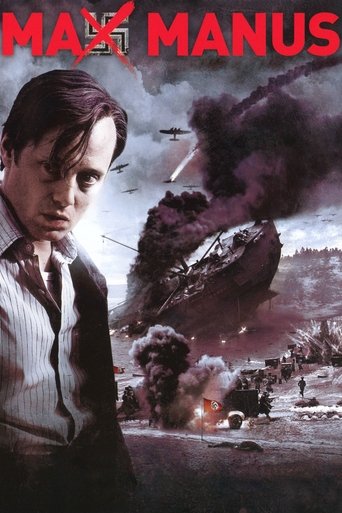
Max Manus is a Norwegian 2008 biographic war film based on the real events of the life of resistance fighter Max Manus (1914–96), after his contribution in the Winter War against the Soviet Union. The story follows Manus through the outbreak of World War II in Norway until peacetime in 1945.

This film is a poetic composition of recorded history and non-recorded memory. Filmmaker Rea Tajiri’s family was among the 120,000 Japanese and Japanese Americans who were imprisoned in internment camps after the attack on Pearl Harbor. And like so many who were in the camps, Tajiri’s family wrapped their memories of that experience in a shroud of silence and forgetting. This film raises questions about collective history – questions that prompt Tajiri to daringly re-imagine and re-create what has been stolen and what has been lost.

Filmed in their home in Norway, this intimate documentary follows conversations between trans physician and queer-rights advocate Esben Esther Pirelli Benestad and their partner Elsa Almås. As Esben Esther lives with cancer, they reflect on queer aging, love and mortality, and what it means to face an uncertain future together.
A 4 year-old boy stands in awe of a 1,000 year-old Viking boat in a small Norwegian museum and finds within its silent grace an impressionistic sweep of picture and music revealing the rich spirit of Norway and its people.

On 22 July 2011, neo-Nazi terrorist Anders Behring Breivik murdered 77 young people attending a Labour Party Youth Camp on Utøya Island outside of Oslo. This three-part story focuses on the survivors, the political leadership of Norway, and the lawyers involved.

The captain of a submarine sunk by the Japanese during WWII is finally given a chance to skipper another sub after a year of working a desk job. His singleminded determination for revenge against the destroyer that sunk his previous vessel puts his new crew in unneccessary danger.

Based on a true incident that occurred in 1942 when nine Nazi saboteurs were put ashore on the coast of Long Island, New York, by submarine, with orders to blow up various defense installations.

A German submarine hunts allied ships during the Second World War, but it soon becomes the hunted. The crew tries to survive below the surface, while stretching both the boat and themselves to their limits.

In the freezing northern seas, the Yamato nuclear submarine begins its deep underwater voyage to the tune of Mozart, heading for the United Nations headquarters in New York. In the Bering Strait between the US and Russia, another submarine approaches: an American nuclear submarine that overwhelmingly dwarfs the Yamato. Now, a battle commences among the cracking floes of the cold Arctic Ocean.
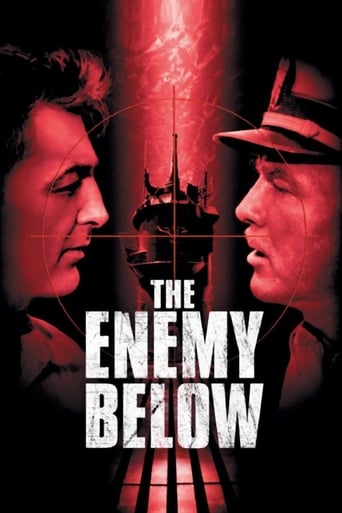
The crew of the American destroyer escort, the USS Haynes, detects a German U-Boat—resulting in a prolonged, deadly battle of wits.

When Norwegian resistance leader Lieutenant Erik Bergman reports the location of a German V-2 rocket fuel plant, the Royal Air Force's 633 Squadron is assigned the mission to destroy it. The plant is in a seemingly-impregnable location beneath an overhanging cliff at the end of a long, narrow fjord lined with anti-aircraft guns. The only way to destroy the plant is by collapsing the cliff on top of it.

Milquetoast Henry Limpet experiences his fondest wish and is transformed into a fish. As a talking fish he assists the US Navy in hunting German submarines during World War II.

The movie takes place during World War II and depicts the true story of Jan Baalsruds amazing escape from the German army from the coast of Northern Norway and across the border to the neutral country Sweden.

In 2008, German U- boat U-455 was discovered off the coast of Italy. 400 feet down, the submarine stands almost vertically on the ocean floor. This documentary will reveal its history and the cause of its demise.

The drama stars Beat Takeshi as General Hideki Tojo, who served as Prime Minister of Japan during World War II and was later executed as a war criminal. The story's theme is said to be a look at how the Pacific War began, focusing mostly on the three month period between the Imperial Conference (Gozen Kaigi) on September 6, 1941, and the attack on Pearl Harbor on December 7, 1941.
When Russia's first nuclear submarine malfunctions on its maiden voyage, the crew must race to save the ship and prevent a nuclear disaster.
During routine manoeuvres near Hawaii in 1980, the aircraft-carrier USS Nimitz is caught in a strange vortex-like storm, throwing the ship back in time to 1941—mere hours before the Japanese attack on Pearl Harbor.

Sam Favret joined Nikolai Schirmer at his home in the far north in Norway to discover the secrets of narrow couloirs descended at full throttle, slopes that plunge straight down to the sea, and days that push back the nights.
The crew of an Air Force bomber arrives in Pearl Harbor in the aftermath of the Japanese attack and is sent on to Manila to help with the defense of the Philippines.

One dark night during the early phases of WWII, the Italian Royal Navy submarine Cappellini sinks an armed merchant ship sailing with lights out. At that moment, its commander Salvatore Todaro makes a decision that was destined to go down in history: to save the 26 shipwrecked Belgians who otherwise would have drowned in the middle of the Atlantic Ocean and disembark them at the nearest safe harbor. To make room for them on board his submarine, he is forced to navigate on the surface of the water for three days, visible to the enemy forces and endangering his life and that of his men.