

The Battle Over Citizen Kane
1996-01-29 · 108 min · ★ 7.4
Documentary about the battle between Orson Welles and William Randolph Hearst over Welles' Citizen Kane (1941). Features interviews with Welles' and Hearst's co-workers also acts as a relatively complete biograph of Hearst's career.
Trailers are previews, not full movies.
No authorized playback source configured. Use the legal watch options below.
Production details
- Directors
- Thomas Lennon, Michael Epstein
- Production companies
- GBH
- Countries
- United States of America
- Status
- Released
Top Cast
 William AllandSelf
 Peter BogdanovichSelf
 Marion DaviesSelf (archive footage)
 Douglas Fairbanks Jr.Self
 Richard FranceSelf
 William Randolph HearstSelf (archive footage)
 Norman LloydSelf
 Ruth WarrickSelf
 Orson WellesSelf (archive footage)
 Robert WiseSelf
 David McCulloughSelf - Host of The American Experience
Title information and images are supplied by TMDb. Explore our discovery guide for advice on comparing metadata and legal viewing options.
Where to watch
Availability provided by JustWatch via TMDb. Offers can change. Provider links are listed on TMDb; full playback requires a separately authorized source.
Availability not listed for this country.
Seasons & episodes
Recommendations

A documentary on the life of John Lennon, with a focus on the time in his life when he transformed from a musician into an antiwar activist.

A visual montage portrait of our contemporary world dominated by globalized technology and violence.
Going beyond the occasional news clip from Burma, the acclaimed filmmaker, Anders Østergaard, brings us close to the video journalists who deliver the footage. Though risking torture and life in jail, courageous young citizens of Burma live the essence of journalism as they insist on keeping up the flow of news from their closed country.

This documentary focuses on the actors and their journey over two summers to create the remake to the original IT, by Stephen King. The documentary originally released as bonus material, bundled with IT: Chapter Two.

Film adaptation of French economist Thomas Piketty's ground-breaking global bestseller of the same name: an eye-opening journey through wealth and power.
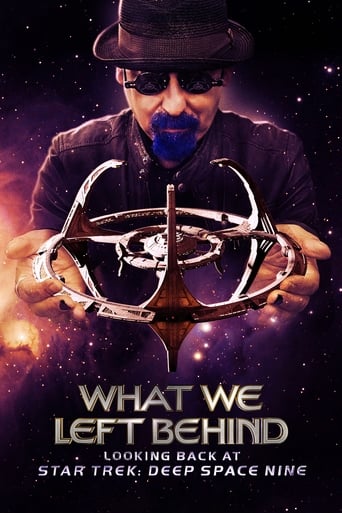
A documentary exploring the legacy of Star Trek: Deep Space Nine, the reasons it went from the black sheep of Star Trek to a beloved mainstay of the franchise, and a brainstorm with the original writers on what a theoretical eighth season of the show could look like.

Learn the incredible behind-the-scenes story of how the original Star Wars movie was brought to the big screen in this fascinating documentary hosted by C-3PO and R2-D2 which includes interviews with George Lucas and appearances by Mark Hamill, Harrison Ford and Carrie Fisher.
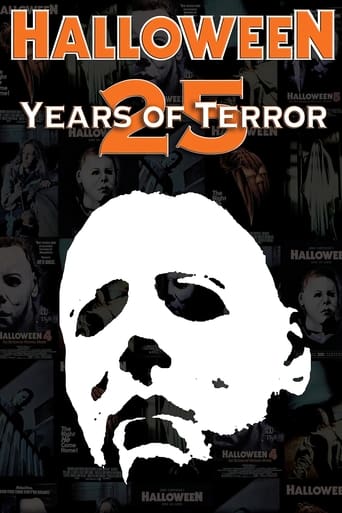
Follow the evolution of the 'Halloween' movies over the past twenty-five years. It examines why the films are so popular and revisits many of the original locations used in the films - seeing the effects on the local community. For the first time, cast, crew, critics and fans join together in the ultimate 'Halloween' retrospective.

An investigation into the ongoing threat caused by the phenomenon of “fake news” in the U.S., focusing on the real-life consequences that disinformation, conspiracy theories and false news stories have on the average citizen.
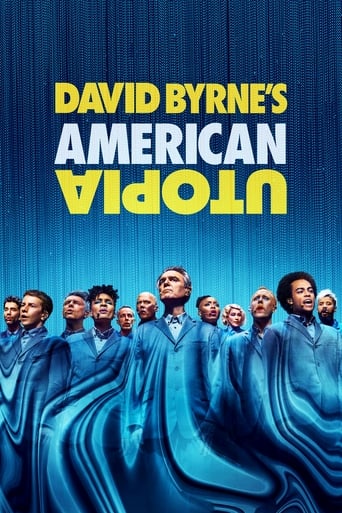
A filmed version of David Byrne's Broadway show, a unifying musical celebration that inspires audiences to connect to each other and to the global community.
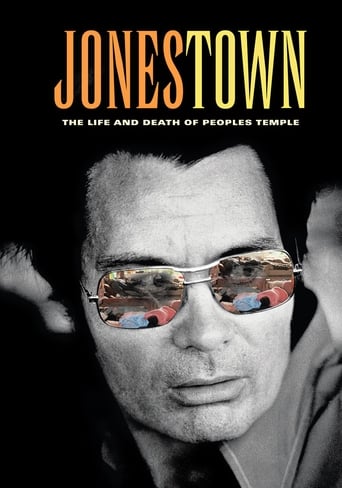
Featuring never-before-seen footage, this documentary delivers a startling new look at the Peoples Temple, headed by preacher Jim Jones who, in 1978, led more than 900 members to Guyana, where he orchestrated a mass suicide via tainted punch.
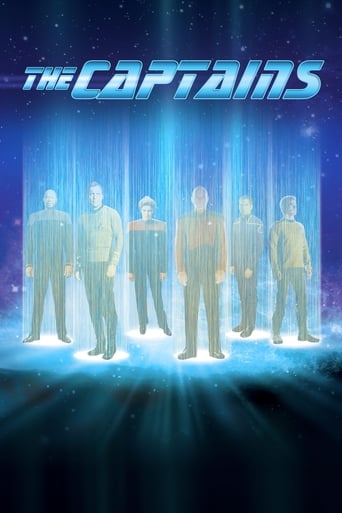
The Captains is a feature-length documentary film written and directed by William Shatner. The film follows Shatner as he interviews the other actors who have portrayed starship captains in the Star Trek franchise.
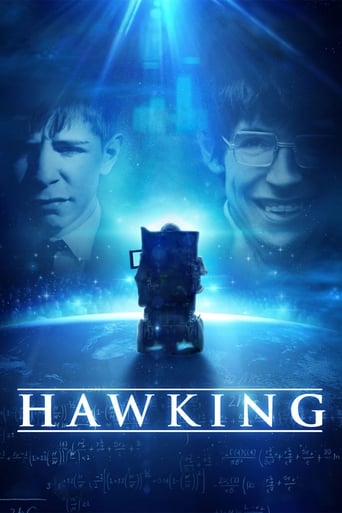
The extraordinary story of the planet’s most famous contemporary scientist, told in his own words and by those closest to him. Made with unique access to Hawking’s private life, this is an intimate and moving journey into Stephen's world, both past and present.

Grammy® winner singer-songwriter Olivia Rodrigo takes a familiar road trip from Salt Lake City, where she began writing her debut album “SOUR,” to Los Angeles. Along the way, Rodrigo recounts the memories of writing and creating her record-breaking debut album and shares her feelings as a young woman navigating a specific time in her life. Through new live arrangements of her songs, intimate interviews and never-before-seen footage from the making of the album, audiences will follow Olivia along on a cinematic journey exploring the story of “SOUR.”
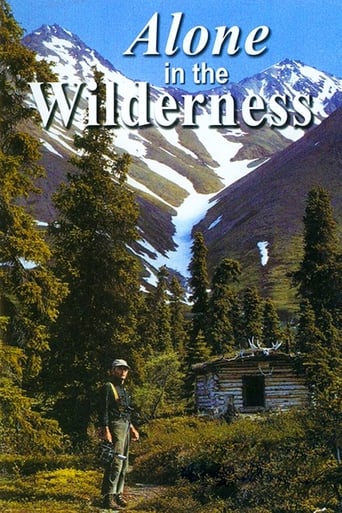
Dick Proenneke retired at age 50 in 1967 and decided to build his own cabin in the wilderness at the base of the Aleutian Peninsula, in what is now Lake Clark National Park. Using color footage he shot himself, Proenneke traces how he came to this remote area, selected a homestead site and built his log cabin completely by himself. The documentary covers his first year in-country, showing his day-to-day activities and the passing of the seasons as he sought to scratch out a living alone in the wilderness.
An exploration of technologically developing nations and the effect the transition to Western-style modernization has had on them.
Years spent recording footage of creatures from every corner of the globe is bound to produce a bit of drama. Here's a behind-the-scenes look.

A documentary highlighting the Soviet Union's legendary and enigmatic hockey training culture and world-dominating team through the eyes of the team's Captain Slava Fetisov, following his shift from hockey star and celebrated national hero to political enemy.
Darwin's great insight – that life has evolved over millions of years by natural selection – has been the cornerstone of all David Attenborough’s natural history series. In this documentary, he takes us on a deeply personal journey which reflects his own life and the way he came to understand Darwin’s theory.
A real-life undercover thriller about two ordinary men who embark on an outrageously dangerous ten-year mission to penetrate the world's most secretive and brutal dictatorship: North Korea.
Similar titles

Orson Welles sits in his chair behind his typewriter where he sends a message out to his dying friend Bill Cronshaw: a passage from the journal of Charles Lindbergh.
In 1939, boy-wonder Orson Welles leaves New York, where he has succeeded in radio and theater, and, hired by RKO Pictures, moves to Hollywood with the purpose of making his first film.
George Abitbol, the classiest man in the world, dies tragically during a cruise. The director of an American newspaper, wondering about the meaning of these intriguing final words, asks his three best investigators, Dave, Peter and Steven, to solve the mystery. (Sixteen French actors dub scenes from various Warner Bros. films to create a parody of Citizen Kane, 1941.)
A poetic journey into the visual world of the legendary filmmaker and actor Orson Welles (1915-85) that reveals a new portrait of a unique genius, both of his life and of his monumental work: through his own eyes, drawn by his own hand, painted with his own brush.

The extraordinary life of Orson Welles (1915-85), an enigma of Hollywood, an irreducible independent creator: a musical prodigy, an excellent painter, a master of theater and radio, a modern Shakespeare, a magician who was always searching for a new trick to surprise his audience, a romantic and legendary figure who lived only for cinema.
In this abridged television production, Lear vows revenge against his conniving daughters after they try to take swift control of his power.

The raft man Manuel Jacaré was swallowed by the sea when Orson Welles was filming It's All True in 1942. The fact evokes memories of the dictatorship of the Estado Novo, of World War II, of Ceará fishermen's struggle for labor rights and housing in their traditional space - target of real estate speculation.

Still reeling from the painful breakup of his marriage to screen siren Rita Hayworth, filmmaker Orson Welles makes his way to Rome, where he gets pulled into a tangled political plot involving murder and mysterious motives. A beautiful actress proves a tempting distraction. But if they want to stay alive, Welles and his young Italian driver need to stay focused.
New York, 1937. A teenager hired to star in Orson Welles' production of Julius Caesar becomes attracted to a career-driven production assistant.

In 1940, author Richard Wright turns to Pulitzer Prize-winning playwright Paul Green to help adapt his best-selling book, Native Son, into a Broadway play. Days from opening night, they differ over a single page of the script.
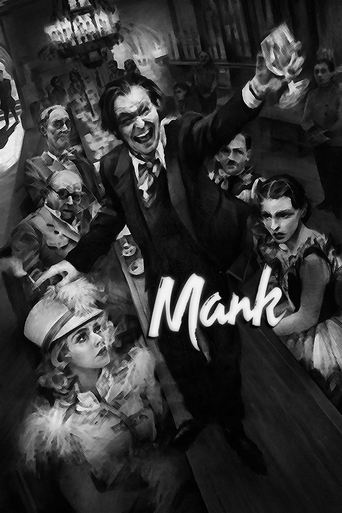
1930s Hollywood is reevaluated through the eyes of scathing social critic and alcoholic screenwriter Herman J. Mankiewicz as he races to finish the screenplay of Citizen Kane.

A comedy that tells the story of a small New Jersey town on the night of Orson Welles' famed 1938 War of the Worlds radio broadcast, which led millions of listeners to believe the U.S. was being invaded by Martians.

Amid the buildings and streets of Ramallah, men take up positions. In a continuous, unedited shot, the camera witnesses a confrontation between Palestinians and Israeli soldiers illegally stationed in the city. With a single gesture, the viewer experiences the occupation of Palestinian territory in real time.
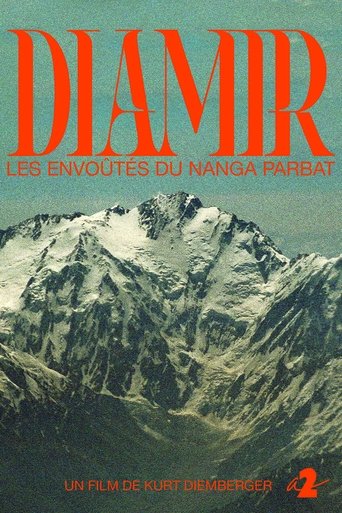
Mountaineering documentary on the Nanga Parbat expedition, in India, in 1982. Led by mountaineer Pierre Mazeaud, this international expedition brings together eight French people, two Germans, an Iraqi, an Austrian and an Englishman including Michel Afanassieff, Michel Berrueux, Walter Cecchinel, Kurt Diemberger, Hans Engl, Shah Jehan, Karim Imamdad and others. On July 14, 1982, Hans Engl reached the summit after twelve hours of struggle.

The corridors of a consciousness invaded by ruined cars, where images of the past, present and possible futures coexist.
A culmination of a body of work Mariah Garnett began in 2020, dealing with an archive of diaries and operatic score written by her great-great aunt.


Each year, groups of Tibetan children secretly flee their homeland over the Himalayas to reach schools in India founded by the government in exile. Entrusted to smugglers, they are risking their lives by illegally crossing the great Himalayan range, a towering rampart between Tibet and India. The director will take us in the Mussorie school, in North India, where two thousand four hundred children have been rescued. They have left behind their family childhood and are now considered as orphans. We will discover the itineraries of Sonam, aged nine, and Dholma, the little new girl of the school. Here in India, they are taught about Tibetan culture and will find out about the history of their country and their ancestors. Sonam and Dholma's story is that of thousands of Tibetan children. Are they orphans of a lost country or bearers of hope who will save an endangered culture?

This video work was made while Rist was still an art student at the School of Design in Basel, Switzerland. It was produced in an unlimited edition and is intended to be shown on a domestic-style monitor, although it may also be displayed as a projection with special permission from the artist. The video depicts the artist, an attractive young woman dancing manically around the room while repeatedly singing ‘I’m not the girl who misses much’. The phrase is an adaptation of the first line of the Beatles song ‘Happiness is a Warm Gun'. Referring to her childhood Rist has said, ‘In my village in Switzerland I had a small window on the art world through the mass media; through John Lennon/Yoko Ono I moved from pop music to contemporary art. In return, I will always be grateful to popular culture’ (quoted in ‘I rist, you rist, she rists, he rists, we rist, you rist, they rist, tourist: Hans Ulrich Obrist in Conversation with Pipilotti Rist’, Pipilotti Rist, p.16).