Vezdekhod
2012-06-22 · 30 min · Not rated
Image by Carlos Casas. Double screen projection with live soundtrack. Images and sound captured on location. Somewhere in the tundra, Chukotka Region, Northeastern Siberia, Russian Federation. Music by Prurient. Published by Von Archives. N 66° 37’ 916, W 172° 40’ 353, Sept 2006.
Trailers are previews, not full movies.
No authorized playback source configured. Use the legal watch options below.
Production details
- Directors
- Carlos Casas
- Production companies
- Unavailable
- Countries
- Unavailable
- Status
- Released
Top Cast
Cast unavailable.
Title information and images are supplied by TMDb. Explore our discovery guide for advice on comparing metadata and legal viewing options.
Where to watch
Availability provided by JustWatch via TMDb. Offers can change. Provider links are listed on TMDb; full playback requires a separately authorized source.
Availability not listed for this country.
Seasons & episodes
Recommendations

Ranjit, a farmer in India, takes on the fight of his life when he demands justice for his 13-year-old daughter, the victim of a brutal gang rape. His decision to support his daughter is virtually unheard of, and his journey unprecedented.

A visual montage portrait of our contemporary world dominated by globalized technology and violence.

A documentary about how a dominant cultural and demographic institution both sustains their traditional activities and adapts to the digital revolution.

In an intimate and joyful story of love in the face of loss, celebrated poets Andrea Gibson and Megan Falley find strength—and unexpected hilarity—in what might be their final year together.

A string of threatening emails escalates into a revenge plot involving a newly married US marshal and his ex-girlfriend.
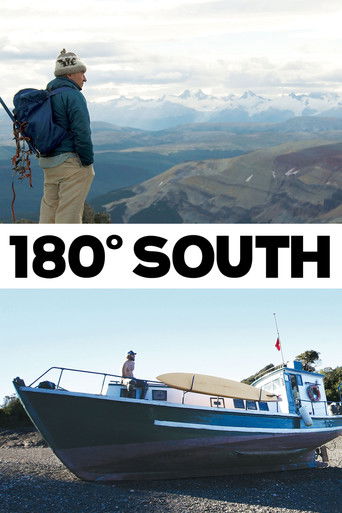
The film follows adventurer Jeff Johnson as he retraces the epic 1968 journey of his heroes Yvon Chouinard and Doug Tompkins to Patagonia.

In the Realms of the Unreal is a documentary about the reclusive Chicago-based artist Henry Darger. Henry Darger was so reclusive that when he died his neighbors were surprised to find a 15,145-page manuscript along with hundreds of paintings depicting The Story of the Vivian Girls, in What is Known as the Realms of the Unreal, of the Glodeco-Angelinnian War Storm, Cased by the Child Slave Rebellion.
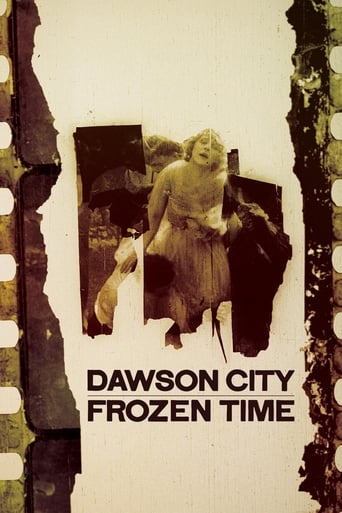
The true history of a collection of some 500 films dating from 1910s to 1920s, which were lost for over 50 years until being discovered buried in a sub-arctic swimming pool deep in the Yukon Territory, in Dawson City, located about 350 miles south of the Arctic Circle.

Just two years away from turning 30, participants in Michael Apted's documentary series are facing serious questions of identity and purpose, wondering whether they've found their place in the world.
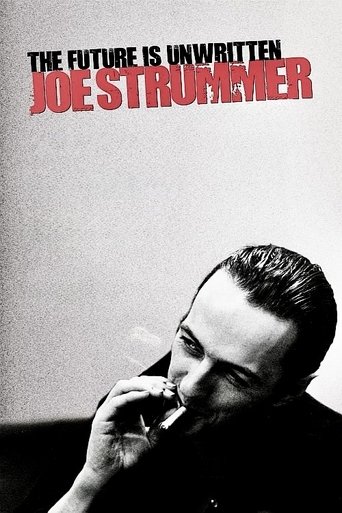
As the front man of the Clash from 1977 onwards, Joe Strummer changed people's lives forever. Four years after his death, his influence reaches out around the world, more strongly now than ever before. In "The Future Is Unwritten", from British film director Julien Temple, Joe Strummer is revealed not just as a legend or musician, but as a true communicator of our times. Drawing on both a shared punk history and the close personal friendship which developed over the last years of Joe's life, Julien Temple's film is a celebration of Joe Strummer - before, during and after the Clash.
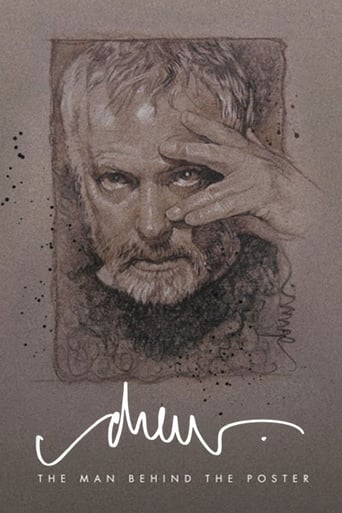
A documentary on legendary movie-poster artist Drew Struzan.

Through deeply personal interviews with her siblings and an examination of the photographs, letters, and belongings left behind, Mariska assembles a new portrait of her mother Jayne Mansfield, an extraordinary and complex woman.
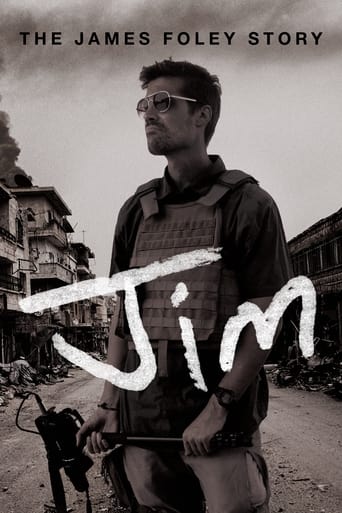
In August, 2014, a video of the public execution of American photojournalist James Foley rippled across the globe. Foley wore an orange jumpsuit as he knelt beside an ISIS militant dressed in black. That image challenged the world to deal with a new face of terror. And it tested one American family. Seen through the lens of filmmaker Brian Oakes, Foley’s close childhood friend, Jim takes us from small-town New England to the adrenaline-fueled front lines of Libya and Syria, where Foley pushed the limits of danger to report on the plight of civilians impacted by war.
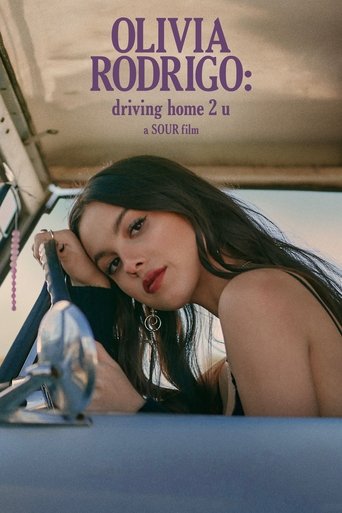
Grammy® winner singer-songwriter Olivia Rodrigo takes a familiar road trip from Salt Lake City, where she began writing her debut album “SOUR,” to Los Angeles. Along the way, Rodrigo recounts the memories of writing and creating her record-breaking debut album and shares her feelings as a young woman navigating a specific time in her life. Through new live arrangements of her songs, intimate interviews and never-before-seen footage from the making of the album, audiences will follow Olivia along on a cinematic journey exploring the story of “SOUR.”

A documentary chronicling Queen and Lambert's incredible journey since they first shared the stage together on "American Idol" in 2009.

A detailing of the rise to prominence and global sporting superstardom of six supremely talented young Manchester United football players (David Beckham, Nicky Butt, Ryan Giggs, Paul Scholes, Phil and Gary Neville). The film covers the period 1992-1999, culminating in Manchester United's European Cup triumph.

A 1993 documentary film about Bruce Lee. The film includes interviews from some of his fellow students and opponents who worked alongside him in his movies.

An inside look at one of the most anticipated movie sequels ever with James Cameron and cast.
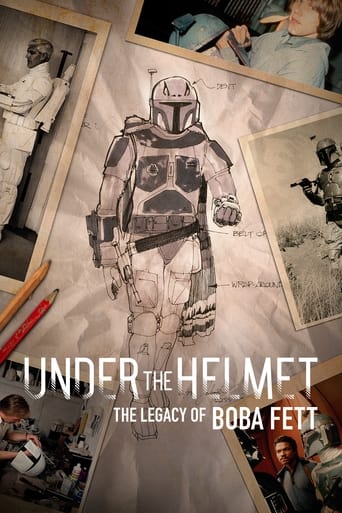
A special celebrating the origins and legacy of Star Wars' legendary bounty hunter, Boba Fett.

A true-crime comedy exploring a failed music festival turned internet meme at the nexus of social media influence, late-stage capitalism, and morality in the post-truth era.
Similar titles
Openland is an art film guided by issues surrounding micro states and its derivative definitions. Through intertwining interviews, meta-narratives, and digital landscapes, Openland unfurls a dialogue between consciousness, individuality and collectivity.
Phil Morton's General Motors was created in 1976. Then based in Chicago, the late Phil Morton created this project as a playful and critical video response in conversation with a local General Motors dealership from whom he had purchased a van. Segments 'Colorful Colorado' and 'RYRAL' begin after the video-complaints cease. Produced at the School of the Art Institute of Chicago (where Morton founded the Video Area), this work includes Dan Sandin and Tom DeFanti who collaboratively developed the early Video Art scene in Chicago.
Outrage kiss-in at Bow Street police station in London, with a demonstration against homophobic government bills clause 25/28.
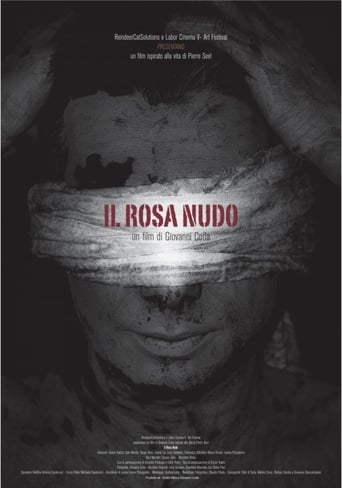
Among the millions of victims of the Nazi madness during the Second World War, Pierre Seel was charged with homosexuality and imprisoned in the Schirmeck concentration camp. He survived this terrifying experience of torture and humiliation, and after the war he married, had three children, and tried to live a normal life. In 1982, however, he came to terms with his past and his true nature and decided to publicly reveal what he and thousands of other homosexuals branded with the Pink Triangle had undergone during the Nazi regime. Il Rosa Nudo (Naked Rose), inspired by the true story of Pierre Seel, depicts in a theatrical and evocative way the Homocaust, focusing on the scientific theories of SS Physician Carl Peter Værnet for the treatment of homosexuality, which paved the way for the Nazi persecution of gay men.

The second half of Gustav Deutsch's experimental Film ist. series, constructing new narratives and moods out of existing footage, mostly from early silent era films.
An 18-minute long single-channel video which uses CNN footage cut so that each word is spoken by a different newsperson. The pieces literally asks the viewers questions about media authenticity and give CNN a distinct voice
"Filmed in Cairo, in Al-Azhar Park, sunset during Isha'a praying time. The city becomes a Chorus. Dedicated to the people of Cairo. With love and hope." Part of the Azan series & the Cairo fieldworks.
Images and sound captured in Zamboanga city Mindanao, Philippines. During sunset. Part of the Azan series & the Philippines fieldworks.

Canadian Pacific I is made up of a series of slowly dissolved shots done from the same framing over several months. The camera frames a window with a railway yard in the foreground, a bay in the space behind it, and misty mountains in the extreme distance. Trains occasionally pass by in the foreground. Huge ships move across the bay. Blue mists hover over the mountain heads.

Canadian Pacific II is designed as a companion piece to Canadian Pacific I. Shot from a window two storeys higher and in the building adjacent to the artists’s studio of the previous year, one enters into a dream state… an involvement with a vocabulary of seeing and feeling by subtle transitions of the passage of time
An odyssey through Beethoven’s lasting presence and influence in our modern world – viewed through the eyes of the composer himself.
A dark and magical visit to the fabled Parisian address Rue Fontaine 42. This was the residence of André Breton, the mastermind of surrealism, who surrounded himself with an impressive collection of modern, Western art and ethnographic objects from Oceania and North America. The collection was sold and divided up in 2003 at a controversial auction. 'The Trick Brain' is a delirious montage and a trip back in time to Breton's private art collection, where Atkins has been scouring the archives and come up with a possessing interior film of the place that once was, complete with surrealistic paintings, scores of Indian figures and hundreds of other displayed rarities. The film's soundtrack is provided by an observant narrator, who reveals to us that the objects shown are not necessarily what they claim to be - but instead are catalysts for some kind of wonderful linguistic virus which reveals the real identity of things.
Migrating by sea from Holland as an eight-year-old, Dirk de Bruyn went on to be a doyen of Australian experimental cinema. But as this intimate film reveals, his work is suffused with the trauma of migration, and the struggle to recognise himself as a ‘new Australian'. In conversation with documentarian Steven McIntyre, Dirk guides us through more than 40 years of his filmmaking: the early years exploring technique and technology, a subsequent phase of unflinching self-examination brought on by upheaval and overseas travel, and more recent projects where he attempts a fusion of personal, cultural, and historical identity. What emerges is an inspiring, rugged, and at times poignant portrait of an artist committed to self-expression and self-discovery through the medium of film.
Szirtes's masterful experimental work is a dazzling composition of several years of filming within an industrial macro/microcosm, an abstract model of revolution and the beauty of daybreak.
De-electronation of a molecular entity as a result of photoexcitation. Light increases its oxidation state, at the same time it releases free radical electrons. Light goes through human work as a natural photodegradation. It mutates within its own limits, from a solar irradiation to its impossible perception in an absent retina.
The Quays' interest in esoteric illusions finds its perfect realization in this fascinating animated lecture on the art of anamorphosis. This artistic technique, often used in the 16th- and 17th centuries, utilizes a method of visual distortion with which paintings, when viewed from different angles, mischievously revealed hidden symbols.
One morning, the late Karlheinz Stockhausen awoke from a dream that told him to take to the sky. Stockhausen envisioned four helicopters swirling in the clouds, with each of a quartet’s members tucked inside his own chopper, communicating through headsets, stringing away in sync to the rotor-blade motors. He immediately set forth to make that dream a reality. In 1995, Dutch film director Scheffer followed Stockhausen in the days leading up to the premiere performance of his Helicopter String Quartet in Amsterdam. The resulting film offers a rare glimpse of Stockhausen as he patiently dictates every agonizingly detailed measure to the Arditti Quartet.
The Darkness of Day is a haunting meditation on suicide. It is comprised entirely of found 16mm footage that had been discarded. The sadness, the isolation, and the desire to escape are recorded on film in various contexts. Voice-over readings from the journal kept by a brother of the filmmaker’s friend who committed suicide in 1990 intermix with a range of compelling stories, from the poignant double suicide of an elderly American couple to a Japanese teenager who jumped into a volcano, spawning over a thousand imitations. While this is a serious exploration of a cultural taboo, its lyrical qualities invite the viewer to approach the subject with understanding and compassion.
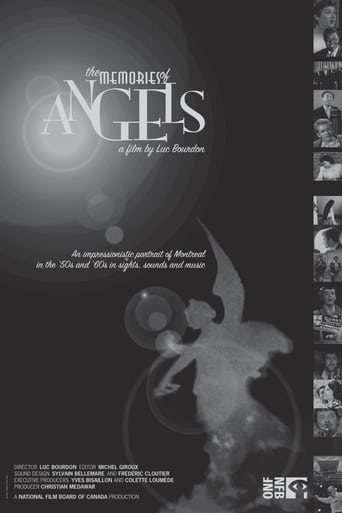
Documentary, poetry and essay rolled into one, this compilation of stockshots and clips sourced from NFB productions of the '50s and '60s offers a singular lesson in Montreal history - its famous figures, symbolic places, and ordinary citizens. Without commentary, the film moves from the red light district to Jean Drapeau, the Jacques-Cartier market, department stores downtown, textile factories, and the construction of Place Ville-Marie. We meet Geneviève Bujold, Oscar Peterson, Monique Mercure, and Igor Stravinsky. We hear Raymond Lévesque, Jean Drapeau, and René Lecavalier.
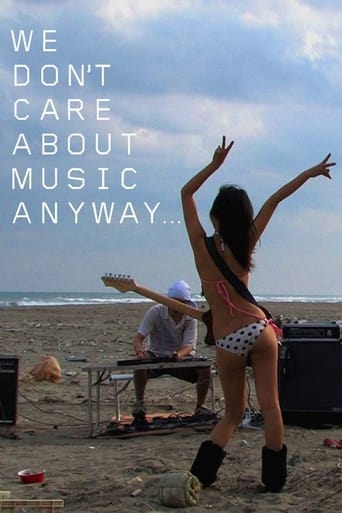
From radical turntablism (Otomo Yoshihide) to laptop music innovation (Numb), via classical instrument hijacking (Sakamoto Hiromichi), Tokyo's avant-garde music scene is internationally known for its boldness. While introducing some of the greatest musicians of this scene, "We Don't Care About Music Anyway..." offers a kaleidoscopic view of Tokyo, confronting music and noise, sound and image, reality and representation, documentary and fiction.