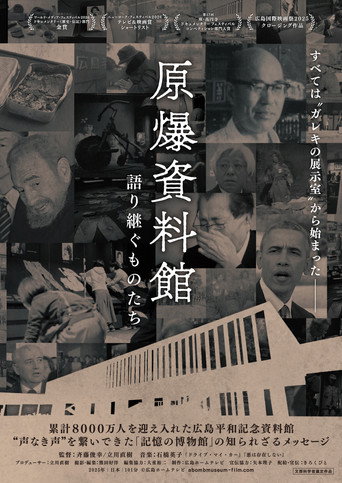
A-Bomb Museum
2026-07-18 · 101 min · Not rated
Trailers are previews, not full movies.
No authorized playback source configured. Use the legal watch options below.
Production details
- Directors
- Toshiyuki Saitō, Naoki Tachikawa
- Production companies
- Hiroshima Home Television, きろくびと
- Countries
- Unavailable
- Status
- Released
Top Cast
 Shōgo Nagaokahimself (footage)
 Akihiro Takahashihimself (footage)
 Fumie Takahashiherself
 Kenji Shigahimself
 Yoshifumi Ishidahimself
 Pope John Paul IIhimself (footage)
 Fidel Castrohimself (footage)
 Barack Obamahimself (footage)
 Nancy Pelosiherself (footage)
 Joe Bidenhimself (footage)
Title information and images are supplied by TMDb. Explore our discovery guide for advice on comparing metadata and legal viewing options.
Where to watch
Availability provided by JustWatch via TMDb. Offers can change. Provider links are listed on TMDb; full playback requires a separately authorized source.
Availability not listed for this country.
Seasons & episodes
Recommendations

The history of cinematic sound, told by legendary sound designers and visionary filmmakers.
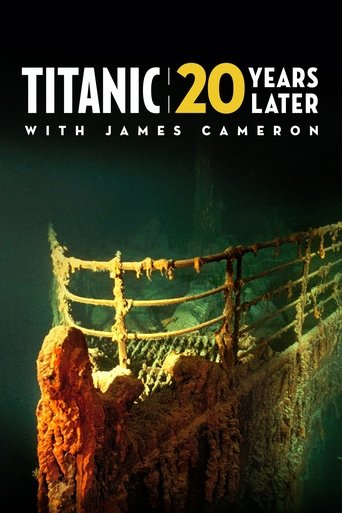
For the 20th anniversary of "Titanic," James Cameron reopens the file on the disaster.
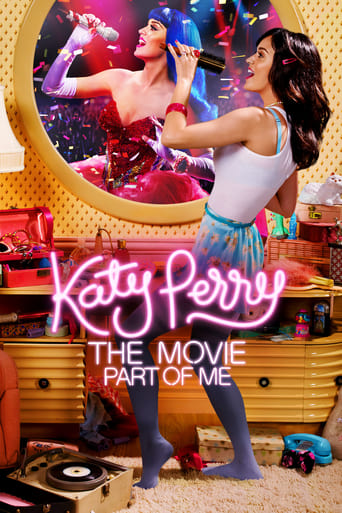
Giving fans unprecedented access to the real life of the music sensation, Katy Perry: Part of Me exposes the hard work, dedication and phenomenal talent of a girl who remained true to herself and her vision in order to achieve her dreams. Featuring rare behind-the-scenes interviews, personal moments between Katy and her friends, and all-access footage of rehearsals, choreography, Katy’s signature style and more, Katy Perry: Part of Me reveals the singer’s unwavering belief that if you can be yourself, then you can be anything.

Lupita Nyong'o narrates a documentary about Peanuts and its creator, Charles M. Schulz. Famous fans—including Drew Barrymore, Kevin Smith, and Al Roker—share its influence on them, and a new animated story finds Charlie Brown on a quest.

A visual montage portrait of our contemporary world dominated by globalized technology and violence.

Prelude to War was the first film of Frank Capra's Why We Fight propaganda film series, commissioned by the Pentagon and George C. Marshall. It was made to convince American troops of the necessity of combating the Axis Powers during World War II. This film examines the differences between democratic and fascist states.
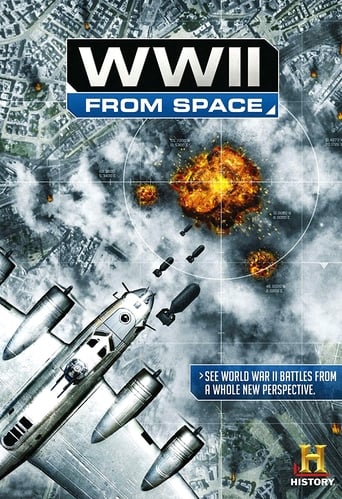
WWII from Space delivers World War II in a way you've never experienced it before. This HISTORY special uses an all-seeing CGI eye that offers a satellite view of the conflict, allowing you to experience it in a way that puts key events and tipping points in a global perspective. By re-creating groundbreaking moments that could never have been captured on camera, and by illustrating the importance of simultaneity and the hidden effects of crucial incidents, HISTORY presents the war's monumental moments in a never-before-seen context. And with new information brought to the forefront, you'll better understand how a nation ranked 19th in the world's militaries in 1939 emerged six years later as the planet's only atomic superpower.
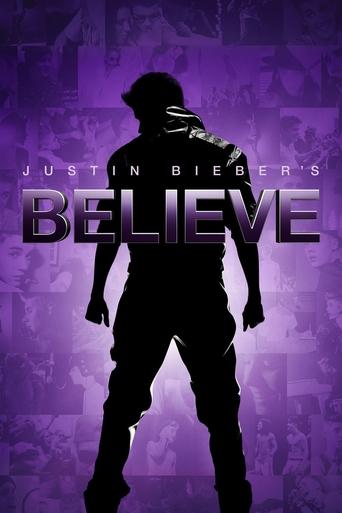
A backstage and on-stage look at Justin Bieber during his rise to super stardom.
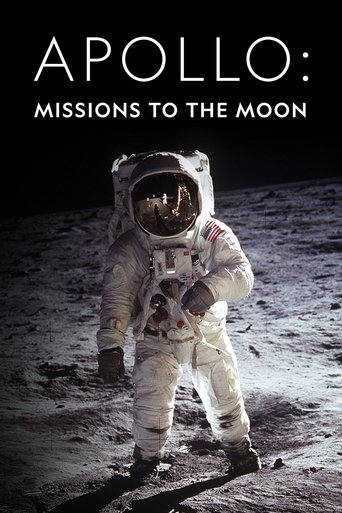
National Geographic's riveting effort recounts all 12 crewed missions using only archival footage, photos and audio.

A documentary highlighting the Soviet Union's legendary and enigmatic hockey training culture and world-dominating team through the eyes of the team's Captain Slava Fetisov, following his shift from hockey star and celebrated national hero to political enemy.

Embark on a delightful journey into the world of dogs in this documentary that reveals scientific and emotional insights about our lovable BFFs.
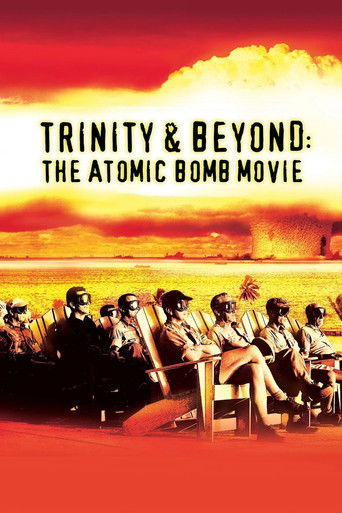
"Trinity and Beyond" is an unsettling yet visually fascinating documentary presenting the history of nuclear weapons development and testing between 1945-1963. Narrated by William Shatner and featuring an original score performed by the Moscow Symphony Orchestra, this award-winning documentary reveals previously unreleased and classified government footage from several countries.
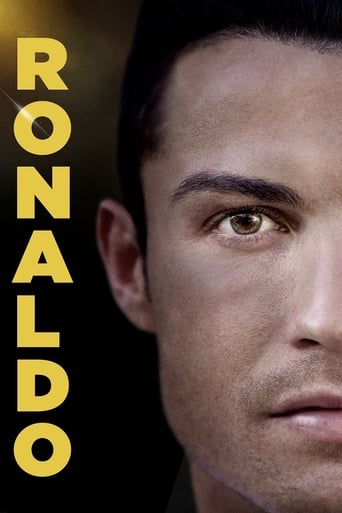
Filmed over 14 months with unprecedented access into the inner circle of the man and the sport, this is the first official and fully authorised film of one of the most celebrated figures in football. For the first time ever, the world gets vividly candid and un-paralleled, behind-closed-doors access to the footballer, father, family-man and friend in this moving & fascinating documentary. Through in-depth conversations, state of the art football footage and never before seen archival footage, the film gives an astonishing insight into the sporting and personal life of triple Ballon D'Or winner Cristiano Ronaldo at the peak of his career. From the makers of ‘Senna’ and ‘Amy’, Ronaldo takes audiences on an intimate and revealing journey of what it’s like to live as an iconic athlete in the eye of the storm.

A documentary about ten very different lives connected by having appeared onscreen wearing masks or helmets in Star Wars.
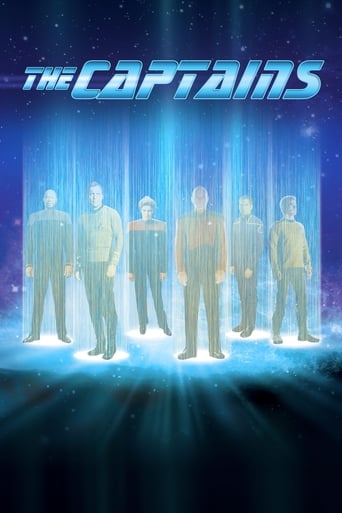
The Captains is a feature-length documentary film written and directed by William Shatner. The film follows Shatner as he interviews the other actors who have portrayed starship captains in the Star Trek franchise.
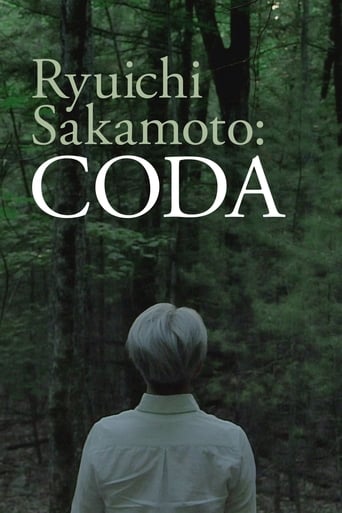
Oscar-winning composer Ryuichi Sakamoto weaves man-made and natural sounds together in his works. His anti-nuclear activism grew after the 2011 Fukushima disaster, and his career only paused after a 2014 cancer diagnosis.

Oliver Stone charts the history of the United States from the Second World War to the present.

Documentary filmmaker Amy Berg investigates the life of 30-year pedophile Father Oliver O'Grady and exposes the corruption inside the Catholic Church that allowed him to abuse countless children. Victims' stories and a disturbing interview with O'Grady offer a view into the troubled mind of the spiritual leader who moved from parish to parish gaining trust ... all the while betraying so many.
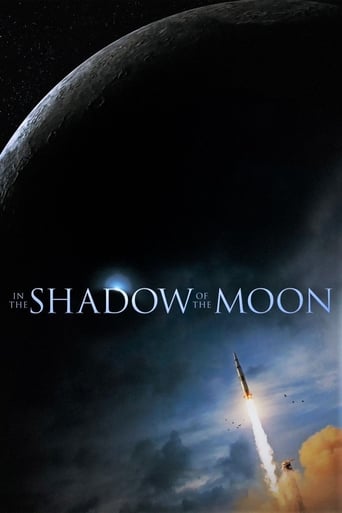
Archival material from the original NASA film footage – much of it seen for the first time – plus interviews with the surviving astronauts, including Jim Lovell, Dave Scott, John Young, Gene Cernan, Mike Collins, Buzz Aldrin, Alan Bean, Edgar Mitchell, Charlie Duke and Harrison Schmitt.

The epic life story of Alice Guy-Blaché (1873–1968), a French screenwriter, director and producer, true pioneer of cinema, the first person who made a narrative fiction film; author of hundreds of movies, but banished from history books. Ignored and forgotten. At last remembered.
Similar titles
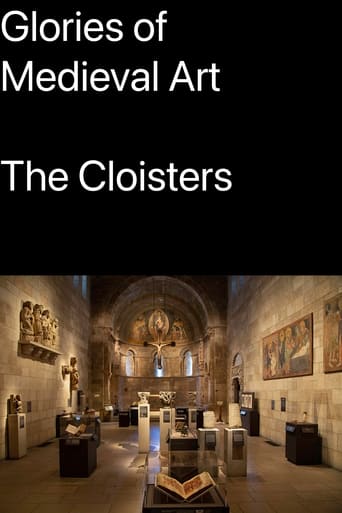
Philippe de Montebello, Director of The Metropolitan Museum of Art from 1977 to 2008, guides viewers through The Cloisters, pointing out Romanesque and Gothic architecture and artwork, beautiful tapestries, and the diverse species in the gardens. He outlines the history of the building and it's many influences and highlights significant works of art in the collection. It was produced in 1989 by The Metropolitan Museum of Art's Office of Film and Television.
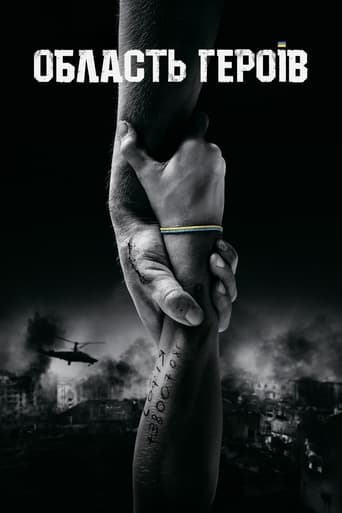
Film reconstruction of five real stories about the heroic deeds of the residents of Kyiv region during the Russian occupation. A story about those who heroically and selflessly saved tens of thousands of Ukrainian lives.
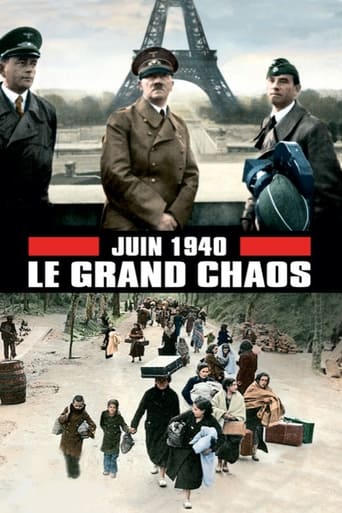
From May 10, 1940, France is living one of the worst tragedies of it history. In a few weeks, the country folds, and then collapsed in facing the attack of the Nazi Germany. On June 1940, each day is a tragedy. For the first time, thanks to historic revelations, and to numerous never seen before images and documents and reenacted situations of the time, this film recounts the incredible stories of those men and women trapped in the torment of this great chaos.
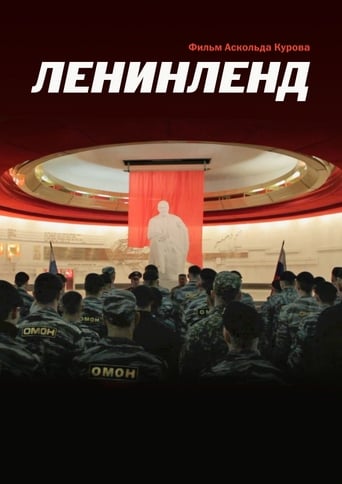
At the peak of Perestroika, in 1987, in the village of Gorki, where Lenin spent his last years, after a long construction, the last and most grandiose museum of the Leader was opened. Soon after the opening, the ideology changed, and the flow of pilgrims gradually dried up. Despite this, the museum still works and the management is looking for ways to attract visitors. Faithful to the Lenin keepers of the museum as they can resist the onset of commercialization. The film tells about the modern life of this amazing museum-reserve and its employees.
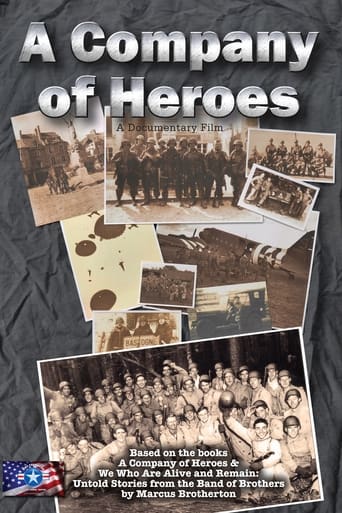
Easy Company, the 2nd Battalion of the 506th Parachute Infantry Regiment of the 101st Airborne Division, fought their way through Europe, liberated concentration camps, and drank a victory toast in April 1945 at Hitler's hideout. Veterans from Easy Company, along with the families of three deceased others, recount their horrors and victories, bonds they made and the friends they lost.
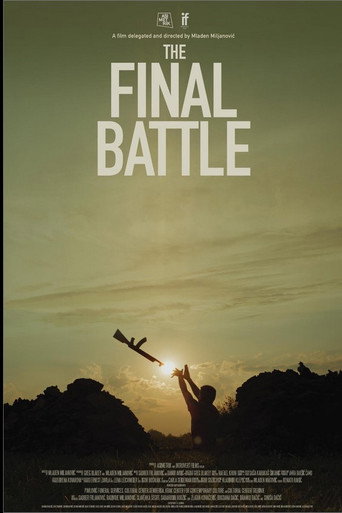
This film documents four delegated performances/castings, featuring participants who are both directly and indirectly actors of war: veterans, civilian victims, disabled individuals, or those traumatised by conflict. Applicants that have been seduced to participate in four castings of imaginary movie altogether agreeing to be part not only of an experimental film, but also of a subversive cinematic social experiment. They signed up for battle in the movie, and got an unexpectedly brutal lesson about conflict. They certainly, but so do we who watch it.
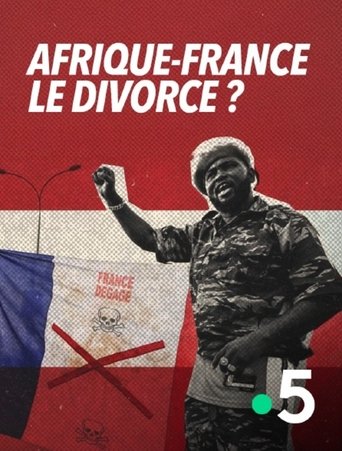
At a time when French flags are being burned and French embassies targeted, this documentary delves into the growing disaffection between French-speaking Africa and the former colonial power. Through the voices of African leaders, pan-African activists, and committed young people, the film questions the persistence of a relationship marked by the aftermath of colonization, the opaque agreements of "Françafrique," and a military presence deemed paternalistic.

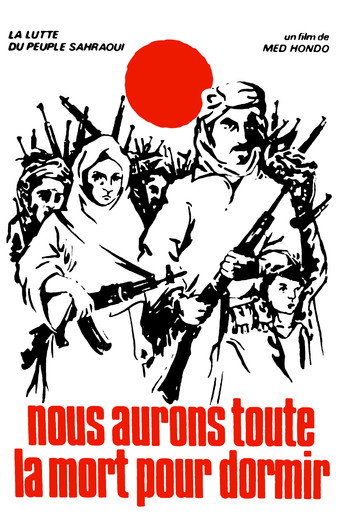
Documentary filmed over a period of four months, from 25 December 1975 to 5 March 1976, in the area of the former Spanish Sahara claimed by the people who lived there, the Saharawis, a people now mobilised and in arms (the Polisario Front) against Morocco and Mauritania, two states that have signed an agreement to share the territory.
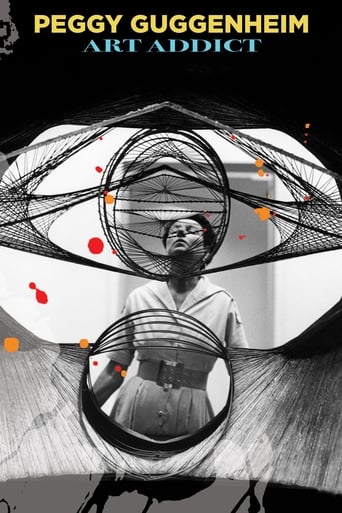
Bouncing between Europe and the United States as often as she would between lovers, Peggy Guggenheim’s life was as swirling as the design of her uncle’s museum, and reads more like fiction than any reality imaginable. Peggy Guggenheim – Art Addict offers a rare look into Guggenheim’s world: blending the abstract, the colorful, the surreal and the salacious, to portray a life that was as complex and unpredictable as the artwork Peggy revered and the artists she pushed forward.

This is a once in a generation event that needs to be examined without the usual spin that is delivered by the controlled media. While the video will be interpreted one way or the other, it is one that supports the voice of reason and of peace rather than jingoistic war drums and the cacophony of white noise.
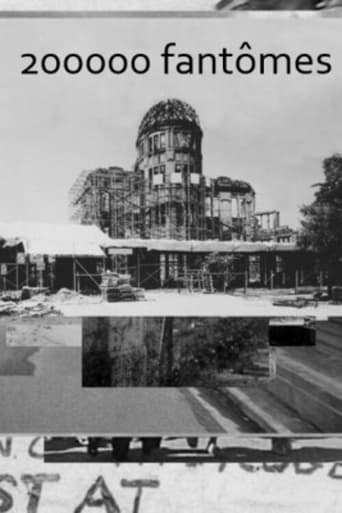
In 1914, the Czech architect Jan Letzel designed in the Japanese city of Hiroshima Center for the World Expo, which has turned into ruins after the atomic bombing in August 1945. “Atomic Dome” – all that remains of the destroyed palace of the exhibition – has become part of the Hiroshima memorial. In 2007, French sculptor, painter and film director Jean-Gabriel Périot assembled this cinematic collage from hundreds of multi-format, color and black and white photographs of different years’ of “Genbaku Dome”.

Talking about the story of the Gaza genocide with other images and other words is possible. The discovery of some slides in a high school in Catania is the starting point for analyzing the origins of Israel's military occupation of Gaza by resorting to the etymology of the words used to describe what expressions like "terrorist" or "military occupation" mean, while the drawings of Amos, an Israeli child who portrays his imaginary friend Anya under the worried gaze of the babysitter May Golan, point out that most horror stories have deep roots in everyday life. Invention and black humor try to overcome the (denied) reality of an apartheid and a normalized genocide, exposed and simultaneously removed.

A memorial to the atomic annihilation of 321 students at Hiroshima Middle School.
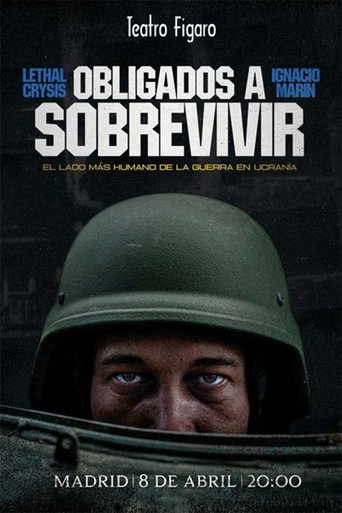
The war in Ukraine continues to leave indelible scars, but beyond military strategies and political speeches, there are stories that are rarely told: those of people who survive day by day amid the conflict. In an effort to document the human reality of war, Rubén Díez (Lethal Crysis), one of the most influential Spanish-speaking travel and exploration content creators, and Ignacio Marín, a renowned photojournalist specializing in war zones, traveled to the heart of the conflict in December 2024 to capture the experiences of those who resist in the shadows. For two weeks, they visited trenches, evacuation points, rehabilitation centers, and front lines, meeting soldiers, doctors, civilians, and refugees who shared their daily lives in a world where normalcy has been destroyed. Through intimate encounters and raw testimonies, this feature-length documentary offers an honest, unfiltered look at the human capacity to adapt, resist, and carry on—even in the darkest of settings.
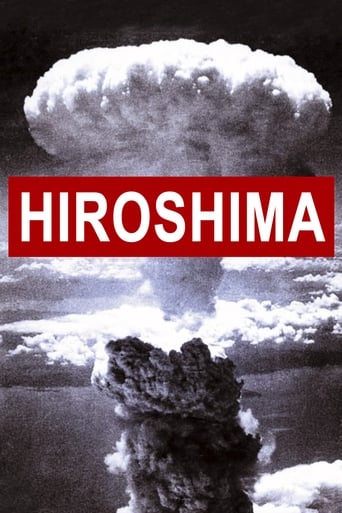
The documentary recounts the world's first nuclear attack and examines the alarming repercussions. Covering a three-week period from the Trinity test to the atomic bombing of Hiroshima, the program chronicles America's political gamble and the planning for the momentous event. Archival film, dramatizations, and special effects feature what occurred aboard the Enola Gay (the aircraft that dropped the bomb) and inside the exploding bomb.
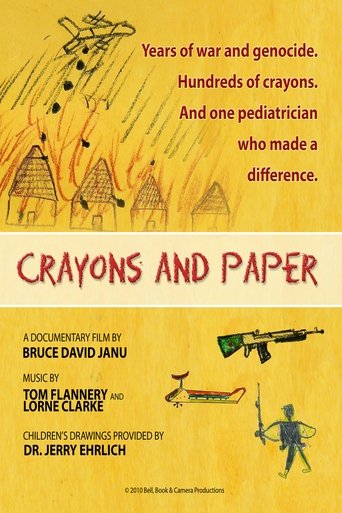
Crayons and Paper follows Dr. Jerry Ehrlich, a New Jersey pediatrician who worked with Doctors Without Borders in war zones including Sri Lanka, Haiti, the Caucasus, and Darfur. Alongside medical care, he gave children crayons and paper, encouraging them to draw their experiences. The resulting images—bombings, shootings, and burning villages—offer a raw, heartbreaking glimpse into the impact of war on children. These drawings serve as powerful testimonies, capturing trauma that words cannot. This short film tells Dr. Jerry’s story and honors the children whose art bears witness to the horrors of conflict.

This short film employs an anonymous hotline to elevate the voices beneath Vermont's F-35 flight path, the first urban residents to live with one of the military's most controversial weapons systems overhead. Tranquil scenes of unassuming neighborhoods near Burlington International Airport are juxtaposed with voicemails of the unheard, those drowned out by the ear-shattering “sound of freedom.” Exploring the relationship between picturesque residential areas and the deafening fighter jets overhead, Jet Line is a poetic portrait of a community plagued by war machines, documenting untenable conditions in a small city once voted one of the best places to live in America.

Following the 1954 Geneva Accords that partitioned Vietnam into two zones at the 17th parallel, a pregnant Dịu remains back in the South with her family while her husband has to move up North. At home, the young woman has to juggle between the duties of a liberation fighter and a mother while enduring her enemies' tortures and imprisonment, as she assumes the leadership of an underground liberation movement after its previous secretary was assassinated

Paintings conservators at the Getty Center reveal details of their craft as they restore two large paintings by French master Jean-Baptiste Oudry.