Visit to Jerusalem
1904-01-01 · Runtime unavailable · Not rated
1904, cinematography by Frank Ormiston-Smith.
Trailers are previews, not full movies.
No authorized playback source configured. Use the legal watch options below.
Production details
- Directors
- Unavailable
- Production companies
- Charles Urban Trading Company
- Countries
- United Kingdom
- Status
- Released
Top Cast
Cast unavailable.
Title information and images are supplied by TMDb. Explore our discovery guide for advice on comparing metadata and legal viewing options.
Where to watch
Availability provided by JustWatch via TMDb. Offers can change. Provider links are listed on TMDb; full playback requires a separately authorized source.
Availability not listed for this country.
Seasons & episodes
Recommendations

The epic life story of Alice Guy-Blaché (1873–1968), a French screenwriter, director and producer, true pioneer of cinema, the first person who made a narrative fiction film; author of hundreds of movies, but banished from history books. Ignored and forgotten. At last remembered.
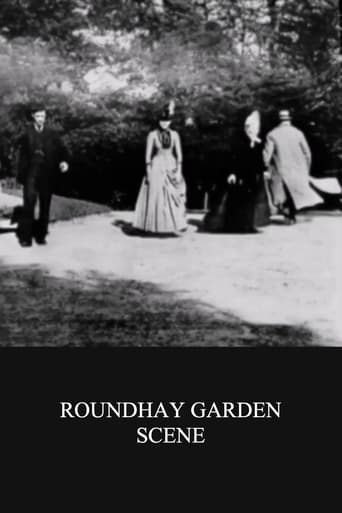
The earliest surviving motion-picture film, and believed to be one of the very first moving images ever created, was shot by Louis Aimé Augustin Le Prince using the LPCCP Type-1 MkII single-lens camera. It was taken on paper-based photographic film in the garden of Oakwood Grange, the Whitley family house in Roundhay, Leeds, West Riding of Yorkshire (UK), on 14 October 1888. The film shows Adolphe Le Prince (Le Prince’s son), Mrs. Sarah Whitley (Le Prince’s mother-in-law), Joseph Whitley, and Miss Harriet Hartley walking around in circles, laughing to themselves, and staying within the area framed by the camera. Roundhay Garden Scene is often associated with a recording speed of around 12 frames per second and runs for about 2 to 3 seconds.

The history of cinematic sound, told by legendary sound designers and visionary filmmakers.

This documentary from Albert and David Maysles follows the bitter rivalry of four door-to-door salesmen working for the Mid-American Bible Company: Paul "The Badger" Brennan, Charles "The Gipper" McDevitt, James "The Rabbit" Baker and Raymond "The Bull" Martos. Times are tough for this hard-living quartet, who spend their days traveling through small-town America, trying their best to peddle gold-leaf Bibles to an apathetic crowd of lower-middle-class housewives and elderly couples.

A compilation of over 30 years of private home movie footage shot by Lithuanian-American avant-garde director Jonas Mekas, assembled by Mekas "purely by chance", without concern for chronological order.

A documentary on the expletive's origin, why it offends some people so deeply, and what can be gained from its use.
In 1972, a seemingly typical shoestring budget pornographic film was made in a Florida hotel: "Deep Throat," starring Linda Lovelace. This film would surpass the wildest expectation of everyone involved to become one of the most successful independent films of all time. It caught the public imagination which met the spirit of the times, even as the self-appointed guardians of public morality struggled to suppress it, and created, for a brief moment, a possible future where sexuality in film had a bold artistic potential. This film covers the story of the making of this controversial film, its stunning success, its hysterical opposition along with its dark side of mob influence and allegations of the on set mistreatment of the film's star.

Daniel Craig candidly reflects on his 15 year adventure as James Bond. Including never-before-seen archival footage from Casino Royale to the upcoming 25th film No Time To Die, Craig shares his personal memories in conversation with 007 producers, Michael G Wilson and Barbara Broccoli.
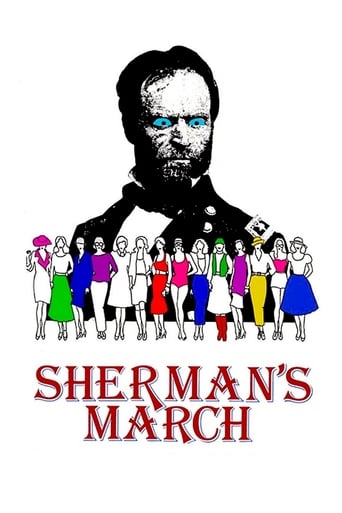
Documentarian Ross McElwee originally set out to make a travelogue of sorts tracing General William T. Sherman's infamous scorched-earth march through the Confederacy in the latter stages of the Civil War. Instead, haunted by a recent breakup with a girlfriend, McElwee ends up documenting his progress -- or lack thereof -- in starting a new relationship. His journey then becomes one of self-reflection and self-discovery rather than a historical/sociological exploration.

A documentary about the life and films of director John Ford.
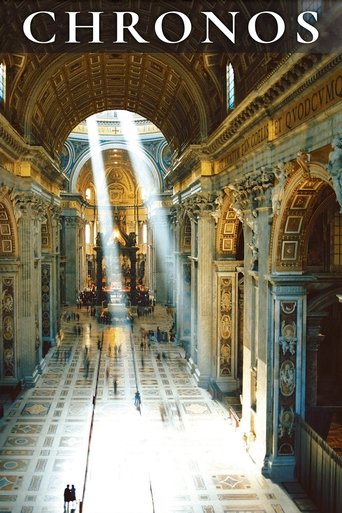
Carefully picked scenes of nature and civilization are viewed at high speed using time-lapse cinematography in an effort to demonstrate the history of various regions.

Ranjit, a farmer in India, takes on the fight of his life when he demands justice for his 13-year-old daughter, the victim of a brutal gang rape. His decision to support his daughter is virtually unheard of, and his journey unprecedented.
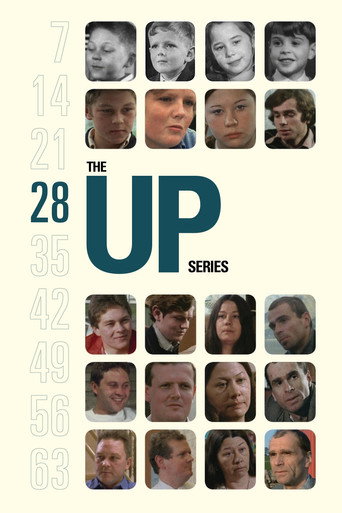
Just two years away from turning 30, participants in Michael Apted's documentary series are facing serious questions of identity and purpose, wondering whether they've found their place in the world.

A documentary about ten very different lives connected by having appeared onscreen wearing masks or helmets in Star Wars.

When Allied forces liberated the Nazi concentration camps in 1944-45, their terrible discoveries were recorded by army and newsreel cameramen, revealing for the first time the full horror of what had happened. Making use of British, Soviet and American footage, the Ministry of Information’s Sidney Bernstein (later founder of Granada Television) aimed to create a documentary that would provide lasting, undeniable evidence of the Nazis’ unspeakable crimes. He commissioned a wealth of British talent, including editor Stewart McAllister, writer and future cabinet minister Richard Crossman – and, as treatment advisor, his friend Alfred Hitchcock. Yet, despite initial support from the British and US Governments, the film was shelved, and only now, 70 years on, has it been restored and completed by Imperial War Museums under its original title "German Concentration Camps Factual Survey".

From the heights of her modeling fame to her tragic death, this documentary reveals Anna Nicole Smith through the eyes of the people closest to her.

In an intimate and joyful story of love in the face of loss, celebrated poets Andrea Gibson and Megan Falley find strength—and unexpected hilarity—in what might be their final year together.
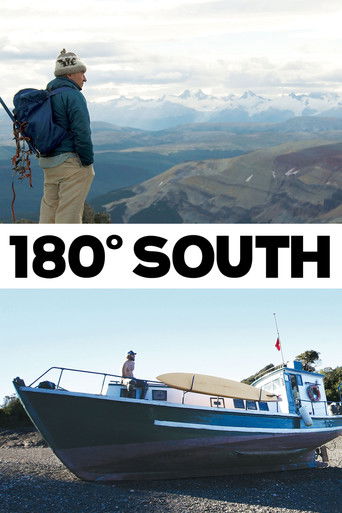
The film follows adventurer Jeff Johnson as he retraces the epic 1968 journey of his heroes Yvon Chouinard and Doug Tompkins to Patagonia.
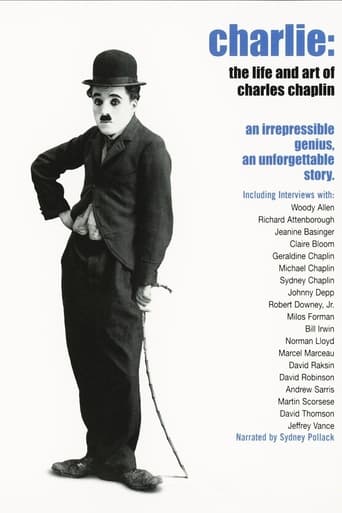
Brilliant, long in-the-works story of the life and art of the world's greatest comedian and the cinema's first genius, Charlie Chaplin. Produced, written and directed by renowned film critic Richard Schickel.

As a visually radical memoir, CAMERAPERSON draws on the remarkable footage that filmmaker Kirsten Johnson has shot and reframes it in ways that illuminate moments and situations that have personally affected her. What emerges is an elegant meditation on the relationship between truth and the camera frame, as Johnson transforms scenes that have been presented on Festival screens as one kind of truth into another kind of story—one about personal journey, craft, and direct human connection.
Similar titles
Short documentary on a central african tribe called 'The Chillouks'.

For nearly three decades Laura Aguilar has used photography as a tool to speak about people and issues not considered part of the cultural mainstream. Laura Aguilar: Life, the Body, Her Perspective presents personal video essays by the artist, a lecture she gave at UCLA in 2005 that describes her life as a photographer, plus an interview and documentary filmed by Michael Stone. A comprehensive series of slide shows features works from her extensive oeuvre, including Family and Friends, In Sandy’s Room, and Clothed/Unclothed. A bonus CD contains a PowerPoint survey that enables students and educators to study individual images, facilitating discussion of Aguilar’s groundbreaking art.

Legendary drag performer Ocaña in performance with a cardboard Marilyn on the west side of the Berlin Wall.
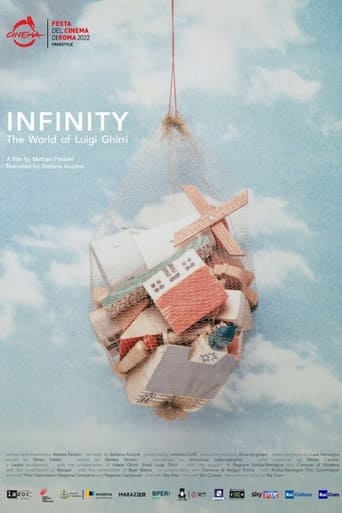
In this poetic portrayal of Luigi Ghirri (1943–1992), a master of contemporary photography, the director gives voice and, in particular the image, to the protagonist. The photographer takes the audience on a tour of the outskirts of daily life as seen from the corner of his eye, the area in between what is artificial and authentic or grand and small – the meso-scale.

To support his mother in Mexico, Angel, a nude dancer, turns the web into his new stage.
A short documentary and character study about a woman's complex relationship with religion and family.
Shannon Amen unearths the passionate and pained expressions of a young woman overwhelmed by guilt and anxiety as she struggles to reconcile her sexual identity with her religious faith. A loving elegy to a friend lost to suicide.
Directors Errol Morris and Werner Herzog describe and discuss the film The Act of Killing (2012).
This video focuses primarily on the implications of the structure and format of television, especially the consequences of concision, and how these factors can shape the messages of the medium. In addition, other issues, such as how democracies handle dissenters, and how the mainstream media have treated the challenges of Noam Chomsky's media critiques are explored. The media construct reality, and in the conclusion we see the author participating in that very process.
Beginning with Noam Chomsky's response to a college student who role-plays "Jane U.S.A."--someone who naively believes she lives in a democratic society in which she can create her own destiny--the viewer is presented with a cross-section of typically lively Chomsky encounters. Central to a functioning democracy is the necessity of free access to information, ideas and opinions. But what should be our democratic right turns out to be limited and shaped by the biases of insitutions and ideologies within the mass media. Chomsky shows how governments, corporations and other elites manufacture the consent of the public to serve their interests.
Chomsky on the media treatment of the Indonesian invasion of East Timor and Pol Pot's atrocities in Cambodia
In this video, Noam Chomsky concentrates on the contemporary institutions and powers which have set limits on human progress and offers us some concrete ways of challenging them; in effect, he presents a vision of a future society. Chomsky's work is directed at developing intellectual self-defense for "ordinary people" who are often isolated in their struggles. States are seen to be violent through such strategies as the near-genocide of aboriginal peoples. Ultimately, Chomsky feels we must move beyond the myths of modern industrial civilization and the privileged elites who dominate mass communication, and instead foster the interests of a truly global community.
This video focuses on the formative influences in Noam Chomsky's life--those factors which enable him to become a politically engaged intellectual. Starting out as a linguist at the Massachusetts Institute of Technology, where his work revolutionized the study of language, Chomsky was radicalized by the 1960s anti-war movement and became a major critic of American policy. We learn about the important Jewish intellectual influences of his family, as well as those defining incidents in his early schooling that made a lasting impression.
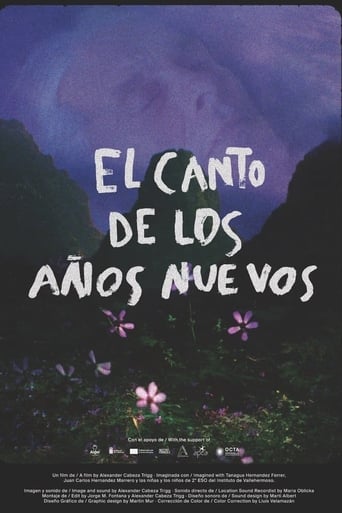
On the island of La Gomera, children imagine stories while they examine archeological remains. An ethno-fictional journey in which past and present coalesce, creating resonances between the volcanic landscape and Silbo, the whistled language of the island.

Ivan and Jožica, a married couple, move to a care home after 70 years of sharing their lives. Despite the hardships of old age, they continue to live together in the new environment. Memories are fading, love remains.
A method soldier boys have for amusing themselves in their leisure moments. New comrades are frequently initiated by the old-fashioned sport of tossing in a blanket. The newly arrived recruit, who is the victim of their sport, enjoys himself, perhaps, less than the other participants.

This documentary, the final film directed by Frank Capra, explores America's plans for the future of space exploration. It was produced by the Martin-Marietta Corporation for exhibition in the Hall of Science at the 1964 New York World's Fair.
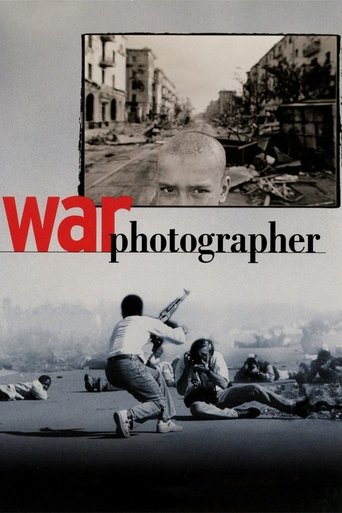
Documentary about war photographer James Nachtwey, considered by many the greatest war photographer ever.