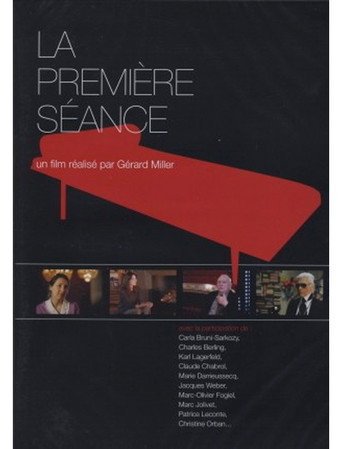
La première séance
2009-11-07 · 52 min · Not rated
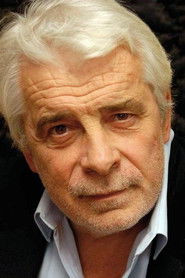
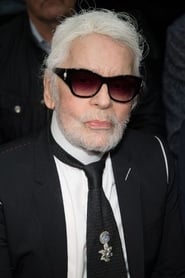
For the first time, filmed by psychoanalyst Gérard Miller, famous and ordinary patients speak in a documentary about their “first session” of analysis—the one that sets the course for a personal journey that may last for years. Among them are Jacques Weber, Charles Berling, Marc-Olivier Fogiel, Marie Darrieussecq, and Carla Bruni-Sarkozy—who is the only wife of a sitting head of state to speak candidly about why and how she has been in analysis for the past eight years. But why did all these “analysands” go to see a psychoanalyst? What happened during their first session? Why did they continue? And why did some, like Karl Lagerfeld or Claude Chabrol, become critics of Freudian theory? The inside of the consulting room, where everyone dreams of being a fly on the wall and hearing what is said, but also… everything that goes on around, before, and after.
Trailers are previews, not full movies.
No authorized playback source configured. Use the legal watch options below.
Production details
- Directors
- Gérard Miller
- Production companies
- France•3
- Countries
- Unavailable
- Status
- Released
Top Cast
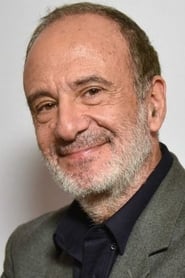 Gérard Miller
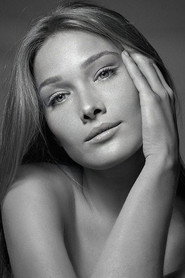 Carla Bruni
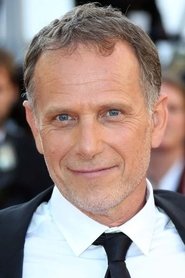 Charles Berling
 Claude Chabrol
 Jacques Weber
 Karl Lagerfeld
 Marc Jolivet
 Marc-Olivier Fogiel
 Patrice Leconte
Title information and images are supplied by TMDb. Explore our discovery guide for advice on comparing metadata and legal viewing options.
Where to watch
Availability provided by JustWatch via TMDb. Offers can change. Provider links are listed on TMDb; full playback requires a separately authorized source.
Availability not listed for this country.
Seasons & episodes
Recommendations

Director Michael Apted revisits the same group of British-born adults after a 7 year wait. The subjects are interviewed as to the changes that have occurred in their lives during the last seven years.

In an intimate and joyful story of love in the face of loss, celebrated poets Andrea Gibson and Megan Falley find strength—and unexpected hilarity—in what might be their final year together.

A compilation of over 30 years of private home movie footage shot by Lithuanian-American avant-garde director Jonas Mekas, assembled by Mekas "purely by chance", without concern for chronological order.

Through deeply personal interviews with her siblings and an examination of the photographs, letters, and belongings left behind, Mariska assembles a new portrait of her mother Jayne Mansfield, an extraordinary and complex woman.

Director Michael Apted revisits the same group of British-born adults after a 7 year wait. The subjects are interviewed as to the changes that have occurred in their lives during the last seven years.

A documentary about the life and films of director John Ford.

The life and career of an actor, artist, and icon. His own journey through his own camera.
New exclusive access and never before heard testimony gives a unique insight into the mind of America's most notorious serial killer, Ted Bundy. Breathtaking archive from the time and the voice of Bundy himself, reveals the monster inside the man.
The life of Mr. Spock, as well as that of Leonard Nimoy, the actor who played him for almost fifty years, written and directed by his son: Adam.

Daniel Craig candidly reflects on his 15 year adventure as James Bond. Including never-before-seen archival footage from Casino Royale to the upcoming 25th film No Time To Die, Craig shares his personal memories in conversation with 007 producers, Michael G Wilson and Barbara Broccoli.

An inside look at one of the most anticipated movie sequels ever with James Cameron and cast.

Al Pacino's deeply-felt rumination on Shakespeare's significance and relevance to the modern world through interviews and an in-depth analysis of "Richard III."

This revealing documentary honors the legendary Sidney Poitier—iconic actor, filmmaker, and civil rights activist. Featuring interviews with Denzel Washington, Spike Lee, Halle Berry, and more.

Brilliant, long in-the-works story of the life and art of the world's greatest comedian and the cinema's first genius, Charlie Chaplin. Produced, written and directed by renowned film critic Richard Schickel.
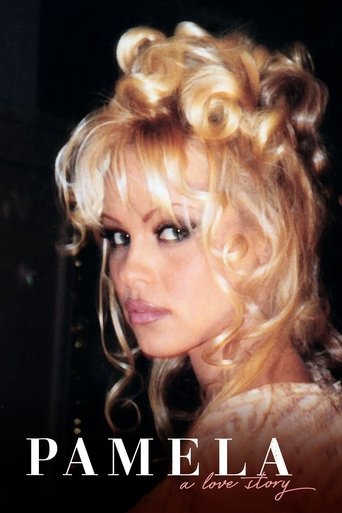
In her own words, through personal video and diaries, Pamela Anderson shares the story of her rise to fame, rocky romances and infamous sex tape scandal.
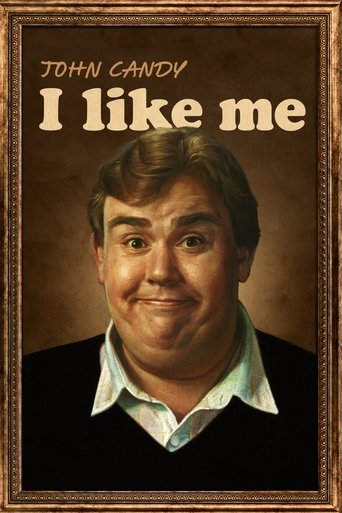
Those who knew iconic funnyman John Candy best share his story, in their own words, through never-before-seen archival footage, imagery, and interviews.
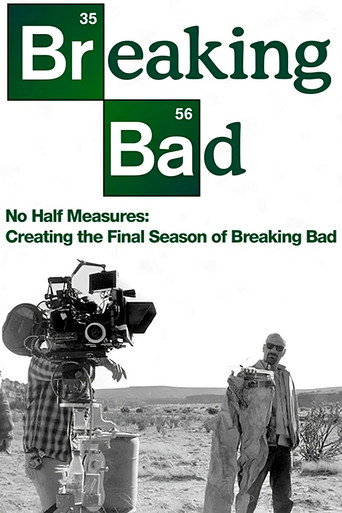
A documentary about the making of season five of the acclaimed AMC series Breaking Bad.

From the heights of her modeling fame to her tragic death, this documentary reveals Anna Nicole Smith through the eyes of the people closest to her.
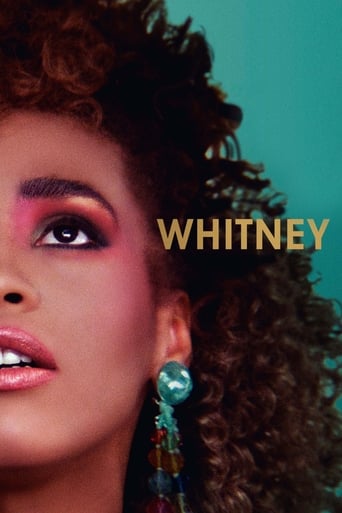
Examines the life and career of singer Whitney Houston. Features never-before-seen archival footage, exclusive recordings, rare performances and interviews with the people who knew her best.
From a prolific career in film and television, Anton Yelchin left an indelible legacy as an actor. Through his journals and other writings, his photography, the original music he wrote, and interviews with his family, friends, and colleagues, this film looks not just at Anton's impressive career, but at a broader portrait of the man.
Similar titles
A documentary about the legendary Japanese filmmaker.
An intimate conversation between Félix Guattari and psychiatrist Danielle Sivadon.
In "psychanalyse", a two part documentary, the psychoanalyst Jacques Lacan answers to questions submitted by his son-in-law Jacques-Alain Miller under the direction of Benoit Jacquot. The Office de Radiodiffusion Television Francaise (ORTF, the french public TV) broadcast this program. This documentary and its text became famous because this is the only televisual experience practiced by Lacan. A fair amount is made of the fact that Lacan was renowned for his powers of seduction and what effect this had on transference in the clinical setting. According to some of the interviewees, he could be irresistibly seductive, so much so that some thought him "monster".
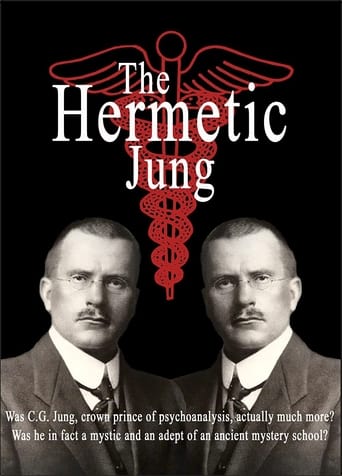
Acclaimed author Gary Lachman looks at renowned psychoanalyst C.G. Jung's work from an esoteric viewpoint, drawing parallells to the disciplines of mysticism and occultism.
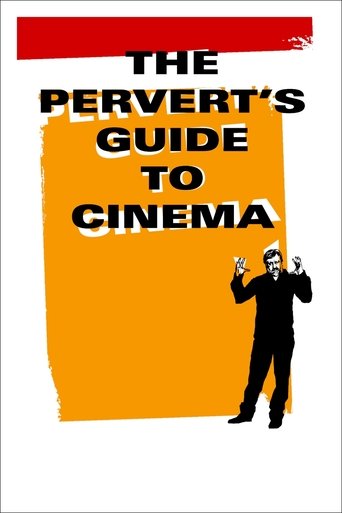
A hilarious introduction, using as examples some of the best films ever made, to some of Slovenian philosopher and psychoanalyst Slavoj Žižek's most exciting ideas on personal subjectivity, fantasy and reality, desire and sexuality.

Made for Italian national television, Ellis Donda’s Il Corpo Rubato (The Stolen Body) is an experimental documentary on psychoanalisis in 70s/80s Italy, its analytical practices and forms of suggestion.
Epigenetics and psychogenealogy through a VERY personal experience.
Psychoanalysis in El Barrio shows the experience of Latino psychoanalysts in the United States bringing psychoanalysis to Latino communities. It features interviews with ten Latino analysts (whose heritage is from a variety of Latino cultures) as well as students. It uniquely shows some of those communities in Philadelphia, New York City, and Texas and Interviews Latinos in the street on their thoughts about therapy. And it discusses issues of culture, bias, language and transference that occur for Latino analysts and their patients. The video challenges psychoanalysts to understand the culture and economic circumstances of Latinos in the United States and to bring psychoanalytically informed therapy to them. It Is a consequence of conferences held by the Institute for Psychoanalytic Training and Research (IPTAR) and the Clinical Psychology Department of The New School.
This compelling film represents a rare record of an original genius. In Jung on Film, the pioneering psychologist tells us about his collaboration with Sigmund Freud, about the insights he gained from listening to his patients' dreams, and about the fascinating turns his own life has taken. Dr. Richard I. Evans, a Presidential Medal of Freedom nominee, interviews Jung, giving us a unique understanding of Jung's many complex theories, while depicting Jung as a sensitive and highly personable human being.
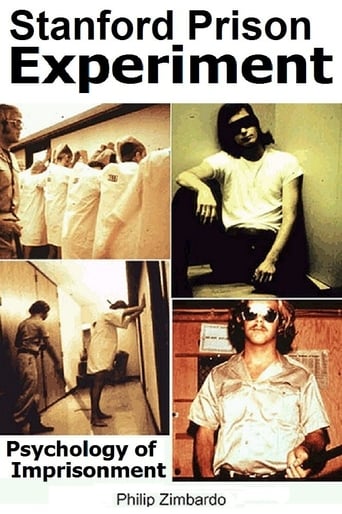
The Stanford prison experiment was a landmark psychological study of the human response to captivity, in particular, to the real world circumstances of prison life, and the effects of imposed social roles on behaviour. It was conducted in 1971 by a team of researchers led by Philip Zimbardo of Stanford University.
A film about the noted American linguist/political dissident and his warning about corporate media's role in modern propaganda.

Carl Gustav Jung interviewed on the subject of 'Sigmund Freud': how Jung met him, how he was influenced by him and where he disagreed with him. Jung talks about word association, Freudian slips, the unconscious, the Oedipus complex, the ego, archetypes, falling in love and more.

Resonating Surfaces is triple portrait, of a city, a woman and an attitude to life. For the personal story of Suely Rolnik, who is a Brazilian psychoanalyst currently living in São Paulo, involves the Brazilian dictatorship of the sixties as well as the Parisian intellectual climate surrounding Deleuze and Guattari in the seventies. The film is woven through by different themes: the other and the relation to otherness, the connection between body and power, the voice and, ultimately, the micropolitics of desire and of resistance.
BLIND TRUST celebrates the life and work of Nobel Peace Prize nominee Vamik Volkanis, a psychiatrist and psychoanalyst who has spent a lifetime bringing enemy groups together for dialogue in traumatized regions of the globe. The film recounts Volkan's journey in unofficial diplomacy working in the Middle East, Estonia, the former Yugoslavia and the Republic of Georgia. The story dramatizes the new vocabulary he created for understanding large group psychology.

In 1950 Jerome Hill went to Zurich with the intention of making a film about Dr. Carl G. Jung. The project was abandoned when Hill decided that Jung was not a good subject. After Hill's death, Jonas Mekas edited the film which focuses on Dr. Jung as a person.
A film by Spetsnaz, narrated through a first person perspective, documenting his journey and the journeys of countless other men. "A Documentary Told in Four Chapters. Featuring many favorite content creators & some of the videos that impacted me the most in my journey. This Feature does not take a historical approach but is rather an expression of my experience discovering men going their own way content & the impact it had on my development. It is told from a personal individual perspective. I wanted to make this video to have closure on that chapter in my life & to leave a record of what was & what continues to evolve. The insights & shared experiences of men are more important now than ever. They certainly helped me."
A documentary about Jacques Lacan and his influence on the main tendencies of modern psychoanalysis. It begins with a series of interviews with psychoanalysts who knew Lacan, and then presents an overview of Lacanian theory and practice that explores what actually happens in psychoanalysis.
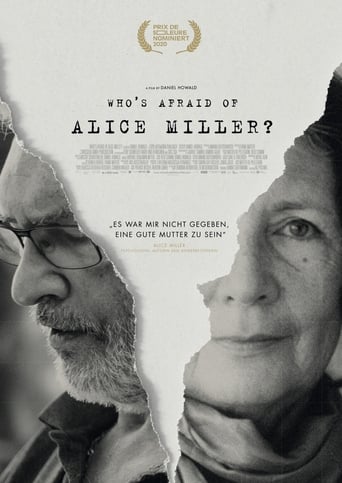
Martin is rejected by his mother with callousness and beaten by his father: a childhood without love. The story sounds like a case study from the book "The Drama of the Gifted Child" by the world-famous Swiss psychoanalyst Alice Miller. But Martin is the son of the committed child rights activist...
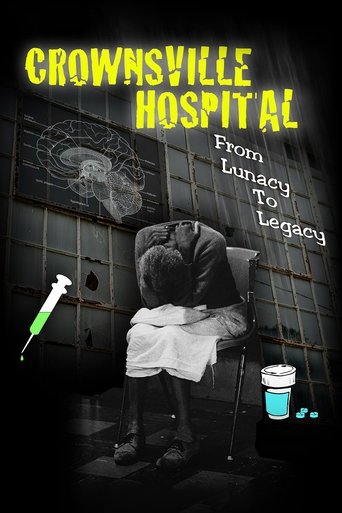
Crownsville Hospital: From Lunacy to Legacy is a feature-length documentary film highlighting the history of the Crownsville State Mental Hospital in Crownsville, MD.
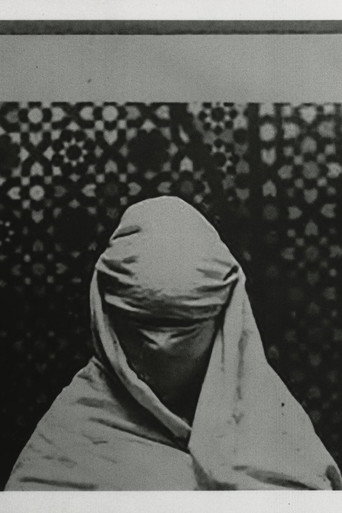
A visual and psychological investigation of the French psychiatrist and photographer Gaëtan Gatian de Clérambault (1872–1934), who took thousands of images in Morocco of veiled Islamic women, and sometimes men, through which he sought to explore his psychoanalytic ideas about covering and fantasy. Through a digital re-imagining of his death — a suicide in front of a mirror —, followed by assessments of clinicians and academics, The Fold explores de Clérambault’s significance as a historical figure while also looking more broadly at the way we understand images. The interviews are filmed within a setting inspired by the house of mirrors in Orson Welles’s The Lady from Shanghai (1947) and draw on the aesthetic of film noir, a style of cinema that commonly features a crime-centred narrative and morally ambiguous male protagonists.