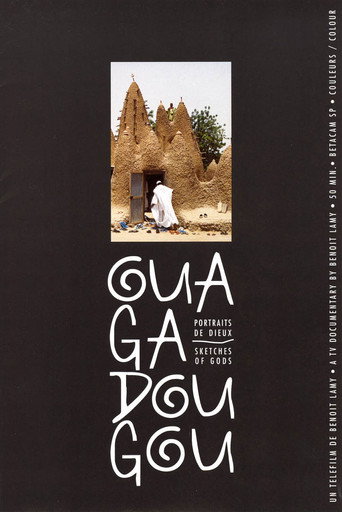
Ouagadougou – portraits de dieux
1992-01-01 · 50 min · Not rated
Ouagadougou – Portraits of Gods (1992) explores contemporary Burkina Faso through the intertwined journeys of two Burkinabè men and a Belgian painter. As Christianity, Islam, and ancestral beliefs coexist in everyday life, the film reveals how the sacred is woven into ordinary existence. Blending intimate observation with visual portraiture, Benoît Lamy offers a poetic reflection on identity, spirituality, and the invisible forces that shape human lives.
Trailers are previews, not full movies.
No authorized playback source configured. Use the legal watch options below.
Production details
- Directors
- Benoît Lamy
- Production companies
- CBA, RTBF, Lamy Films, Cinecom Production
- Countries
- Burkina Faso, Belgium
- Status
- Released
Top Cast
Cast unavailable.
Title information and images are supplied by TMDb. Explore our discovery guide for advice on comparing metadata and legal viewing options.
Where to watch
Availability provided by JustWatch via TMDb. Offers can change. Provider links are listed on TMDb; full playback requires a separately authorized source.
Availability not listed for this country.
Seasons & episodes
Recommendations

Documentary filmmaker Amy Berg investigates the life of 30-year pedophile Father Oliver O'Grady and exposes the corruption inside the Catholic Church that allowed him to abuse countless children. Victims' stories and a disturbing interview with O'Grady offer a view into the troubled mind of the spiritual leader who moved from parish to parish gaining trust ... all the while betraying so many.
Nine filmmakers each profile a young girl from a different part of the world to weave a global tapestry of youth in the 21st century.
Thousands of royal artifacts of Dahomey, a West African kingdom, were taken by French colonists in the 19th century for collection and display in Paris. Centuries later, a fraction returned to their home in modern-day Benin. This dramatized documentary follows the journey of 26 of the treasures as told by cultural art historians, embattled university students, and one of the repatriated statues himself.
A paralysingly beautiful documentary with a global vision—an odyssey through landscape and time—that attempts to capture the essence of life.

A detailing of the rise to prominence and global sporting superstardom of six supremely talented young Manchester United football players (David Beckham, Nicky Butt, Ryan Giggs, Paul Scholes, Phil and Gary Neville). The film covers the period 1992-1999, culminating in Manchester United's European Cup triumph.
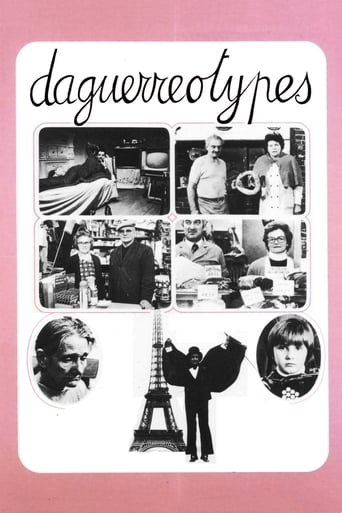
An intimate portrait of the small shops and shopkeepers of the Rue Daguerre in Paris, a picturesque street that has been the filmmaker’s home for more than 50 years.

A visual montage portrait of our contemporary world dominated by globalized technology and violence.

In the Realms of the Unreal is a documentary about the reclusive Chicago-based artist Henry Darger. Henry Darger was so reclusive that when he died his neighbors were surprised to find a 15,145-page manuscript along with hundreds of paintings depicting The Story of the Vivian Girls, in What is Known as the Realms of the Unreal, of the Glodeco-Angelinnian War Storm, Cased by the Child Slave Rebellion.

Martin Scorsese, Robert De Niro, Joe Pesci, and Al Pacino in conversation about The Irishman.
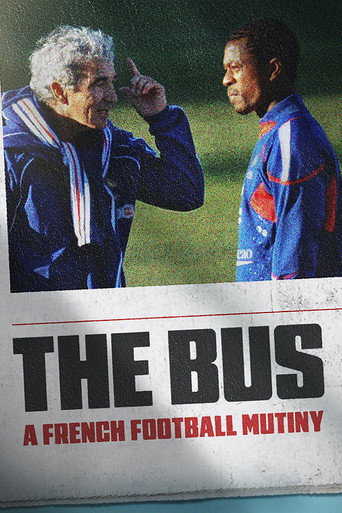
This documentary revisits the French football team's controversial 2010 World Cup and the bus strike that sparked global headlines and national outrage.

The Oscar nominated actor best known for his role of Mr. Miyagi, left behind a painfully revealing autobiographical record of his much-too-brief time here on earth. Tracing his journey from being bed bound as a boy to the bright lights and discrimination in Hollywood. Deep inside that sweet, generous, multi-talented performer seethed an army of demons, that even alcohol and drugs couldn't mask.
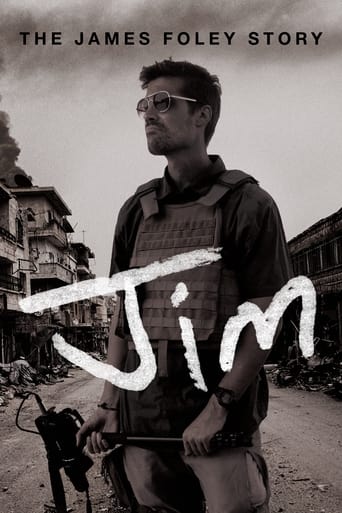
In August, 2014, a video of the public execution of American photojournalist James Foley rippled across the globe. Foley wore an orange jumpsuit as he knelt beside an ISIS militant dressed in black. That image challenged the world to deal with a new face of terror. And it tested one American family. Seen through the lens of filmmaker Brian Oakes, Foley’s close childhood friend, Jim takes us from small-town New England to the adrenaline-fueled front lines of Libya and Syria, where Foley pushed the limits of danger to report on the plight of civilians impacted by war.
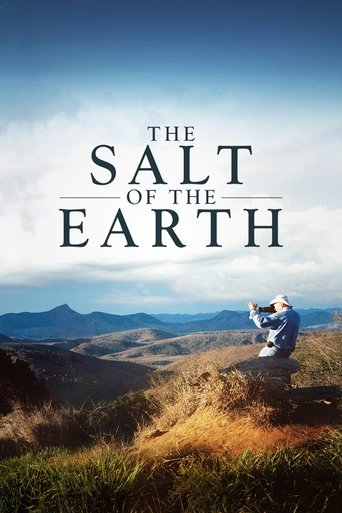
During the last forty years, the photographer Sebastião Salgado has been travelling through the continents, in the footsteps of an ever-changing humanity. He has witnessed the major events of our recent history: international conflicts, starvations and exodus… He is now embarking on the discovery of pristine territories, of the wild fauna and flora, of grandiose landscapes: a huge photographic project which is a tribute to the planet's beauty. Salgado's life and work are revealed to us by his son, Juliano, who went with him during his last journeys, and by Wim Wenders, a photographer himself.

A primetime special with performances from the superstar including Adele’s first new material in six years plus her chart-topping hits. The special will also feature an exclusive interview with Adele by Oprah Winfrey from her rose garden, in Adele’s first televised wide-ranging conversation.
In the remote and forgotten wilderness of Lake Natron, in northern Tanzania, one of nature's last great mysteries unfolds: the birth, life and death of a million crimson-winged flamingos.
A documentary about the making of David Fincher's 2008 film THE CURIOUS CASE OF BENJAMIN BUTTON. Virtually every element in the evolution of the Fincher's film is documented here, from the project's attachment to numerous other directors during the 1990s, to its shoot in 2006 and 2007 in New Orleans, to its complex, CGI-intensive postproduction process.
January 2016. The love story that brought me to this village in Alsace where I live ended six months ago. At 45, I am now alone, without a car, a job or any real prospects, surrounded by luxuriant nature, the proximity of which is not enough to calm the deep distress into which I am plunged. I am lost and I watch four to five films a day. I decide to record this stagnation, not by picking up a camera but by editing shots from the stream of films I watch.
As his life comes to its end, famous Hollywood director Orson Welles puts it all on the line at the chance for renewed success with the film The Other Side of the Wind.
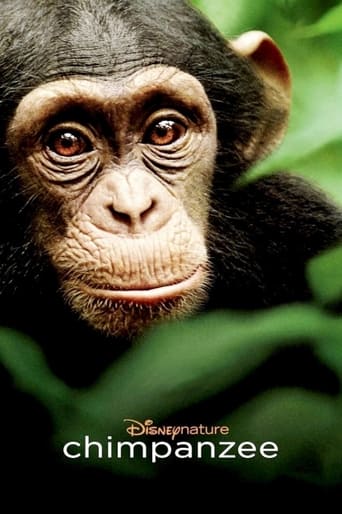
A nature documentary centered on a family of chimps living in the Ivory Coast and Ugandan rain forests. Through Oscar, a little chimpanzee, we discover learning about life in the heart of the African tropical forest and follow his first steps in this world with humor, emotion and anguish. Following a tragedy, he finds himself separated from his mother and left alone to face the hostility of the jungle. Until he is picked up by an older chimpanzee, who will take him under her protection.
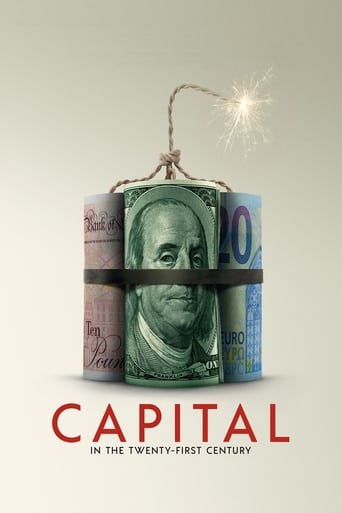
Film adaptation of French economist Thomas Piketty's ground-breaking global bestseller of the same name: an eye-opening journey through wealth and power.
Similar titles
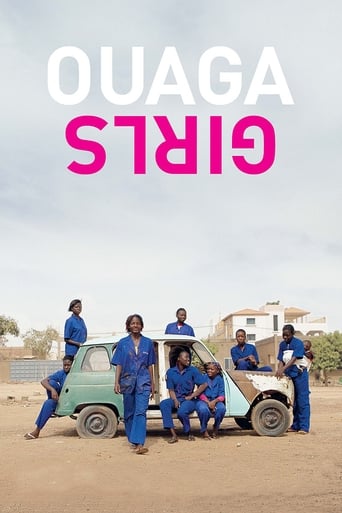
A group of young women from Ouagadougou study at a girl school to become auto mechanics. The classmates become their port of safety, joy and sisterhood, all while they are going through the life changing transition into becoming adults in a country boiling with political changes. In a country with youth unemployment at 52 percent, jobs are a hot issue. The young girls at a mechanics school in Burkina Faso’s capital Ouagadougou are right in the middle of a crucial point in life when their dreams, hopes and courage are confronted with opinions, fears and society’s expectations of what a woman should be. Using interesting narrative solutions, Theresa Traore Dahlberg depicts their last school years and at the same time succeeds in showing the country’s violent past and present. This is a feature-film debut and coming-of-age film with much warmth, laughs, heartbreak and depth.

In the African nation of Burkina Faso, drums such as the djembe are more than a simple instrument; they have long been used for communication and storytelling as well as musical accompaniment, as this fascinating documentary illustrates. Explore the role the drum has played in Burkina Faso's history, and how the current generations' quest to move away from tradition threatens this time-honored instrument of oral history.
In a quest to rediscover the spiritual values of his own people, an African filmmaker from the Gourmantche tribe of Burkina Faso visits an Aboriginal band, the Atikamekw of northern Quebec. The resulting documentary is a dialogue between those who divine the future in the sand with those who use snow-encased sweat lodges to reconnect with the spiritual world.

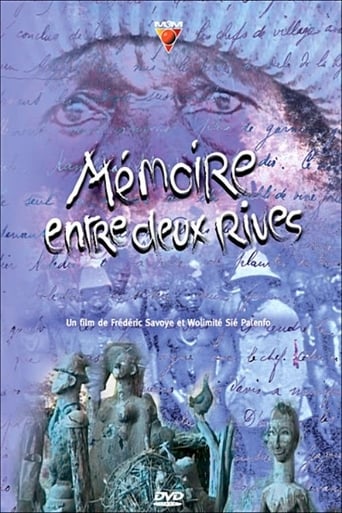
This documentary follows the traces of the French colonization of the country Lobi. In this region of southwestern Burkina Faso, there is not a village, not a family that does not remember the suffering brought by the colonizers. Confronted with the archival documents of the administrators, the oral tradition, through its numerous testimonies, allows us to trace back nearly a century of history, from the arrival of the first Whites until today. This word also testifies to the individual, social or religious consequences of this often painful history. Between the past and the present, between the living words and the writings of the colonists, "Mémoire entre deux rives" is as much a quest for Lobi identity as a reflection on "civilising" France.

Thomas Sankara, former president of Burkina Faso, was known as "the African Che", and became famous in Africa due to his innovative ideas, his devastating humor, his spirit and his altruism. More than a classic biography, this film sheds light on the impact that this man and his politic made on Burkina Faso and Africa in general.
For decades, the countries of the African Sahel region have been targets of colonialism and exploitation by France and other Western powers. This documentary addresses the popular resistance and new paths of development forged by Burkina Faso, Niger, and Mali after experiencing civil and military uprisings in recent years. The film explores the popular resistance that sustains the revolution in the three Sahel countries and was made after extensive coverage of the ongoing social dynamics and geopolitical disputes.
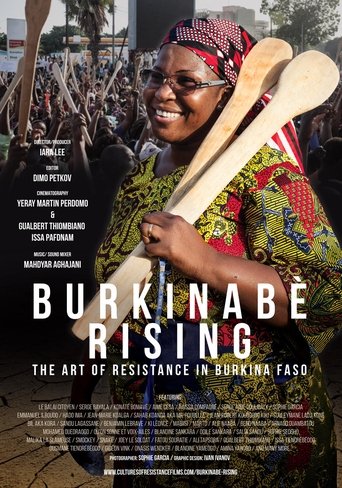
BURKINABÈ RISING: the art of resistnace in Burkina Faso showcases creative nonviolent resistance in Burkina Faso. A small, landlocked country in West Africa, Burkina Faso is home to a vibrant community of artists and engaged citizens, who provide an example of the type of political change that can be achieved when people come together. It is an inspiration, not only to the rest of Africa but also to the rest of the world. Through music, film, ecology, visual art, and architecture, the people featured in this film are carrying on the revolutionary spirit of Thomas Sankara. After assuming the presidency in 1983, Sankara was killed in a 1987 coup d'état led by his friend and close advisor Blaise Compaoré, who subsequently ruled the country as an autocrat for twenty-seven years. In October 2014, a massive popular insurrection led to his removal. Today, the spirit of resistance is mightier than ever in Burkina Faso.
October 2014. Ouagadougou, the capital of Burkina Faso, is the scene of an unarmed uprising that ousts the dictator in power since 1987 and later staves off an attempted coup. In 2015, the country votes freely for the first time in its history, yet real change remains allusive, especially regarding ongoing economic exploitation by foreign companies. In one year of struggle and resistance, the film follows the daily life of four Burkinabes: a musician and leader of the revolution, a local political candidate, a miner engaged in the labor movement, and an impoverished mother, all sharing hopes that the elections will change the country’s path.
Based on powerful archival material documenting the most daring moments in the struggle for liberation in the Third World, this documentary is accompanied by classic text from The Wretched of the Earth by Frantz Fanon.
Documentary about filmmaker, author, director, and performance artist Christoph Schlingensief and his last major project, building an opera village in Burkina Faso. What was initially planned as a festival theater soon developed into a more ambitious idea, and in addition to the theater, a school, a hospital, and living quarters for teachers and nursing staff were also planned. Beginning with the search for a suitable building site, the film also recounts the difficulties encountered during the work and Schlingensief's advancing cancer.
African masks in performance: The spectacular masks of the Winiama people in the rural village of Ouri, in Burkina Faso, perform to reenact the encounters between the village ancestors and the spirits of the wilderness. This video emphasizes performance. There are lots of long takes of individual mask's performances from start to finish, with musical accompaniment, crowd reaction. Professor Roy has taught African art history at the University of Iowa for thirty years, and he has been doing research in Burkina Faso for thirty-seven years. He recently published The Land of Flying Masks: Art and Culture of Burkina Faso (Munich: Prestel, 2007).
Like a modern-day version of Deadwood, a makeshift gold mine on the remote Diosso hillside in Burkina Faso has attracted a swarm of gold-diggers and dynamite blasters, healers and dealers, vendors and prostitutes, children, holy men and barbers. Living in the promiscuous closeness of a crowded and improvised gold town, these men and women are recklessly determined to find the gold that will change their lives. The film explores their desperate quest for fortune and elusive happiness. The gold rush is relentless.
The life story of Daniel Balimá, a horticulturist with a disability in Burkina Faso.
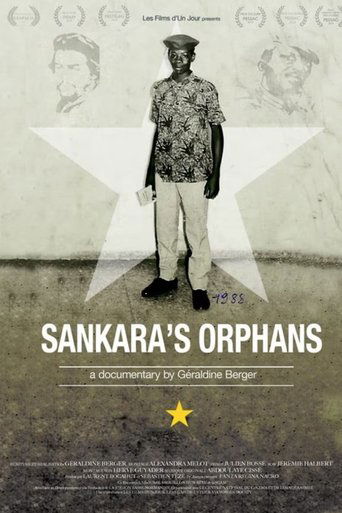
Thomas Sankara came to power in Burkina Faso in 1983, with the promise of a revolutionary government that would transform the West African country. To help build the revolution, he sent 600 children — many orphans from rural areas — to be educated in Cuba. But after Sankara’s assassination, the children were stranded. The last would only return to Burkina Faso in 2005. SANKARA’S ORPHANS tells their stories through interviews with some of the 600, along with archival footage of their lives on Cuba’s Isle of Youth — where both Sankara and Fidel Castro came to visit. Along with their education, the children worked in the fields and received weapons training. This, combined with their idealism, frightened the new Burkina Faso regime, which worried they might return and take up arms.
An inside look at slavery in the country of Burkina Faso, The Courage Of Others follows the journey of a slave (played by Sotigui Kouyaté) being taken across the African desert by his captors.
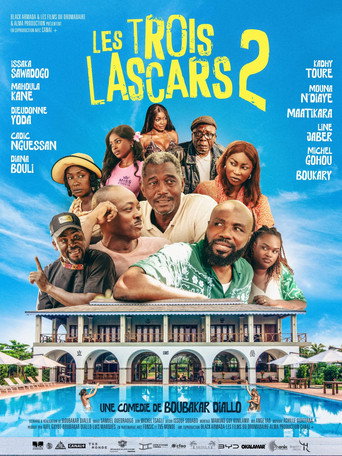
The day after their disastrous escapade, our three scoundrels, although publicly forgiven, face the persistent bad mood of their wives. One idea emerges: to offer them a dream weekend by the sea in Côte D'ivoire. The plan goes as planned in Assinie, until... the charming delegation of the Miss O'Tentik pageant arrives to rehearse their ceremony.