
Black Indians: An American Story
2004-01-01 · 60 min · ★ 6.4
This award-winning feature examines a minority group that is discounted and often ignored by mainstream media. Sharing a common past, many African Americans and Native Americans have combined to create a unique culture that has meshed the traditions and fine heritage of both. Little known, little documented, and often marginalized, this group has become all but invisible at the dawn of the new millennium. James Earl Jones narrates this examination of the historical relationship between American Indians and African-Americans, who often merged their cultures to work and live together while mainstream white society shunned them. Through illuminating anecdotes and interviews, descendants of fused black and Indian families discuss the complications of their mixed heritage and how their culture was largely erased on official documents.
Trailers are previews, not full movies.
No authorized playback source configured. Use the legal watch options below.
Production details
- Directors
- Chip Richie
- Production companies
- Rich-Heape Films
- Countries
- United States of America
- Status
- Released
Top Cast
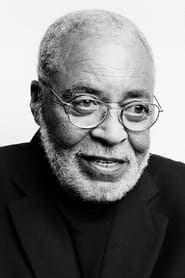 James Earl JonesNarrator
Title information and images are supplied by TMDb. Explore our discovery guide for advice on comparing metadata and legal viewing options.
Where to watch
Availability provided by JustWatch via TMDb. Offers can change. Provider links are listed on TMDb; full playback requires a separately authorized source.
Seasons & episodes
Recommendations

A visual montage portrait of our contemporary world dominated by globalized technology and violence.

Martin Scorsese, Robert De Niro, Joe Pesci, and Al Pacino in conversation about The Irishman.
A chronicle of the rise and fall of O.J. Simpson, whose high-profile murder trial exposed the extent of American racial tensions, revealing a fractured and divided nation.

Explore the evolution of Buzz Lightyear from toy to human in the making of Pixar’s Lightyear. Dive into the origin and cultural impact of everyone’s favorite Space Ranger, the art of designing a new “human Buzz,” and the challenges faced by the Lightyear crew along the way.

Al Pacino's deeply-felt rumination on Shakespeare's significance and relevance to the modern world through interviews and an in-depth analysis of "Richard III."

Through deeply personal interviews with her siblings and an examination of the photographs, letters, and belongings left behind, Mariska assembles a new portrait of her mother Jayne Mansfield, an extraordinary and complex woman.
An immersive look at the eventful life and brilliant artistic career of visionary American jazz trumpeter Miles Davis (1926-1991).
Takes us to locations all around the US and shows us the heavy toll that modern technology is having on humans and the earth. The visual tone poem contains neither dialogue nor a vocalized narration: its tone is set by the juxtaposition of images and the exceptional music by Philip Glass.
In the past 40 years, the War on Drugs has accounted for 45 million arrests, made America the world's largest jailer, and destroyed impoverished communities at home and abroad. Yet drugs are cheaper, purer, and more available today than ever. Where did we go wrong?
An exploration of technologically developing nations and the effect the transition to Western-style modernization has had on them.

Daniel Craig candidly reflects on his 15 year adventure as James Bond. Including never-before-seen archival footage from Casino Royale to the upcoming 25th film No Time To Die, Craig shares his personal memories in conversation with 007 producers, Michael G Wilson and Barbara Broccoli.

Have you ever read the Terms and Conditions and Privacy Policies connected to every website you visit, phone call you make, or app you use? Of course you haven’t. But those agreements allow corporations to do things with your personal information you could never even imagine. This film explores the intent hidden within these ridiculous agreements, and reveals what corporations and governments are legally taking from you and the outrageous consequences that result from clicking “I accept.”

THE SPIRIT MOLECULE weaves an account of Dr. Rick Strassman's groundbreaking DMT research through a multifaceted approach to this intriguing hallucinogen found in the human brain and hundreds of plants, including the sacred Amazonian brew, ayahuasca. Utilizing interviews with a variety of experts to explain their thoughts and experiences with DMT, and ayahuasca, within their respective fields, and discussions with Strassman’s research volunteers, brings to life the awesome effects of this compound, and introduces us to far-reaching theories regarding its role in human consciousness.

A documentary detailing the epic Rogues' Gallery of DC Comics from The Joker and Lex Luthor, Sinestro, Darkseid and more, this documentary will explore the Super Villains of DC Comics.

New York, 1980. Three complete strangers accidentally discover that they're identical triplets, separated at birth. The 19-year-olds' joyous reunion catapults them to international fame, but also unlocks an extraordinary and disturbing secret that goes beyond their own lives – and could transform our understanding of human nature forever.

Lupita Nyong'o narrates a documentary about Peanuts and its creator, Charles M. Schulz. Famous fans—including Drew Barrymore, Kevin Smith, and Al Roker—share its influence on them, and a new animated story finds Charlie Brown on a quest.
Scientists examine underground clues from over 250,000 years ago that raise questions about our early relatives — and what it truly means to be human.
Pushed to his breaking point, a master welder in a small town at the foot of the Rocky Mountains quietly fortifies a bulldozer with 30 tons of concrete and steel and seeks to destroy those he believes have wronged him.
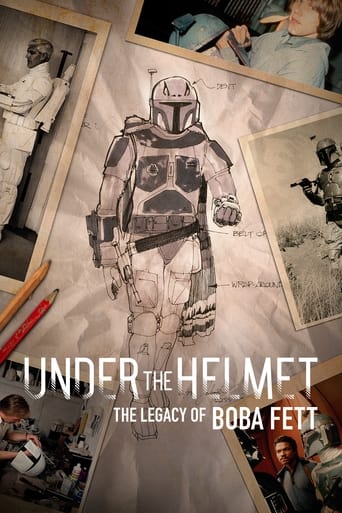
A special celebrating the origins and legacy of Star Wars' legendary bounty hunter, Boba Fett.
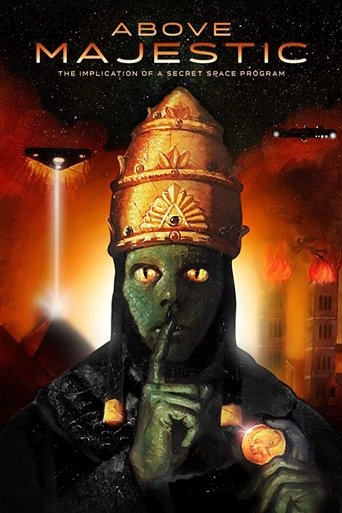
A look at the origins, history and conspiracies behind the "Majestic 12", a clandestine group of military and corporate figureheads charged with reverse-engineering extraterrestrial technology.
Similar titles
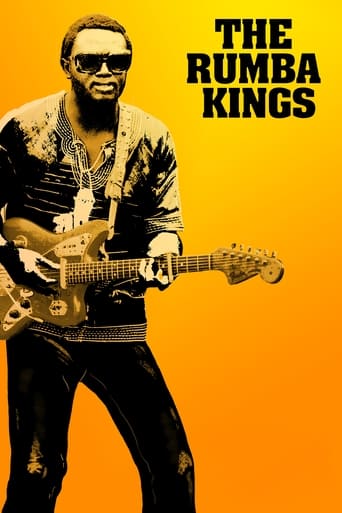
In the fifties, when the future Democratic Republic of Congo was still a Belgian colony, an entire generation of musicians fused traditional African tunes with Afro-Cuban music to create the electrifying Congolese rumba, a style that conquered the entire continent thanks to an infectious rhythm, captivating guitar sounds and smooth vocals.
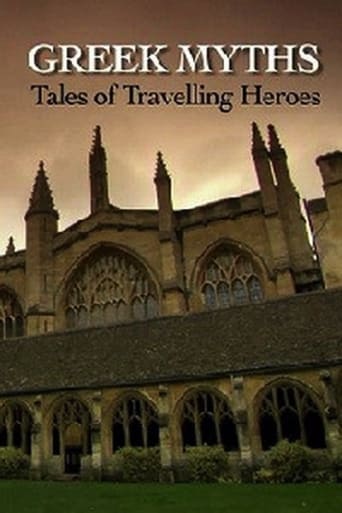
Eminent classical historian Robin Lane Fox embarks on a journey in search of the origins of the Greek myths. He firmly believes that these fantastical stories lie at the root of western culture, and yet little is known about where the myths of the Greek gods came from, and how they grew. Now, after 35 years of travelling, excavation and interpretation, he is confident he has uncovered answers.
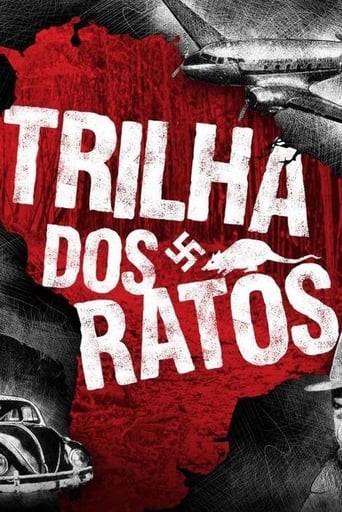
Before ending World War II, Nazi Germany, realizing it was going to lose the war, planned an escape route so that its high-ranking officers would not be convicted. Thousands of Nazis fled along these routes, with the help of the CATHOLIC CHURCH and the RED CROSS to America. Passports were issued and many criminals escaped and lived prosaically across America in exchange for German money and technology. These trails were called: RATILINES or TRACK OF THE RATS
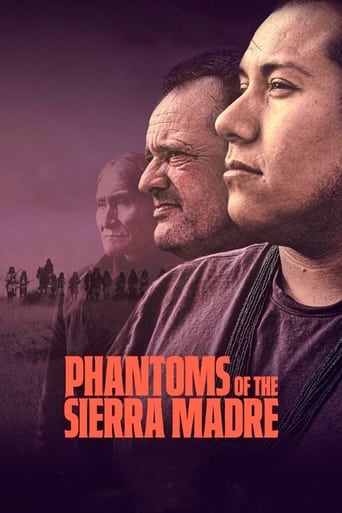
A Danish writer travels to Mexico with the purpose of locating a mysterious Apache tribe that fervently seeks to remain in obscurity.
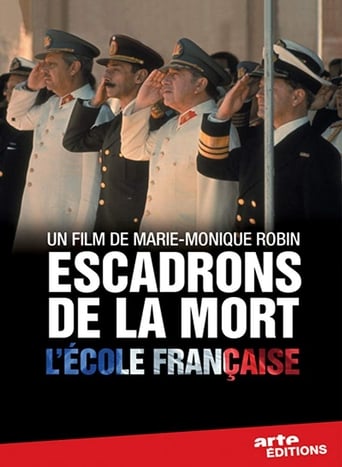
After the Battle of Algiers, France and its army exported, as true experts, anti-subversive methods to Latin America and the United States in the 1960s. After more than a year of investigation in Argentina , in Chile, Brazil, the United States and France, the director collected, sometimes under the cover of a hidden camera, recorded conversations, the exclusive testimonies of the main protagonists. From General Aussaresses to former Minister of the Armed Forces Pierre Messmer, including General Reynaldo Bignone (head of the military junta in Argentina from 1982 to 1984), General Albano Harguindéguy, General Manuel Contreras, and Generals John Johns and Carl Bernard, this investigation gives us a hidden reality of the country of Human Rights.

Four young people from Tanzania and Cameroon complete a year of weltwärts voluntary service in Germany. For each of them, it is their first visit in Europe. The film follows the volunteers throughout their year of service, it expresses different expectations, enthusiasm, goals and challenges. The volunteers describe subjectively their personal experiences as well as their view of Germany. The documentary is a thoughtful and exciting vision of the exchange program seen by four young people.
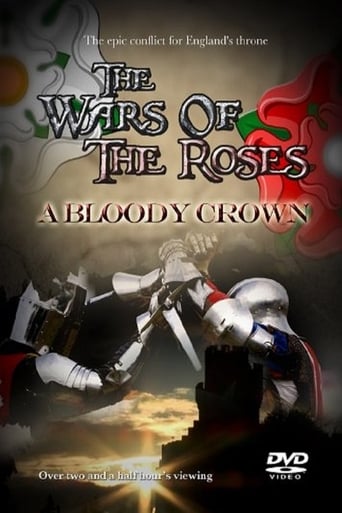
Using historically-accurate, battle-filled re-enactments and interviews with expert historians and noted authors, this two-part documentary series brings to vivid life the captivating true stories behind Britain's bloody civil wars.
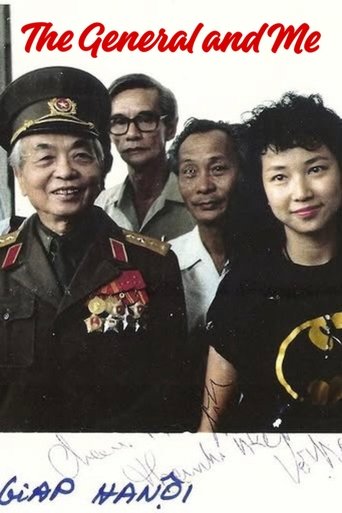
Over the period of 25 years the director met General Võ Nguyên Giáp, a legendary hero of Vietnam’s independence wars, a number of times. She was the first American who entered the home of the “Red Napoleon”. The fruit of this friendship is a film, personal and politically involved at the same time. Travelling across the country and talking to important figures as well as ordinary people, the director finds out more about her roots and offers the audience a unique perspective on Vietnam’s present and past.

5000 years ago the ancient Elamites established a glorious civilization that lasted about three millennia. They created marvelous works in architecture and craftsmanship. These works of art depict the lifestyle, thoughts, and beliefs of the Elamites.

The Metaphor That Became a Room is a psychological drama exploring identity, communication, and the struggle for self-understanding. Divided into two parts, the film first delves into the protagonist’s frustration with the urge to persuade others, realizing that over-explaining only distorts meaning. A note from the past echoes a hard truth: “Someone’s unwillingness to understand will always outweigh your effort.” In A Symphony of Unfinished Selves, the narrative shifts inward, revealing the protagonist’s fractured identity. Trapped in a metaphorical room built from illusions and contradictions, he reflects on his dual persona—the social facade and the hidden, lost self. The film questions how we see ourselves versus how others see us and whether true self-recognition is possible. Through minimalist dialogue and layered symbolism, the film captures the silent tension between who we are, who we appear to be, and who we long to become.
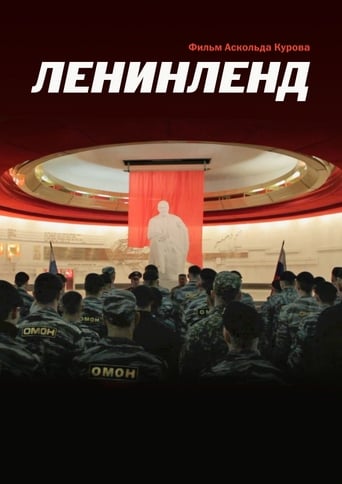
At the peak of Perestroika, in 1987, in the village of Gorki, where Lenin spent his last years, after a long construction, the last and most grandiose museum of the Leader was opened. Soon after the opening, the ideology changed, and the flow of pilgrims gradually dried up. Despite this, the museum still works and the management is looking for ways to attract visitors. Faithful to the Lenin keepers of the museum as they can resist the onset of commercialization. The film tells about the modern life of this amazing museum-reserve and its employees.
Kathy's family left on a Saturday morning in 1965. The rumble of bulldozers echoed through the neighborhood, and her block was empty. Federally-funded urban renewal had arrived in Charlottesville, scattering dozens of families like Kathy's. The once-vibrant African American community, built by formerly enslaved men and women who had secured a long-denied piece of the American dream, disappeared.
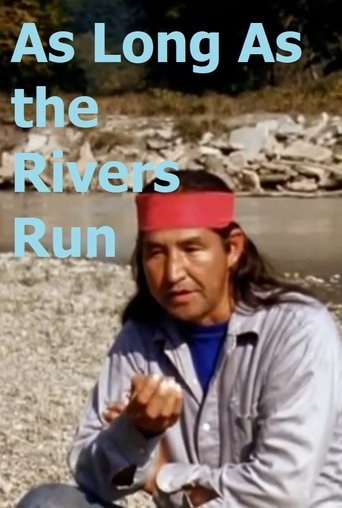
Examines the violence and civil disobedience leading up to the hallmark decision in U.S. v. Washington, with particular reference to the Nisqually Indians of Frank's Landing in Washington.
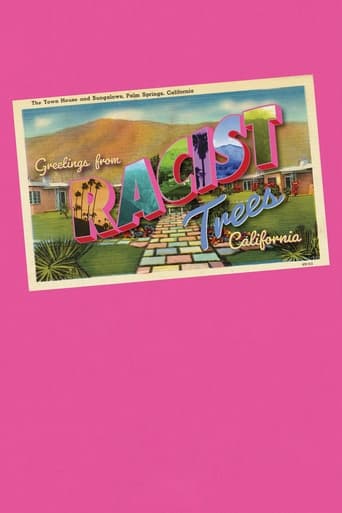
Can a tree be racist? A few years ago, debate on this issue reached as far as Fox News. The focus was a row of tamarisk trees along a huge golf course in Palm Springs, which screened off the neighborhood of Crossley Tract. This is a historically Black neighborhood, named after its founder Lawrence Crossley, who was one of the first Black residents to settle in the largely white tourist paradise, established on indigenous land over a century ago.
Documentary tracing the remarkable career of one of Britain’s best-loved and most successful comedians. Charting Peter’s journey from humble beginnings to superstardom featuring contributions from people who know him or have worked with him, as well as his fans and biographers.
A young Bulgarian girl digs into her grandfather's turbulent life in an attempt to unravel the past and find answers and explanations for the catastrophic fall of communism.
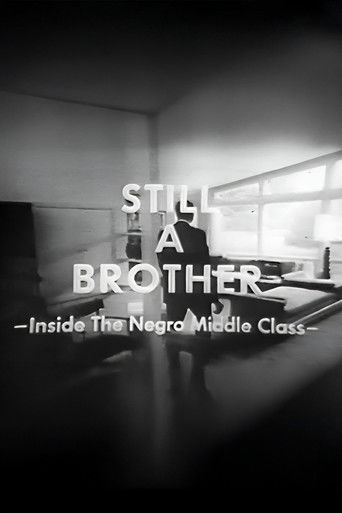
The Black middle class, torn between white goals and Black needs, are examined by producers William Greaves and William Branch in a 90-minute NET Journal documentary.
A documentary about rap artists from Ceilândia, a satellite-city of Brazil capital, Brasilia. The film portrait the struggle of the lives of the rapers and makes a parallel with the violent building of the city designed to settle the outcast from Brasilia after its completion.
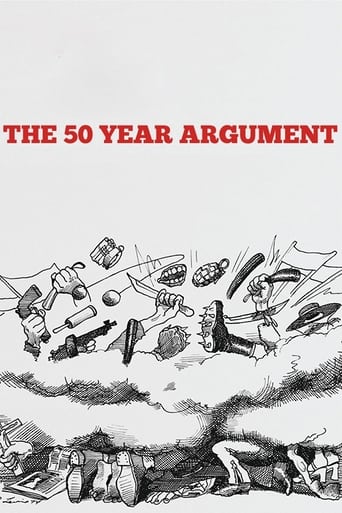
Follows the waves of literary, political, and cultural history as charted by the The New York Review of Books, America’s leading journal of ideas for over 50 years. Provocative, idiosyncratic and incendiary, the film weaves rarely seen archival material, contributor interviews, excerpts from writings by such icons as James Baldwin, Gore Vidal, and Joan Didion along with original verité footage filmed in the Review’s West Village offices.

This one hour documentary examines the life of the famed Sharp Shooter and Wild West performer, Annie Oakley from her birth in mid nineteenth century rural Pennsylvania to her death in 1926. Many myths are overturned and the program also features a little known trial when Annie Oakley had to sue The Hearst Newspaper chain all throughout the country for libel when they reported the activities of someone who was impersonating the famed sharpshooter and besmirching her reputation.