
À l'assaut du ciel, Cuba ou la solidarité anti-impérialiste
2026-06-13 · 75 min · ★ 8.0
Trailers are previews, not full movies.
No authorized playback source configured. Use the legal watch options below.
Production details
- Directors
- Unavailable
- Production companies
- La brèche
- Countries
- France
- Status
- Released
Top Cast
 Saïd BouamamaHimself
Title information and images are supplied by TMDb. Explore our discovery guide for advice on comparing metadata and legal viewing options.
Where to watch
Availability provided by JustWatch via TMDb. Offers can change. Provider links are listed on TMDb; full playback requires a separately authorized source.
Availability not listed for this country.
Seasons & episodes
Recommendations

Film adaptation of French economist Thomas Piketty's ground-breaking global bestseller of the same name: an eye-opening journey through wealth and power.
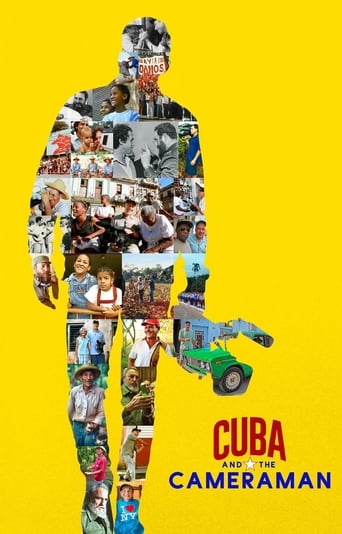
This revealing portrait of Cuba follows the lives of Fidel Castro and three Cuban families affected by his policies over the last four decades.

The film is based on interviews with 2,000 women from 50 countries, and covers the status of women all over the world. The topics covered include forced marriages, sexual assault, female genital mutilation, acid attacks, motherhood, sexuality, menstruation, education and the professional success of women.

A string of threatening emails escalates into a revenge plot involving a newly married US marshal and his ex-girlfriend.
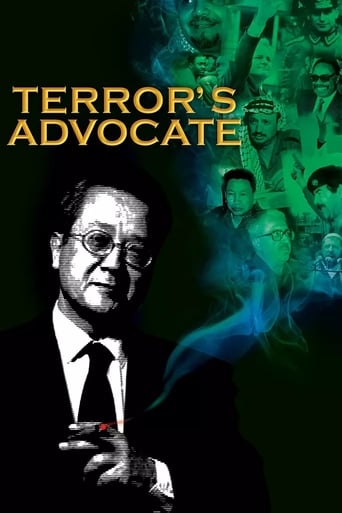
A documentary on Jacques Vergès, the controversial lawyer and former Free French Forces guerrilla, exploring how Vergès assisted, from the 1960s onwards, anti-imperialist terrorist cells operating in Africa, Europe, and the Middle East. Participants interviewed include Algerian nationalists Yacef Saadi, Zohra Drif, Djamila Bouhired and Abderrahmane Benhamida, Khmer Rouge members Nuon Chea and Khieu Samphan, once far-left activists Hans-Joachim Klein and Magdalena Kopp, terrorist Carlos the Jackal, lawyer Isabelle Coutant-Peyre, neo-Nazi Ahmed Huber, Palestinian politician Bassam Abu Sharif, Lebanese politician Karim Pakradouni, political cartoonist Siné, former spy Claude Moniquet, novelist and ghostwriter Lionel Duroy, and investigative journalist Oliver Schröm.

A 1993 documentary film about Bruce Lee. The film includes interviews from some of his fellow students and opponents who worked alongside him in his movies.

Through deeply personal interviews with her siblings and an examination of the photographs, letters, and belongings left behind, Mariska assembles a new portrait of her mother Jayne Mansfield, an extraordinary and complex woman.

A look at the origins, history and conspiracies behind the "Majestic 12", a clandestine group of military and corporate figureheads charged with reverse-engineering extraterrestrial technology.

Al Pacino's deeply-felt rumination on Shakespeare's significance and relevance to the modern world through interviews and an in-depth analysis of "Richard III."

A compilation of over 30 years of private home movie footage shot by Lithuanian-American avant-garde director Jonas Mekas, assembled by Mekas "purely by chance", without concern for chronological order.

In an intimate and joyful story of love in the face of loss, celebrated poets Andrea Gibson and Megan Falley find strength—and unexpected hilarity—in what might be their final year together.

A documentary about the life and films of director John Ford.

A detailing of the rise to prominence and global sporting superstardom of six supremely talented young Manchester United football players (David Beckham, Nicky Butt, Ryan Giggs, Paul Scholes, Phil and Gary Neville). The film covers the period 1992-1999, culminating in Manchester United's European Cup triumph.
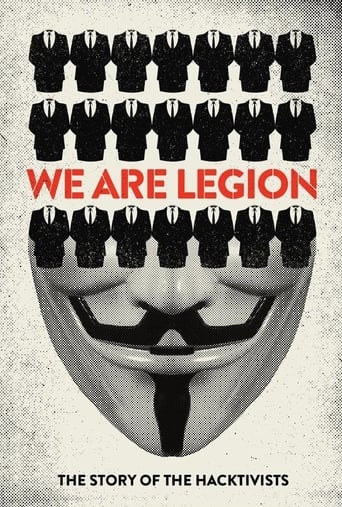
Takes us inside the world of Anonymous, the radical "hacktivist" collective that has redefined civil disobedience for the digital age. The film explores early hacktivist groups like Cult of the Dead Cow and Electronic Disturbance Theater, then moves to Anonymous' raucous beginnings on the website 4chan. Through interviews with current members, people recently returned from prison or facing trial, writers, academics, activists and major players in various "raids," the documentary traces Anonymous’ evolution from merry pranksters to a full-blown movement with a global reach, the most transformative civil disobedience of our time.
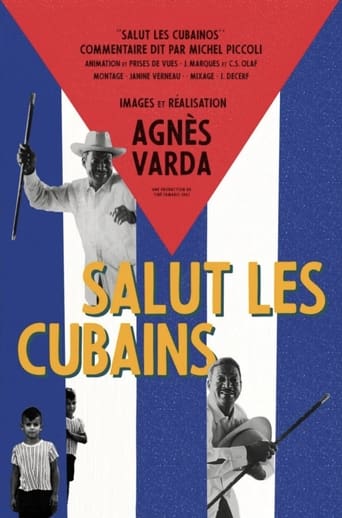
A photo montage of Cubans filmed by Agnès Varda during her visit to Cuba in 1963, four years after Fidel Castro came to power. This black & white documentary explores their socialist culture and society while making use of 1500 pictures (out of 4000!) the filmmaker took while on the island.

A documentary on the expletive's origin, why it offends some people so deeply, and what can be gained from its use.

A real-life undercover thriller about two ordinary men who embark on an outrageously dangerous ten-year mission to penetrate the world's most secretive and brutal dictatorship: North Korea.

A non-narrated documentary following the lovesome lives of four infants from birth to their first birthday. The babies featured are two from rural areas: Ponijao from Opuwo, Namibia, and Bayar from Bayanchandmani, Mongolia, as well as two from urban areas: Mari from Tokyo, Japan, and Hattie from San Francisco, USA.
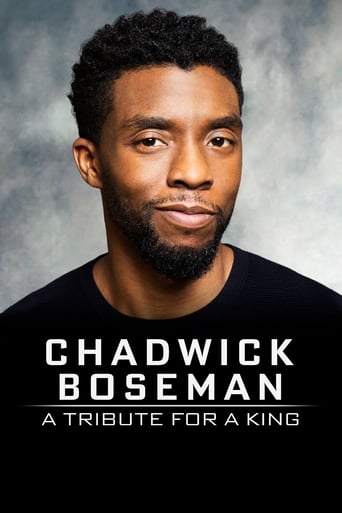
A tribute to Chadwick Boseman, celebrating his life and legacy.
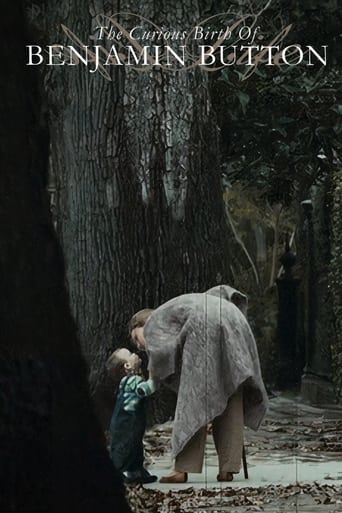
A documentary about the making of David Fincher's 2008 film THE CURIOUS CASE OF BENJAMIN BUTTON. Virtually every element in the evolution of the Fincher's film is documented here, from the project's attachment to numerous other directors during the 1990s, to its shoot in 2006 and 2007 in New Orleans, to its complex, CGI-intensive postproduction process.
Similar titles
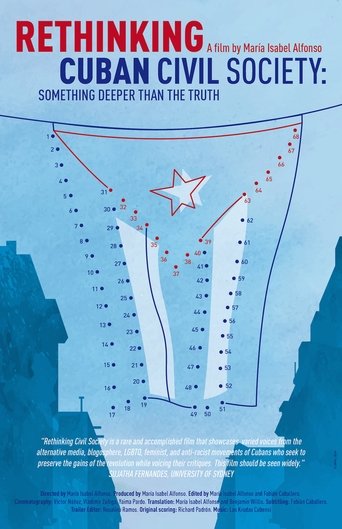
The notion of a Cuban civil society is often misrepresented in the U.S. mainstream media. According to most sources, Cuban civil society is limited to the opposition, which has little impact on the Cuban political scenario. Regardless, yearly, the U.S. government allocates tens of millions of taxpayer money to empower dissidents in the island. By doing so, it overlooks genuine expressions of pluralism, reform and contestation which are shaping the Cuban public sphere, sometimes in autonomous ways, sometimes within State-run institutions. Through in-depth interviews to members of Cuban Civil society, this documentary explores the complexities associated to these processes, following the itinerary of the debate about the concept of civil society generated in Cuba, since the 90s to the present.

Teresita's Dream follows the extraordinary story of Cuban scientist Teresita Rodríguez. When her mother is diagnosed with Alzheimer’s, Teresita embarks on a deeply personal and politically complex journey to find a treatment – joined by a team of mostly women scientists. What begins as an effort to help her mother, leads to a discovery that could change how the world treats this devastating disease forever.
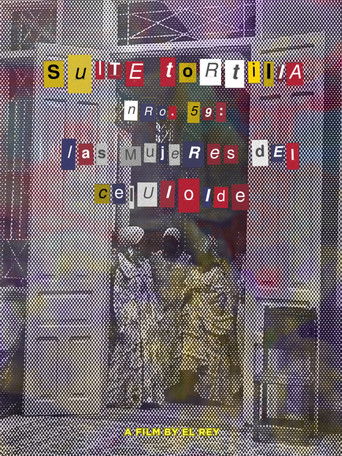
An American lesbian in Cuba explores gender through dance and film, blending personal experiences and cultural symbols with music and Revolutionary cinema and questions how lesbians fit into Cuban cinema.

When the world shut down, a Cuban band in Los Angeles turned up on a stage at a Cuban-Latin American restaurant. Their music became a beacon light in the dark. Their music helped reconnect people. "The Music that Saved a Community" Culture. Community. Cuisine. This is Son Habana.
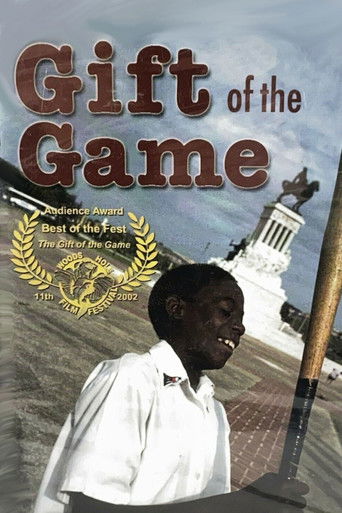
Acclaimed Florida novelist Randy Wayne White travels to Cuba with former pitchers Bill "Spaceman" Lee (Boston Red Sox) and Jon Warden (Detroit Tigers), and a band of baseball enthusiasts to find and revive the children's baseball league founded by American writer Ernest Hemingway in the days before Fidel Castro came to power.
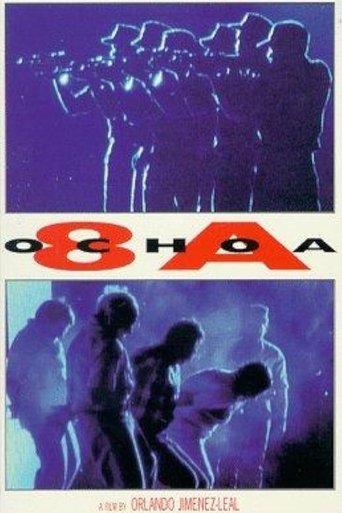
The Kafkaesque world of Cuba under Castro's rule is brought to light in this reconstruction of the 1989 trial and execution of General Arnaldo Ochoa Sanchez, the highest-ranking general and hero of the revolution, and commander of the Angolan and Ethiopian campaigns.
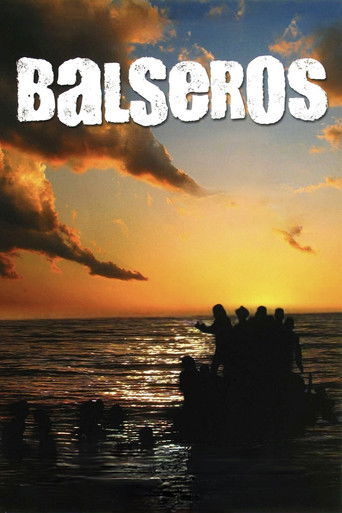
In the summer of 1994, a team of public television reporters filmed and interviewed seven Cubans a few days before their risky venture of setting out to sea in homemade rafts to reach the coast of the United States. Six made it far enough to be picked up at sea by the U.S. Coast Guard. When these balseros (rafters) were finally allowed to go to the United States, the film crew went with them to a string of several cities. Seven years later, the film crew visits them again, to discover that their destiny has been in the United States. Theirs is a true story about some of the authentic survivors of our times, the human adventure of people who are shipwrecked between two worlds.
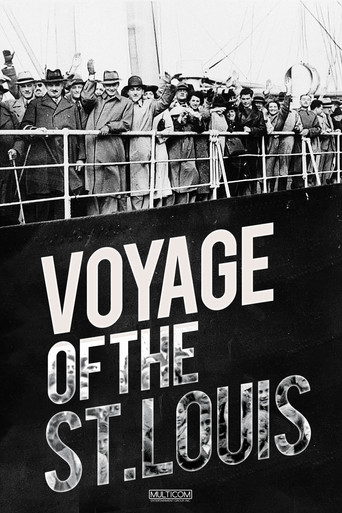
Documentary on the German luxury liner St. Louis that sailed from Hamburg to Cuba in 1939 carrying 937 German Jews. For 30 excruciating days the ship wandered the seas and was refused haven by every country in the Americas.
Lázaro Escarze, an 87 years old revolutionary Cuban man, lives in a small village and will have his phone installed for the first time in his life. To whom will he call?
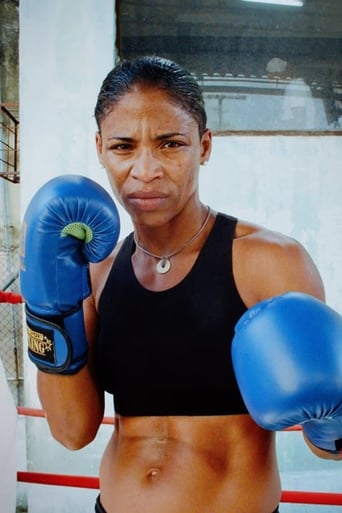
The short film captures the tireless battle of Namibia Flores Rodriguez, the only known female boxer in the Caribbean nation. Training at Havana’s Rafael Trejo arena in defiance of the ban, the athlete undertakes the same unrelenting regime as her male counterparts—running the same circuits, lifting the same truck tires—but without the hope that she might one day represent her country.
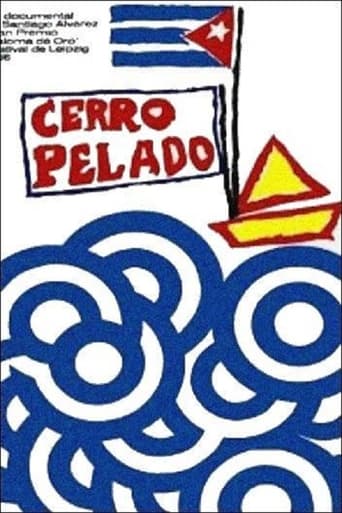
A ship of athletes training on the rough seas becomes a symbol of Castro’s Cuba, the games projected on the backdrop of political struggle. This is the story of a ship and of a sports delegation whom the enemy tried to stop from participating in the Tenth Central American and Caribbean Games.
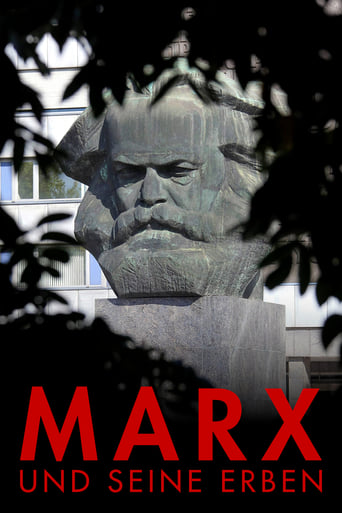
Over the past hundred years, dramatic social upheavals have taken place in the name of Karl Marx's theories. In Western Europe, the student movement of 1968 and the Eurocommunists were inspired. And in recent times, the thinker has experienced a renaissance.
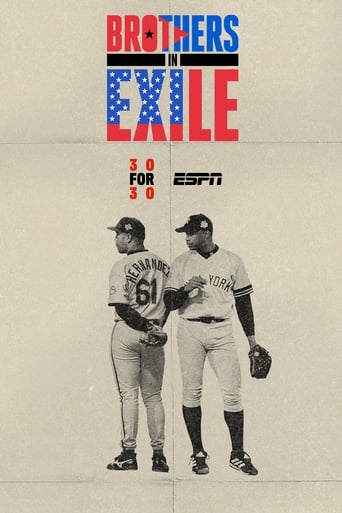
Major League Baseball has been transformed by the influx of Cuban players such as Aroldis Chapman, Yasiel Puig and Jose Abreu. But a special debt of gratitude is owed to two half-brothers, whose courage two decades ago paved the way for their stardom. "Brothers in Exile" tells the incredible story of Livan and Orlando "El Duque" Hernandez, who risked their lives to get off the island.

Cuba is a place of longing. The Caribbean cliché comes to life here: sunlight, music, and a joy of living. Buena Vista Social Club around the clock. A utopia beyond the routines of everyday life, far removed from our efficiency-driven society. Cuba feels like a living open-air museum. Classic cars, old palaces, steam locomotives, and ox-drawn carts. The government seems torn between the need for modernization and the desire to preserve the past, knowing that it is precisely this timeless atmosphere that fascinates tourists. An island from a bygone golden age, one might be tempted—perhaps too hastily—to think.
In the cabin the conductor activates the gear lever; his motion breaks the inertia. Behind is the station, then images of the machinery, the resignation of travelers, and the landscape. The events are increasingly bizarre; there is no destination, only the journey as metaphor.

Colin Stafford-Johnson journeys through one of the most bewitching islands in the world, featuring the wildlife and wild places that make it so special. In the first part of this two-part mini-series, Colin explores corners of Cuba that few outsiders have seen. Amongst the wonders he encounters is the bee hummingbird, the world’s tiniest bird, found nowhere else on the planet, and the spectacle of thousands of crabs migrating en masse. Cuba’s isolation has helped preserve many of its natural riches, creating unspoiled landscapes that are home to many enchanting animals living under the bluest skies in the Caribbean. In this authored odyssey, the natural magic of one Earth’s most intriguing countries is revealed.
This film was shot in Cuba in 1994. The opportunity came when Russel Porter, an Australian documentary filmmaker, was invited to teach at the international film and television school (EICTV) located some forty kilometers from Havana. He took the opportunity to make a film about life in Cuba today. He examines how people are surviving the hardships caused initially by the "blockade" imposed by the USA over 30 years ago and increased by the more recent loss of trade with the countries of Eastern Europe. The goal was to faithfully and objectively portray the current atmosphere and character of this "little island in the Caribbean." Apart from Russel and producer Denise Patience, the film crew was Cuban: cinematographer Alejandro Perez, sound recordist Lenin de los Reyes, production manager Elaine Santos, and local liaison Alex Alday.
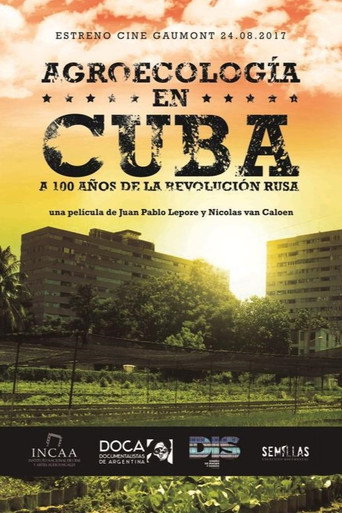
100 years after the Russian revolution, the film invites us to think about agroecology as an option and a necessity in the construction of food sovereignty, taking the experience of Cuba as a world reference and inviting us to think that another type of field is possible.

In the first and only American interview with President Miguel Díaz-Canel, Cuba After Castro explores the island’s revolutionary history and turbulent present, while revealing a portrait of the man tasked with steering its future.