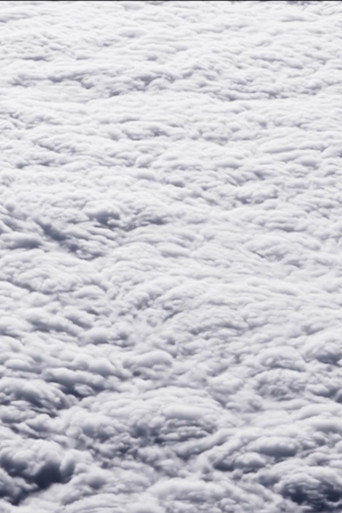
Future Past Perfect Pt. 04 (Stratus)
2013-02-28 · 5 min · Not rated
Conceived as the fourth part of the series under the name future past perfect, the fourth short film of the row is the result of a long-term fascination with clouds, their movements, structure/texture, and their potentially infinite variety of forms. shot from the plane on various trips, the sequences of cloud imagery are edited and collaged in different ways to match the diverse qualities of constitution and behaviour of clouds. the short movie especially focussed on so-called stratus clouds, a category of clouds that usually appears rather flat, hazy and featureless. their visual quality as seen from above may imply micro and macro structures at the same time thus potentially deceives the viewer's perception.
Trailers are previews, not full movies.
No authorized playback source configured. Use the legal watch options below.
Production details
- Directors
- Carsten Nicolai
- Production companies
- Unavailable
- Countries
- Unavailable
- Status
- Released
Top Cast
Cast unavailable.
Title information and images are supplied by TMDb. Explore our discovery guide for advice on comparing metadata and legal viewing options.
Where to watch
Availability provided by JustWatch via TMDb. Offers can change. Provider links are listed on TMDb; full playback requires a separately authorized source.
Availability not listed for this country.
Seasons & episodes
Recommendations
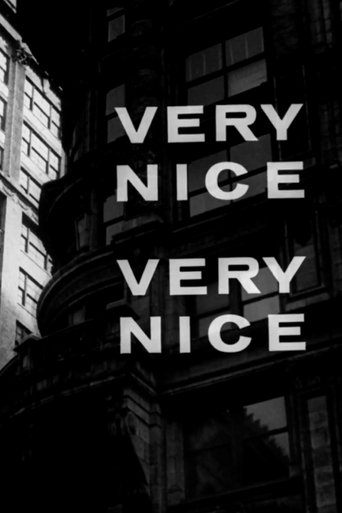
Arthur Lipsett's first film is an avant-garde blend of photography and sound. It looks behind the business-as-usual face we put on life and shows anxieties we want to forget. It is made of dozens of pictures that seem familiar, with fragments of speech heard in passing and, between times, a voice saying, "Very nice, very nice." The film was nominated for an Oscar for Best Live Action Short Film.

An inside look at one of the most anticipated movie sequels ever with James Cameron and cast.

A compilation of over 30 years of private home movie footage shot by Lithuanian-American avant-garde director Jonas Mekas, assembled by Mekas "purely by chance", without concern for chronological order.

In an intimate and joyful story of love in the face of loss, celebrated poets Andrea Gibson and Megan Falley find strength—and unexpected hilarity—in what might be their final year together.

A string of threatening emails escalates into a revenge plot involving a newly married US marshal and his ex-girlfriend.

A documentary about the life and films of director John Ford.
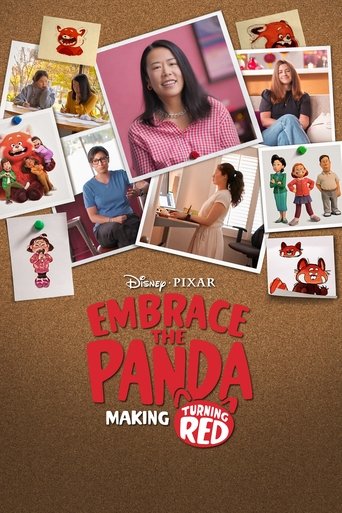
A feature length documentary about the all-women team at the helm of Pixar's original feature, Turning Red. With unprecedented behind-the-scenes access to Director Domee Shi and her core leadership crew, this story shines a light on the powerful professional and personal journeys that brought this incredibly comical, utterly relatable, and deeply heartfelt story to the screen.

A purely observational non-fiction film that takes viewers into the ethically murky world of end-of-life decision making in a public hospital.
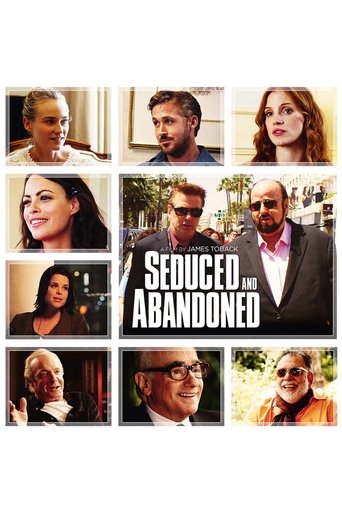
SEDUCED AND ABANDONED combines acting legend Alec Baldwin with director James Toback as they lead us on a troublesome and often hilarious journey of raising financing for their next feature film. Moving from director to financier to star actor, the two players provide us with a unique look behind the curtain at the world's biggest and most glamourous film festival, shining a light on the bitter-sweet relationship filmmakers have with Cannes and the film business. Featuring insights from directors Martin Scorsese, 'Bernando Bertolucci' and Roman Polanski; actors Ryan Gosling and Jessica Chastain and a host of film distribution luminaries.

Daniel Craig candidly reflects on his 15 year adventure as James Bond. Including never-before-seen archival footage from Casino Royale to the upcoming 25th film No Time To Die, Craig shares his personal memories in conversation with 007 producers, Michael G Wilson and Barbara Broccoli.
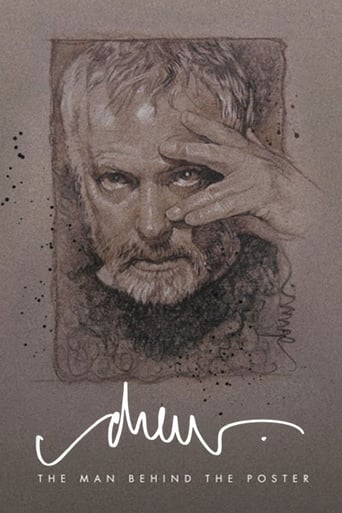
A documentary on legendary movie-poster artist Drew Struzan.

The film follows adventurer Jeff Johnson as he retraces the epic 1968 journey of his heroes Yvon Chouinard and Doug Tompkins to Patagonia.

A visual montage portrait of our contemporary world dominated by globalized technology and violence.

Featuring interviews with filmmakers and industry legends, discover the origins and evolution of The Joker, and learn why The Clown Prince of Crime is universally hailed as the greatest comic-book supervillain of all time.

Director Michael Apted revisits the same group of British-born adults after a 7 year wait. The subjects are interviewed as to the changes that have occurred in their lives during the last seven years.
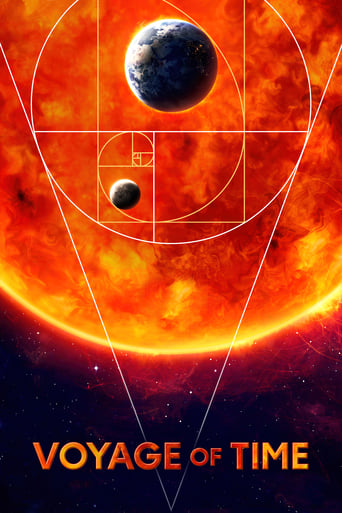
A celebration of the universe, displaying the whole of time, from its start to its final collapse. This film examines all that occurred to prepare the world that stands before us now: science and spirit, birth and death, the grand cosmos and the minute life systems of our planet.
The Making-of James Cameron's Avatar. It shows interesting parts of the work on the set.

Director Michael Apted revisits the same group of British-born adults after a 7 year wait. The subjects are interviewed as to the changes that have occurred in their lives during the last seven years.
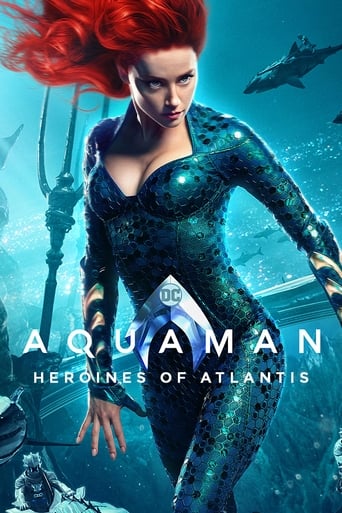
Amber Heard and Nicole Kidman discuss their characters Mera and Atlanna.

A documentary about the making of season five of the acclaimed AMC series Breaking Bad.
Similar titles
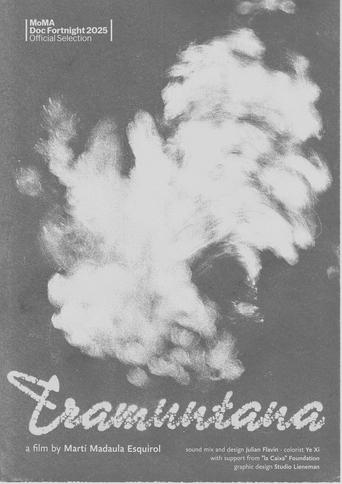
In a remote area of northern Spain, the wind has a name: Tramuntana. Tramuntana takes what it wants—clothes, trees, boats, and the people of the landscape who live with the endless threat of being carried away by its force. This film is a lyrical portrait of this furious wind, woven from the stories passed down by local villagers.
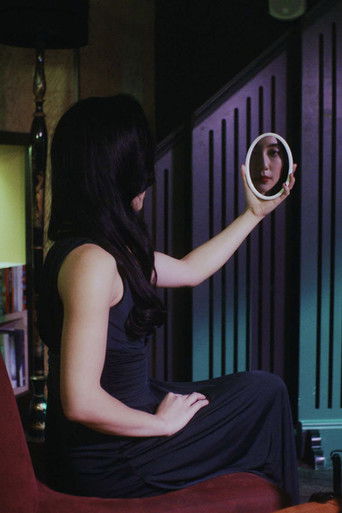
'Afloat' is an experimental film that paints a portrait of Japanese performance artist: Ayumi Lanoire. The film opens as a telephone call between Ayumi and Person X, which meanders the audience through the various layers that make up her personas leading one to wonder whether she is in fact a myth or reality.
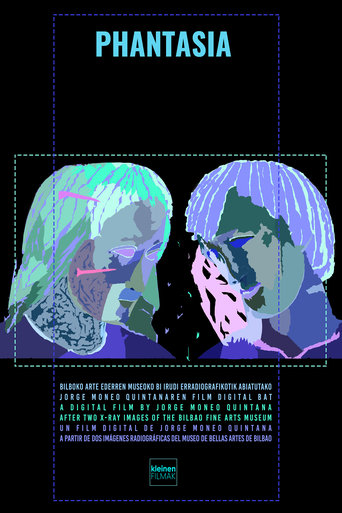
X-ray images were invented in 1895, the same year in which the Lumière brothers presented their respective invention in what today is considered to be the first cinema screening. Thus, both cinema and radiography fall within the scopic regime inaugurated by modernity. The use of X-rays on two sculptures from the Bilbao Fine Arts Museum generates images that reveal certain elements of them that would otherwise be invisible to our eyes. These images, despite being generally created for technical or scientific purposes, seem to produce a certain form of 'photogénie': they lend the radiographed objects a new appearance that lies somewhere between the material and the ethereal, endowing them with a vaporous and spectral quality. It is not by chance that physics and phantasmagoria share the term 'spectrum' in their vocabulary.
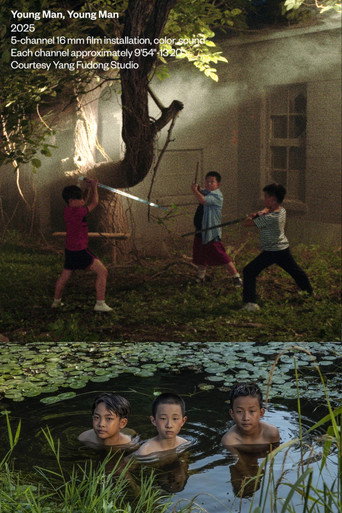
Young Man, Young Man unfolds in a fragmented structure, reconstructing Yang Fudong’s recollections of his 1980s adolescence in a Beijing military compound, along with scattered memories of collective life in the post-socialist era. In the film, young boys run, practice martial arts, wait for the bus, splash in water, and play in cornfields. There is no fixed narrative; instead, the boys seem to drift through an endless summer. Yet an undercurrent of distance and estrangement suggests that childhood has already quietly slipped away. These moments of adolescent innocence and loneliness, crystalized within the film, form a dreamlike allegory.

County Magistrate, County Magistrate depicts a collective migration unfolding in an indeterminate time and place. Men, women, and children from a village move through mountains as the sky gradually grows dark, walking resolutely into the distance until they arrive at a new settlement. The abandoned courtyards they leave behind still bear traces of daily life: a steaming kettle, unfinished bowls of food, an old television flickering with static, and worn-out pieces of furniture. The camera then slowly pans to an outdoor movie screen showing After Armistice, a black-and-white film released in 1962. In the film, a man draws a business card from his pocket and introduces himself as Xianghe’s newly appointed county magistrate. At this moment, the story slips into another layer of fictional time and space.
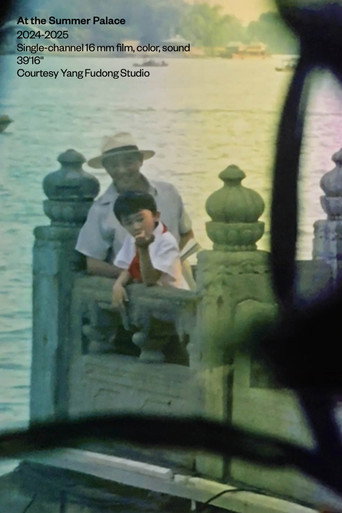
At the Summer Palace follows a mysterious man and a young boy as they wander through the Summer Palace, clad in clothing recalling styles from the 1980s and 1990s. The work unfolds like a hazy moment between dreaming and wakefulness, recalling the stillness of a languid afternoon. The era-specific details present in the setting seem to anachronistically clash with their pair’s clothing and behavior. Through this dislocation of time and space, Yang Fudong evokes the complex emotions of childhood, specifically the mixture of curiosity and unease a child feels upon encountering the strange and unknown.
A self-portrait film about sentimental objects and moments in life.
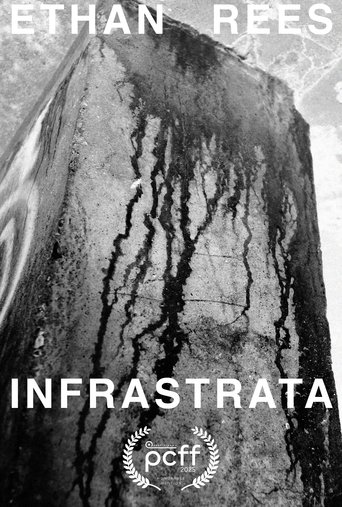
Amongst the contemplative static shots of decaying architecture weaves an abstract narrative unveiling the life-cycle of a higher perception, too large to perceive. Shot at various sites across south-east England, INFRASTRATA is a study on the concept of super-organisms, and the relationship between structure and nature.

A student made film tackling the theme of space, how it is used and how it affects. In this particular instance we follow the quite absurd actions taking place in the context of quite a serious, linear and industrial setting. The actions intended to guide self awareness of the participants surroundings and allow them to in turn be more aware of them and the space they occupy. These instructions also form part of a list of equal absurd instructions which may continue to grow.

sononda is the first part of the short film series future past perfect and was originally recorded in 2006. the series whose single fragments are supposed to be parts of a larger scale film project is designed as a row of conceptually independent movies that document nicolai's focus of interest of the respective year of origin and also builds up on the results of the movie(s) before. despite sononda's visual quality seems artificial at times, it was shot in a natural environment. the focus is directed on the sculptural quality of light. the correspondence of both music - with its low frequency modulations and merging soundscapes - and light play on the curved surfaces of the sculptural stone formations create an ever-changing atmosphere of concrete and abstract appearances.

In a playful critique of the mechanisation of the body and the militarisation of the workplace, Zhou Tao collages choreographed chants that take place in morning group meetings – a form of taking attendance at the beginning of a workday – for shops and companies in Shanghai and Shenzhen.
A documentary-art film, incorporating dance sequences alongside interviews with such luminaries as Rigoberta Menchú Tum, a K’iche’ Guatemalan human rights activist, feminist and Nobel Peace Prize laureate, and current Guatemalan president Bernardo Arévalo.
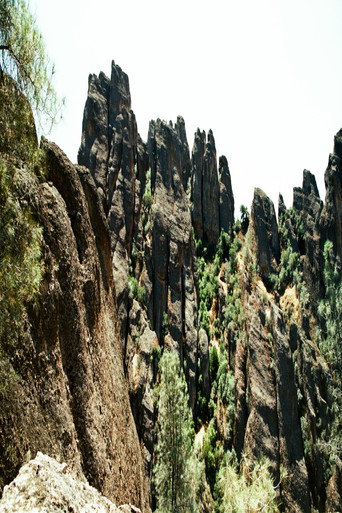
Resulting from an ancient volcanic eruption, revered as sacred by the Chalun and Matsun Native American Tribes as the home of the Firebird/Thunderbird (California Condor) a supernatural being of power and strength. Pinnacles represents transcendent moments, spiritual guidance and forging new timelines within interpersonal landscapes.
Documentary on the work of French caricaturist Jean Ignace Isidore Gérard, better known by his pseudonym Grandville (1803-1847). Based on a text by Dotremont, the film takes us on an imaginary journey to the planet of the "Real People", whose habits and customs we learn about. A satire on the arts and society.
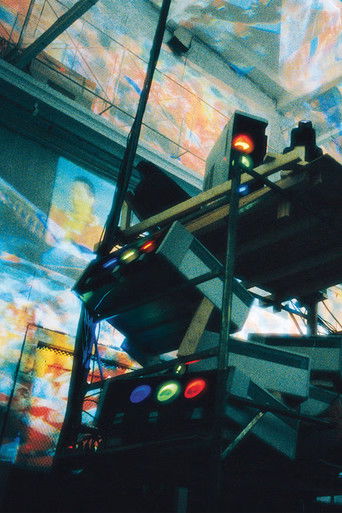
Sistine Chapel is an audio-visual collage of new footage and samples from Paik’s past videos, which featured many of his friends, collaborators, and public figures. It was Paik’s own way of summarizing his artistic career with video. The film installation consists of fast-paced and overlapping images that completely cover the gallery walls and ceiling—one of the most under-appreciated parts of architecture, according to Paik. With its electronic visuals and booming audio, interspersed with periods of silence, the immersive installation stands in stark contrast to the experience of its namesake.
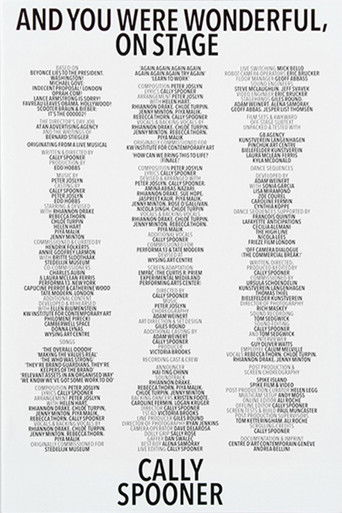
An immersive film installation by Cally Spooner. In this work, a musical for six continuously rolling cameras, a black box soundstage and its inhabitants, are recorded in a single take. The mechanics of the shoot (cameras, microphones, mixing boards, chromakey screens and crew) remain as present as the performers they capture. Cast and crew become a constant-motion human backdrop, pragmatically recomposing scene-changes through lighting cues, voice, body movement, or continuous shifts of filmic apparatus and props. The semblance of a post-production edit arrives through the organisation and orchestration of bodies on set. Delivered by a chorus line of women, the film gossips about various celebrities, athletes and politicians who have outsourced their performances to different technologies.
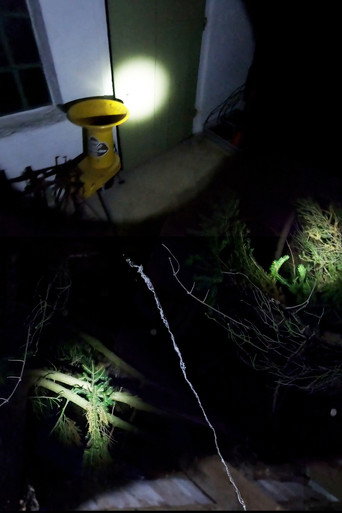
By rethinking the notions of working, exhaustion, and the slash between the precariat/artist, Emirhan aims to unearth the embodied knowledge he has stored from the cleaning job he has been working for to sustain his art practice, to draw parallels between the durational performance pieces (eventually performance art) and the word cleaning (and it’s political, historical and societal connotations).
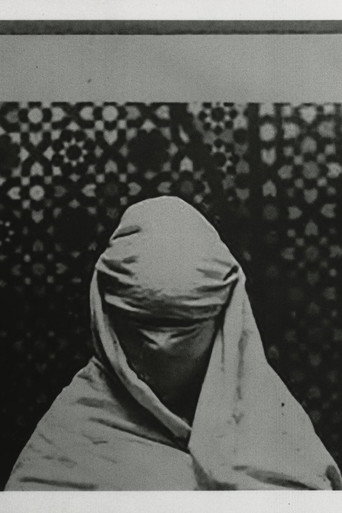
A visual and psychological investigation of the French psychiatrist and photographer Gaëtan Gatian de Clérambault (1872–1934), who took thousands of images in Morocco of veiled Islamic women, and sometimes men, through which he sought to explore his psychoanalytic ideas about covering and fantasy. Through a digital re-imagining of his death — a suicide in front of a mirror —, followed by assessments of clinicians and academics, The Fold explores de Clérambault’s significance as a historical figure while also looking more broadly at the way we understand images. The interviews are filmed within a setting inspired by the house of mirrors in Orson Welles’s The Lady from Shanghai (1947) and draw on the aesthetic of film noir, a style of cinema that commonly features a crime-centred narrative and morally ambiguous male protagonists.
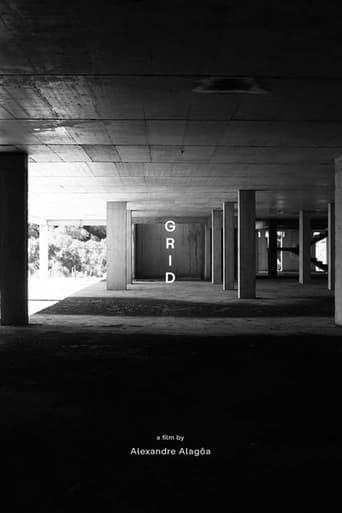
A ritual of grids, reflections and chasms; a complete state of entropy; a space that devours itself; a vertigo that destroys the gravity of the Earth; a trap that captures us inside the voids of the screen of light: «That blank arena wherein converge at once the hundred spaces» (Hollis Frampton).

A 16mm experimental short film loosely following a cormorant as it attempts to dry its wings.