
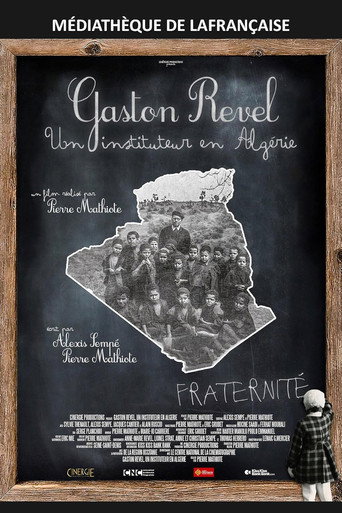
Gaston Revel, a schoolteacher in Algeria
2021-02-28 · 92 min · ★ 10.0
In 1936, Gaston Revel entered the École Normale in Algiers, where he was supposed to learn how to "educate the native." It was also during this time that he began to take an interest in politics: he was drawn to the Popular Front, then to Spanish anarchism, and finally to communism. From 1940 to 1955, he taught in Algeria, first in rural areas, then in Bejaia. He returned to Europe because of the war and landed in Provence in September 1914, following the Allied advance. It was in Bejaia, in 1945, that he became fully committed to the Algerian Communist Party: in 1953, he ran for municipal office in the second electoral district (reserved for Algerians) and sat alongside the Muslims. In 1955, at the beginning of the war, he was forced to leave Algeria against his will. But, like thousands of other "red feet," he returned there in 1962 and resumed his teaching career. From all those years, he left a complete and deeply committed record, many letters, notebooks, and newspaper articles.
Trailers are previews, not full movies.
No authorized playback source configured. Use the legal watch options below.
Production details
- Directors
- Pierre Mathiote
- Production companies
- Unavailable
- Countries
- France
- Status
- Released
Top Cast
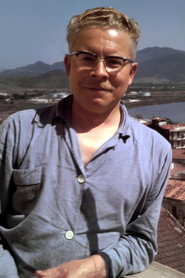 Gaston RevelSelf (archive footage)
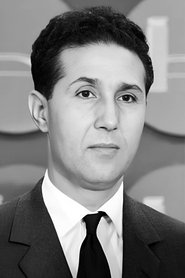 Ahmed Ben BellaSelf (archive footage)
 Alain RuscioSelf
Title information and images are supplied by TMDb. Explore our discovery guide for advice on comparing metadata and legal viewing options.
Where to watch
Availability provided by JustWatch via TMDb. Offers can change. Provider links are listed on TMDb; full playback requires a separately authorized source.
Availability not listed for this country.
Seasons & episodes
Recommendations

“The Soviet Story” is a story of an Allied power, which helped the Nazis to fight Jews and which slaughtered its own people on an industrial scale. Assisted by the West, this power triumphed on May 9th, 1945. Its crimes were made taboo, and the complete story of Europe’s most murderous regime has never been told. Until now...

When Sgt. First Class Brian Eisch is critically wounded in Afghanistan, it sets him and his sons on a journey of love, loss, redemption and legacy.

Prelude to War was the first film of Frank Capra's Why We Fight propaganda film series, commissioned by the Pentagon and George C. Marshall. It was made to convince American troops of the necessity of combating the Axis Powers during World War II. This film examines the differences between democratic and fascist states.

A documentary about World War I with never-before-seen footage to commemorate the centennial of Armistice Day, and the end of the war.
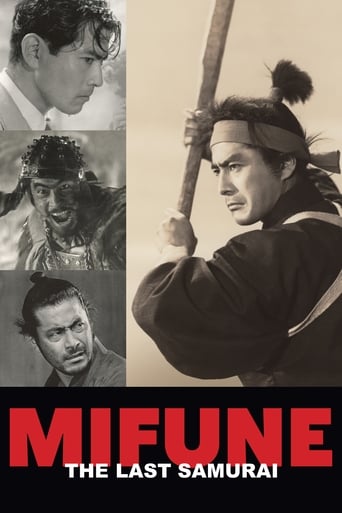
An account of the life and work of legendary Japanese actor Toshirō Mifune (1920-97), the most prominent actor of the Golden Age of Japanese cinema.
Meet the real-life airmen who inspired Masters of the Air as they share the harrowing and transformative events of the 100th Bomb Group.
Over a period of two years, Mark Cowen and his crew travelled to thirty U.S. states and ten European cities, to interview the veterans of Easy Company. The stories told by the veterans themselves, create a history of the Second World War from the point of view of this heroic company of men, made famous in the mini-series Band of Brothers.
An account of the extraordinary life of film pioneer Georges Méliès (1861-1938) and the amazing story of the copy in color of his masterpiece A Trip to the Moon (1902), unexpectedly found in Spain and restored thanks to the heroic efforts of a group of true cinema lovers.

Set both in Latin America and the United States, the film explores the historic and current relationship of Washington with countries such as Venezuela, Bolivia and Chile. Pilger says that the film "...tells a universal story... analysing and revealing, through vivid testimony, the story of great power behind its venerable myths. It allows us to understand the true nature of the so-called "war on terror". According to Pilger, the film’s message is that the greed and power of empire is not invincible and that people power is always the "seed beneath the snow".

The history of cinematic sound, told by legendary sound designers and visionary filmmakers.

A documentary highlighting the Soviet Union's legendary and enigmatic hockey training culture and world-dominating team through the eyes of the team's Captain Slava Fetisov, following his shift from hockey star and celebrated national hero to political enemy.

Amid the failing counteroffensive, a journalist follows a Ukrainian platoon on their mission to traverse one mile of heavily fortified forest and liberate a strategic village from Russian occupation. But the farther they advance through their destroyed homeland, the more they realize that this war may never end.
In 1972, a seemingly typical shoestring budget pornographic film was made in a Florida hotel: "Deep Throat," starring Linda Lovelace. This film would surpass the wildest expectation of everyone involved to become one of the most successful independent films of all time. It caught the public imagination which met the spirit of the times, even as the self-appointed guardians of public morality struggled to suppress it, and created, for a brief moment, a possible future where sexuality in film had a bold artistic potential. This film covers the story of the making of this controversial film, its stunning success, its hysterical opposition along with its dark side of mob influence and allegations of the on set mistreatment of the film's star.
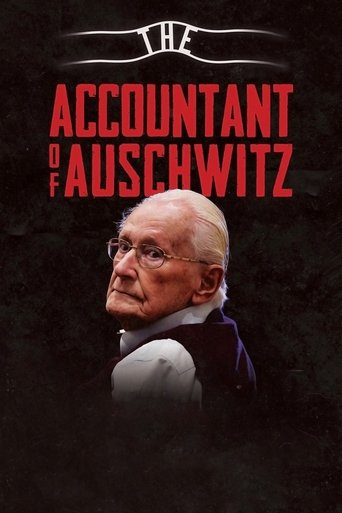
Oskar Gröning, known as the "Accountant of Auschwitz," was charged with the murder of 300,000 Jews. When he took the stand in 2015, at the age of 94, his trial made headlines worldwide.

This documentary movie is about the battle of San Pietro, a small village in Italy. Over 1,100 US soldiers were killed while trying to take this location, that blocked the way for the Allied forces from the Germans. Preserved by the Academy Film Archive in 2005.
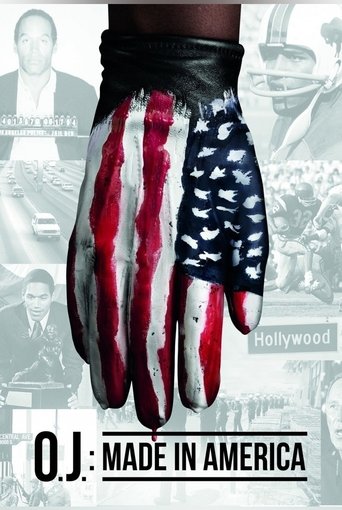
A chronicle of the rise and fall of O.J. Simpson, whose high-profile murder trial exposed the extent of American racial tensions, revealing a fractured and divided nation.

In 1936, Victor H. Green (1892-1960) published The Negro Motorist Green Book, a book that was both a travel guide and a survival manual, to help African-Americans navigate safe those regions of the United States where segregation and Jim Crow laws were disgracefully applied.
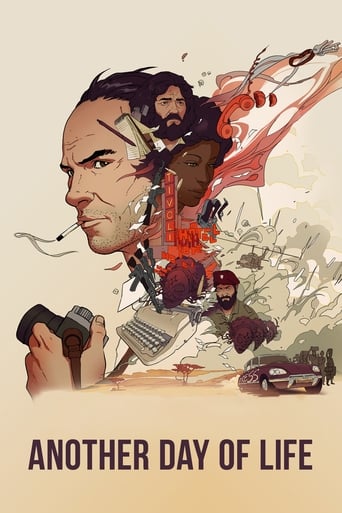
In 1975, Ryszard Kapuściński, a veteran Polish journalist, embarked on a seemingly suicidal road trip into the heart of the Angola's civil war. There, he witnessed once again the dirty reality of war and discovered a sense of helplessness previously unknown to him. Angola changed him forever: it was a reporter who left Poland, but it was a writer who returned…
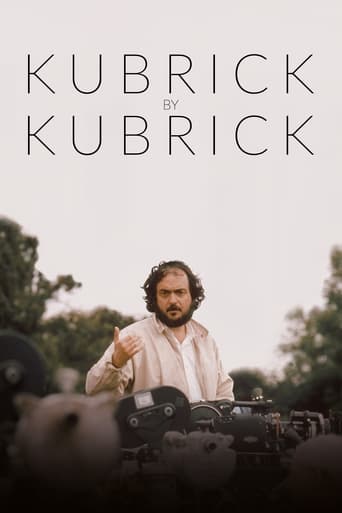
American filmmaker Stanley Kubrick (1928–1999), one of the greatest in history, but also one of the most reserved, gave few interviews throughout his long career, and none of them were filmed. A first-person journey through his life and work, based on a recorded conversation with French film critic Michel Climent.

A love letter from a young mother to her daughter, the film tells the story of Waad al-Kateab’s life through five years of the uprising in Aleppo, Syria as she falls in love, gets married and gives birth to Sama, all while cataclysmic conflict rises around her. Her camera captures incredible stories of loss, laughter and survival as Waad wrestles with an impossible choice– whether or not to flee the city to protect her daughter’s life, when leaving means abandoning the struggle for freedom for which she has already sacrificed so much.
Similar titles
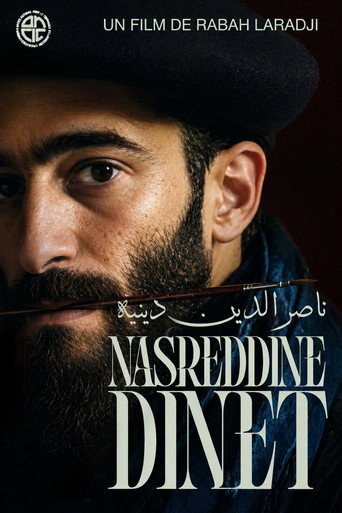
Étienne Dinet (إتيان دينيه), born March 28, 1861 in Paris, where he died on December 24, 1929, was a French painter and lithographer. He was one of the leading representatives of Orientalist painting at the turn of the 19th and 20th centuries. Obtaining a scholarship in 1884, Dinet undertook his first trip to southern Algeria in the region of Bou-Saâda, the Naili culture having a profound impact on him, as he would return there many times until he settled in his first Algerian studio in Biskra in 1900. In 1905, he bought a house in Bou-Saâda to spend three-quarters of the year there. In 1907, on his advice, the Villa Abd-el-Tif was created in Algiers, modeled on the Villa Medici in Rome. Having lived much of his life in Algeria, he called himself Nasreddine Dinet (نصر الدين ديني) after converting to Islam. On January 12, 1930, he was buried in the Bou-Saâda cemetery, where a museum that houses many of his works bears his name.

Documentary about the life of silent film star Francis X. Bushman
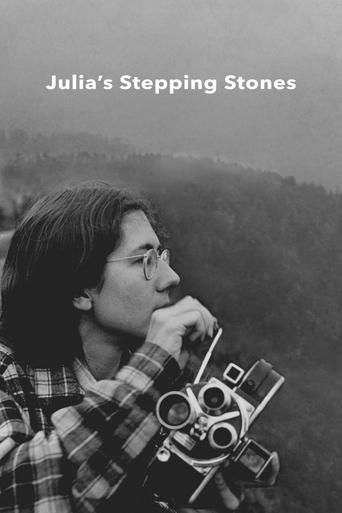
Oscar-winning filmmaker Julia Reichert reflects on the social, economic and personal forces that led to her career as a pioneering documentarian.
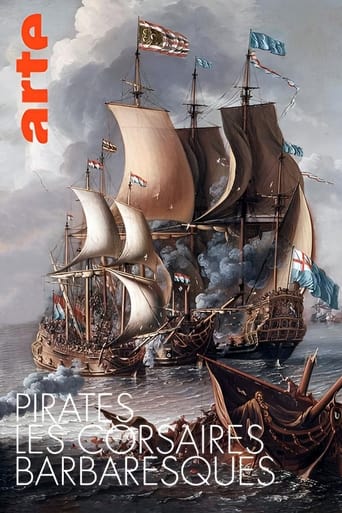
In the 18th century, the Barbary threat became serious. In July 1785, two American boats were returned to Algiers; In the winter of 1793, eleven American ships, their crews in chains, were in the hands of the dey of Algiers. To ensure the freedom of movement of its commercial fleet, the United States was obliged to conclude treaties with the main Barbary states, paying considerable sums of money as a guarantee of non-aggression. With Morocco, treaty of 1786, 30,000 dollars; Tripoli, November 4, 1796, $56,000; Tunis, August 1797, 107,000 dollars. But the most expensive and the most humiliating was with the dey of Algiers, on September 5, 1795, “treaty of peace and friendship” which cost nearly a million dollars (including 525,000 in ransom for freed American slaves). , with an obligation to pay 20,000 dollars upon the arrival of each new consul and 17,000 dollars in annual gifts to senior Algerian officials...
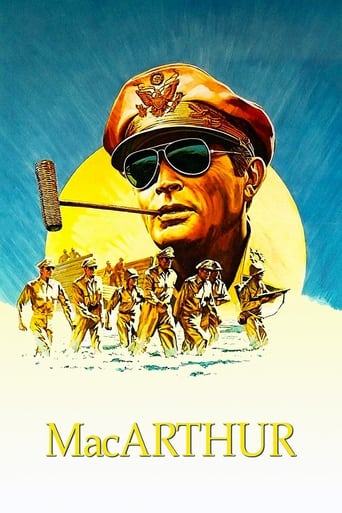
The film portrays MacArthur's life from 1942, before the Battle of Bataan, to 1952, when he was removed from his Korean War command by President Truman for insubordination, and is recounted in flashback as he visits West Point.

Documentary about the famous Polish director Agnieszka Holland and her relationship to Czechoslovakia, based on two storylines: one depicting the life of Agnieszka Holland during her studies in Prague towards the end of the 1960’s, her friends, her participation in a student strike and her arrest for supporting the dissident movement and anti-state tendencies, and the second one - following her return there.

The life of Ryszard Riedel, former leader of cult Polish rock-blues band Dzem, including the history of his family relationships, music career and addiction to alcohol and drugs.

The tragic, true story about Hachikō, an Akita dog who was loyal to his master, Professor Ueno, even after Ueno's death.
When Astrid Lindgren was very young something happened that affected her profoundly, and this combination of both miracle and calamity came to shape her entire life. It was an event that transformed her into one of the most inspiring women of our age and the storyteller a whole world would come to love. This is the story of when a young Astrid, despite the expectations of her time and religious upbringing, decided to break free from society's norms and follow her heart.
Vienna, 1813-1819: Beethoven (played by Donatas Banionis) is at the peak of his fame. Orchestras all over the world play his music, but he lives modestly and is dependent upon private patrons. Nagged by his patronizing brothers, spied upon by officials for his republican beliefs and faced by his progressive hearing loss, the composer becomes more and more isolated. Seeman’s poetic film explores the joys, heartbreak and artistic spirit of the great composer as he works on his Ninth Symphony.
In a small Vietnamese village torn apart by war, a young woman faces unimaginable horrors before deciding to escape to the city. There, she encounters a compassionate Marine who offers her hope and a chance at a new life, igniting the possibility of a future together.

In June 2013, Laura Poitras and reporter Glenn Greenwald flew to Hong Kong for the first of many meetings with Edward Snowden. She brought her camera with her.

Unprecedented access to Muhammad Ali's personal archive of "audio journals" as well as interviews and testimonials from his inner circle of family and friends are used to tell the legend's life story.
A communist journalist from Prague is sent to Ravensbruck concentration camp.
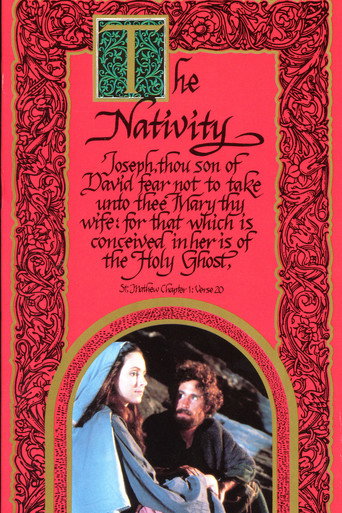
The story of the courtship of Joseph and Mary, and of the events leading up to the first Christmas.

Irena Sendler is a Catholic social worker who has sympathized with the Jews since her childhood, when her physician father died of typhus contracted while treating poor Jewish patients. When she initially proposes saving Jewish children from the Warsaw Ghetto, her idea is met with skepticism by fellow workers, her parish priest, and even her own mother Janina.

Explores the life and death of one of the first onscreen flappers. By the time she appeared in The Flapper, she had completed more than seventeen films, but beneath the glitter of success Olive had her share of tragedy. Her death under mysterious circumstances just before her 26th birthday shocked the world.

This is the story of unsung hero Steve Fairless, a country boy who represented Australia in road cycling at the Seoul Olympics in 1988. After the games, with professional opportunities limited, Steve retired from the sport to return to dairy farming to provide for his young family. He was 26 and in physiological terms, only really just arriving at his peak. However, the desire to compete never left him and at 50, Steve made a comeback of sorts. Within a season he was one of the best on the country for any age. Our film tracks his life, his comeback and his journey to the ultimate proving ground, the UCI World masters Championships in Slovenia. Steve is a great character, and his story is one of never letting go of a dream.