

Avant de partir : Béatrice Picard
2024-12-10 · Runtime unavailable · Not rated
Trailers are previews, not full movies.
No authorized playback source configured. Use the legal watch options below.
Production details
- Directors
- Patricia Beaulieu
- Production companies
- Pamplemousse Média
- Countries
- Unavailable
- Status
- Released
Top Cast
 Béatrice Picard
Title information and images are supplied by TMDb. Explore our discovery guide for advice on comparing metadata and legal viewing options.
Where to watch
Availability provided by JustWatch via TMDb. Offers can change. Provider links are listed on TMDb; full playback requires a separately authorized source.
Availability not listed for this country.
Seasons & episodes
Recommendations

A documentary about how a dominant cultural and demographic institution both sustains their traditional activities and adapts to the digital revolution.

Through deeply personal interviews with her siblings and an examination of the photographs, letters, and belongings left behind, Mariska assembles a new portrait of her mother Jayne Mansfield, an extraordinary and complex woman.

An intimate portrait of the small shops and shopkeepers of the Rue Daguerre in Paris, a picturesque street that has been the filmmaker’s home for more than 50 years.

A documentary on the life of John Lennon, with a focus on the time in his life when he transformed from a musician into an antiwar activist.

Film adaptation of French economist Thomas Piketty's ground-breaking global bestseller of the same name: an eye-opening journey through wealth and power.

Using the book 'Fragments', which collects Marilyn Monroe's poems, notes and letters, and with participation from the Arthur Miller and Truman Capote estates who have contributed more material, each of the actresses will embody the legend at various stages in her life.

A real-life undercover thriller about two ordinary men who embark on an outrageously dangerous ten-year mission to penetrate the world's most secretive and brutal dictatorship: North Korea.

A visual montage portrait of our contemporary world dominated by globalized technology and violence.

Musician and performance artist Laurie Anderson reflects on the deaths of her husband Lou Reed, her mother and her beloved dog.

A look at the origins, history and conspiracies behind the "Majestic 12", a clandestine group of military and corporate figureheads charged with reverse-engineering extraterrestrial technology.

Al Pacino's deeply-felt rumination on Shakespeare's significance and relevance to the modern world through interviews and an in-depth analysis of "Richard III."
Grammy® winner singer-songwriter Olivia Rodrigo takes a familiar road trip from Salt Lake City, where she began writing her debut album “SOUR,” to Los Angeles. Along the way, Rodrigo recounts the memories of writing and creating her record-breaking debut album and shares her feelings as a young woman navigating a specific time in her life. Through new live arrangements of her songs, intimate interviews and never-before-seen footage from the making of the album, audiences will follow Olivia along on a cinematic journey exploring the story of “SOUR.”
The life of Mr. Spock, as well as that of Leonard Nimoy, the actor who played him for almost fifty years, written and directed by his son: Adam.
Giving fans unprecedented access to the real life of the music sensation, Katy Perry: Part of Me exposes the hard work, dedication and phenomenal talent of a girl who remained true to herself and her vision in order to achieve her dreams. Featuring rare behind-the-scenes interviews, personal moments between Katy and her friends, and all-access footage of rehearsals, choreography, Katy’s signature style and more, Katy Perry: Part of Me reveals the singer’s unwavering belief that if you can be yourself, then you can be anything.
Go behind the scenes with stars, puppeteers and creators as they bring Jim Henson's magical world of Thra back to life in a sweeping fantasy series.

The life of Bambi, a male roe deer, from his birth through childhood, the loss of his mother, the finding of a mate, the lessons he learns from his father, and the experience he gains about the dangers posed by human hunters in the forest.

Explore the evolution of Buzz Lightyear from toy to human in the making of Pixar’s Lightyear. Dive into the origin and cultural impact of everyone’s favorite Space Ranger, the art of designing a new “human Buzz,” and the challenges faced by the Lightyear crew along the way.
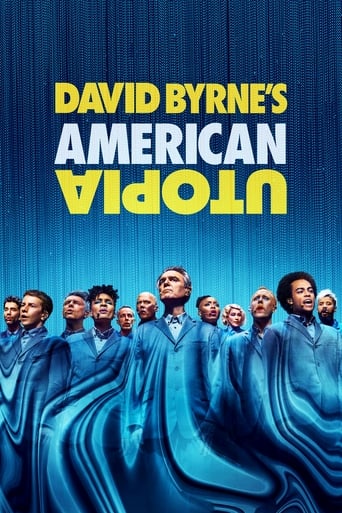
A filmed version of David Byrne's Broadway show, a unifying musical celebration that inspires audiences to connect to each other and to the global community.
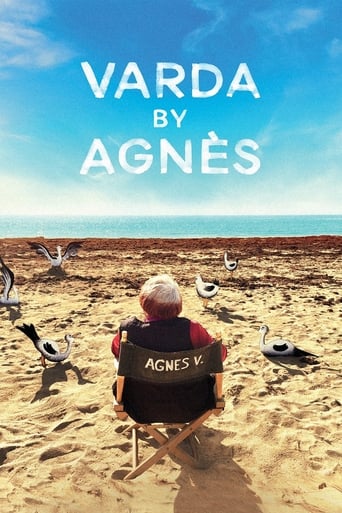
An unpredictable documentary from a fascinating storyteller, Agnès Varda’s last film sheds light on her experience as a director, bringing a personal insight to what she calls "cine-writing," traveling from Rue Daguerre in Paris to Los Angeles and Beijing.

This documentary focuses on the actors and their journey over two summers to create the remake to the original IT, by Stephen King. The documentary originally released as bonus material, bundled with IT: Chapter Two.
Similar titles
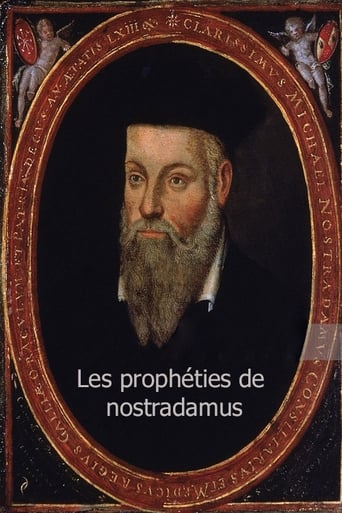
Debunking the mythology surrounding the 16th century French prophet, Nostradamus.
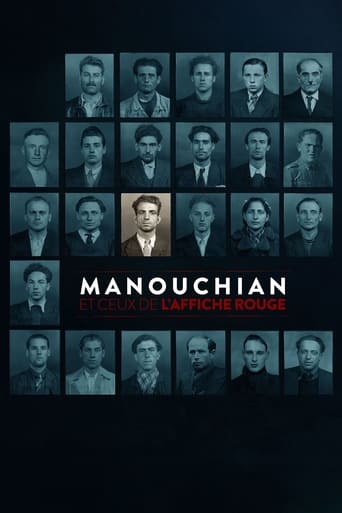
In February 1944, in a courtyard at Fresnes Prison, the Germans staged a spectacle to stigmatize a group of communist resistance fighters—all foreigners and mostly Jewish—who had been arrested a few weeks earlier. The propaganda aimed to discredit these fighters, portraying them as terrorists and criminals, even though they had managed to carry out numerous attacks against the occupiers in Paris. The red poster, plastered in thousands of copies across the country, would immortalize them in legend. They were subsequently executed at Mont-Valérien, near Paris. Missak Manouchian, the Armenian who led these fighters, now embodies this group in the collective memory as he is enshrined in the Panthéon, on behalf of all his comrades, 80 years after their execution.
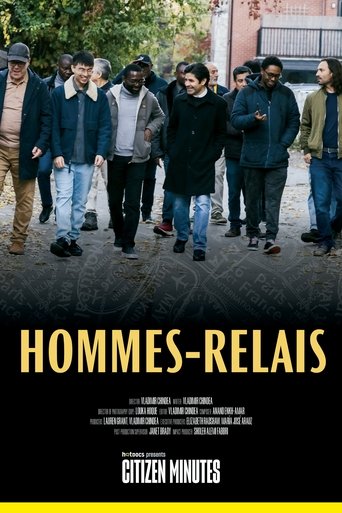
HOMME-RELAIS spotlights Juan Manuel, a doctor turned community leader who, amid migration grief and integration challenges, guides immigrant men through a life-changing program: forging resilience, belonging, solidarity, and hope.
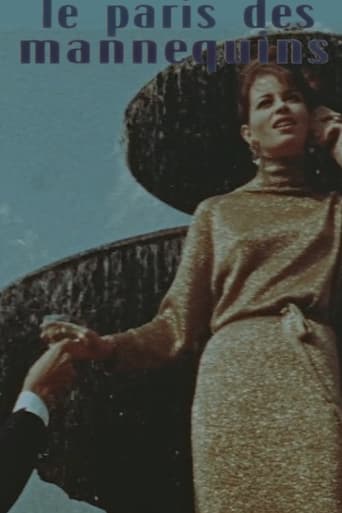
A photoshoot on the roofs and in the streets of Paris, under the astonished eyes of the inhabitants.
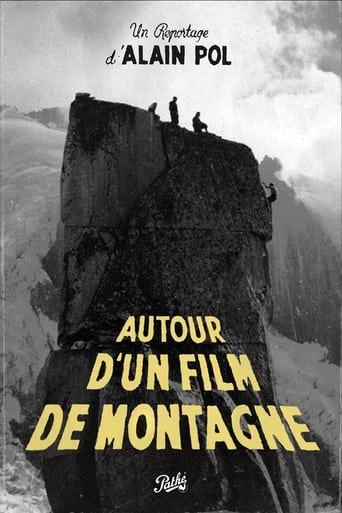
Making of the cinematographic shooting of "Premier de cordée" directed by Louis Daquin in the Mont-Blanc massif. In 1943. Alain Pol films the risky adventure of filming in the high mountains with a team of seventy people. The images of the making-of reveal the technical constraints encountered by the actors and technicians: falling rocks, crossing glaciers and long approach walks at altitude to the filming locations. Six actors and technicians will also be injured and the main role - that of Pierre - will be reassigned to André Le Gall following a bad fall by Roger Pigaut.
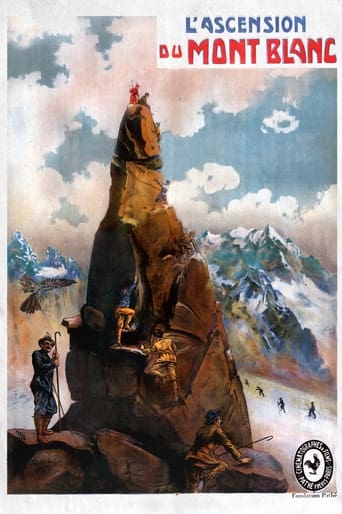
Joseph Vallot and his team of guides and porters climb Mont Blanc in 1906. Their ascent will take three days. They spent their nights at the Grands Mulets refuge and the Grand Plateau refuge. This is the very first successfully filmed ascent. Joseph Vallot (1854-1925), rich heir of Lodève in Occitania. He devotes part of his fortune to the observation of the Alps, sometimes opposing the scientific community. He built an observatory, still standing today.
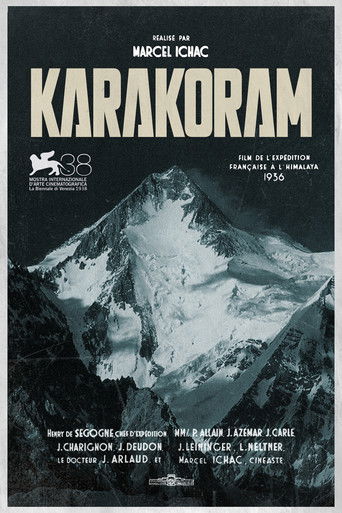
Account of the first French expedition to the Himalayas, which attempted to climb the hidden peak (Gasherbrum I) in 1936, from the preparations for the trip to the end of the ascent. After a long approach walk through quasi-desert regions, then on a huge glacier, the caravan of 700 porters arrives at the foot of Hidden Peak. The expedition was led by Henry de Ségogne, with Jean Charignon, Pierre Allain, Raymond Leininger, Jean Carle, Jean Deudon, Louis Neltner, Jacques Azémar, doctor Jeand Arlaud and director Marcel Ichac. Weather conditions, logistical problems and a strike among Sherpas forced the team to retire at 6900m on the south face. The film received the Silver Lion at the Venice Film Festival in 1938.
A documentary of insect life in meadows and ponds, using incredible close-ups, slow motion, and time-lapse photography. It includes bees collecting nectar, ladybugs eating mites, snails mating, spiders wrapping their catch, a scarab beetle relentlessly pushing its ball of dung uphill, endless lines of caterpillars, an underwater spider creating an air bubble to live in, and a mosquito hatching.
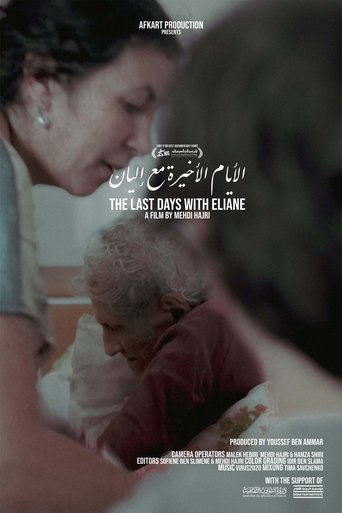
A portrait of the Director’s maternal grandmother, Eliane, a French woman who lived her entire life in Tunisia. The film shows her last moments at home with her family before her passing due to Alzheimer's disease.

During the three weeks of Justice's March 2008 North American tour, Romain Gavras, So Me and the band themselves tape every second of their escapades across the country and the chaos that ensued.


Jean des Bossons is a documentary-fiction which recounts the activities of a high mountain guide in 1947. Around Chamonix Mont-Blanc, the guide Jean des Bossons, interpreter by the mountaineer Armand Charlet, accompanies on mountain hikes, Jean-Pierre, an apprentice guide. The novice, skis on the shoulder, is already clumsy. The professional taught him how to travel on skis uphill and downhill, then mountaineering in ice and rock parishes. By dint of training, Jean-Pierre has made it his job. Guides are also lifeguards. A group went to a glacier to rescue a man who had fallen into a crevasse. During this rescue, Jean des Bossons is the victim of an accident. A drama that prevents him from practicing the profession, but not climbing. The man sinks into the fog and Jean-Pierre cannot find him.

"The ascent of the Aiguilles Ravanel and Mummery", climbed by young guides in cycling pants: The brothers Armand Charlet and Georges Charlet, Arthur Ravanel, Henri Couttet and Charles Balmat. The film was shot by Georges Tairraz II, Chamoniard mountain photographer, representative of the third generation of a family line of mountain photographers and filmmakers. George Tairraz II's film will lay the groundwork for a French vision of mountain film; In the 1930s, a French school of mountain cinema emerged, less expressionist, more stripped down and realistic than the German school. These are the films of Marcel Ichac, Roger Frison-Roche, Samivel, Georges Tairraz II, etc. It develops according to the principles set by Marcel Ichac, in opposition to the German school. It is both about getting out of the dramatic vision of the mountain and placing the mountain and the climbers at the heart of the plot.

"Flammes de Pierre" is the first documentary made by Gaston Rébuffat himself in 1947. It depicts Rébuffat in full ascent of the Flammes De Pierre, wild ridges in the heart of the Mont Blanc massif overlooking Chamonix. Like Roger Frison-Roche, Walter Bonatti, René Desmaison or Giusto Gervasutti, Gaston Rébuffat has written and filmed the great pages of contemporary mountaineering but above all, he knew how to talk about it with enough poetry so that it is not simply airtight race stories for spectators. Stories that have been triggers for many readers, who have come to know “stone flames” thanks to him.

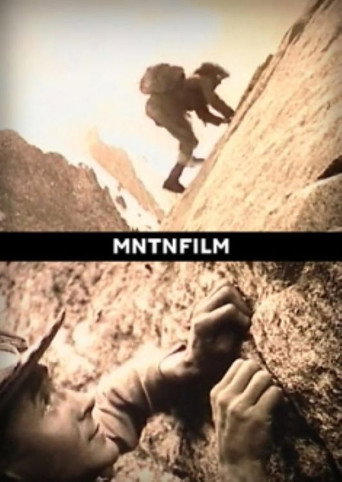
Hermann Perren, mountain guide, prepares the ascent of Dent du Requin with a companion. He checks the equipment necessary for any mountaineer, rope, ice axe, glasses, double socks and iron shoes. They leave Chamonix, cross the Mer de Glace and arrive at the Requin Refuge. The next morning, Perren and his companion cross the glacier and encounter huge crevasses and seracs, which slow their progress. They cautiously cross a snow bridge and bivouac a few hours later. The climb is more and more difficult. They reach the Requin shoulder and have to climb the vertical wall to the summit. A shortened and sounded version of the film was released in 1937 under the same title by Les Films du Sagittaire.
Part of a trilogy about the reality of living in a French prison.