Introduction to the Primates
· 49 min · Not rated
An Introduction to the Primates, covers 41 species of primates ranging from the 300-gram sized pygmy slow loris to the 200-kilogram sized gorilla. At least ten of these are extremely endangered species including the Zanzibar red colobus, filmed in Zanzibar, and the potto, aye-aye, and Drill, all of which occur in less than half a dozen sites in captivity.
Trailers are previews, not full movies.
No authorized playback source configured. Use the legal watch options below.
Production details
- Directors
- Anne Zeller
- Production companies
- Unavailable
- Countries
- Unavailable
- Status
- Released
Top Cast
Title information and images are supplied by TMDb. Explore our discovery guide for advice on comparing metadata and legal viewing options.
Where to watch
Availability provided by JustWatch via TMDb. Offers can change. Provider links are listed on TMDb; full playback requires a separately authorized source.
Availability not listed for this country.
Seasons & episodes
Recommendations

In an intimate and joyful story of love in the face of loss, celebrated poets Andrea Gibson and Megan Falley find strength—and unexpected hilarity—in what might be their final year together.

The life and career of an actor, artist, and icon. His own journey through his own camera.

Director Michael Apted revisits the same group of British-born adults after a 7 year wait. The subjects are interviewed as to the changes that have occurred in their lives during the last seven years.

Through deeply personal interviews with her siblings and an examination of the photographs, letters, and belongings left behind, Mariska assembles a new portrait of her mother Jayne Mansfield, an extraordinary and complex woman.

A compilation of over 30 years of private home movie footage shot by Lithuanian-American avant-garde director Jonas Mekas, assembled by Mekas "purely by chance", without concern for chronological order.

Director Michael Apted revisits the same group of British-born adults after a 7 year wait. The subjects are interviewed as to the changes that have occurred in their lives during the last seven years.
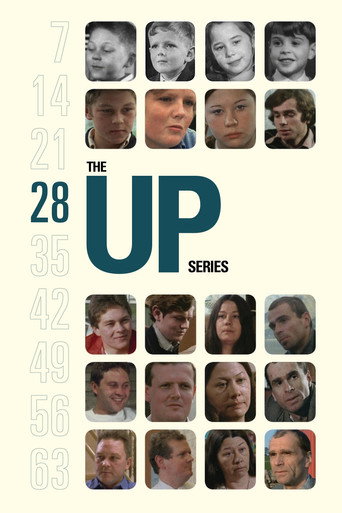
Just two years away from turning 30, participants in Michael Apted's documentary series are facing serious questions of identity and purpose, wondering whether they've found their place in the world.

A documentary about how a dominant cultural and demographic institution both sustains their traditional activities and adapts to the digital revolution.

Daniel Craig candidly reflects on his 15 year adventure as James Bond. Including never-before-seen archival footage from Casino Royale to the upcoming 25th film No Time To Die, Craig shares his personal memories in conversation with 007 producers, Michael G Wilson and Barbara Broccoli.
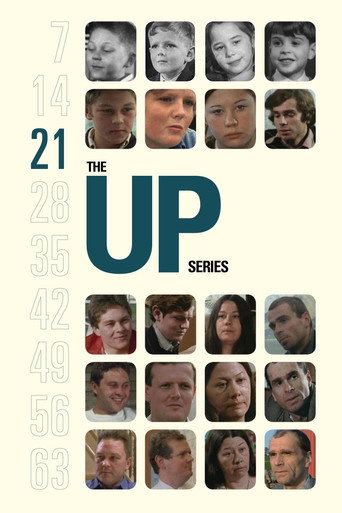
After another 7 year wait, director Michael Apted revisits the same group of British-born children from Seven Up! and 7 Plus Seven. The subjects are interviewed as to the changes that have occurred in their lives during the last seven years.

A documentary about ten very different lives connected by having appeared onscreen wearing masks or helmets in Star Wars.

This revealing documentary honors the legendary Sidney Poitier—iconic actor, filmmaker, and civil rights activist. Featuring interviews with Denzel Washington, Spike Lee, Halle Berry, and more.

A visual montage portrait of our contemporary world dominated by globalized technology and violence.

The life of Mr. Spock, as well as that of Leonard Nimoy, the actor who played him for almost fifty years, written and directed by his son: Adam.

A string of threatening emails escalates into a revenge plot involving a newly married US marshal and his ex-girlfriend.
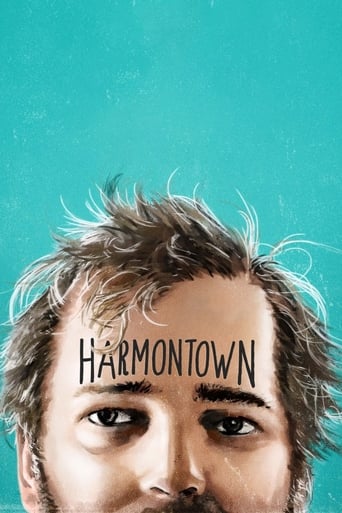
A comedic, brutally honest documentary following self-destructive TV writer Dan Harmon as he takes his live podcast on a national tour.

Al Pacino's deeply-felt rumination on Shakespeare's significance and relevance to the modern world through interviews and an in-depth analysis of "Richard III."

A documentary on the expletive's origin, why it offends some people so deeply, and what can be gained from its use.

A documentary about the life and films of director John Ford.
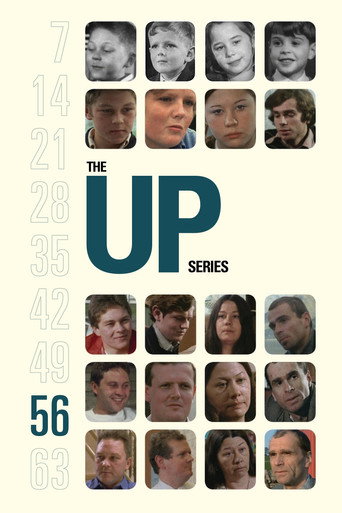
When a cross-section of seven-year-olds were interviewed for 7 Up in 1964 it was immediately evident that their social backgrounds influenced their attitudes towards life. While the upper class children were confident and self-assured, those from middle and working class backgrounds were resigned to a challenging life of hard work. This premise was put to the test every seven years when the same group were interviewed about the progression of their lives. 49 years in the making, the changes that occurred to the original 14 make for fascinating television and are in many ways the stories of all our lives. From success and disappointment, marriage and childbirth, to poverty and illness, nearly every facet of life has been captured on film. Now, at the age of 56, the group are once more brought together and, with the benefit of hindsight, assess whether their lives have been ruled by circumstance or self-determination.
Similar titles

The film discusses the traits and originators of some of metal's many subgenres, including the New Wave of British Heavy Metal, power metal, Nu metal, glam metal, thrash metal, black metal, and death metal. Dunn uses a family-tree-type flowchart to document some of the most popular metal subgenres. The film also explores various aspects of heavy metal culture.
In GLOBAL METAL, directors Scot McFadyen and Sam Dunn set out to discover how the West's most maligned musical genre - heavy metal - has impacted the world's cultures beyond Europe and North America. The film follows metal fan and anthropologist Sam Dunn on a whirlwind journey through Asia, South America and the Middle East as he explores the underbelly of the world's emerging extreme music scenes; from Indonesian death metal to Chinese black metal to Iranian thrash metal. GLOBAL METAL reveals a worldwide community of metalheads who aren't just absorbing metal from the West - they're transforming it - creating a new form of cultural expression in societies dominated by conflict, corruption and mass-consumerism.
"Heart of the Country" is the story of Shinichi Yasutomo, the extraordinary principal of a rural elementary school in Kanayama, central Hokkaido, Northern Japan. Yasutomo is a man driven by his vision for learning and his passion for educating the heart as well as the mind. The film follows Yasutomo, his teachers and staff, students and their families over the course of one entire school year. The film is also the story of the families of Kanayama. Parents and elders of this once impoverished town embrace Yasutomo's vision, but not without wary glances back to the past. This small community, bound together by love for its children, is also defined by its journey through the cultural upheavals of postwar Japan.
Drawing on original footage from National Geographic, Etched in Bone explores the impact of one notorious bone theft by a member of the 1948 American-Australian Scientific Expedition to Arnhem Land. Hundred of bones were stolen and deposited in the Smithsonian Institution in Washington DC, until it became known to Arnhem elders in the late 1990s. The return of the sacred artefacts was called for, resulting in a tense standoff between indigenous tribespeople and the Department of Anthropology at the Smithsonian.
A dark and magical visit to the fabled Parisian address Rue Fontaine 42. This was the residence of André Breton, the mastermind of surrealism, who surrounded himself with an impressive collection of modern, Western art and ethnographic objects from Oceania and North America. The collection was sold and divided up in 2003 at a controversial auction. 'The Trick Brain' is a delirious montage and a trip back in time to Breton's private art collection, where Atkins has been scouring the archives and come up with a possessing interior film of the place that once was, complete with surrealistic paintings, scores of Indian figures and hundreds of other displayed rarities. The film's soundtrack is provided by an observant narrator, who reveals to us that the objects shown are not necessarily what they claim to be - but instead are catalysts for some kind of wonderful linguistic virus which reveals the real identity of things.
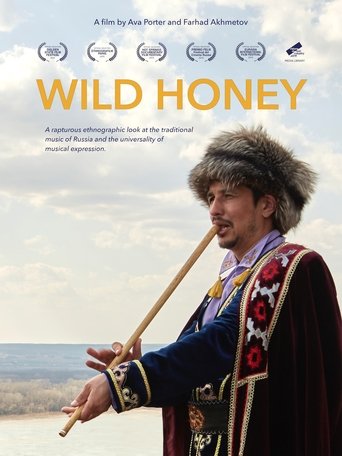

Raised in one of the most violent outskirts of Fortaleza, the Cruz brothers had their lives shaped by music to the point that their parents turned the house where they live into a school.
A deep dive into contemporary Brazilian music. Guided by the composer, anthropologist and ethnomusicologist Kilza Setti and the Hésperides Música das Américas nucleus, the documentary takes us to a world where contemporary music, the Guarani and Timbira peoples, the colonization of America and poetic professions meet.
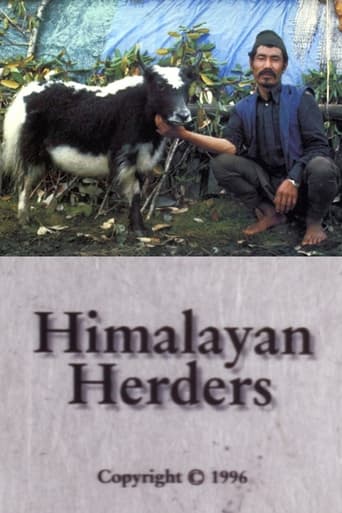
John Bishop and Naomi Bishop present a portrait a peculiar life style of the Himalayan indigenous Sherpa people in their documentary , the Himalayan Herders. The 76 minutes long film is about the diverse culture and life style of herders community near Mt. Everest region of Nepal.The film was made in 1997 as a part of Case Studies in Cultural Anthropology Series.
An anthropological documentary that gives voice to the Orokavia women in Papua New Guinea and shows their daily lives.

The cave paintings of Tifariti, a fundamental place for Wester Sahara, come to life before our very eyes to tell us, as though a fable, the story of a civilization that 10,000 years ago occupied a fertile valley where today all there is is desert. A magical tale that, through the cultural heritage of a stateless nation, tells us about our own experience of progress and civilization.
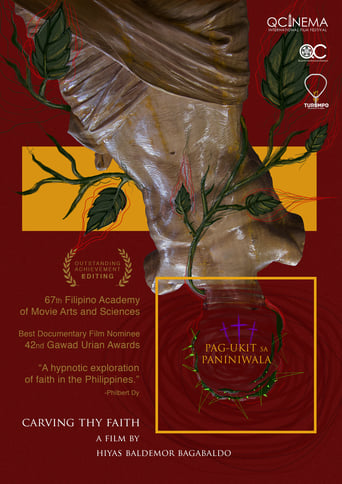
A five-year visual ethnography of traditional yet practical orchestration of Semana Santa in a small town where religious woodcarving is the livelihood. An experiential film on neocolonial Philippines’ interpretation of Saints and Gods through many forms of rituals and iconographies, exposing wood as raw material that undergoes production processes before becoming a spiritual object of devotion. - A sculpture believed to have been imported in town during Spanish colonial conquest, locally known as Mahal na Señor Sepulcro, is celebrating its 500 years. Meanwhile, composed of non-actors, Senakulo re-enacts the sufferings and death of Jesus. As the local community yearly unites to commemorate the Passion of Christ, a laborious journey unfolds following local craftsmen in transforming blocks of wood into a larger than life Jesus crucified on a 12-ft cross.
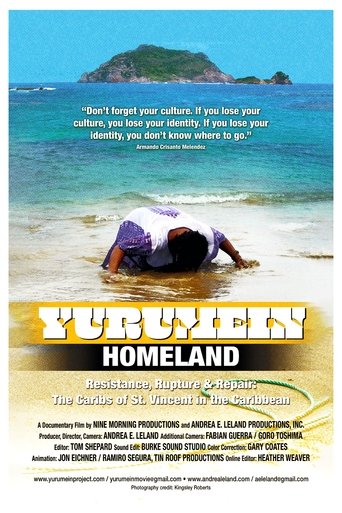
YURUMEIN (Homeland) is a documentary film which recounts the painful past of the Caribs on the island of St. Vincent in the Caribbean, their extermination at the hands of the British 200+ years ago, the decimation of their culture on the island, and their exile to Central America where much of that culture survived, even thrived. YURUMEIN (your -o- main) also explores what few cultural remnants of the Caribs, also known as Garifuna, still exist on St. Vincent and the beginnings of a movement to teach and revitalize Garifuna language, music and dance, and ritual to younger generations of Garifuna/ Caribs on St. Vincent.

The Fall of Womenland is a fascinating documentary on the unique sexual culture of the Mosuo people — a small minority situated in the southwest of China — and one of the last remaining matriarchal societies in the world. Without a formal marriage contract, the Mosuo traditionally build relationships based on free love and sexual satisfaction (‘walking marriages'). But can the sexual liberty and power of the Mosuo women survive as modern Chinese society slowly encroaches their ancestral land? The film explores the present reality for the Mosuo people as well as the dangers that threaten their inherited way of life.

Kuldeep is in love, but the girl he wants to marry comes from a more prestigious caste than him. And no matter how much Kuldeep begs the goddess Kali to intervene on his behalf, the girl’s father is hard to convince.

On the night of 3 August 1996 a school of striped dolphins ran ashore near the village of Tuo on Ngasinue/Fenualoa Island in the Reef Islands (Solomon Islands). Dolphins have a special kinship-related link to the Aiwoo-speaking people in Tuo. Moffat Bonunga tells the legend or so-called local kastom story that explains why. Moffat's explanations are linked with those of another local expert, Commins Veio, who tells his version of the story to Nathaniel Meningi inside the men's house (sapolau) in Tuo. The night the dolphins run ashore, Moffat immediately contacts the film crew - the villagers want the crew to film this peculiar phenomenon. Although the film focuses on the kastom story and the villagers' re-enactment of the hunt, it also documents the villagers' joy that the sea once again has proved an important source of food.
“The barbaric negro inhabitants of an African village are shown in their various forms of activity, the first view being a photograph of a number of children of all sizes, shapes and degrees of African beauty. Following this is a match between two giant negro wrestlers, who first fence with slicks and then grapple with each other. The start of a caravan is next pictured, the handling of the huge camels being well demonstrated. A British courier next comes into view and the African, presumably sheiks, attack him. A short sham fight takes place, and he escapes. Now a religious procession of natives is shown, with their tom-toms and curious devices for making curious music. The last is a photo of a comical looking African infant playing with a kitten.” (Moving Picture World)