Vita di borgata
1962-06-01 · Runtime unavailable · Not rated
Trailers are previews, not full movies.
No authorized playback source configured. Use the legal watch options below.
Production details
- Directors
- Giuseppe Ferrara
- Production companies
- Corona Cinematografica
- Countries
- Italy
- Status
- Released
Top Cast
Cast unavailable.
Title information and images are supplied by TMDb. Explore our discovery guide for advice on comparing metadata and legal viewing options.
Where to watch
Availability provided by JustWatch via TMDb. Offers can change. Provider links are listed on TMDb; full playback requires a separately authorized source.
Availability not listed for this country.
Seasons & episodes
Recommendations
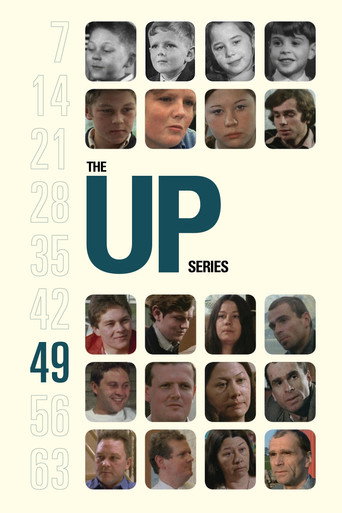
49 Up is the seventh film in a series of landmark documentaries that began 42 years ago when UK-based Granada's World in Action team, inspired by the Jesuit maxim "Give me the child until he is seven and I will give you the man," interviewed a diverse group of seven-year-old children from all over England, asking them about their lives and their dreams for the future. Michael Apted, a researcher for the original film, has returned to interview the "children" every seven years since, at ages 14, 21, 28, 35, 42 and now again at age 49.In this latest chapter, more life-changing decisions are revealed, more shocking announcements made and more of the original group take part than ever before, speaking out on a variety of subjects including love, marriage, career, class and prejudice.

A visual montage portrait of our contemporary world dominated by globalized technology and violence.
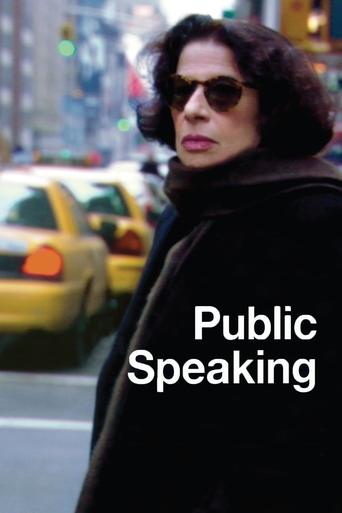
Martin Scorsese’s portrait of writer and social commentator Fran Lebowitz, celebrated for her sharp wit and observations on modern life. Filmed at New York’s Waverly Inn and intercut with archival footage and interviews, the documentary captures Lebowitz’s distinctive worldview through her spontaneous monologues and public appearances.
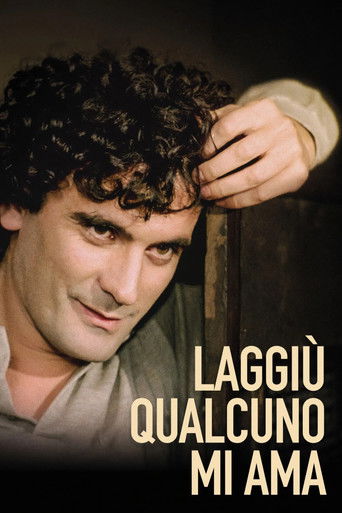
The life of a dying young man at the short age of only forty-one after playing the lead in Il postino. He was a brilliant stage actor before becoming an astonishing film director.

In an intimate and joyful story of love in the face of loss, celebrated poets Andrea Gibson and Megan Falley find strength—and unexpected hilarity—in what might be their final year together.

Explore the evolution of Buzz Lightyear from toy to human in the making of Pixar’s Lightyear. Dive into the origin and cultural impact of everyone’s favorite Space Ranger, the art of designing a new “human Buzz,” and the challenges faced by the Lightyear crew along the way.

A string of threatening emails escalates into a revenge plot involving a newly married US marshal and his ex-girlfriend.

A purely observational non-fiction film that takes viewers into the ethically murky world of end-of-life decision making in a public hospital.

Through deeply personal interviews with her siblings and an examination of the photographs, letters, and belongings left behind, Mariska assembles a new portrait of her mother Jayne Mansfield, an extraordinary and complex woman.

Just two years away from turning 30, participants in Michael Apted's documentary series are facing serious questions of identity and purpose, wondering whether they've found their place in the world.

An inside look at one of the most anticipated movie sequels ever with James Cameron and cast.

A documentary on the expletive's origin, why it offends some people so deeply, and what can be gained from its use.

Amber Heard and Nicole Kidman discuss their characters Mera and Atlanna.
Legendary journalist Gay Talese unmasks a motel owner who spied on his guests for decades. But his bombshell story soon becomes a scandal of its own.

Daniel Craig candidly reflects on his 15 year adventure as James Bond. Including never-before-seen archival footage from Casino Royale to the upcoming 25th film No Time To Die, Craig shares his personal memories in conversation with 007 producers, Michael G Wilson and Barbara Broccoli.
A documentary on the life of John Lennon, with a focus on the time in his life when he transformed from a musician into an antiwar activist.

A documentary about ten very different lives connected by having appeared onscreen wearing masks or helmets in Star Wars.

To mark the recent thirtieth anniversary of Sergio Leone’s death, this documentary sets out to pay tribute to one of the great legends of world cinema. The singular artistic vision of Sergio Leone has transcended national borders, creating the Spaghetti Western genre and transforming the international cinematic panorama forever with his innovative stylistic and narrative solutions, which have now become part of the language of the movies. The film, which is enriched with precious archive footage from the Cineteca di Bologna, including rare audio recordings and film clips shot behind the scenes, sees for the first time the direct participation of the Leone family and has interviews both with Leone’s longtime collaborators and with icons of Hollywood who have been profoundly influenced by his work.
Explores the true story of the notorious Jesse James, how the myth developed during his lifetime, and how the legends have persisted over 100 years after his death at the hands of his former friend, Robert Ford.
Unravel the case of Utah therapist Jodi Hildebrandt, whose child abuse arrest with parenting YouTuber Ruby Franke exposed a twisted tale of manipulation.
Similar titles
Cranes and Voices follows, on one side, people who hear voices and share their daily lives, and on the other, a collective of tenants who investigate their neighbourhood through its noises, its vibrations and its construction sites. The film moves through apartments, streets, meetings and moments of sound creation, where voices, urban noises and recorded materials are transformed into collective sound compositions and spaces for exchange. Sound appears here as an ambivalent force, at once invasive and generative, shaping the way we inhabit the city, other people and ourselves. Cranes and Voices invites us to pay attention to these singular listening experiences, to hear what they reveal about the housing crisis, about how mental health is viewed and about the ways we organise our shared spaces.

Because of the big housing problem in the US many people move into cheap, run down hotels, the so-called Flophouse hotels. Twelve-year-old Mikal was born and raised in a hotel room he shares with his parents, who struggle with substance abuse. Driven by love and a desire for a better life, his greatest wish is for his mother to stop drinking. Mikal is bright and articulate, but his parents’ struggles prevent them from giving him the stability he needs. Through Mikal’s perspective, the film paints an intimate portrait of resilience, hope, and the harsh realities of life on society’s margins.
Homelessness in the United States takes many forms. For Elizabeth Herrera, David Lima and their four children, housing instability has meant moving between unsafe apartments, motels, relatives’ couches, shelters, the streets and their car. After 15 years of this uncertainty, the family moved into their first stable housing — an apartment in the San Francisco Bay Area — in the midst of the coronavirus pandemic.
Shot in the aftermath of the 2010 Haiti earthquake, the documentary looks at what really happens with the money donated to help with disaster aid.

In 1980s Brooklyn, a resilient family, evicted from public housing, refuses to succumb to homelessness or welfare. Instead, they construct their own home-one scrap of discarded wood at a time.
Just a stone’s throw from downtown Montreal is the largest social housing complex in Quebec. Built in 1959 where the red-light district used to be, Les Habitations Jeanne-Mance have retained something of the area’s seedy reputation for poverty, prostitution, drugs and violence. But who really knows the projects and the people who live there? Delving beneath the prejudices and stereotypes, director Isabelle Longtin ventured inside the buildings and met the residents.
Chronicles the modern-day David and Goliath tale amidst North America's housing crisis. During the pandemic, Khaleel Seivwright, a young Toronto carpenter, builds life-saving shelters for unhoused people facing the winter outside. His actions attracted international acclaim but also staunch opposition from the city government, portraying a compelling narrative set against the backdrop of societal challenges and governmental resistance.

Jaiden van Bork examines both the mythology and reality of Cape Cod, Massachusetts, seeking to unravel the difficult questions that face the coastal community today as it confronts a barrage of overtourism and a subsequent housing crisis that has left locals scrambling to keep their feet planted in the sand. Weaving a personal chronicle of childhood on Cape Cod with the voices of local artists, fishermen, and hospitality workers, the film channels the eerie realities of small town America, posing new questions about identity and memory.

Over the course of over six decades, Honest Ed's became a Toronto Landmark. The neighbourhood it left behind when it closed its doors in 2016 reflects on its history and legacy.
Canada is facing a housing crisis, and cooperative housing might be a part of the solution.
A film about the way of life of young people in a squatted and barricaded building, the confrontations with the state for the preservation of the building, the differences of opinion within the squatting movement on strategic and tactical issues, the political pressure from the House of Representatives and the government, and the actions of the authorities, including riot police, tanks, and mass arrests.
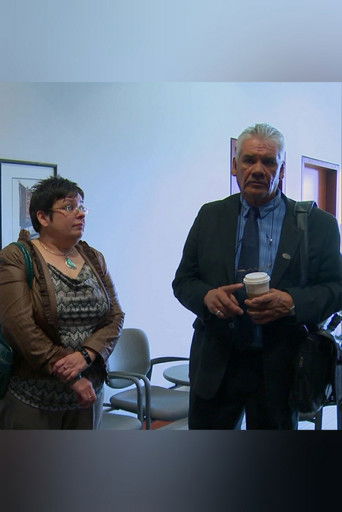
Amid a severe housing crisis that made international headlines in 2011, the federal government imposed third-party management on the Attawapiskat First Nation. In response, the First Nation’s leadership filed a challenge in federal court, claiming the appointment was unreasonable, contrary to law and harmful to community members. Alanis Obomsawin documents the remarkable judicial review that ensued in April 2012 in this companion work to her feature documentary The People of the Kattawapiskak River.

Mark Humphries examines Australia's housing crisis, with renters, journos and comics asking who broke the dream and how can the country fix it before it's too late.

Amidst the ivy-draped remnants of once-notorious public housing projects, FOR THOSE THAT LIVED THERE weaves a visual tapestry, navigating the poignant impacts of gentrification, the displacement of Black legacies, and the emergent migrant narratives. Against Chicago's ever-evolving skyline, this evocative exploration immerses audiences into the soul of a neighborhood transformed.
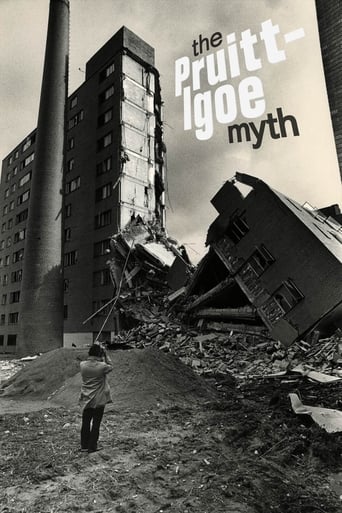
Destroyed in a dramatic and highly-publicized implosion, the Pruitt-Igoe public housing complex has become a widespread symbol of failure amongst architects, politicians and policy makers. The Pruitt-Igoe Myth explores the social, economic and legislative issues that led to the decline of conventional public housing in America, and the city centers in which they resided, while tracing the personal and poignant narratives of several of the project's residents. In the post-War years, the American city changed in ways that made it unrecognizable from a generation earlier, privileging some and leaving others in its wake. The next time the city changes, remember Pruitt-Igoe.
A naturalistic story about the realities of healthcare and houselessness from the perspective of Ramon Duarte, a houseless welder who receives care from Miami Street Medicine, a street medicine team. In Miami, where rising housing costs are forcing folks onto the streets, the doctor's work is more important than ever.

Frederick Wiseman’s unflinching portrayal of life at the Ida B. Wells housing project in Chicago, a raw exposition of the daily conflicts between residents and the bureaucratic machinery to which they are continually subjected. With intimate detail and an abiding dedication to his subject, Wiseman unearths the hidden facets of institutions to find humanity and sites of unexpected beauty.
In buildings where foreign workers lived in Germany, there were strict rules of conduct, defined by the house rules and supervised by the building superintendents. Many rights regarding the freedom of movement, communication and behavior were abused. Interviews with the tenants and with the "orderlies" which point out absurd situations and clashes caused by these restrictions.