Stray Light
2011-11-26 · 12 min · Not rated
A reflection on the iconic headquarters of the Johnson Publishing Company in downtown Chicago. The eleven-story Modernist building on South Michigan Avenue was home to Jet and Ebony magazines since its design in 1971. The building was heralded as the first major downtown Chicago building designed by an African-American architect since the eighteenth century. In the case of the Johnson family and its legacy, Hartt looks to the intersection of the publisher’s ideals and values, the style and aesthetics embodied by the site and the lasting cultural impact of the magazines.
Trailers are previews, not full movies.
No authorized playback source configured. Use the legal watch options below.
Production details
- Directors
- David Hartt
- Production companies
- Unavailable
- Countries
- Unavailable
- Status
- Released
Top Cast
Cast unavailable.
Title information and images are supplied by TMDb. Explore our discovery guide for advice on comparing metadata and legal viewing options.
Where to watch
Availability provided by JustWatch via TMDb. Offers can change. Provider links are listed on TMDb; full playback requires a separately authorized source.
Availability not listed for this country.
Seasons & episodes
Recommendations

Director Michael Apted revisits the same group of British-born adults after a 7 year wait. The subjects are interviewed as to the changes that have occurred in their lives during the last seven years.

Through deeply personal interviews with her siblings and an examination of the photographs, letters, and belongings left behind, Mariska assembles a new portrait of her mother Jayne Mansfield, an extraordinary and complex woman.

The film follows adventurer Jeff Johnson as he retraces the epic 1968 journey of his heroes Yvon Chouinard and Doug Tompkins to Patagonia.

An inside look at one of the most anticipated movie sequels ever with James Cameron and cast.

Al Pacino's deeply-felt rumination on Shakespeare's significance and relevance to the modern world through interviews and an in-depth analysis of "Richard III."

Director Michael Apted revisits the same group of British-born adults after a 7 year wait. The subjects are interviewed as to the changes that have occurred in their lives during the last seven years.

In an intimate and joyful story of love in the face of loss, celebrated poets Andrea Gibson and Megan Falley find strength—and unexpected hilarity—in what might be their final year together.
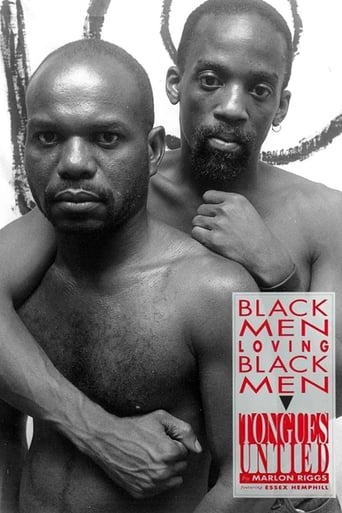
Marlon Riggs, with assistance from other gay Black men, especially poet Essex Hemphill, celebrates Black men loving Black men as a revolutionary act. The film intercuts footage of Hemphill reciting his poetry, Riggs telling the story of his growing up, scenes of men in social intercourse and dance, and various comic riffs, including a visit to the "Institute of Snap!thology," where men take lessons in how to snap their fingers: the sling snap, the point snap, the diva snap.

The life and career of an actor, artist, and icon. His own journey through his own camera.

A look at the origins, history and conspiracies behind the "Majestic 12", a clandestine group of military and corporate figureheads charged with reverse-engineering extraterrestrial technology.

A string of threatening emails escalates into a revenge plot involving a newly married US marshal and his ex-girlfriend.
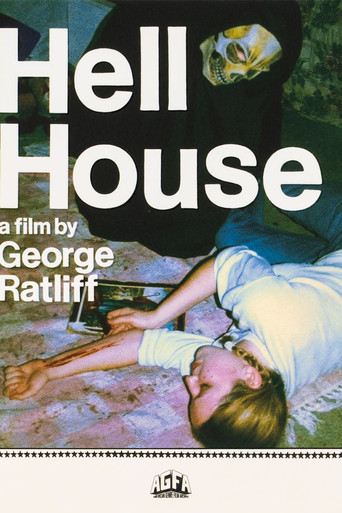
A look at the "Hell House" performed annually in October by the youth members of Trinity Church (Assemblies of God) in Cedar Hill, Texas (a Dallas suburb) — seen by over 10,000 visitors each year.

Alexander McQueen's rags-to-riches story is a modern-day fairy tale, laced with the gothic. Mirroring the savage beauty, boldness and vivacity of his design, this documentary is an intimate revelation of McQueen's own world, both tortured and inspired, which celebrates a radical and mesmerizing genius of profound influence.
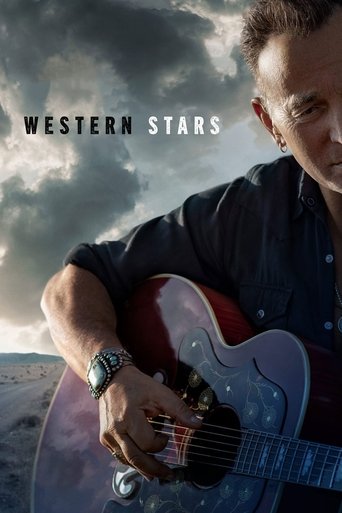
The incomparable Bruce Springsteen performs his critically acclaimed latest album and muses on life, rock, and the American dream, in this intimate and personal concert film co-directed by Thom Zimny and Springsteen himself.
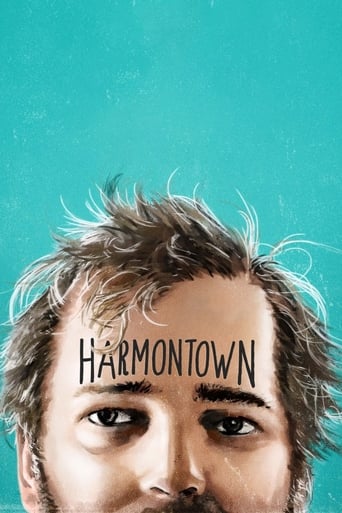
A comedic, brutally honest documentary following self-destructive TV writer Dan Harmon as he takes his live podcast on a national tour.

A documentary about ten very different lives connected by having appeared onscreen wearing masks or helmets in Star Wars.
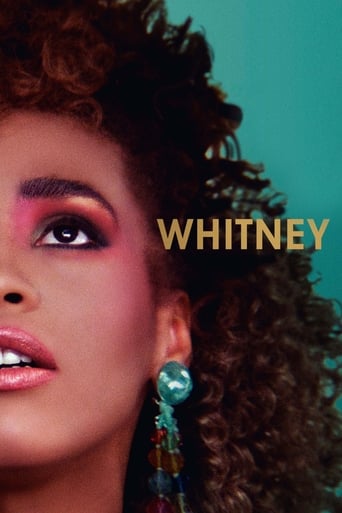
Examines the life and career of singer Whitney Houston. Features never-before-seen archival footage, exclusive recordings, rare performances and interviews with the people who knew her best.
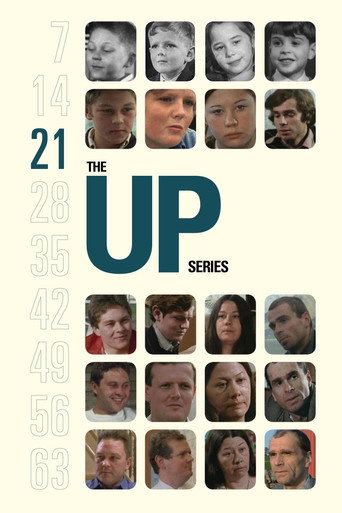
After another 7 year wait, director Michael Apted revisits the same group of British-born children from Seven Up! and 7 Plus Seven. The subjects are interviewed as to the changes that have occurred in their lives during the last seven years.
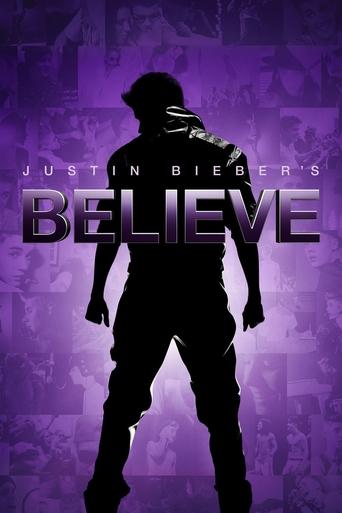
A backstage and on-stage look at Justin Bieber during his rise to super stardom.
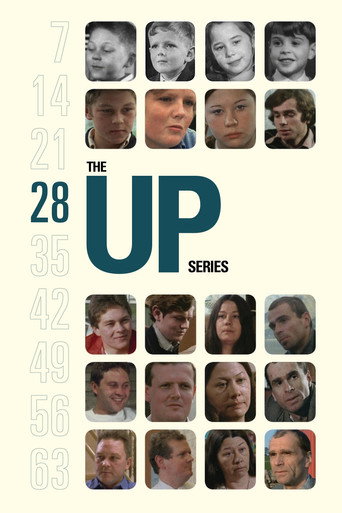
Just two years away from turning 30, participants in Michael Apted's documentary series are facing serious questions of identity and purpose, wondering whether they've found their place in the world.
Similar titles
In February 2013, the New World Symphony presented Making the Right Choices: A John Cage Centennial Celebration, a spectacular three-day festival dedicated to the music and ideas of John Cage. As part of the festival, NWS hosted a new video installation entitled NWS: 4’33″, created by New York-based composer, director, performer and recording artist Mikel Rouse; which consisted of video performances contributed by Cage fans via a special YouTube site set up by Rouse. The public was invited to record and submit their own video, and visit the installation during the festival to see their work in the SunTrust Pavilion at the New World Center. These videos will be included in an online Archive of the event, a lasting tribute to this defining and seminal artist.

A movie about James Tissot (1836-1902), a French painter and portraitist
An unnamed passer-by is forced to trace a circular route inside an abandoned tram station, facing loss and time. The broken walls act as a channel, transmitting fragmentary, blurred and analogical memories.

An abstract and detailed observation of a young life told through a series of observational montages. Part of the 'Technicolour' series of films from Lot 108 Productions.
Departing from peripheral details of some paintings of the Bilbao Fine Arts Museum, a female narrator unravels several stories related to the economic, social and psychological conditions of past and current artists.
The decision to move to Holland doesn't sound like a wise idea. Why move to a country that could be flooded at any moment? For the last 25 years, the political climate has shifted. The public debate on migration has become harsher, more heated, and polarized. What would have been considered right-wing xenophobia back then, is now considered mainstream. Populists simplify complex realities into good and evil, victims and perpetrators: ‘us’ versus ‘them’. Their rhetoric often consists of dehumanizing words and metaphors. One of these is ‘water’. In reality, water is not an immediate threat to the average Dutch person; but it is a huge threat to the thousands trying to reach the Netherlands. People trying to survive the Mediterranean Sea in rubber boats. Trying to survive winter on the Aegean coast in primitive tents. To them, water really is deadly.
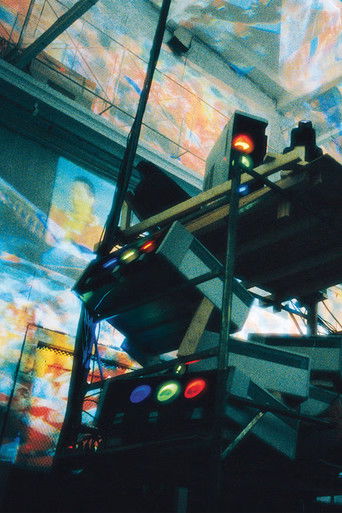
Sistine Chapel is an audio-visual collage of new footage and samples from Paik’s past videos, which featured many of his friends, collaborators, and public figures. It was Paik’s own way of summarizing his artistic career with video. The film installation consists of fast-paced and overlapping images that completely cover the gallery walls and ceiling—one of the most under-appreciated parts of architecture, according to Paik. With its electronic visuals and booming audio, interspersed with periods of silence, the immersive installation stands in stark contrast to the experience of its namesake.

In Antarctica, an artist prepares his installation simultaneously with a group of scientists conducting research. An essay on the persistence and loneliness of the creative act; like the flight of a butterfly in chaos theory or a silent prayer. A sensory experience. A visual poem made of ice, snow and wind.
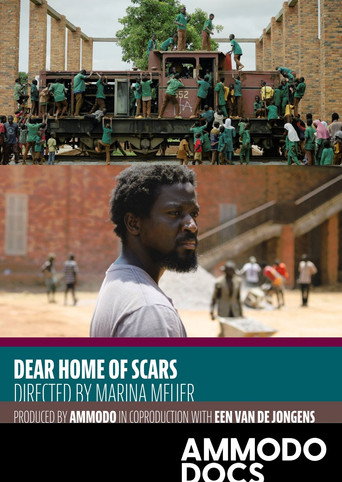
In Dear Home of Scars, we see celebrated visual artist Ibrahim Mahama return to his hometown of Tamale in Northern Ghana to visit Red Clay Studio, a lively cultural centre and art space he founded, where he works on a new art installation involving old colonial railcars and the reconstruction of a stretch of track. During British rule of Ghana (1821-1957), the colonisers used trains to transport gold and other resources to the coast. Remnants of track now lie abandoned as silent reminders of this history of exploitation. They are ‘scars in the landscape’, in the words of Mahama. The project brings new energy and self-awareness to local residents. Meanwhile, Mahama reflects on his role as a sought-after artist and builder of local communities.

While Virtual Reality promises a whole world, in fact it offers only a view within the strictly defined boundaries of a sphere. Is this also the case for the strictly defined boundaries of the European Union? When crossing the borders of the European Union, one is not allowed to film. This also applies to Google and their Street View cars, resulting in gaps in the available Street View coverage within the area of EU border control posts. The Euro dome is increasingly made more visible and intimidating from the outside: high fences with barbed wire stand tall along the border and armed border patrols pass by on a regular basis. While from inside the dome, one can only see a virtual glimpse of its borders. A faint reflection or a delayed feedback version.
Combining ecological imperatives, unique land narratives, cultural folklore, ancestral agricultural traditions, and farming practices side by side using a dual-channel video projection aims to explore how ecological concerns in disparate contexts can unveil a third realm for reflection within poetic and empathetic frameworks. The video serves as tangible evidence of our collective journey as beings, extending local contexts and conveying local socio-ecological imperatives to distant settings, fostering dialogues both on and off the ground.
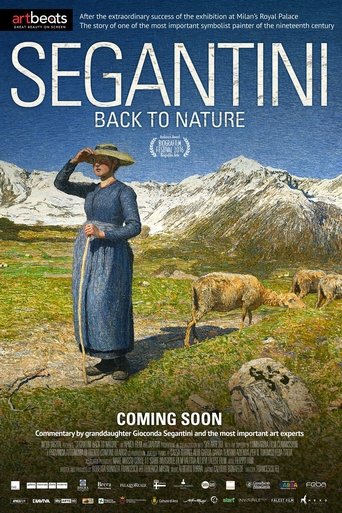
Giovanni Segantini rose from humble origins to become the most important of Italian pointillists, and one of the most important symbolist painters in the 19th century. This film focuses on his way of feeling nature as a source of artistic and spiritual inspiration.
These 131 video monitors stacked in a grid present simultaneous, continuous footage of the German artist during the last year of his life. In this filmed diary-project that Dieter Roth executed while convalescing in Reykjavik and Basel, we see him not only working in his studio but also while he sleeps, bathes, and uses the bathroom. It is nearly impossible to pay attention to only one video without becoming distracted by an unexpected sound or movement coming from one of the many other screens. Each monitor broadcasts a different point in the artist's daily routine, while the gridlike arrangement of monitors reinforces a sense of order and chronology.
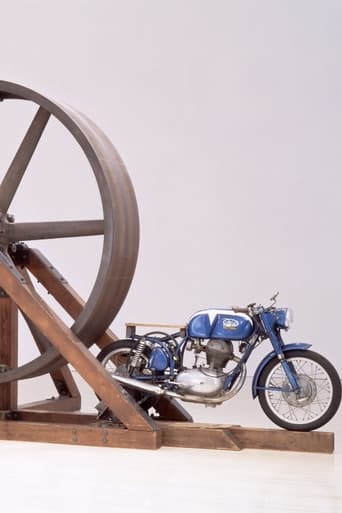
During the 1980 exhibition of Burden's monumental kinetic sculpture The Big Wheel at Ronald Feldman Fine Arts, New York, Burden and Feldman were interviewed by art critic Willoughby Sharp. Burden articulates the process of creating The Big Wheel, a 6,000-pound, spinning cast-iron flywheel that is initially powered by a motorcycle, and discusses its relation to his earlier performance pieces and sculptural works. Addressing his motivations and the meaning of this potentially dangerous mechanical art object, Burden discusses such topics as the role of the artist in the industrial world, "personal insanity and mass insanity," and "man's propensity towards violence."
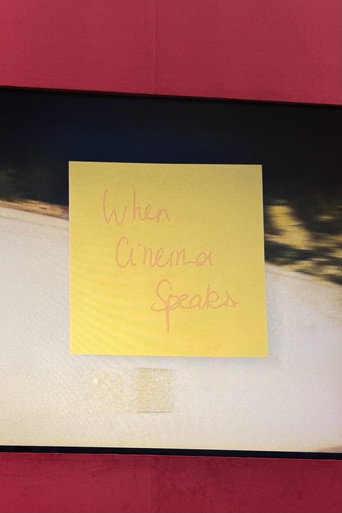
Zineb Sedira pays tribute to the history of African Cinema and the filmmakers who had inspired her.

Michael Palin heads for rural Pennsylvania and Maine to explore the extraordinary life and work of one of America's most popular and controversial painters, Andrew Wyeth. Fascinated by his iconic painting Christina's World, Palin goes in search of the real life stories that inspired this and Wyeth's other depictions of the American landscape and its hard grafting inhabitants. Tracking down the farmers, friends and family featured in Wyeth's magically real work, Palin builds a picture of an eccentric, enigmatic and driven painter. He also gets a rare interview with Helga, the woman who put Wyeth back in the headlines when the press discovered he had been painting her nude, compulsively but secretly for 15 years.

In this film, we get to know the socially engaged sculptor Asbjørn Høglund, who has made a deep impression through his contributions to the public sphere. Hundreds of people pass several of his sculptures every day, but few know who the artist is. Asbjørn is represented at the National Museum of Norway, but during his 85 years he has only had two exhibitions and remained in the shadow of his sculptures throughout his life. The film explores his creative process, his legacy, and his lifelong dedication to his craft. Viewers get an intimate glimpse into his daily studio routine and experience the third exhibition of his life at Galleri Vanntårnet. As the artist reflects on his life's work, the film presents a moving contemplation of art, aging, and the enduring power of creativity.
"Regina José Galindo’s Tierra (2013) explores connections between the exploitation of labor, resources, and human life in Guatemala. Presented at a larger-than-life scale, Galindo stands naked on a parcel of land that is excavated by an encroaching bulldozer. Conjuring imagery of machine-dug mass graves, the work draws attention to the massacre of hundreds of thousands of Indigenous people, mostly Maya Ixil, during the Guatemalan Civil War (1960–96). As the excavator digs around her, the artist stands fixed and unrelenting." - MoMA PS1

A three-headed Melbourne set reality film about art, dialectics, and regionality.