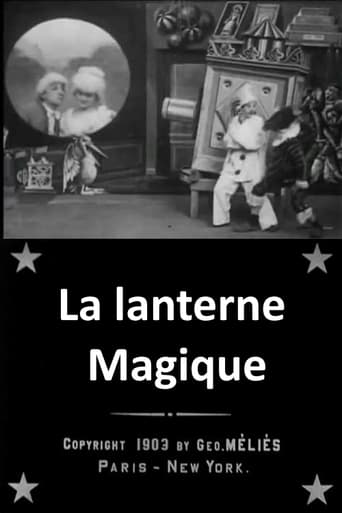
The Magic Lantern
1903-10-30 · 5 min · ★ 5.9
Two impish clowns construct a magic lantern. They prop it up at an angle, and use it to project pictures onto a wall. When the picture show ends, they open up the lantern to reveal a group of dancing girls inside - and this is only the first of the indications that this lantern really is magical.
Trailers are previews, not full movies.
No authorized playback source configured. Use the legal watch options below.
Production details
- Directors
- Georges Méliès
- Production companies
- Star Film
- Countries
- France
- Status
- Released
Top Cast
 Georges Méliès
Title information and images are supplied by TMDb. Explore our discovery guide for advice on comparing metadata and legal viewing options.
Where to watch
Availability provided by JustWatch via TMDb. Offers can change. Provider links are listed on TMDb; full playback requires a separately authorized source.
Availability not listed for this country.
Seasons & episodes
Recommendations
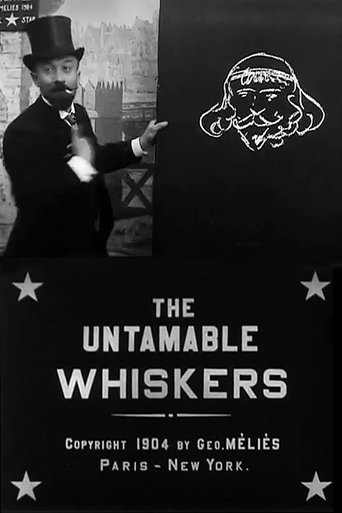
The background of this picture represents a scene along the beautiful river Seine in Paris. A gentleman enters, and taking a blackboard from the side of the picture, he draws on it a sketch of a novelist. Then, standing in the centre, he causes the living features of his sketch to appear in the place of his own, which is utterly devoid of whiskers. The change is made so mysteriously that the eye cannot notice it until one sees quite another person in the place of the first. Again another sketch is shown on the board, this one being that of a miser; then an English cockney; a comic character; a French policeman, and last of all, the grinning visage of Mephistopheles. It is almost impossible to give this film a more definite description; suffice it to say that it is something entirely new in motion pictures and is sure to please. (Méliès Catalog)
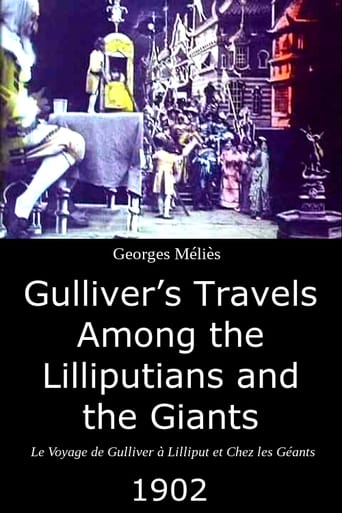
Georges Méliès' adaptation of Jonathan Swift's "Gulliver's Travels" is most distinguished, today, for being a color film of the classic story. Color was rare in 1902 (and many years after) as non-tinted color has to be hand painted on the film; this was an arduous task. Also notable is the film's short running time of approximately five minutes. Much of the original work is not covered, but viewers were expected to be familiar with the story, and enjoy the filmed highlights. There are a couple of scenes missing; according to contemporary reports, Gulliver's shipwreck was certainly included. You can do a lot in a few minutes, as Mr. Méliès includes a re-make of his own "Une partie de cartes" (1896), which already looked like something previously covered by the Lumière Brothers.

A poor young boy goes on a field trip and dreams of escaping to a land beyond the sunset.

In a medieval castle, a dark magician thought to be Mephistopheles conjures up a series of bizarre creatures and events in order to torment a pair of interloping cavaliers.
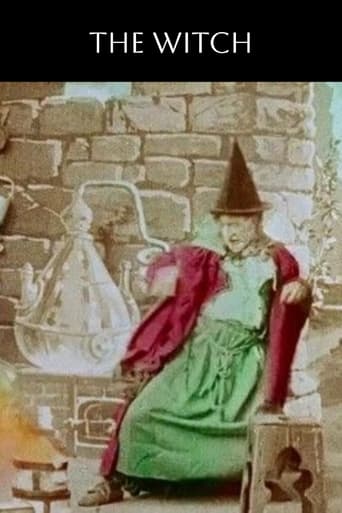
A penniless troubadour consults witch Carabosse about his future, but offends her by paying with a bag of sand. He evades the witch's revenge, and saves the beautiful princess.
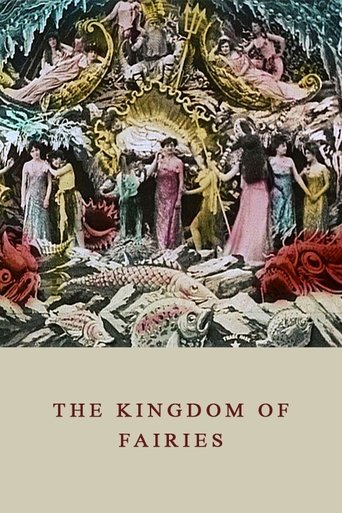
At the royal court, a prince is presenting the princess whom he is pledged to marry when a witch suddenly appears. Though driven off, the witch soon returns, summons some of her servants, and carries off the princess. A rescue party is quickly organized, but the unfortunate captive has been taken to a strange, forbidding realm, from where it will be impossible to rescue her without some special help.
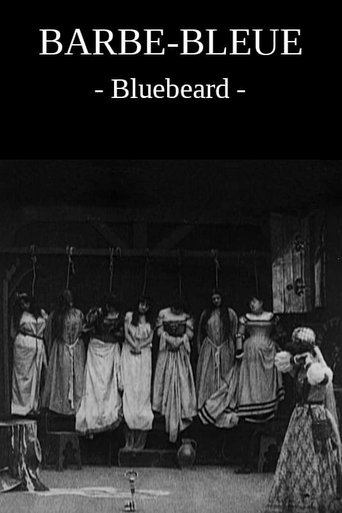
A young woman becomes the eighth wife of the wealthy Bluebeard, whose first seven wives have died under mysterious circumstances.
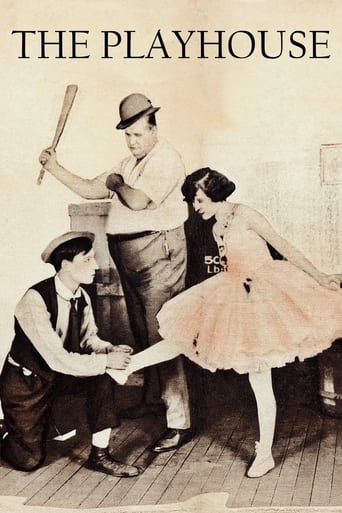
Upon waking from the dream of a theater peopled entirely by numerous Buster Keatons, a lowly stage hand causes havoc everywhere he works.
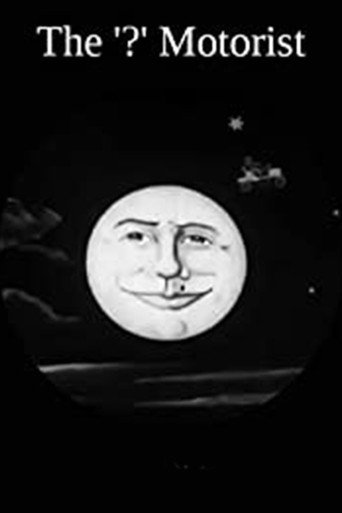
A magical glowing white motorcar ignores policemen, drives up buildings, flies through outer space, and can transform into a horse and carriage.

Mal emerges from the shadows of a mystical forest onto a dark coastline where she crosses paths with Dizzy.
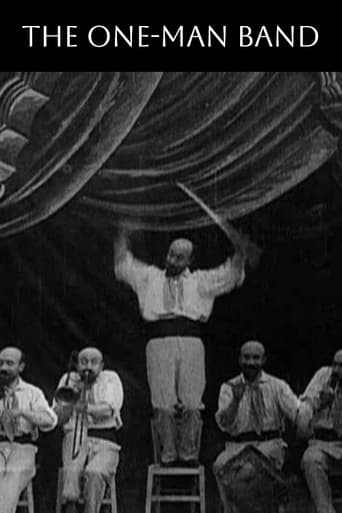
A band-leader has arranged seven chairs for the members of his band. When he sits down in the first chair, a cymbal player appears in the same chair, then rises and sits in the next chair. As the cymbal player sits down, a drummer appears in the second chair, and then likewise moves on to the third chair. In this way, an entire band is soon formed, and is then ready to perform.
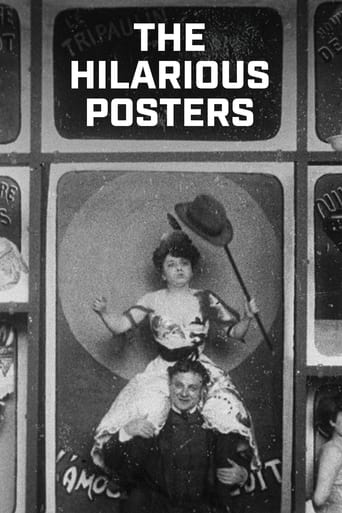
A wall full of advertising posters comes to life.
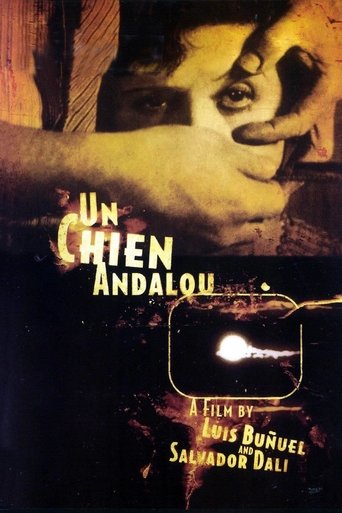
Un Chien Andalou is an European avant-garde surrealist film, a collaboration between director Luis Buñuel and Salvador Dali.

An original story featuring performances by Cirque du Soleil. A young woman is entranced by an Aerialist. When they fall into the dreamlike world of Cirque du Soleil and are separated, they travel through the different tent worlds trying to find each other.

Monsieur Cinema, a hundred years old, lives alone in a large villa. His memories fade away, so he engages a young woman to tell him stories about all the movies ever made.

One of the greatest of black art pictures. The conjurer appears before the audience, with his head in its proper place. He then removes his head, and throwing it in the air, it appears on the table opposite another head, and both detached heads sing in unison. The conjurer then removes it a third time. You then see all three of his heads, which are exact duplicates, upon the table at one time, while the conjurer again stands before the audience with his head perfectly intact, singing in unison with the three heads upon the table. He closes the picture by bowing himself from the stage.

Tim Burton's reimagined classic combines live action and stop motion, making for a creepy adventure into the woods. It is known for having aired only once on Disney Channel, on Halloween Night in 1983.

When a young girl’s sketchbook falls into a strange pond, her drawings come to life—chaotic, real, and on the loose. As the town descends into chaos, her family must reunite and stop the monsters they never meant to unleash.
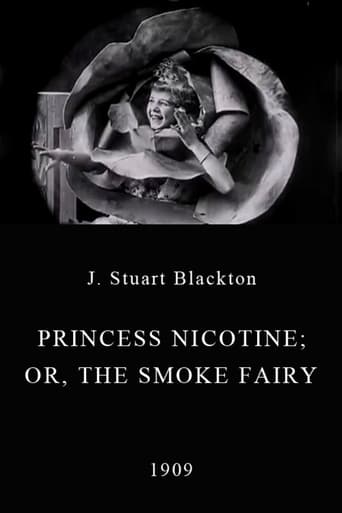
A smoker falls asleep, and two mischievious fairies play with his pipe. He discovers this, and imprisons them in a cigar box. He removes a flower from the box, which contains a fairy smoking a cigarette. Next, he leaves briefly while his smoking paraphenalia clears itself from the table and the flower reassembles itself into a cigar. He lights the cigar, then breaks a bottle containing the fairy, who interacts with him in various ways reeling from his cigar smoke, building a bonfire that he extinguishes, etc.

Egyptian gods summon the angel Lucifer, in order to usher in a new occult age.
Similar titles

Filmic exercise by Verhoeven
A reel of the Noh drama Momiji-gari, in which Danjuro Ichikawa played opposite Onoe Kikugoro V as an ogress who has disguised herself as the Princess Sarashina. Filmed by Shibata Tsunekichi in the open air on a windy day in November 1899, Danjuro would allow only the one take, so that when his fan blew away in mid-performance the scene had to stay. The film re-emerged at the Kikikan theatre in 1907 where it was a great success and inspired a wave of fiction filmmaking based on traditional Japanese narratives.

A homeless bum, bored of eating the same food every night, promises his girlfriend a special dinner. He plans to take her out with money robbed from a passing stranger. But the bum’s in for a surprise when the man he targets for his mugging turns out to have special – and hilarious – powers.
An experimental silent film made with a team of three. Humanity is being wiped out and the last people left are friends May and Pearl. The main themes of the film are friendship that gives strength and hope, as well as current concern for the future of humans and our nature. Could we start over or was this it?
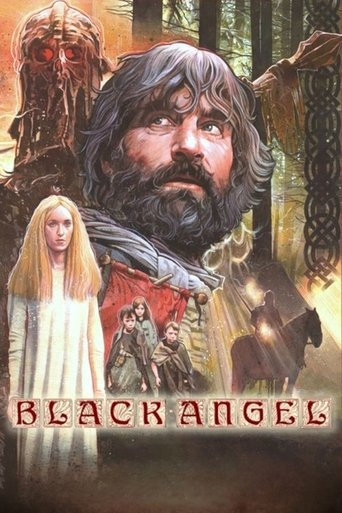
A knight returns home from the Crusades to find his village devastated by disease and his family gone. He roams the forest searching for them, until he finds a mysterious maiden who is being held prisoner by a black knight. In order to free her, he must confront her captor.

Avant-garde homage to pre-revolution Russian silent movies, and to the poet Aleksandr Blok.
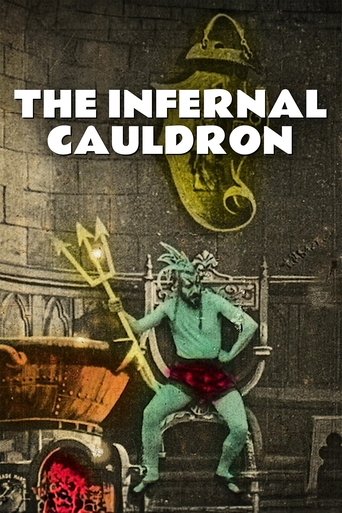
A green-skinned demon places a woman and two courtiers into a flaming cauldron.

A dying professor leaves his great-nephew a collection of documents pertaining to the Cthulhu Cult. The nephew begins to learn why the study of the cult so fascinated his grandfather. Bit-by-bit he begins piecing together the dread implications of his grandfather's inquiries, and soon he takes on investigating the Cthulhu cult as a crusade of his own.

L. Frank Baum would appear in a white suit and present his live actors, slide shows and films as a live travelogue presentation of his popular fantasies. Highlights include Dorothy being swept to Oz in various ways, such as with back-projection tornadoes and storms in a chicken coop. Lack of financial backing forced the show to fold after appearing in only two cities, despite being a critical and commercial success. This film is lost.

A man wakes up in a blue room. He's stuck and he can't escape. A window is his only connection to the outer world. It filters the reality in a very mysterious way.
A boy breaks his sister's doll and it mends, grows, tears him up and eats him.
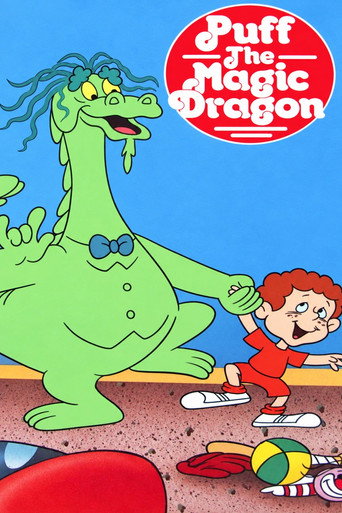
Jackie is a boy who is so trapped by his fears and doubts that he could not communicate with anyone. Then, a magic dragon named Puff comes to help Jackie by taking his soul force on a wonderous voyage to his island of Honah Lee. Along the way, they have adventures that nurture Jackie's imagination and courage in unorthodox ways.

In this fragile yet frightening poetic fantasy set against a dark industrial landscape, a woman sits knitting on the porch of her home when a man appears and takes the knitting from her.
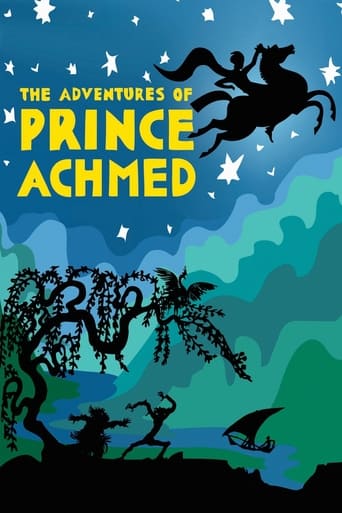
Taken from The Arabian Nights, a wicked sorcerer and the beautiful prince Achmed battle one against the other during a series of wondrous adventures.
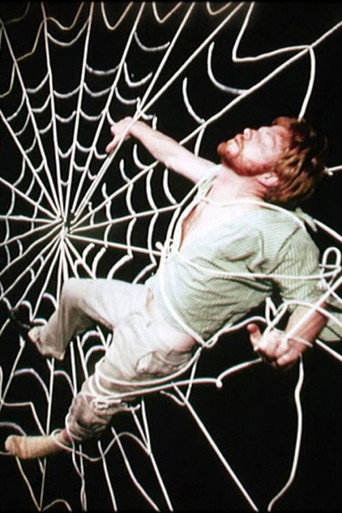
A young man's struggle with his sexuality overtakes his life, driving him deep into his subconscious where guilt and fears of physicality chase him still further. Cornered by an intangible terror, he realises he must either break out or break down.
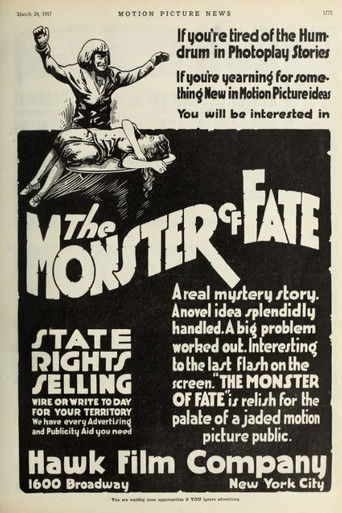
This mostly lost film is often confused with director Paul Wegener third and readily available interpretation of the legend; Der Golem, wie er in die Welt kam (1920). In this version of the golem legend, the golem, a clay statue brought to life by Rabbi Loew in 16th century Prague to save the Jews from the ongoing brutal persecution by the city's rulers, is found in the rubble of an old synagogue in the 20th century. Brought to life by an antique dealer, the golem is used as a menial servant. Eventually falling in love with the dealer's wife, it goes on a murderous rampage when its love for her goes unanswered.
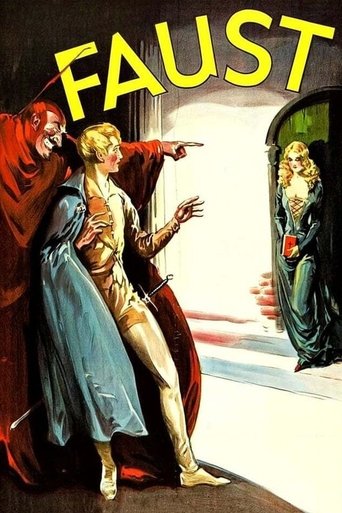
Murnau’s epic adaptation of Goethe’s tragedy stands with Fritz Lang’s Metropolis among the supreme achievements of German silent cinema. Gösta Ekman plays the alchemist who, his faith shaken in a time of plague, is offered the gift of healing and eternal youth… in exchange for his soul.
This film begins with the invocation of 'almighty god' at a river where several people are gathered. The child god Krishna rises out of the water astride the demon snake Kaliya. Then we see Yashoda as she rocks the sleeping Krishna's crib and imagines the god as Gopala. The next scene shows Kamsa fantasizing about Krishna threateningly duplicated many times around him. Kamsa then imagines himself dead as his severed head rises up and descends again. People of all castes pay obeisance to the deity with the title-card: 'may this humble offering be accepted by the Lord'.
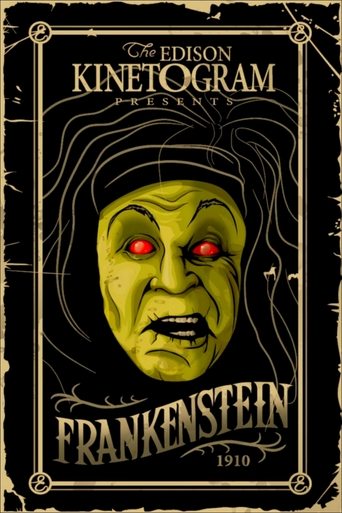
Frankenstein, a young medical student, trying to create the perfect human being, instead creates a misshapen monster. Made ill by what he has done, Frankenstein is comforted by his fiancée; but on his wedding night he is visited by the monster.
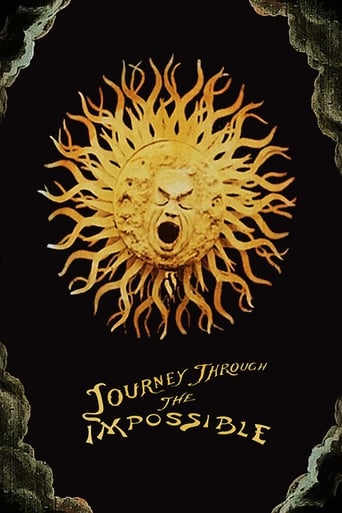
Using every known means of transportation, several savants from the Geographic Society undertake a journey through the Alps to the Sun which finishes under the sea.