
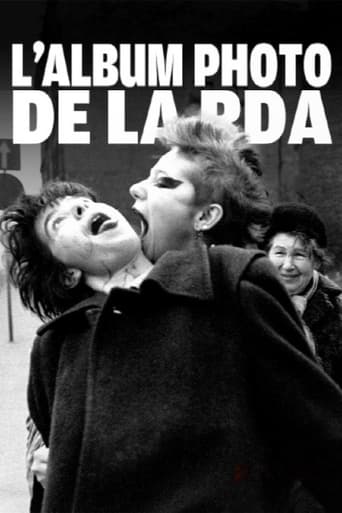
GDR Photo Shoot: Propaganda and Daily Life
2024-10-04 · Runtime unavailable · ★ 6.5
Life in the GDR was not only documented on behalf of the state, but also by photographic artists and journalists. The documentary goes on a journey through time with some of them and shows little-known aspects of the GDR from its foundation to the fall of the Wall. Photographers in the GDR had a surprising amount of freedom; there was no explicit censorship of images. This allowed them to make visible what the state wanted to hide. This documentary presents two photographers who observed life in the GDR and whose work has been rediscovered in recent years.
Trailers are previews, not full movies.
No authorized playback source configured. Use the legal watch options below.
Production details
- Directors
- Daniel Guthmann, Joachim Palutzki
- Production companies
- Florianfilm, ZDF, ARTE
- Countries
- Germany
- Status
- Released
Top Cast
Title information and images are supplied by TMDb. Explore our discovery guide for advice on comparing metadata and legal viewing options.
Where to watch
Availability provided by JustWatch via TMDb. Offers can change. Provider links are listed on TMDb; full playback requires a separately authorized source.
Availability not listed for this country.
Seasons & episodes
Recommendations
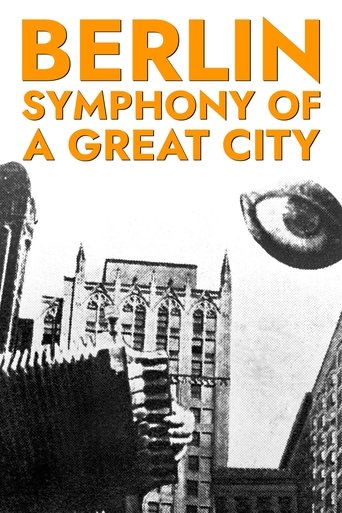
A day in the city of Berlin, which experienced an industrial boom in the 1920s, and still provides an insight into the living and working conditions at that time. Germany had just recovered a little from the worst consequences of the First World War, the great economic crisis was still a few years away and Hitler was not yet an issue at the time.
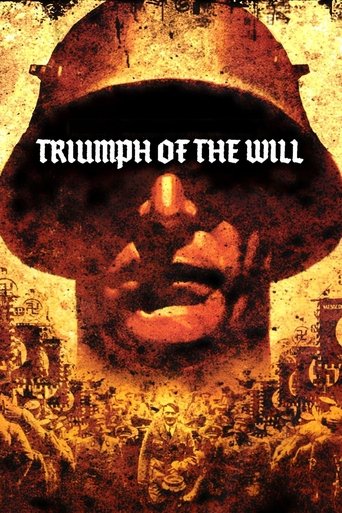
A showcase of German chancellor and Nazi Party leader Adolf Hitler at the 1934 Nuremberg Rally.

As a visually radical memoir, CAMERAPERSON draws on the remarkable footage that filmmaker Kirsten Johnson has shot and reframes it in ways that illuminate moments and situations that have personally affected her. What emerges is an elegant meditation on the relationship between truth and the camera frame, as Johnson transforms scenes that have been presented on Festival screens as one kind of truth into another kind of story—one about personal journey, craft, and direct human connection.
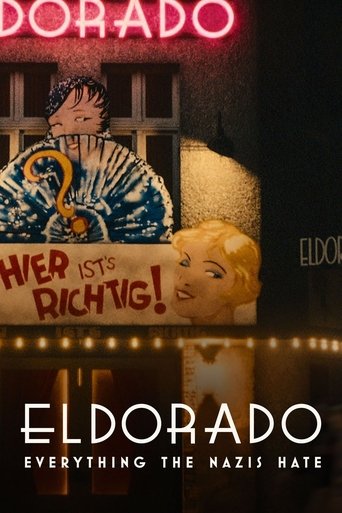
A glittery nightclub in 1920s Berlin becomes a haven for the queer community in this documentary exploring the freedoms lost amid Hitler’s rise to power.
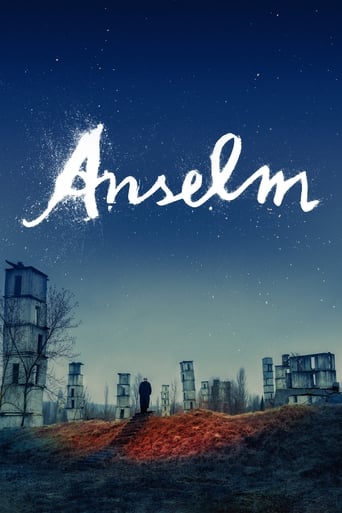
This unique cinematic experience dives deep into an artist’s work and reveals his life path, inspiration, and creative process. It explores his fascination with myth and history. Past and present are interwoven to diffuse the line between film and painting, allowing the audience to be completely immersed in the remarkable world of one of the greatest contemporary artists, Anselm Kiefer. Wim Wenders shot this unique portrait over the course of two years in stunning 3D.

A compilation of over 30 years of private home movie footage shot by Lithuanian-American avant-garde director Jonas Mekas, assembled by Mekas "purely by chance", without concern for chronological order.
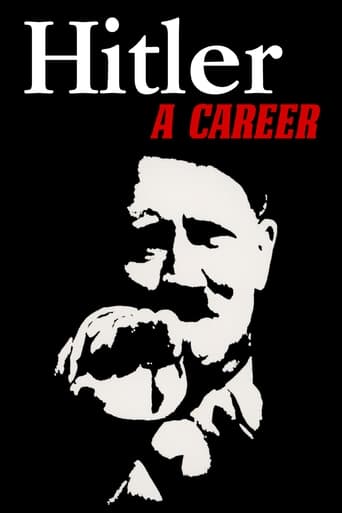
A keen chronicle of the unlikely rise to power of Adolf Hitler (1889-1945) and a dissection of the Third Reich (1933-1945), but also an analysis of mass psychology and how the desperate crowd can be deceived and shepherded to the slaughterhouse.
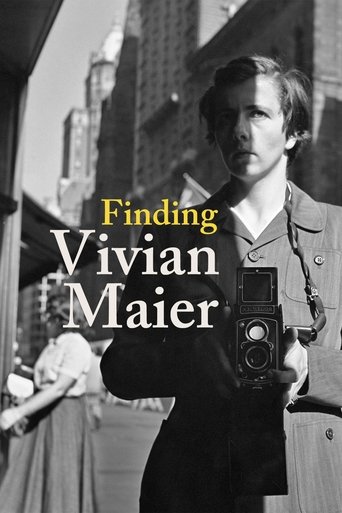
Vivian Maier's photos were seemingly destined for obscurity, lost among the clutter of the countless objects she'd collected throughout her life. Instead these images have shaken the world of street photography and irrevocably changed the life of the man who brought them to the public eye. This film brings to life the interesting turns and travails of the improbable saga of John Maloof's discovery of Vivian Maier, unravelling this mysterious tale through her documentary films, photographs, odd collections and personal accounts from the people that knew her. What started as a blog to show her work quickly became a viral sensation in the photography world. Photos destined for the trash heap now line gallery exhibitions, a forthcoming book and this documentary film.

When Allied forces liberated the Nazi concentration camps in 1944-45, their terrible discoveries were recorded by army and newsreel cameramen, revealing for the first time the full horror of what had happened. Making use of British, Soviet and American footage, the Ministry of Information’s Sidney Bernstein (later founder of Granada Television) aimed to create a documentary that would provide lasting, undeniable evidence of the Nazis’ unspeakable crimes. He commissioned a wealth of British talent, including editor Stewart McAllister, writer and future cabinet minister Richard Crossman – and, as treatment advisor, his friend Alfred Hitchcock. Yet, despite initial support from the British and US Governments, the film was shelved, and only now, 70 years on, has it been restored and completed by Imperial War Museums under its original title "German Concentration Camps Factual Survey".

A visual montage portrait of our contemporary world dominated by globalized technology and violence.
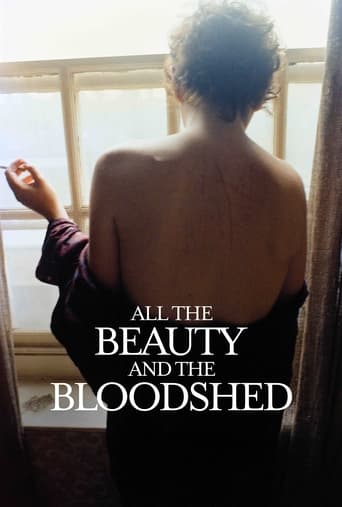
The life of internationally renowned artist and activist Nan Goldin is told through her slideshows, intimate interviews, ground-breaking photography, and rare footage of her personal fight to hold the Sackler family accountable for the overdose crisis.

Produced and presented as evidence at the Nuremberg war crimes trial of Hermann Göring and twenty other Nazi leaders, this film consists primarily of dead and surviving prisoners and of facilities used to kill and torture during the World War II.

Cameramen and women discuss the craft and art of cinematography and of the "DP" (the director of photography), illustrating their points with clips from 100 films, from Birth of a Nation to Do the Right Thing. Themes: the DP tells people where to look; changes in movies (the arrival of sound, color, and wide screens) required creative responses from DPs; and, these artisans constantly invent new equipment and try new things, with wonderful results. The narration takes us through the identifiable studio styles of the 30s, the emergence of noir, the New York look, and the impact of Europeans. Citizen Kane, The Conformist, and Gordon Willis get special attention.

Stars of "The Walking Dead," Andrew Lincoln and Danai Gurira, walk down memory lane and visit iconic locations where pivotal moments between their characters, Rick and Michonne, were filmed.

Musician and performance artist Laurie Anderson reflects on the deaths of her husband Lou Reed, her mother and her beloved dog.

Documentary filmmaker Amy Berg investigates the life of 30-year pedophile Father Oliver O'Grady and exposes the corruption inside the Catholic Church that allowed him to abuse countless children. Victims' stories and a disturbing interview with O'Grady offer a view into the troubled mind of the spiritual leader who moved from parish to parish gaining trust ... all the while betraying so many.
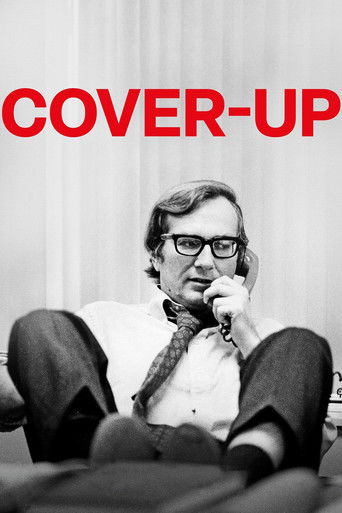
He's devoted his career to uncovering stories the powerful want buried. From My Lai to Abu Ghraib, dig into the life's work of journalist Seymour Hersh.
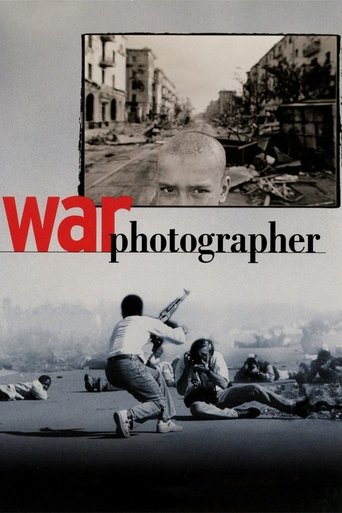
Documentary about war photographer James Nachtwey, considered by many the greatest war photographer ever.

A love letter from a young mother to her daughter, the film tells the story of Waad al-Kateab’s life through five years of the uprising in Aleppo, Syria as she falls in love, gets married and gives birth to Sama, all while cataclysmic conflict rises around her. Her camera captures incredible stories of loss, laughter and survival as Waad wrestles with an impossible choice– whether or not to flee the city to protect her daughter’s life, when leaving means abandoning the struggle for freedom for which she has already sacrificed so much.

In an intimate and joyful story of love in the face of loss, celebrated poets Andrea Gibson and Megan Falley find strength—and unexpected hilarity—in what might be their final year together.
Similar titles
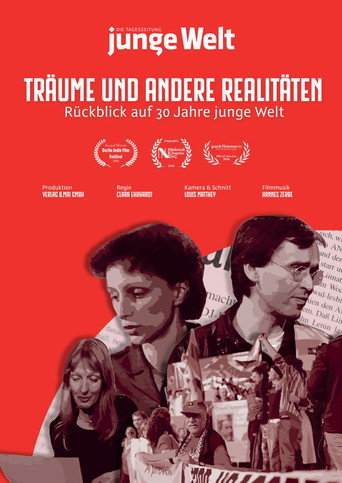
The film looks both back and forward, examining traditions, ruptures, and reinventions. It recounts the struggle for survival in the years following German reunification, the unique role of *junge Welt* as a national Marxist daily newspaper, and its place within the Left movement—as well as the repression, resistance, and visions for the future it has encountered. It is a portrait of the newspaper, the last three decades of its history, and the people who create it.
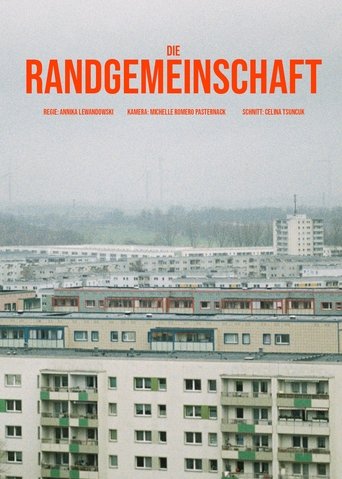

On the 160-hectare grounds of the former Friedrichsfelde Palace Park, the Berlin Animal Park was established in the 1950s with the active support of the local population. In 1980, more than 7,800 animals from all continents live here. The film describes the foundation, the construction and the care of the animals in the extensive park.
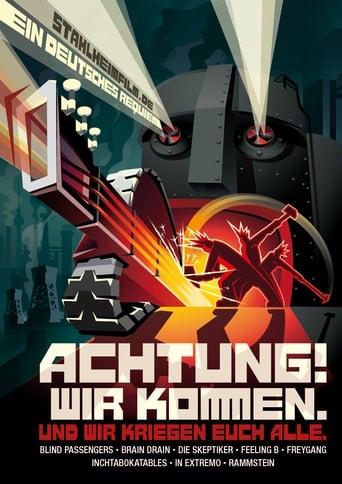
Hard, harder, hardest! This film orders you from the start to turn up the volume and pay attention. "Look out! We're Coming to Get You!" is a flood of images driven by a tempest of guitars. The film's creators jam 20 years of German music history into 120 minutes of film. Musicians from BLIND PASSENGERS, DIE SKEPTIKER, SANDOW and other bands explode their way through the film. Fans of the DEFA documentary "Flüstern und Schreien" ("Whisper and Shout") already know the stars of that film, Aljoscha, Paul and Flake of the band Feeling B. Here they have a chance to see how these musicians survived the period after the fall of the Berlin Wall and the "escalation of possibilities" that came with it. And you're allowed to laugh, too!
The documentary shows historical film footage from the workers' and farmers' faculties (ABF) of the GDR, which existed until 1962 and were intended to help level out class differences in the education sector by preparing mainly workers' and farmers' children for a university career.

Documentary about the life in the then newly completed city Halle Neustadt in the former DDR in East Germany.
In 1999, Konami Corp. introduced a Japanese-influenced coin-operated arcade stand-up to the U.S. Its draw was unheard of for a video game: the combination of music, competition, and interactive video-gameplay along with actual physical activity. Four years later, Dance Dance Revolution (DDR) has become one of the most popular game crazes stateside and found easily in video game stores and in nationwide retail markets. This story explores the youth culture surrounding the game and follows a group of devoted players and documents their interactions at various arcades and tournaments.
This color documentary tells the story of the "Mamais." In 1960, a group of workers at the Bitterfeld chemical plant set themselves the task of becoming the first "socialist brigade" in the German Democratic Republic (GDR) to act in accordance with the slogan "Work, learn, and live socialist."
When people think of DEFA, the film heritage of the GDR, they probably don't just think of film images, but also some of the timeless melodies that were created in Babelsberg.

Since its establishment in 1923, the 24 Hours of Le Mans has dominated the world of motor racing, presenting a daunting challenge for competitors who have to push themselves to their physical limits. Let's revisit the history of this legendary 13.6-kilometer circuit with drivers Kévin Estre, Antonio Fuoco, Timo Bernhard, and Mick Schumacher, son of the seven-time world champion with fascinating behind-the-scenes moments.
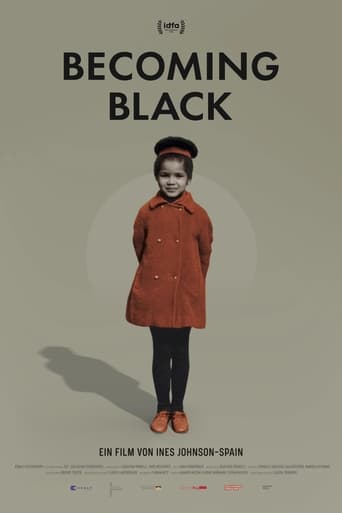
In the 1960s, a white couple living in East Germany tells their dark-skinned child that her skin color is merely a coincidence. As a teenager, she accidentally discovers the truth. Years before, a group of African men came to study in a village nearby. Sigrid, an East German woman, fell in love with Lucien from Togo and became pregnant. But she was already married to Armin. The child is Togolese-East German filmmaker Ines Johnson-Spain. In interviews with Armin and others from her childhood years, she tracks the astonishing strategies of denial her parents, striving for normality, developed following her birth. What sounds like fieldwork about social dislocation becomes an autobiographical essay film and a reflection on themes such as identity, social norms and family ties, viewed from a very personal perspective.
Nine very private encounters with different people of the post-war generation and their memories of childhood and youth. Among others, the guitarist and singer Peter "Caesar" Gläser and the actress Christine Harbort. Roland Steiner asked his contemporaries about - "What we remember ...". All interviewees are as old as the state they live in. Nine CVs from the GDR are described. They have different professions, from skilled worker and scientist, nurse and saleswoman, actress or rock musician, even a minstrel is included. They remember what shaped them: Family, school, birthdays and hot summers, the happy moments and their own failures.
In the midst of the transition towards reunification and a market economy, two teams meet for the last time in the final of the FDGB Cup shortly after the 1990 Volkskammer elections: favorites Dynamo Dresden and Polizeisportverein Schwerin. Matthias Hufmann and Benjamin Unger take a look back 30 years later.