Dit is het begin. 50 jaar 100-urenbezetting hoofdgebouw VU
2022-03-25 · Runtime unavailable · Not rated
Trailers are previews, not full movies.
No authorized playback source configured. Use the legal watch options below.
Production details
- Directors
- Willem Wisselink
- Production companies
- Unavailable
- Countries
- Unavailable
- Status
- Released
Top Cast
Title information and images are supplied by TMDb. Explore our discovery guide for advice on comparing metadata and legal viewing options.
Where to watch
Availability provided by JustWatch via TMDb. Offers can change. Provider links are listed on TMDb; full playback requires a separately authorized source.
Availability not listed for this country.
Seasons & episodes
Recommendations

A string of threatening emails escalates into a revenge plot involving a newly married US marshal and his ex-girlfriend.

Through deeply personal interviews with her siblings and an examination of the photographs, letters, and belongings left behind, Mariska assembles a new portrait of her mother Jayne Mansfield, an extraordinary and complex woman.
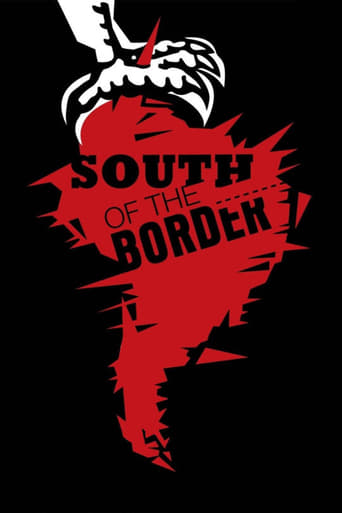
A road trip across five countries to explore the social and political movements as well as the mainstream media's misperception of South America while interviewing seven of its elected presidents.

Ranjit, a farmer in India, takes on the fight of his life when he demands justice for his 13-year-old daughter, the victim of a brutal gang rape. His decision to support his daughter is virtually unheard of, and his journey unprecedented.

In an intimate and joyful story of love in the face of loss, celebrated poets Andrea Gibson and Megan Falley find strength—and unexpected hilarity—in what might be their final year together.

A visual montage portrait of our contemporary world dominated by globalized technology and violence.
A documentary that explores the downloading revolution; the kids that created it, the bands and the businesses that were affected by it, and its impact on the world at large.
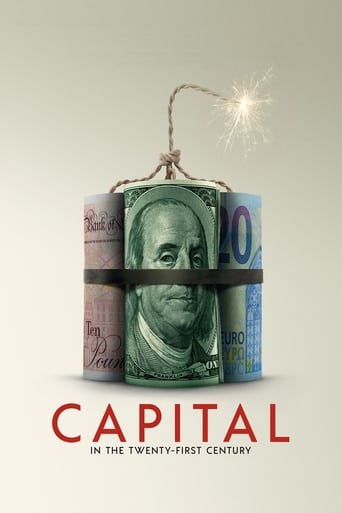
Film adaptation of French economist Thomas Piketty's ground-breaking global bestseller of the same name: an eye-opening journey through wealth and power.
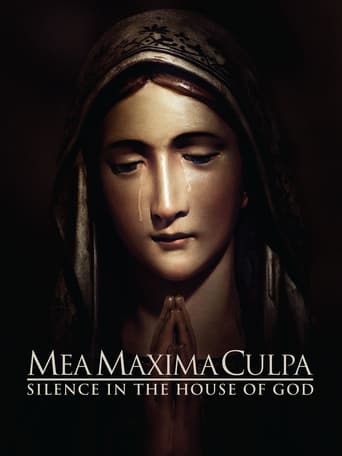
Alex Gibney explores the charged issue of pedophilia in the Catholic Church, following a trail from the first known protest against clerical sexual abuse in the United States and all way to the Vatican.
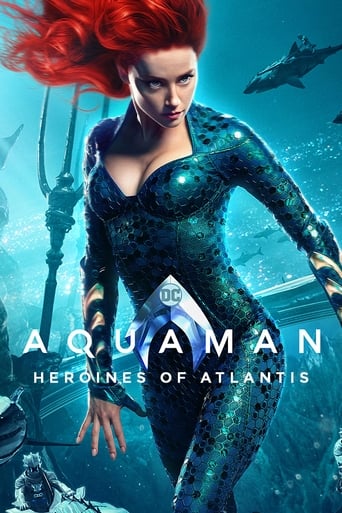
Amber Heard and Nicole Kidman discuss their characters Mera and Atlanna.

An inside look at one of the most anticipated movie sequels ever with James Cameron and cast.
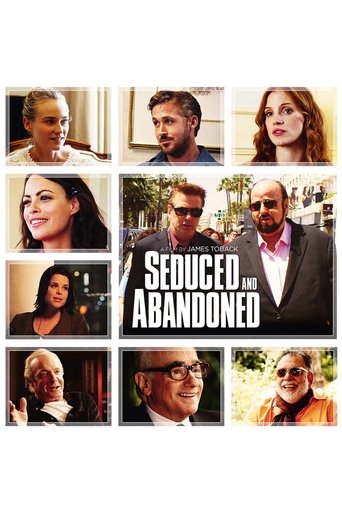
SEDUCED AND ABANDONED combines acting legend Alec Baldwin with director James Toback as they lead us on a troublesome and often hilarious journey of raising financing for their next feature film. Moving from director to financier to star actor, the two players provide us with a unique look behind the curtain at the world's biggest and most glamourous film festival, shining a light on the bitter-sweet relationship filmmakers have with Cannes and the film business. Featuring insights from directors Martin Scorsese, 'Bernando Bertolucci' and Roman Polanski; actors Ryan Gosling and Jessica Chastain and a host of film distribution luminaries.
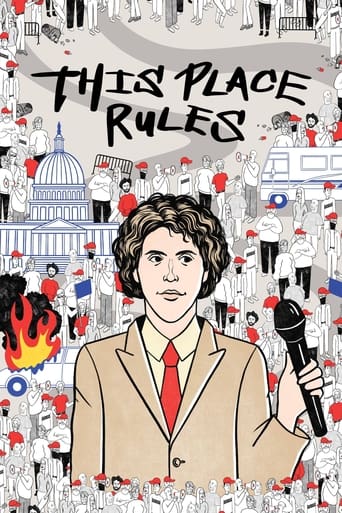
Acclaimed for his unfiltered reporting and deadpan humor, Andrew Callaghan brings his gonzo style reporting to the undercurrents that led to the January 6 Capitol Riot. As one of the best-known and hardest working journalists of his generation, the 25-year-old ventures on a wild RV journey through America to take the pulse of a divided nation.

A detailing of the rise to prominence and global sporting superstardom of six supremely talented young Manchester United football players (David Beckham, Nicky Butt, Ryan Giggs, Paul Scholes, Phil and Gary Neville). The film covers the period 1992-1999, culminating in Manchester United's European Cup triumph.

A compilation of over 30 years of private home movie footage shot by Lithuanian-American avant-garde director Jonas Mekas, assembled by Mekas "purely by chance", without concern for chronological order.
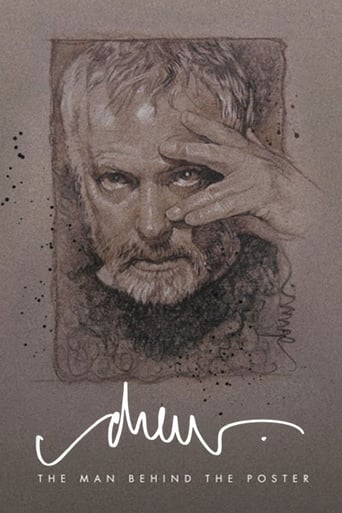
A documentary on legendary movie-poster artist Drew Struzan.

A documentary on the expletive's origin, why it offends some people so deeply, and what can be gained from its use.

A documentary about the life and films of director John Ford.
Vulgar, taunting texts blow up the phones of a teen and her boyfriend. Who's sending them — and why? This twisty documentary reveals the shocking answer.

A 1993 documentary film about Bruce Lee. The film includes interviews from some of his fellow students and opponents who worked alongside him in his movies.
Similar titles
A student is held up in the library while a riot rages outside. As SDS protesters head to burn the library down, he has to fend them off with his baseball bat. This film opens with actual footage of civil disturbances in the 1960s, and moves on to images of historical American figures.
Contrasting radical mobs, anarchy, and 1960s counterculture with footage of American manufacturing and innovation, this film celebrates the concept of American exceptionalism and argues that anti-Vietnam War protesters were influenced by communism, atheism, and immorality. Set mostly in a university library, this political debate between a medical student, his 1770s ancestor, and a history professor is a sequel to the 1972 National Education Program film, Brink of Disaster! Two additional characters appear in this drama: a 19th-century steamboat captain, and the student’s grandfather - an early 20th-century automobile worker. The National Education Program at Harding College in Searcy, Arkansas created a variety of widely-distributed anti-communism films from the mid-1940s to the early 1970s.
In 1968 Joan Bakewell was one of the few female TV presenters, fronting the BBC's Late Night Line-Up and addressing daily the most pressing issues of the time. In this film she looks back at the events that led to what for many became the defining event of that extraordinarily turbulent year - the protests in France in May. While the rest of the world was in turmoil, with the Vietnam War causing increasing dissent, the Civil Rights movement growing in intensity and young people finding new ways of expressing themselves, as 1968 began it seemed to France's president, General de Gaulle, that his country was immune to the kind of protest sweeping the rest of the world.
The Vietnam War protest movement from the student point of view is the basis for this documentary shot in the San Francisco Bay area and dealing mainly with a protest march from the University of California to the Oakland Army Terminal in 1966.

In April 1968, black and white students rebelled against the university administration, occupying five buildings, including the president's office in one of the first campus revolts of the Civil Rights/Vietnam War era. The revolt began as a protest against university expansion into neighboring communities and its role as a slum lord. After five days of student control, the administrators and trustees ordered the police to clear the buildings. What resulted was an unprecedented display of brutality and repression. Narrated by one of the student rebels, the detailed eyewitness account of this event galvanized other campus revolts around the country.

This is the story of Kent State University students who stood up to question racism, violence against protesters, and the long American involvement in the Vietnam War. On May 4, 1970, the National Guard shot thirteen of them, killed four, and all were forever changed.

Students seeking greater control over the hiring of faculty occupy the offices of the Political Science Department at McGill University. The film crew lives with the students and follows their action through confusion, argument, dissent, and negotiations with faculty. The result is an intimate view of a student political action.
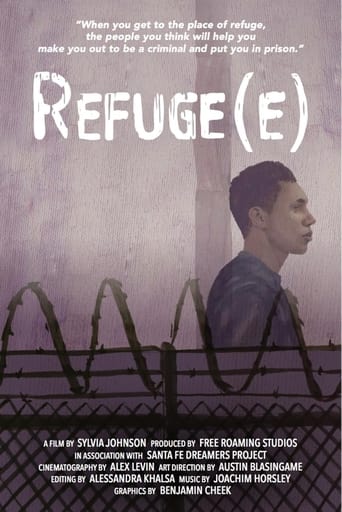
Refuge(e) traces the incredible journey of two refugees, Alpha and Zeferino. Each fled violent threats to their lives in their home countries and presented themselves at the US border asking for political asylum, only to be incarcerated in a for-profit prison for months on end without having committed any crime. Thousands more like them can't tell their stories.

L, a student in India witness to the government's violent response to university protests, writes letters to her estranged lover while he is away.
Students from nine nations unite on August 7, 1950 at the Franco-German border near Germanshof, tear down the barriers and remove the border posts and barriers, which they burn in a ceremony. This act is a commitment to Europe and a protest against the arbitrariness of borders between nations.
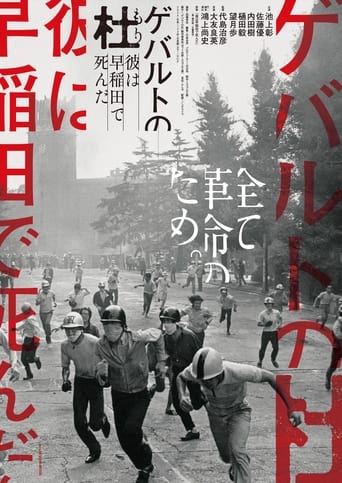
A documentary about the end of the student movement in 1972 and the lynching of Daizaburo Kawaguchi, a student at Waseda University. The documentary interweaves testimonies from japanese intellectuals and a short play, written and directed by Shôji Kôkami, about the murder.
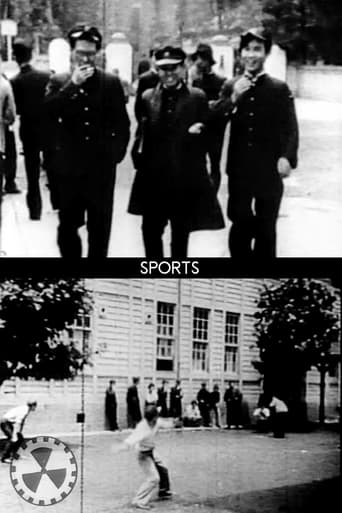
The film is about a protest provoked when the university decided to restrict access to sports facilities to athletes, cutting out all other students. This is, strictly speaking, not a Prokino film. It was produced by the Waseda University Film Circle, which was organized by Kawazoe Shiro. Feature film directors Yamamoto Satsuo and Taniguchi Senkichi were apparently students at Waseda at the time and participated in the production.
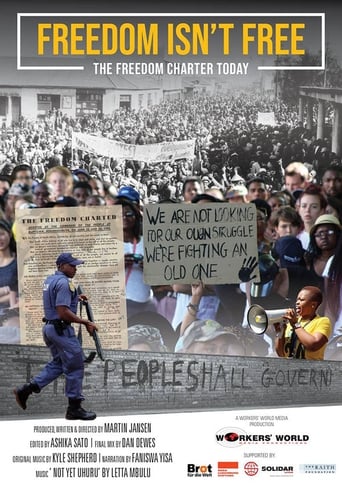
Since its adoption in June 1955 by the Congress movement, the Freedom Charter has been the key political document that acted as a beacon and source of inspiration in the liberation struggle against Apartheid. It was reputedly the main source that informed democratic South Africa’s liberal constitution and a constant reference point for the ruling African National Congress (ANC) and rival political parties that it spawned since 1994, all claiming the Freedom Charter’s legacy. Freedom Isn’t Free assesses the history and role of the charter, especially in relation to key political and socio-economic aspects of developments in South Africa up to the present period. It includes rare archival footage with interviews of a cross-section of outspoken influential South Africans.
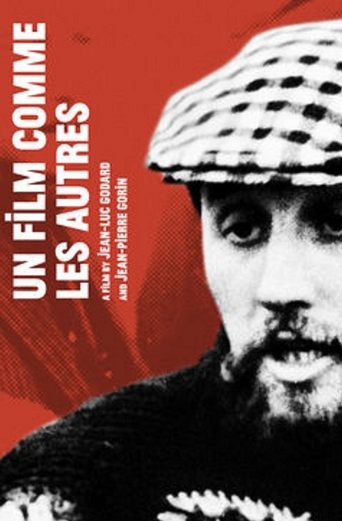
An analysis of the social upheaval of May 1968, made in the immediate wake of the workers’ and students’ protests. The picture consists of two parts, each with with identical image tracks, and differing narration.
The film speaks of student demonstrations in Belgrade, 1969 and of the critical quality, enthusiasm and discipline of this form of protest. It was the most powerful public criticism of "red bourgeoisie" - members of communist apparatus, who suppressed creativity and affirmation of new generations throughout Eastern block.
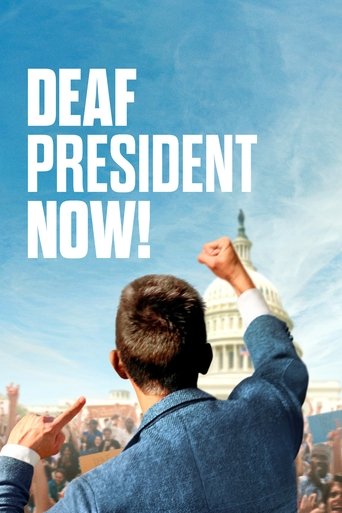
Discover the story of the greatest civil rights movement most people have never heard about. During eight tumultuous days in 1988 at the world's only Deaf university, four students must find a way to lead a revolution—and change the course of history.
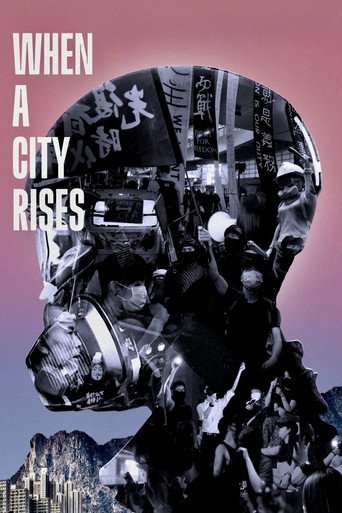
Behind the gas masks of Hong Kong’s democracy movement, the often very young activists are just as diverse as the youths of the rest of the world. But they share a demand for democracy and freedom. They have the will and the courage to fight – and they can see that things are going in the wrong direction in the small island city, which officially has autonomy under China but is now tightening its grip and demanding that ‘troublemakers’ be put away or silenced. Amid the violent protests, we meet a 21-year-old student, a teenage couple and a new father.
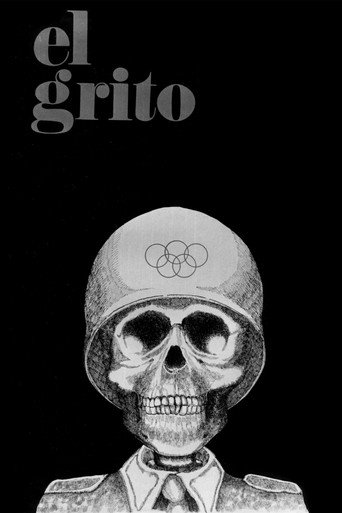
In the summer of revolt 1968, student Leobardo López Aretche captured the protests in Mexico City, and the state’s brutal response, up close – and like many of his subjects and fellow comrades, would pay a high price for his audacity. Fifty years later, his movie is no longer a secret.
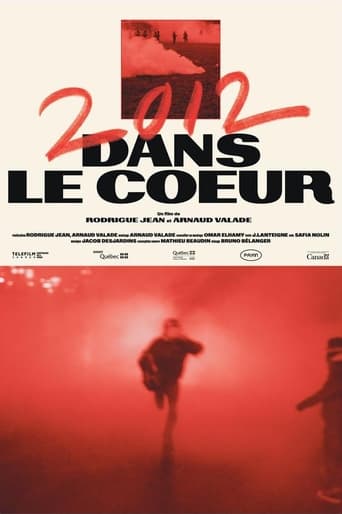
What remains of the 2012 Quebec student protests? Little has changed in the decade that ensued. Rodrigue Jean and Arnaud Valade exhume images of the battles, recorded live and relayed through the mass media, that flared up as anger and indignation went head-to-head with the rhetoric of power. Against these divisive images, the filmmakers overlay a historical perspective of the state and its police in Montreal, Quebec and Canada, delving into the roots of sanctioned violence. Their compelling glance at the past is, of course, a cry that continues to echo in the present day. While the voices have been silenced, revolt still brews. All it takes is a spark...

After the failed Umbrella Revolution in 2014, lives go back to normal, but the scenes of the great protest are like yesterday for Billy and Popsy, students in the University of Hong Kong who took part in the movement. One of them now becomes a student leader, while the other chooses a low-profile life as a private tutor. Amid the rapid social changes, when the Communist Beijing government is extending their influence to Hong Kong to take away the freedom and democracy, how would the youths see their future? Do they still see hopes, when both peaceful protests and radical actions seem to be futile?