
Der aufhaltsame Aufstieg des Arturo Ui
1974-01-13 · Runtime unavailable · Not rated
Hitler's seizure of power in 1933 and his rule in the years that followed are transferred to the North American criminal world of the 1930s in a parable. Gangster boss Ui needs the protection of the ruling class to achieve his goals and offers his help to their representatives. They initially hesitate, but join forces after Ui violently gains their respect. His victory is perfect and the people fall silent before the revolvers of their "protectors". Ui takes the raised hands as a sign of approval... Bertolt Brecht wrote the play in 1941 in a Finnish asylum - the premiere only took place in Stuttgart after his death in November 1958. It has been staged at the Berliner Ensemble since 1959 - Ekkehard Schall has played Ui over 500 times since then. On January 13, 1974, the play was shown for the last time, recorded in color by GDR television.
Trailers are previews, not full movies.
No authorized playback source configured. Use the legal watch options below.
Production details
- Directors
- Günter Schmidt
- Production companies
- Deutscher Fernsehfunk, Fernsehen der DDR
- Countries
- East Germany
- Status
- Released
Top Cast
 Werner DisselButcher
 Willi SchwabeSheet
 Martin FlörchingerDogsborough
 Victor DeißGiuseppe Givola
 Siegfried KilianEmanuele Giri
 Stefan LisewskiLeibwächter Inna
Title information and images are supplied by TMDb. Explore our discovery guide for advice on comparing metadata and legal viewing options.
Where to watch
Availability provided by JustWatch via TMDb. Offers can change. Provider links are listed on TMDb; full playback requires a separately authorized source.
Availability not listed for this country.
Seasons & episodes
Recommendations
At the Wannsee Conference on January 20, 1942, senior Nazi officials meet to determine the manner in which the so-called "Final Solution to the Jewish Question" can be best implemented.

In 1931, budding author Christopher Isherwood goes to Berlin at the invitation of his friend W. H. Auden for the gay sex that abounds in the city. He falls for street sweeper Heinz, paying medical bills for the boy's sickly mother, to the disapproval of her other son, Nazi Gerhardt.

In the Warsaw ghetto in 1943, Jews rise against the Nazis.

An aging King invites disaster, when he abdicates to his corrupt, toadying daughters, and rejects his loving and honest one.

Thomas Montgomery, a married father of two young daughters, gets seduced by the world of online gambling and chat rooms where a virtual romance and sexual obsession ultimately leads to the murder of an innocent man.

Legendary acting duo and married couple Richard Burton and Elizabeth Taylor prepare for a 1983 theatrical production of the play "Private Lives."
Twelve Angry Men is a 1954 teleplay by Reginald Rose for the Studio One anthology television series. Initially staged as a CBS live production on 20 September 1954, the drama was later rewritten for the stage in 1955 under the same title and again for a feature film, 12 Angry Men (1957). The episode garnered three Emmy Awards for writer Rose, director Franklin Schaffner and Robert Cummings as Best Actor.

Set in New York City's gritty East Village, the revolutionary rock opera RENT tells the story of a group of bohemians struggling to live and pay their rent. "Measuring their lives in love," these starving artists strive for success and acceptance while enduring the obstacles of poverty, illness and the AIDS epidemic.

Two delusional geriatrics reveal curious pasts, share a love of tuna and welcome a surprise guest in this filming of the popular Broadway comedy show.

Based on Victor Hugo's famed novel, the story of Quasimodo, the deformed bell ringer of Notre Dame, and his unrequited love for the gypsy girl, Esmeralda.

The Sound of Music Live! is a television special that was originally broadcast by NBC on December 5, 2013. Produced by Craig Zadan and Neil Meron, the special was an adaptation of Rodgers and Hammerstein's Broadway musical The Sound of Music, starring country singer Carrie Underwood as Maria von Trapp, performed and televised live from Grumman Studios in Bethpage, New York. Meron felt that if the telecast were successful, the concept could become "another kind of entertainment that can exist on TV." By her request, Underwood's casting as Maria was personally endorsed by Julie Andrews, who starred in the 1965 film.

An American-born Jewish adolescent, Hannah Stern, is uninterested in the culture, faith and customs of her relatives. However, she begins to revaluate her heritage when she has a supernatural experience that transports her back to a Nazi death camp in 1941. There she meets a young girl named Rivkah, a fellow captive in the camp. As Rivkah and Hannah struggle to survive in the face of daily atrocities, they form an unbreakable bond.

The story of the rise and fall of the Pre-Fab Four.
After the sudden death of their father, four children face cruel treatment from their ruthless grandmother.
Devoted teacher Anne Sullivan leads deaf, blind and mute Helen Keller out of solitude and helps integrate her into the world.

The true story of 20-year-old Colleen Stan, a hitchhiking woman abducted by a young couple and held captive for seven years, during which time she's tortured and forced to live as a slave to her captors.
After a bleak childhood, Jane Eyre goes out into the world to become a governess. As she lives happily in her new position at Thornfield Hall, she meets the dark, cold, and abrupt master of the house, Edward Rochester. Jane and her employer grow close in friendship and she soon finds herself falling in love with him. Happiness seems to have found Jane at last, but could Rochester's terrible secret be about to destroy it forever?

Fanny Price is sent to live with her wealthy relatives, the Bertrams, where she is treated poorly by most except her cousin Edmund. Her life is complicated by the arrival of the worldly Mary and Henry Crawford
Rowan Atkinson and Angus Deayton in Boston doing a live performance of the same styles of humor we've seen in Mr. Bean and Blackadder. Included are lessons on Shakespearean acting, a school headmaster meeting with the father of a boy he's beaten to death, and tips for having a successful date.

Tara needs to go back to Parable, Montana, the place that made her the happiest, in order to move forward after a messy divorce. Her handsome neighbor presents an unexpected twist.
Similar titles

An accountant, presumed honest, inadvertently finds 7 million francs in his bag and decides to change his life.
On May 2, 1945, Soviets take control over the Fuhrerbunker. On May 5th, they find bodies of Hitler and Eva Braun buried in the garden near the bunker. Investigation of Hitler's death was kept secret until now.


For decades, Eva Braun was seen as Adolph Hitler's "dumb blonde" - just a pretty distraction for the Nazi dictator. But more recently, historians have revealed another side to her story. She was an attentive disciple dedicated to the man she called "my Führer," but stayed out of the limelight as World War II unfolded. Eva and Adolph married in April 1945, and the next day they committed suicide.

Raymonde Chandebise suspects her husband Victor-Emmanuel of cheating on her. Her best friend advises her to find out for sure and to use a stratagem. Both of them send him a false letter, written by a beautiful stranger, giving him an appointment at the "Minet Galant"! But they are completely unaware that the hotel's waiter, a simpleton, is a look-alike of poor Victor-Emmanuel!
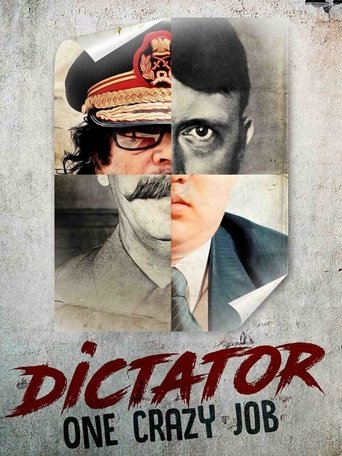
They’ve become the human face of inhuman barbarity. Leaders like Hitler, Idi Amin Dada, Stalin, Kim Jong Il, Saddam Hussein, Nicolae Ceausescu, Bokassa, Muammar Kadhafi, Khomeini, Mussolini and Franco governed their countries completely cut off from reality. These paranoid leaders were driven to abuse their power by the pathology of power itself. Dictators are driven by a relentless, thought-out determination to impose themselves as infallible, all-knowing and all-powerful beings. But they are also men ruled by their caprices, uncontrollable impulses, and reckless fits of frenzy, which paradoxically render them as human as anyone else. The abuses they committed were clearly atrocious, yet some of them were as outlandish as the characters portrayed in the film The Dictator. They sunk to depths worthy of Kafka: so incredibly absurd, they are outrageously funny.
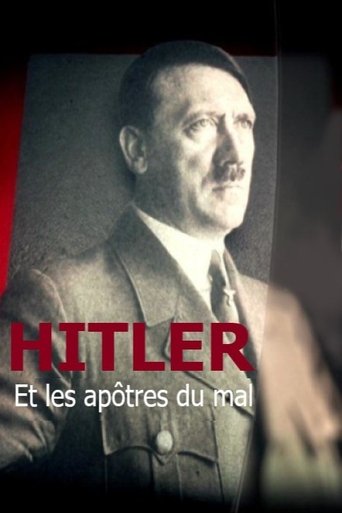
This portrait that goes against the grain depicts the Führer as a lazy, isolated leader, cut off from reality, incapable of governing without his "apostles". They are Hitler's essential ministers, advisers, rivals, courtiers. They hate each other, and the Führer puts them in competition, often to get the worst out of them. The portraits of Hermann Goering, Heinrich Himmler, Joseph Goebbels, Albert Speer but also Rudolf Hoess, the commandant of the Auschwitz-Birkenau camp, and Doctor Joseph Mengele trace the rivalries, hatreds and predations that punctuate the entire frightening epic of Nazism. This documentary is composed of a selection of archive images and testimonies from descendants and specialists of this period.
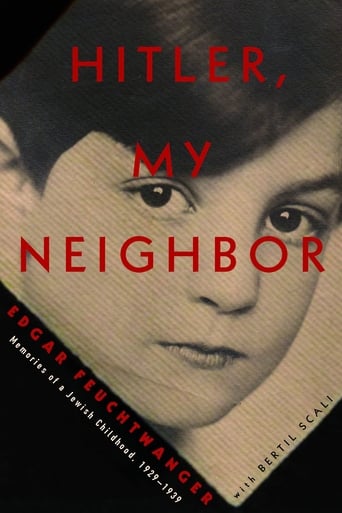
From 1929 to 1939 Edgar Feuchtwanger lived across the street from Adolf Hitler in Munich Germany From his bedroom the young Jewish boy often viewed the Fuumlhrer just across the avenue A schoolboy in Munich at the time Edgar witnessed the rise of Nazism firsthand sharing in the fear and dread felt by all German Jews witnessing the unstoppable ascent of a madman and the start of World War II
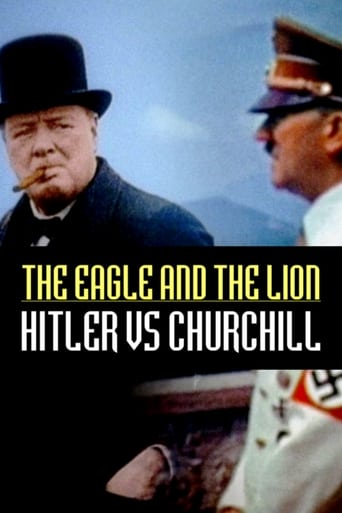
Winston Churchill, one of the most revered men of the twentieth century. Adolf Hitler, one of the most hated leaders in contemporary history. Between 1940 and 1945, these two enormously contradictory personalities faced each other in both politics and war. A clash of giants whose story begins in the trenches of the World War I and ends with the debacle of the World War II.

On April 30, 1945, while the Russian Army surrounded Berlin, Hitler committed suicide in his bunker. His body was discovered a few days later by the Soviets. He would be positively identified after a top secret inquest in which Hitler's personal dentist would play a central role. And yet, at the same time, Stalin publicly declared that his army was unable to find the Führer's body, choosing to let the wildest rumors develop and going so far as to accuse some of his Allies of having aided the monster's probable escape. What secrets were hidden behind this dissimulation? What happened then to the two ladies involved in the identification of Hitler’s body?


A collaboration in which Robert Wilson and Heiner Müller let Molière die, imagine his death in tableaux with text passages recited by Müller himself. "Cinema watches Death at work." Wilson's actors watch Molière die: their vigil is hard work. Müller's comment: "The poem watches a dying man at work, his name is Molière. The poem is not a film. The film watches an actor playing a dying man called Molière."
The final days in the Bunker, with Hitler becoming more and more paranoid, plumbing the depths of his madness and reaching his well deserved fate.

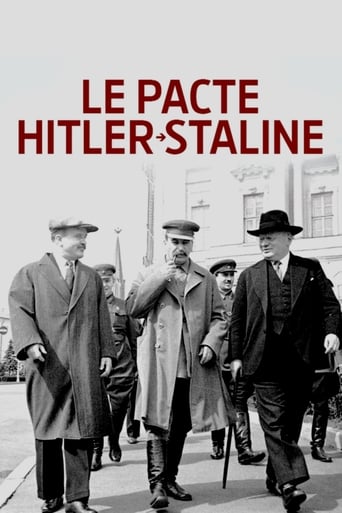
How could Hitler and Stalin, sworn ideological enemies, come to a secret pact in 1939? The captivating and detailed story of the diplomatic fiasco that led to the signing of the Nazi-Soviet pact and its devastating consequences.
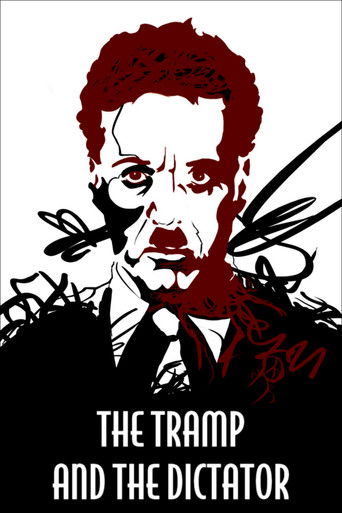
A look at the parallel lives of Charlie Chaplin and Adolf Hitler and how they crossed with the creation of the film “The Great Dictator,” released in 1940.

John Gabriel Borkman, a former bank director, was imprisoned for fraud but believes he was wrongly convicted. He had invested clients' money in a major industrial venture but was reported by his friend Hinkel, who was in love with Borkman's former fiancée, Ella Rentheim. Borkman now lives on the first floor of the house, with his estranged wife, Gunhild, living on the ground floor. He occasionally receives visits from his friend Wilhelm Foldal, who supports Borkman's delusion that the bank will reinstate him. In his youth, Borkman betrayed his love for Ella by marrying her twin sister Gunhild to advance his career. After his conviction, Ella took care of their son Erhart and now wants him to live with her and take her name. Borkman agrees, but Gunhild refuses to let her sister take their son.