
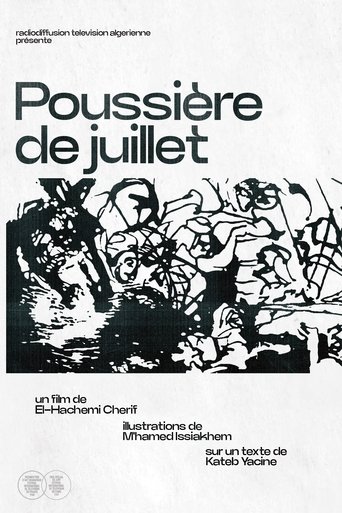
July Dust
1967-01-01 · Runtime unavailable · ★ 10.0
“Poussières de Juillet”, produced in 1967 by Hachemi El-Chérif, is taken from a poem by Kateb Yacine. "We made a film on the return of the ashes of Emir Abdelkader, to Algeria. It was the opportunity to make a film on the ancestors with M'hamed Issiakhem. He designed glass plates on the basis of my texts. Then we had actors collaborate. It was a film which cost us a total of 300 dinars, proof that we could do work for television without too much money. We won two first international prizes at the Belgrade festival. We left the original of the film with the Egyptians in Alexandria and they lost it. We kept a copy but over time I wonder what happened to it, because there is no not even had a screening, they say it still exists, but I don't know in what state." Kateb Yacine, July 28, 1986, interview with Arlette Casas.
Trailers are previews, not full movies.
No authorized playback source configured. Use the legal watch options below.
Production details
- Directors
- El-Hachemi Chérif
- Production companies
- Radiodiffusion Télévision Algérienne (RTA)
- Countries
- Algeria
- Status
- Released
Top Cast
Title information and images are supplied by TMDb. Explore our discovery guide for advice on comparing metadata and legal viewing options.
Where to watch
Availability provided by JustWatch via TMDb. Offers can change. Provider links are listed on TMDb; full playback requires a separately authorized source.
Availability not listed for this country.
Seasons & episodes
Recommendations
Algiers, 1938. Meursault, a quiet and unassuming employee in his early thirties, attends his mother's funeral without shedding a tear. The next day, he begins a casual affair with Marie, a work colleague. He quickly slips back into his usual routine.
A three-chapter (Hell, Purgatory and Paradise) meditation on the city of Sarajevo in the wake of the Bosnian war, on Palestine and Israel, and on war itself.
Agnès Varda eloquently captures Paris in the sixties with this real-time portrait of a singer set adrift in the city as she awaits test results of a biopsy. A chronicle of the minutes of one woman’s life, Cléo from 5 to 7 is a spirited mix of vivid vérité and melodrama, featuring a score by Michel Legrand and cameos by Jean-Luc Godard and Anna Karina.
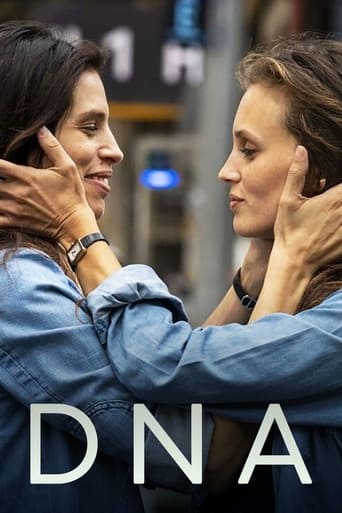
A woman has a close bond with her beloved Algerian grandfather, who protected her from a toxic home life as a child; his death triggers a deep identity crisis as tensions between her extended family members escalate, revealing new depths of resentment and bitterness.
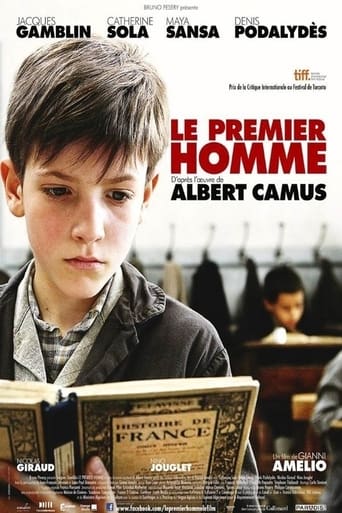
Based on a novel that Albert Camus was working on when he died, we follow Jacques Comery as he travels back to Algeria in 1957, a place full of childhood memories. The country is split between those wanting to remain a part of France, and those demanding independence. Reminiscences of his mother, his stern grandmother and a young Arab boy come flooding back.
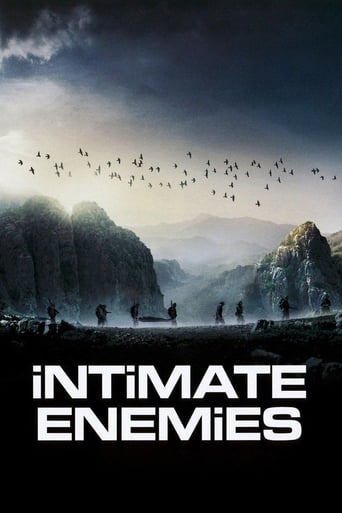
A drama following a French platoon during Algeria's war of independence.

Charlotte Gainsbourg agrees to play a witch condemned to be burned at the stake in the first film directed by Béatrice Dalle. But the chaotic production, technical problems, and psychotic breakdowns gradually plunge the shoot into a chaos of pure light.
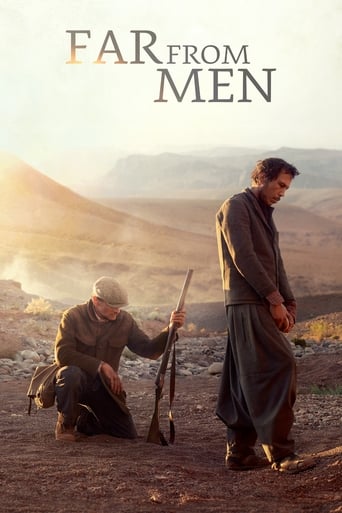
A French teacher in a small Algerian village during the Algerian War forms an unexpected bond with a dissident who is ordered to be turned in to the authorities.
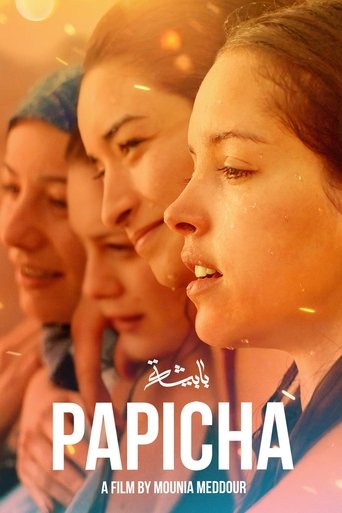
Nedjma, an 18-year-old student passionate about fashion design refuses to let the tragic events of the Algerian Civil War keep her from experiencing a normal life. As the social climate becomes more conservative, she rejects the new bans set by the radicals and decides to put on a fashion show.
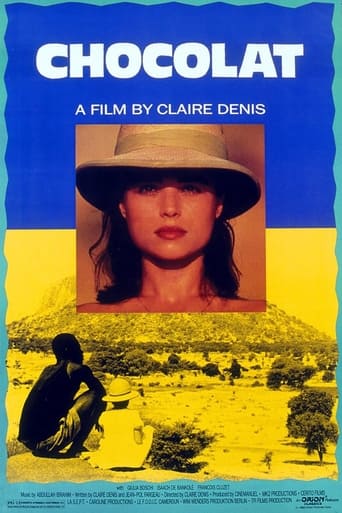
On her way to visit her childhood home in a colonial outpost in Northern Cameroon, a young French woman recalls her childhood, her memories concentrating on her family's houseboy.
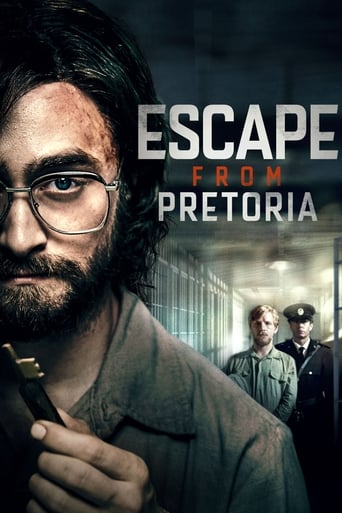
South Africa, 1978. Tim Jenkin and Stephen Lee, two white political activists from the African National Congress imprisoned by the apartheid regime, put a plan in motion to escape from the infamous Pretoria Prison.
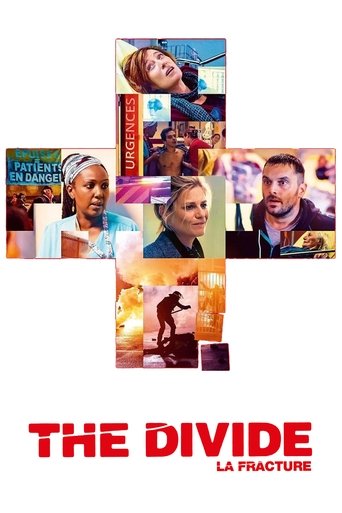
Raf and Julie, a couple on the verge of breaking up, find themselves in an emergency ward bordering on collapse on the evening of a Parisian Yellow Vest protest. Their encounter with Yann, an angry and injured demonstrator, will shatter each person's certainties and prejudices. Outside, the tension escalates.
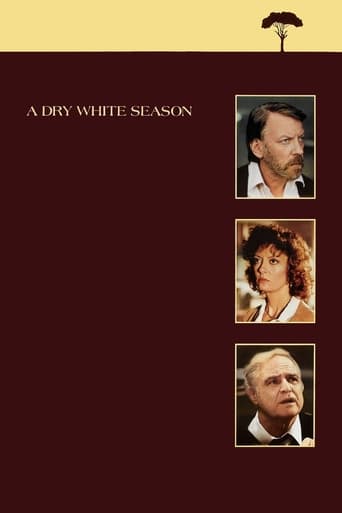
During the 1976 Soweto uprising, a white school teacher's life and values are threatened when he asks questions about the death of a young black boy who died in police custody.
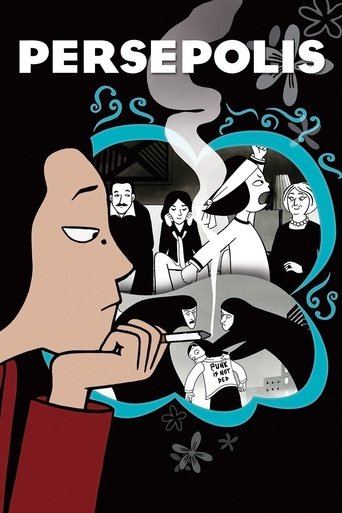
In 1970s Iran, Marjane 'Marji' Satrapi watches events through her young eyes and her idealistic family of a long dream being fulfilled of the hated Shah's defeat in the Iranian Revolution of 1979. However as Marji grows up, she witnesses first hand how the new Iran, now ruled by Islamic fundamentalists, has become a repressive tyranny on its own.

Set in France during the struggle for Algerian independence, Messaoud's mother is terminally ill and his father, needing to work long hours in the factory, can't look after him, so decides to put him and his older brother Abdel in foster care. Sent to the countryside, Abdel has to work on a farm, but Messaoud is taken in by a childless woman, who conceals his Arab origins from her fiercely Gaullist ex-army husband. Re-named Michel/Michou, and with his hair comically dyed blond, the young boy quickly steals the hearts of both foster-parents, and eventually is instrumental in saving their troubled marriage.
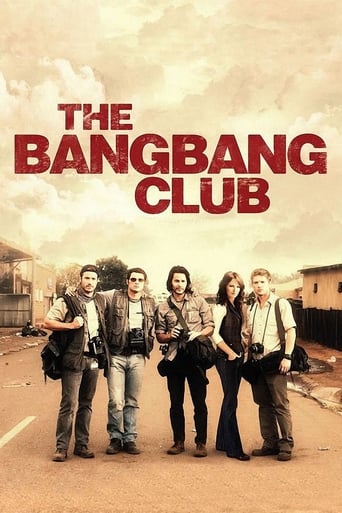
In the early to mid '90s, when the South African system of apartheid was in its death throes, four photographers - Greg Marinovich, Kevin Carter, Ken Oosterbroek and João Silva - bonded by their friendship and a sense of purpose, worked together to chronicle the violence and upheaval leading up to the 1994 election of Nelson Mandela as president. Their work is risky and dangerous, potentially fatally so, as they thrust themselves into the middle of chaotic clashes between forces backed by the government (including Inkatha Zulu warriors) and those in support of Mandela's African National Congress.
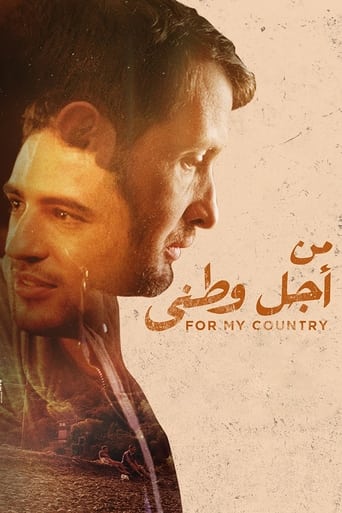
Aissa, a young officer of Algerian origin, tragically loses his life during a fresher initiation ritual at the prestigious French military academy of Saint-Cyr. As the death tears through his family, controversy arises over Aissa’s funeral plans when the Army refuses to take responsibility. Ismael, his older, rebellious brother, tries to keep the family united as they fight to win justice for Aissa.

In the midst of a volatile regime change in a Francophone African state, Maria Vial is fighting to sustain her family’s coffee plantation. With rebels and the army struggling for control, French peacekeeping forces move out, warning the remaining white residents that they’re on their own. But Maria refuses to be driven off the land, even as tragedy looms.
After writing for Cahiers du cinéma, young Godard decides making films is the best film criticism. He gets Beauregard to fund a low-budget feature, creating a treatment with Truffaut about a gangster couple.

A man, Milan steps off a train, into a small French village. As he waits for the day when he will rob the town bank, he runs into an old retired poetry teacher named M. Manesquier. The two men strike up a strange friendship and explore the road not taken, each wanting to live the other's life.
Similar titles
The residents of Ho Chi Minh City face modernization amid widespread poverty. A retired American Marine arrives on a search for his daughter, whom he abandoned at the end of the Vietnam War. Elsewhere, a cyclo driver falls for a troubled prostitute and schemes to raise money so he can spend time with her. Additionally, a young women begins harvesting lotuses for a writer suffering from leprosy, and a child trinket seller loses his traveling case.
A short film commissioned by CBC based on a poem by Canadian poet Irving Layton.
The story of Ana and Diego, a couple who decide to go live on the coast in Chile. There, they meet Vicente, with whom Diego secretly begins a relationship. Ana, for her part, must decide if she wants to open up to a relationship that deconstructs the traditional ways of relating affectively.
William Thatcher, a knight's peasant apprentice, gets a chance at glory when the knight dies suddenly mid-tournament. Posing as a knight himself, William won't stop until he's crowned tournament champion—assuming matters of the heart don't get in the way.
About the life and work of the poet Sergei Yesenin, his connection with his native country, its people and nature. Childhood, love, painful searches for his place in the new, revolutionary Russia — everything found a place in Yesenin's lyrics. Frames illustrating Yesenin's poetry and poems are side by side in the film with episodes of the poet's biography: the film reflects the days of his stay in America, World War I, revolution and village round dances, a daring uncle, a wise mother...
A group of refractory and pacifist Bretons is sent to Algeria. These beings confronted with the horrors of war gradually become killing machines. One of them did not accept it and deserted, taking with him an FLN prisoner who was to be executed the next day.
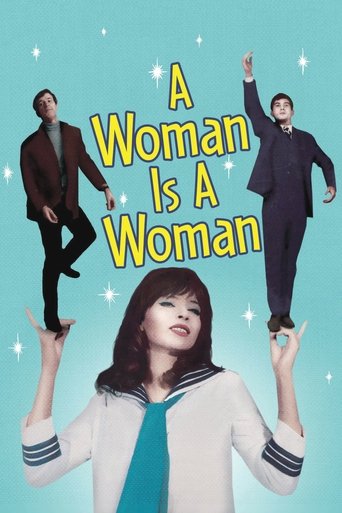
Longing for a baby, a stripper pursues another man in order to make her boyfriend jealous.
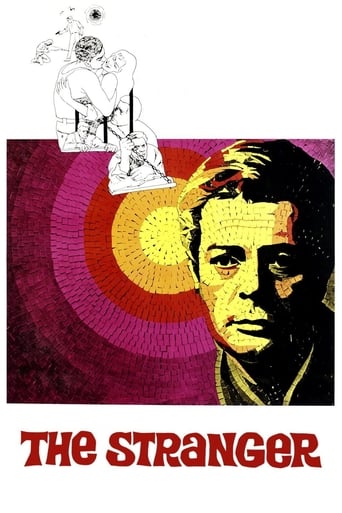
Meursault is a man who feels utterly isolated from everyone and everything around him. This alienation results in sudden, inexplicable bursts of violence, culminating in murder.
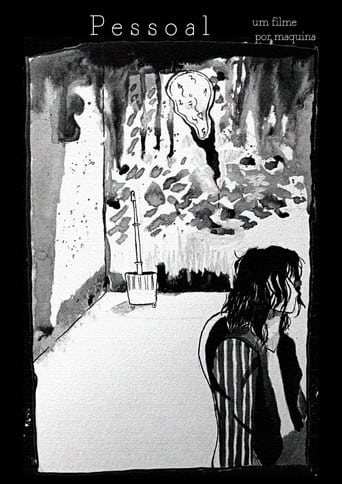
In countless meeting rooms, an employee wants to resign. Her motivations don't matter, what matters is the catharsis of resignation.
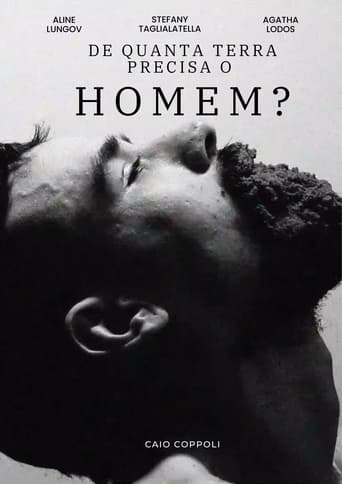
A reflection on man's relationship and needs with the earth, with the self and with hope.

Parisian authorities clash with the Front de Libération Nationale (FLN) in director Alain Tasma’s recounting of one of the darkest moments of the Algerian War of Independence. As the war wound to a close and violence persisted in the streets of Paris, the FLN and its supporters adopted the tactic of murdering French policemen in hopes of forcing a withdrawal. When French law enforcement retaliated by brutalizing Algerians and imposing a strict curfew, the FLN organizes a peaceful demonstration that drew over 11,000 supporters, resulting in an order from the Paris police chief to take brutal countermeasures. Told through the eyes of both French policemen as well as Algerian protestors, Tasma’s film attempts to get to the root of the tragedy by presenting both sides of the story.
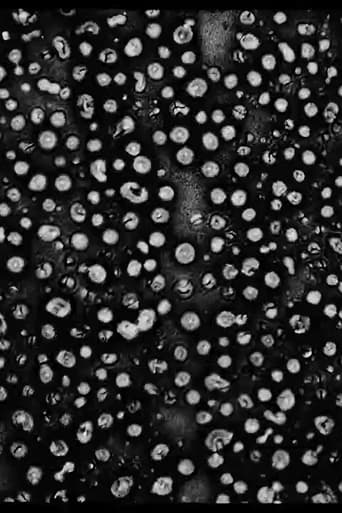
The short film poem KYKLOP is dedicated to a mechanical eye as an autonomous being. Round wheels and targets similar to him seem to arouse the interest of this main character. The atmosphere is thundery, thunderous. It reminds of the cyclopean thunder demons from the "Theogony" of the ancient Greek poet Hesiod. KYKLOP (2023) is another autonomous part of the film cycle by Telemach Wiesinger and Alexander Grebtschenko that began with TURBULENCE (2022) and its pairs of mechanical wings.
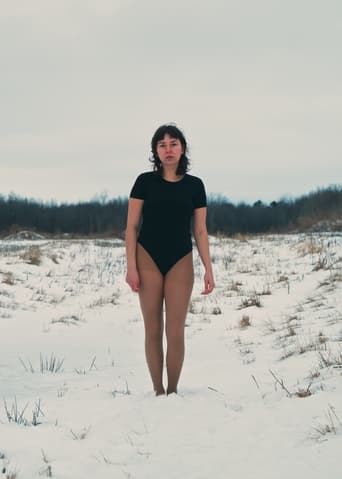
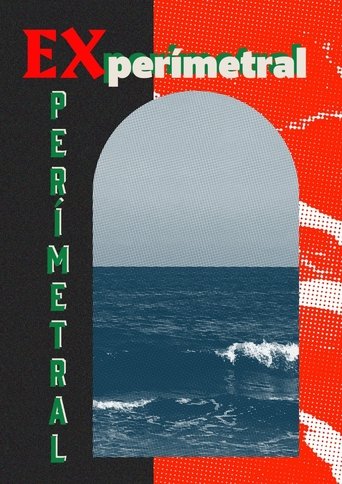
A journey into a mind of an artist with creative crisis.
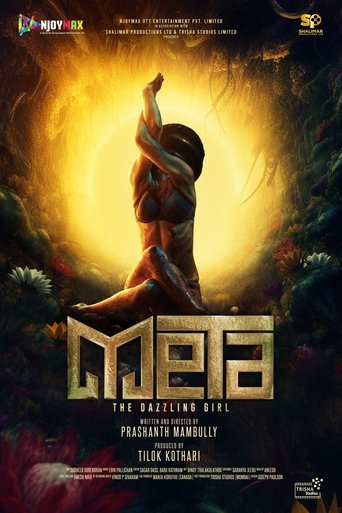
In this single character-driven movie, we follow the life of meta, an archaeologist. In her excavation she comes across an old ruin and unknowingly falls trap to a curse. This curse later leads her head to get stuck in a mystical pot. It is the nature’s payback to her unknown karmic cycle.

Born from steel and glass Kino Kopf is created by two inventors. They are assembled by their mother, a nurturing artist, and their Father a greedy entrepreneur. Kino Kopf is the first of its kind a sentient humanoid VHS camera. They are given a life by their mother but presented to the world by their father. Kino Kopf is the next big sensation and spurs a technological revolution. They are soon forgotten and alone as new models surpass them. Kino Kopf is left alone to contemplate if they ever had a soul, as visions of an electric cowboy dance through their dreams.
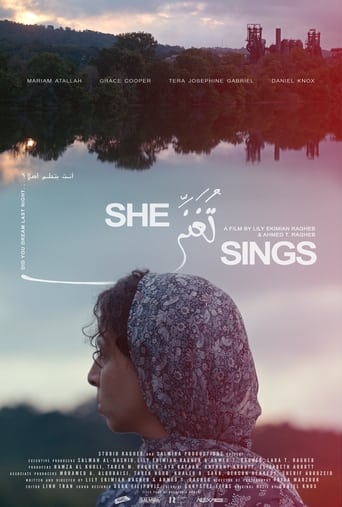
When Aziza finally shares a recurring dream, it’s what she leaves unsaid that reveals her fractured sense of self. Aziza’s dream – in which she must sing a song – takes her on a journey through the post-industrial hills of the American Rust Belt, the eternal fields of Egypt, and the most repressed parts of her mind.

A man breaks in a house, in which he never went before. However, he seems to got some memories of it...
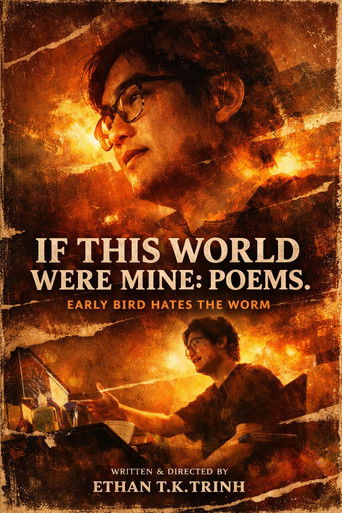
If This World Were Mine: Poems is an intimate, cinematic short film adaptation of a layered poetic journey—a visual meditation on identity, introspection, and the internal landscapes we navigate as we grow. The film blends voice-over narration, evocative imagery, and reflective monologue to bring the emotional and thematic currents of the poetry to life.