
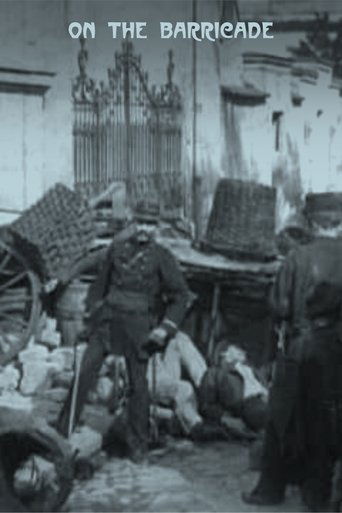
On the Barricade
1907-08-23 · 6 min · ★ 5.3
During the Paris Commune, a boy runs across trouble at the barricade. The film is now attributed to Alice Guy-Blaché by the Gaumont company, although there is some debate about whether it was directed by Étienne Arnaud.
Trailers are previews, not full movies.
No authorized playback source configured. Use the legal watch options below.
Production details
- Directors
- Étienne Arnaud, Alice Guy-Blaché
- Production companies
- Société des Etablissements Gaumont (FR)
- Countries
- France
- Status
- Released
Top Cast
Cast unavailable.
Title information and images are supplied by TMDb. Explore our discovery guide for advice on comparing metadata and legal viewing options.
Where to watch
Availability provided by JustWatch via TMDb. Offers can change. Provider links are listed on TMDb; full playback requires a separately authorized source.
Seasons & episodes
Recommendations
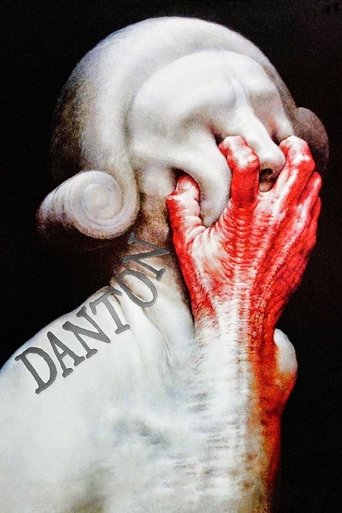
Danton and Robespierre were close friends and fought together in the French Revolution, but by 1793 Robespierre was France's ruler, determined to wipe out opposition with a series of mass executions that became known as the Reign of Terror. Danton, well known as a spokesman of the people, had been living in relative solitude in the French countryside, but he returned to Paris to challenge Robespierre's violent rule and call for the people to demand their rights. Robespierre, however, could not accept such a challenge, even from a friend and colleague, and he blocked out a plan for the capture and execution of Danton and his allies.
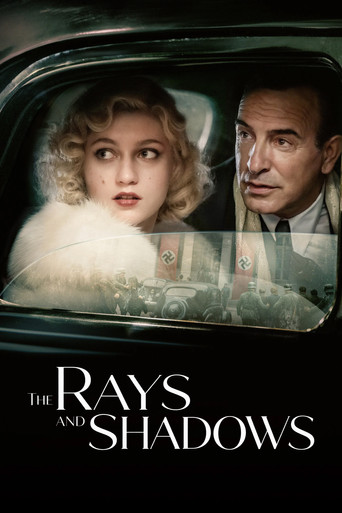
Jean and Otto, a French newspaperman and a young German Francophile, are fighting for peace in Europe. Jean’s daughter, Corinne, is launching a brilliant acting career in the film world, but war breaks out and France is occupied. The two friends have a major role to play in this new France. Jean becomes a big press baron and an ardent advocate of collaboration with the occupying forces, while Otto becomes the Reich’s ambassador in Paris. Corinne, meanwhile, finds herself thrown into the lion’s pit.
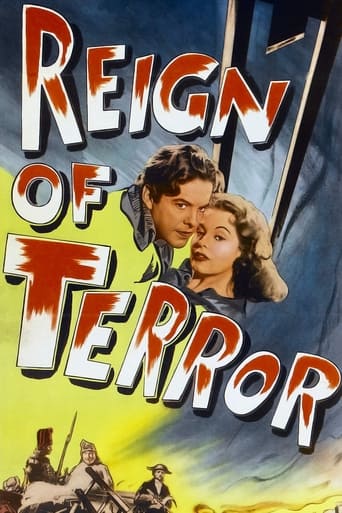
The French Revolution, 1794. The Marquis de Lafayette asks Charles D'Aubigny to infiltrate the Jacobin Party to overthrow Maximilian Robespierre, who, after gaining supreme power and establishing a reign of terror ruled by death, now intends to become the dictator of France.
In 1871, a journalist for Versailles Television broadcasts a soothing and official view of events while a Commune television is set up to provide the perspectives of the Paris rebels. On a stage-like set, more than 200 actors interpret denizens of the Commune, especially the Popincourt neighborhood in the XIth arrondissement. They voice thoughts and feelings concerning the social and political reforms.
France. End of the 19th century. Louise Violet 40, a Parisian teacher, is sent on a mission to the French countryside. But in a place where the daily life is linked to the seasons, land and crops, she must first convince parents to send their kids to school. With the help of the mayor, she is gradually accepted by the parents and their children. But soon, her past catches up with her. Despite the obstacles she faces, Miss Violet will give her heart and soul to her belief that education is the key to freedom.
A prisoner leads his counterparts in a protest for better living conditions which turns violent and ugly.
After writing for Cahiers du cinéma, young Godard decides making films is the best film criticism. He gets Beauregard to fund a low-budget feature, creating a treatment with Truffaut about a gangster couple.
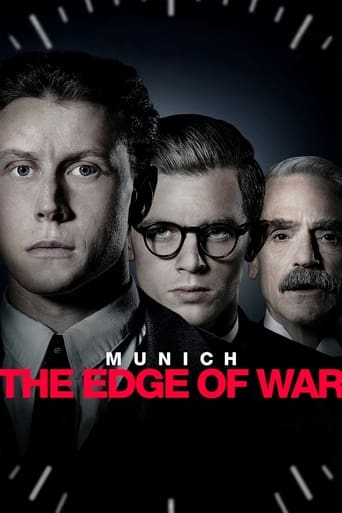
At the tense 1938 Munich Conference, former friends who now work for opposing governments become reluctant spies racing to expose a Nazi secret.

After a chaotic night of rioting in a marginal suburb of Paris, three young friends, Vinz, Hubert and Saïd, wander around unoccupied waiting for news about the state of health of a mutual friend who has been seriously injured when confronting the police.
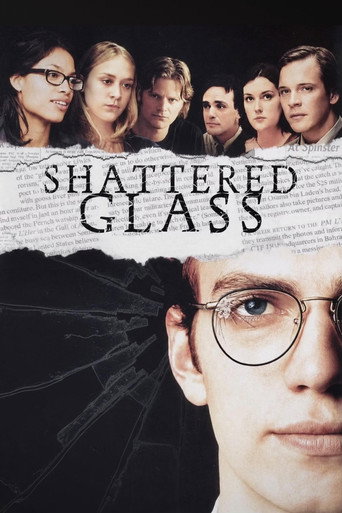
Stephen Glass is a staff writer for the respected current events and policy magazine The New Republic and a freelance feature writer for publications such as Rolling Stone, Harper's and George. By the mid-90s, Glass' articles had turned him into one of the most sought-after young journalists in Washington, but a bizarre chain of events - chronicled in Buzz Bissinger's September 1998 Vanity Fair article - suddenly stopped his career in its tracks.
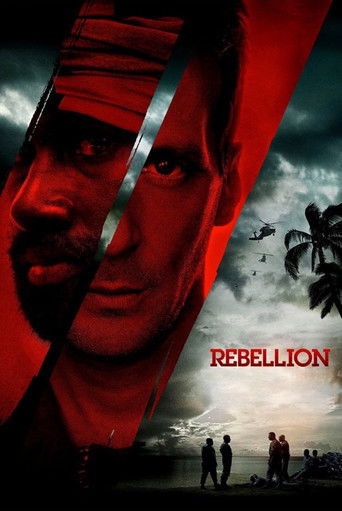
April 1988, Ouvéa Island, New Caledonia. 30 gendarmes are taken hostage by a group of Kanak freedom fighters. 300 soldiers are sent from France to re-establish order. 2 men confront each other: Philippe Legorjus, chief of the terrorist squad, and Alphonse Dianou, head of the kidnappers. Through their shared values, they will attempt to make discussion triumph. But, in the middle of a presidential election, when the stakes are political, order isn't always dictated by morality. A violent and troubling epic that marks the return of Mathieu Kassovitz in front and behind the camera.
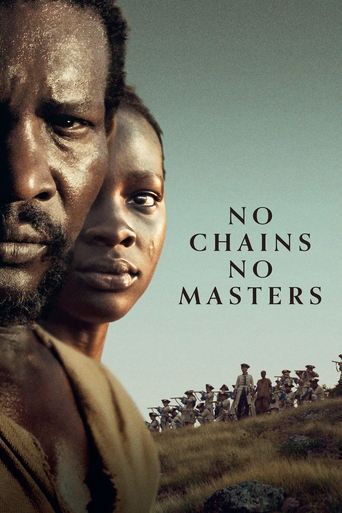
1759, Mauritius Island, Indian Ocean. The island is controlled by French settlers and the deported slave population live in fear while toiling in the sugar cane plantations. Unlike her disillusioned father Massamba, 16-year-old Mati refuses to keep her head down and accept her fate.
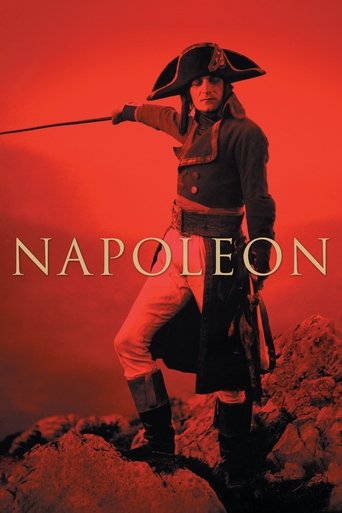
A biopic of former Emperor of France, Napoleon Bonaparte, tracing the Corsican's career from his schooldays (where a snowball fight is staged like a military campaign) to his flight from Corsica, through the French Revolution (where a real storm is intercut with a political storm) and the Terror, culminating in his triumphant 1797 invasion of Italy.

A film relating from the inside the Notre-Dame de Paris fire of April 2019.
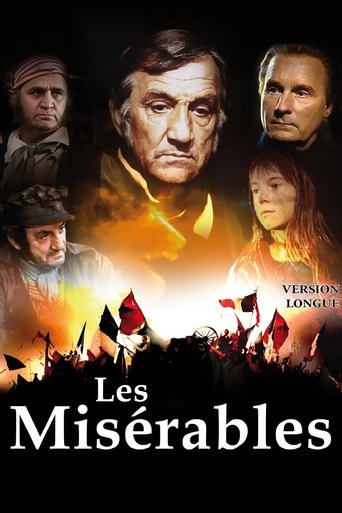
In 19th century France, Jean Valjean, a man imprisoned for stealing bread, must flee a relentless policeman named Javert. The pursuit consumes both men's lives, and soon Valjean finds himself in the midst of the student revolutions in France.
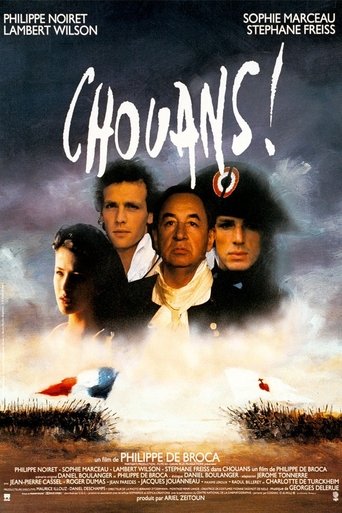
Directed by Philippe de Broca, the film recounts a bloody episode of the French Revolution. 1793, the Terror . In Vendée and in Bretagne, the chouans are revolting against the young Republic and fight for the monarchy restauration. The civil war divides also the family of the Count Savinien de Kerfadec, a liberal and generous noble and a flying machines inventor.

Charlotte Gainsbourg agrees to play a witch condemned to be burned at the stake in the first film directed by Béatrice Dalle. But the chaotic production, technical problems, and psychotic breakdowns gradually plunge the shoot into a chaos of pure light.

France, 1983. The biggest architectural competition in history is launched by the new socialist president, François Mitterrand. Coveted by all the biggest international architectural firms, the open-call competition is surprisingly won by an unknown: Johan Otto von Spreckelsen, an architecture teacher from Copenhagen. Until then, the fifty-year-old Dane had built only four buildings: his home, and three small chapels.

Young women toiling in a factory are exposed to hazardous material which takes a disastrous toll on their health.
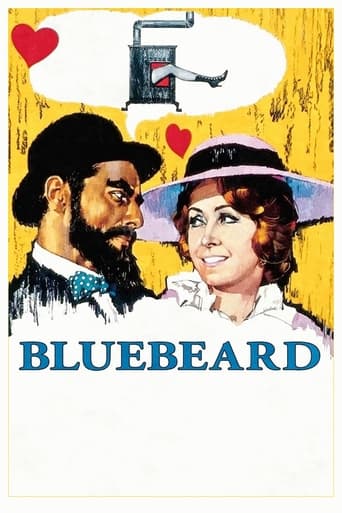
Paris, France, during the First World War. While thousands of soldiers die every day on the battlefields, Henri Landru, a seemingly respectable furniture dealer, married and father of four children, relentlessly feeds his own sinister factory of death.
Similar titles
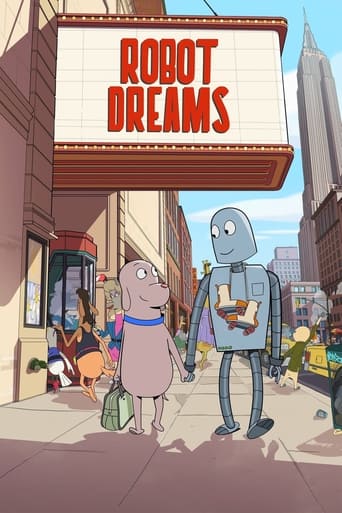
A lonely dog's friendship with his robot companion takes a sad turn when an unexpected malfunction forces him to abandon Robot at the beach. Will Dog ever meet Robot again?
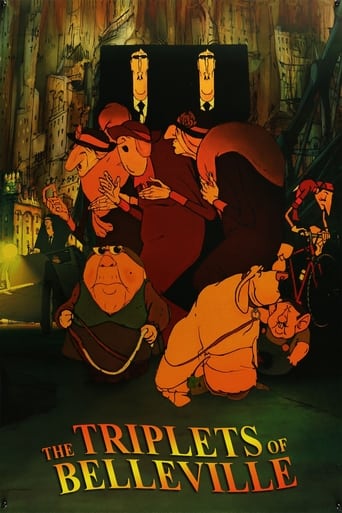
When her grandson is kidnapped during the Tour de France, Madame Souza and her beloved pooch Bruno team up with the Belleville Sisters—an aged song-and-dance team from the days of Fred Astaire—to rescue him.

A man with an umbrella emerges from his grave to be momentarily reunited with his lost loved one.
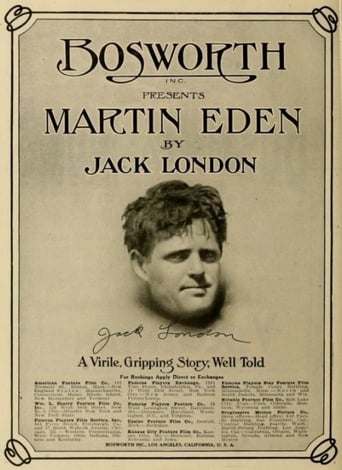
The tale of an individualist proletarian in a time marked by the rise of mass political movements. In early 20th-century Italy, illiterate sailor Martin Eden seeks fame as a writer while torn between the love of a bourgeois girl and allegiance to his social class.
Two men who have been friends for quite some time and who live in different cities maintain a correspondence with Super 8 film reels that they occasionally send to each other. One of these film reels shows a woman who reminds the addressee of a former girlfriend. Immediately and without paying attention to his obligations to the company, he drives the company car to the city of his childhood friend, 780 km away. There he finds out that she has been the secret lover of his Super 8 friend for years. After about three or four weeks, which they spend on the coast of another country without any significant difficulties, the lover of the childhood friend rows his boat alone across the Atlantic after an obviously frame-up rescue operation.
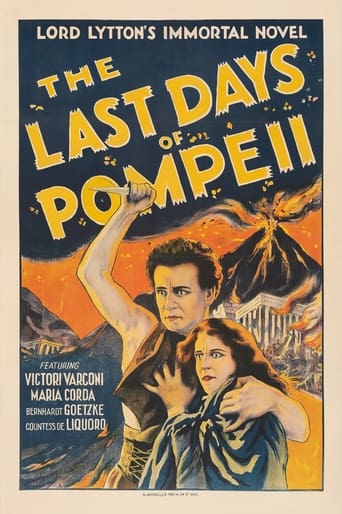
Carmine Gallone and Amleto Palermi’s The Last Days of Pompeii 1926 stages in sumptuous colour tinting the epic fall of the ancient city buried by Mount Vesuvius’ eruption. Adapted from Edward Bulwer-Lytton’s love story, the film was innovative in its special effects and an early major box-office hit. A beautiful tinted restoration print was prepared using photochemical processes by Centro Sperimentale di Cinematografia-Cineteca Nazionale in the mid-1990s and the premiere screening of the restoration print was held in the amphitheatre in Pompeii, followed by a screening at the major restoration festival ‘Il Cinema Ritrovato’ in Bologna in 1998.
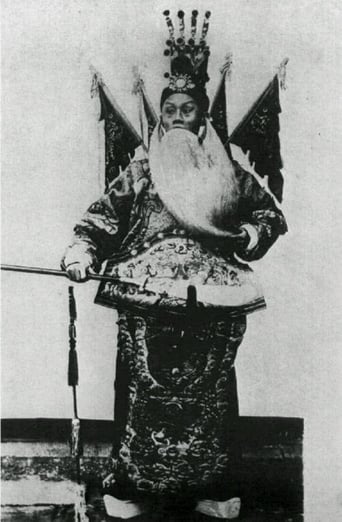
The first Chinese film ever made, a sung representation of Battle of Mount Dingjun.
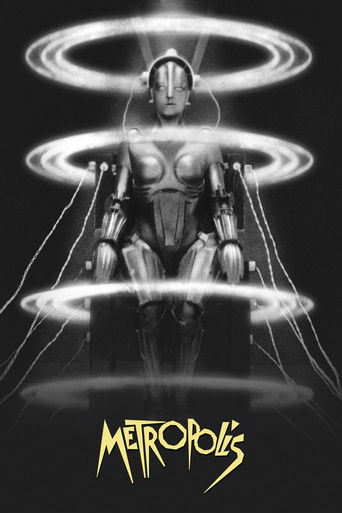
In a futuristic city sharply divided between the rich and the poor, the son of the city's mastermind meets a prophet who predicts the coming of a savior to mediate their differences.
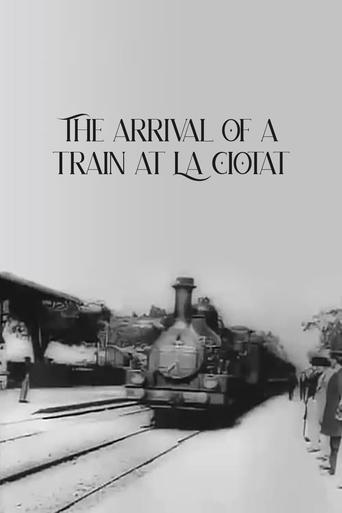
A group of people are standing along the platform of a railway station in La Ciotat, waiting for a train. One is seen coming, at some distance, and eventually stops at the platform. Doors of the railway-cars open and attendants help passengers off and on. Popular legend has it that, when this film was shown, the first-night audience fled the café in terror, fearing being run over by the "approaching" train. This legend has since been identified as promotional embellishment, though there is evidence to suggest that people were astounded at the capabilities of the Lumières' cinématographe.
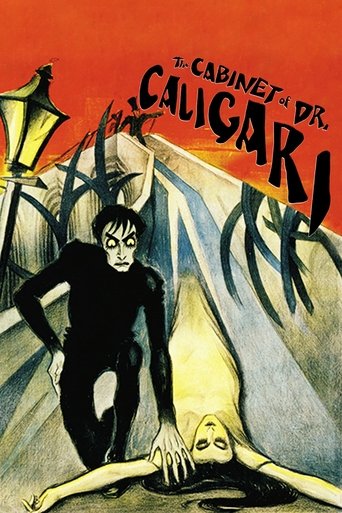
Francis, a young man, recalls in his memory the horrible experiences he and his fiancée Jane recently went through. Francis and his friend Alan visit The Cabinet of Dr. Caligari, an exhibit where the mysterious doctor shows the somnambulist Cesare, and awakens him for some moments from his death-like sleep.


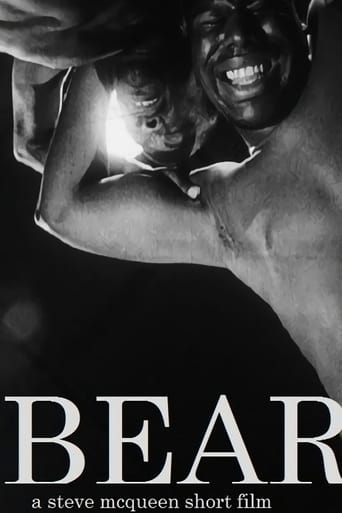
Bear (10 minutes, 35 seconds) was Steve McQueen's first major film. Although not an overtly political work, for many viewers it raises sensitive issues about race, homoeroticism and violence. It depicts two naked men – one of whom is the artist – tussling and teasing one another in an encounter which shifts between tenderness and aggression. The film is silent but a series of stares, glances and winks between the protagonists creates an optical language of flirtation and threat.
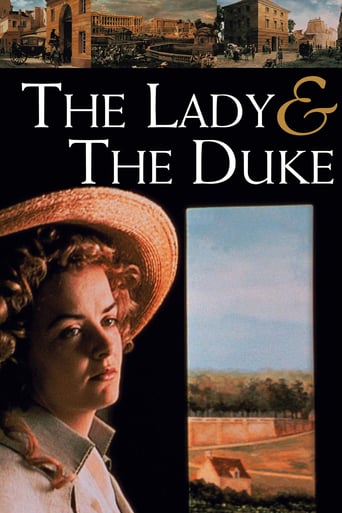
Grace Dalrymple Elliot is a British aristocrat trapped in Paris during the French Revolution. Determined to maintain her stiff upper lip and pampered life despite the upheaval, Grace continues her friendship with the Duke of Orléans while risking her life and liberty to protect a fugitive.

After attending a funeral, a man returns to a merry-go-round where he once cherished joyful moments with someone deeply significant in his life.
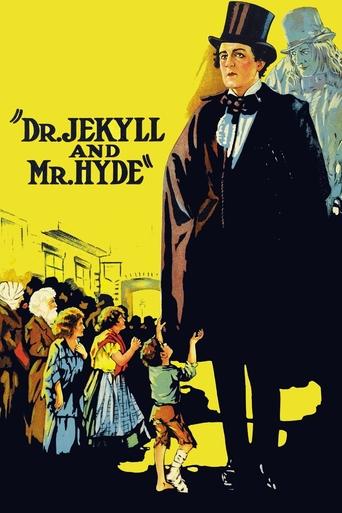
A doctor's research into the roots of evil turns him into a hideous depraved fiend.
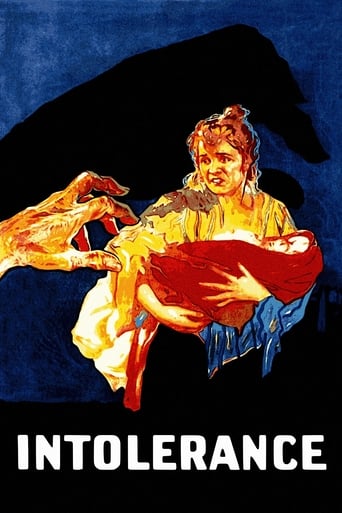
The story of a poor young woman, separated by prejudice from her husband and baby, is interwoven with tales of intolerance from throughout history.
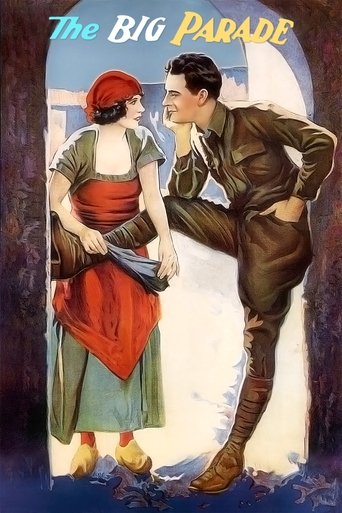
The story of an idle rich boy who joins the US Army's Rainbow Division and is sent to France to fight in World War I, becomes friends with two working class men, experiences the horrors of trench warfare, and finds love with a French girl.