
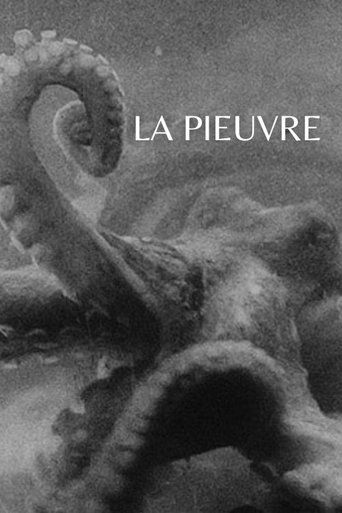
The Octopus
1928-12-14 · 13 min · ★ 6.5
An octopus slithers over objects on land—a doll, a skull—then oozes along the shore into the sea. It secretes its ink. The camera follows it along rocks into deeper water, watching closely as it breathes. Its eye is closed then open. Simple titles, in French and German, suggest what to watch. The octopus alternates the use of breathing tubes on either side. It changes color as cells on its skin contract or dilate. Extreme magnification helps us see these changes. Two struggle, one dies. On shore, fishermen catch them and put them in pails. A single tentacle still has life. Back in the sea, two octopi attack a crab. Soon only a couple of crab legs are visible in the mouth of the victor.
Trailers are previews, not full movies.
No authorized playback source configured. Use the legal watch options below.
Production details
- Directors
- Jean Painlevé
- Production companies
- Unavailable
- Countries
- France
- Status
- Released
Top Cast
Cast unavailable.
Title information and images are supplied by TMDb. Explore our discovery guide for advice on comparing metadata and legal viewing options.
Where to watch
Availability provided by JustWatch via TMDb. Offers can change. Provider links are listed on TMDb; full playback requires a separately authorized source.
Seasons & episodes
Recommendations
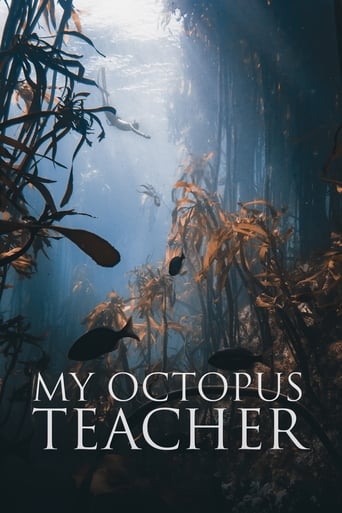
After years of swimming every day in the freezing ocean at the tip of Africa, Craig Foster meets an unlikely teacher: a young octopus who displays remarkable curiosity. Visiting her den and tracking her movements for months on end he eventually wins the animal’s trust and they develop a never-before-seen bond between human and wild animal.
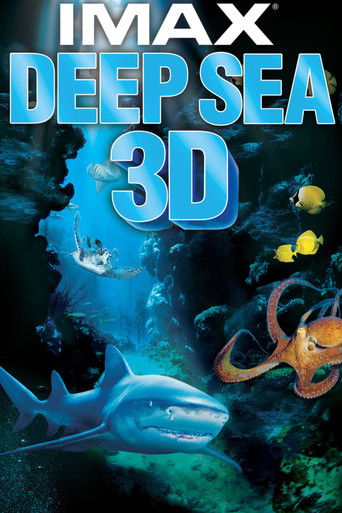
Sea life in a whole new way. Deep Sea 3D, an underwater adventure from the filmmakers behind the successful IMAX® 3D film Into the Deep, transports audiences deep below the ocean surface. Through the magic of IMAX®; and IMAX 3D, moviegoers will swim with some of the planets most unique, dangerous and colorful creatures, and understand this inspiring underworld.
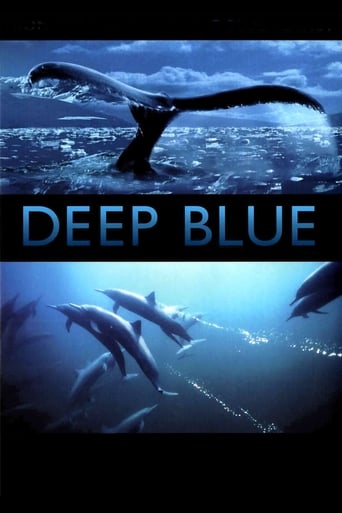
Deep Blue is a major documentary feature film shot by the BBC Natural History Unit. An epic cinematic rollercoaster ride for all ages, Deep Blue uses amazing footage to tell us the story of our oceans and the life they support.
A look behind the lens of Christopher Nolan's space epic.
A documentary of insect life in meadows and ponds, using incredible close-ups, slow motion, and time-lapse photography. It includes bees collecting nectar, ladybugs eating mites, snails mating, spiders wrapping their catch, a scarab beetle relentlessly pushing its ball of dung uphill, endless lines of caterpillars, an underwater spider creating an air bubble to live in, and a mosquito hatching.
An exploration of technologically developing nations and the effect the transition to Western-style modernization has had on them.
Climate is changing. Instead of showing all the worst that can happen, this documentary focuses on the people suggesting solutions and their actions.
Reconnecting with a pack of wolves he has followed for seven years, Bertie sets out to capture one of the Arctic's most dangerous and rarely filmed hunts: wolves taking on a bull moose, prey roughly ten times their size. Led by Kona, a striking white breeding male, the pack faces a critical winter as dwindling food supplies, an encroaching rival wolf and an aging leader threaten its survival.
Years spent recording footage of creatures from every corner of the globe is bound to produce a bit of drama. Here's a behind-the-scenes look.
Takes us to locations all around the US and shows us the heavy toll that modern technology is having on humans and the earth. The visual tone poem contains neither dialogue nor a vocalized narration: its tone is set by the juxtaposition of images and the exceptional music by Philip Glass.
Atlantis is filmmaker Luc Besson's celebration of the beauty and wonder of the world beneath the sea, expanding upon themes touched on in his film The Big Blue. Combining stunning underwater cinematography and a hypnotic score by Eric Serra, Besson's singular vision defies dialogue or narrative structure to explore ocean life as you've never seen it before. Following the colossal success of The Big Blue, Luc Besson crisscrossed the world's seas and oceans to film the beauty and diversity of marine life: from the giant octopuses of Vancouver to the manta rays of the Pacific (New Caledonia), and the grey sharks of Tahiti. A film with no actors or sets other than the underwater world. A breathtaking view of marine species: sharks, dolphins, manatees, octopuses. An exploration of the seabed in the Bahamas, the Galapagos, Vancouver, and Tahiti.
Amber Heard and Nicole Kidman discuss their characters Mera and Atlanna.
Dive into our planet's greatest mysteries with a team of international underwater cinematographers as they explore the breathtaking bond between humanity and the ocean.

A documentary short that gives you an exclusive look behind the groundbreaking original series, "Ms. Marvel", from its comic book origins to its development and production as Marvel Studios’ next hit series on Disney+. It features interviews with its award winning filmmaking team and the show’s captivating star, newcomer Iman Vellani.

A film shot during the summer of 1968 in Oakland, California around the meetings organised by the Black Panthers Party to free Huey Newton, one of their leaders, and to turn his trial into a political debate. They tried and succeeded in catching America’s attention.
Roddy McDowall takes you, film by film, from production meetings to make-up sessions, then right onto the movie set to see the actual filming of the science fiction masterpiece. The most comprehensive history of Planet of the Apes ever created, this fascinating 127-minute documentary explores one of the most imaginative and influential series in movie history.
An epic story of adventure, starring some of the most magnificent and courageous creatures alive, awaits you in EARTH. Disneynature brings you a remarkable story of three animal families on a journey across our planet – polar bears, elephants and humpback whales.

David Attenborough takes viewers on a breathtaking journey showing there is nowhere more vital for our survival, more full of life, wonder, or surprise, than the ocean. Through spectacular sequences featuring coral reefs, kelp forests and the open ocean, Attenborough shares why a healthy ocean keeps the entire planet stable and flourishing.

As a visually radical memoir, CAMERAPERSON draws on the remarkable footage that filmmaker Kirsten Johnson has shot and reframes it in ways that illuminate moments and situations that have personally affected her. What emerges is an elegant meditation on the relationship between truth and the camera frame, as Johnson transforms scenes that have been presented on Festival screens as one kind of truth into another kind of story—one about personal journey, craft, and direct human connection.
Echo is a youngster who can't quite decide if it's time to grow up and take on new responsibilities-or give in to her silly side and just have fun. Dolphin society is tricky, and the coral reef that Echo and his family call home depends on all of its inhabitants to keep it healthy. But Echo has a tough time resisting the many adventures the ocean has to offer.
Similar titles
Documentary film exploring the making, and legacy of 'Forbidden Planet'
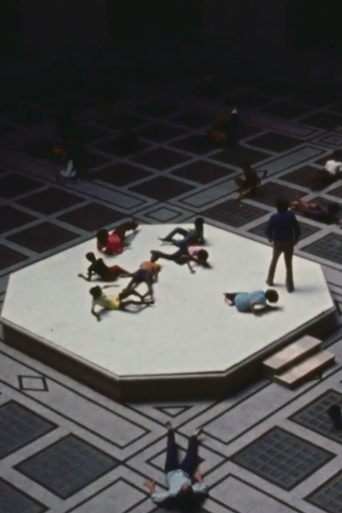
Edited by famed filmmaker Kathleen Collins, Statues Hardly Ever Smile follows a group of middle school children during a six-week project at the Brooklyn Museum, where they collectively discover and respond to the Egyptian collection. With narration by a member of the museum’s education department, we witness the group’s daily exercises and reflections as they create a theatre piece centered on the relationships developed with the objects and each other.
A clash of true oceanic titans sees fights in the remote battlefields of Ascension Island. Tuna are often faster, fitter and bigger than the sharks.
A routine drone survey turns deadly when Ryan Johnson, a marine biologist based in South Africa, films a humpback whale being attacked and strategically drowned by a Great white shark. This is a total perspective shift for the creature.
Directors Errol Morris and Werner Herzog describe and discuss the film The Act of Killing (2012).
Go deep into the woods to explore the lives of a unique avian family. Woodpeckers come in 239 species and live on every continent except Antarctica and Australia, playing a powerful role in every ecosystem they inhabit. They come in all shapes and sizes, each uniquely engineered for their particular lifestyles.
Underwater and microscopic photography by F. Percy Smith tell the story of a newt's life.
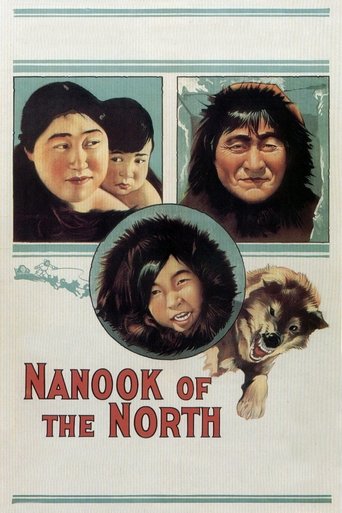
This pioneering documentary film depicts the lives of the indigenous Inuit people of Canada's northern Quebec region. Although the production contains some fictional elements, it vividly shows how its resourceful subjects survive in such a harsh climate, revealing how they construct their igloo homes and find food by hunting and fishing. The film also captures the beautiful, if unforgiving, frozen landscape of the Great White North, far removed from conventional civilization.
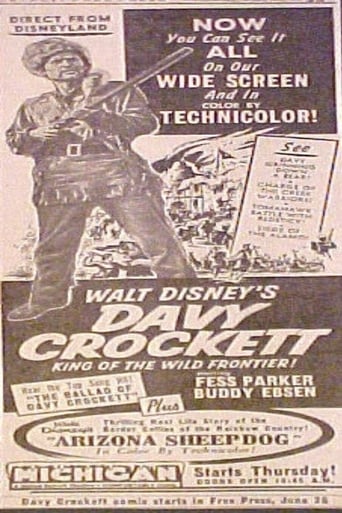
Arizona Sheepdog is a documentary film that was originally released to theaters by Buena Vista Distribution on May 25, 1955 as a double-bill with Davy Crockett, King of the Wild Frontier.
A lyrical and haunting portrait of reindeer herding in the twilight expanses of the Lappish wilderness.

Founding a social Muay Thai project in the North Zone of Rio de Janeiro, Mestre BG and his competitors face the adversities of an underfunded project and fight to win their place on the podium. The challenges intensify when one of the students, Raíssa Pacheco, secures a spot to compete in a South American championship in Uruguay.
Set against a backdrop of spectacular neon footage of Vancouver, Los Angeles, and Las Vegas, the film is an illuminating exploration into the vibrant history and contemporary use of neon. The movement, power, and raw exuberance of neon is revealed through a fascinating demonstration of how neon is made, a montage of notable neon installations and commentary from a colorful array of neon experts.
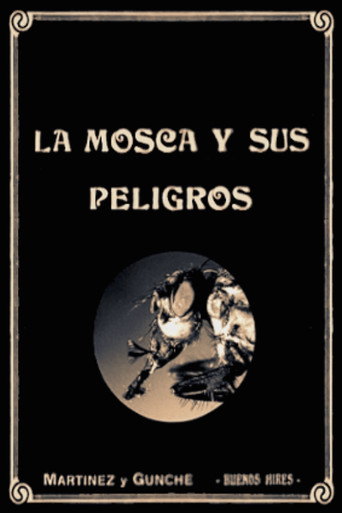
The Dangers of the Fly is an educational film made by Ernesto Gunche and Eduardo Martínez de la Pera, also responsible for Gaucho Nobility (1915), the biggest blockbuster of Argentinean silent cinema. De la Pera was a talented photographer, always willing to try new gadgets and techniques. This film experiments with microphotography in the style of Jean Comandon's films for Pathé and it is part of a series which included a film about mosquitoes and paludism and another one about cancer, which are considered lost. Flies were a popular subject of silent films and there are more than a dozen titles featuring them in the teens and early twenties.
Echo is a youngster who can't quite decide if it's time to grow up and take on new responsibilities-or give in to her silly side and just have fun. Dolphin society is tricky, and the coral reef that Echo and his family call home depends on all of its inhabitants to keep it healthy. But Echo has a tough time resisting the many adventures the ocean has to offer.

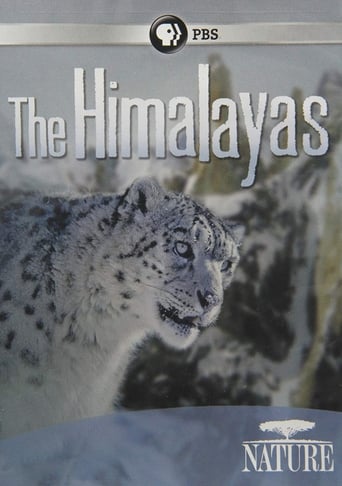
The highest mountain range in the world, the Himalayan range is far reaching, spanning thousands of miles, and holds within it an exceptionally diverse ecology. Coniferous and subtropical forests, wetlands, and montane grasslands are as much a part of this world as the inhospitable, frozen mountaintops that tower above. The word Himalaya is Sanskrit for abode of snow, fitting for a stretch of land that houses the world’s largest non polar ice masses. Extensive glacial networks feed Asia's major rivers including the Ganges, Indus, and Brahmaputra. More than a billion people rely on these glacier-fed water sources for drinking water and agriculture. The Himalayas are not only a remarkable expanse of natural beauty. They're also crucial for our survival.
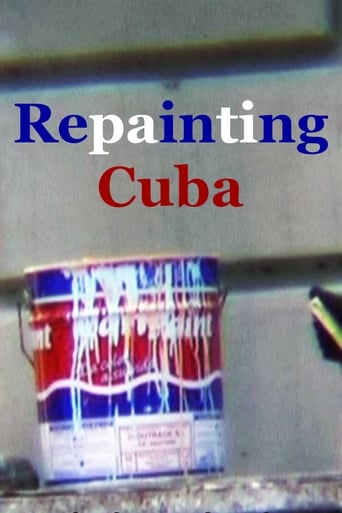
Repainting Cuba takes a critical look at communist Cuba, where both the facades and the aging regime were given a coating of colorful paint in connection with the 50 year anniversary of the revolution. Two young Cubans under house arrest talk about being imprisoned for dealing with foreign tourists in a society where gossip and backstabbing is endemic, and where the heavy varnish can’t conceal the cracks.
This in-depth documentary short exposes how an irresponsible rancher in Washington State set up a pack of wolves living on public land in a remote forest to attack his cattle.
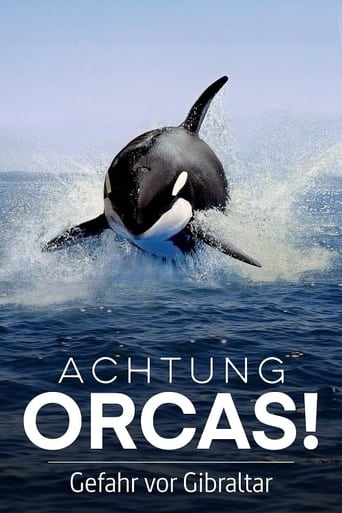
Since the summer of 2020, boats along the Atlantic coast from the Strait of Gibraltar to the Bay of Biscay in the north have been repeatedly attacked by orcas. The whales purposefully attack the rudders and destroy them. Researchers are trying to find out what drives them. Curiosity? Competition for food? Or play?