Człowiek ze studni
1991-01-01 · Runtime unavailable · ★ 10.0
The documentary presents the presidential election campaign in Poland in 1990.
Trailers are previews, not full movies.
No authorized playback source configured. Use the legal watch options below.
Production details
- Directors
- Grzegorz Królikiewicz
- Production companies
- Studio Filmowe N, WFO Film Studio
- Countries
- Poland
- Status
- Released
Top Cast
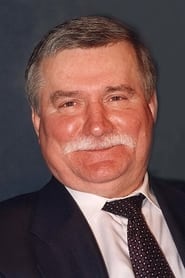 Lech WałęsaSelf
Title information and images are supplied by TMDb. Explore our discovery guide for advice on comparing metadata and legal viewing options.
Where to watch
Availability provided by JustWatch via TMDb. Offers can change. Provider links are listed on TMDb; full playback requires a separately authorized source.
Availability not listed for this country.
Seasons & episodes
Recommendations

An inside look at one of the most anticipated movie sequels ever with James Cameron and cast.

A string of threatening emails escalates into a revenge plot involving a newly married US marshal and his ex-girlfriend.

A documentary about the making of season five of the acclaimed AMC series Breaking Bad.

In an intimate and joyful story of love in the face of loss, celebrated poets Andrea Gibson and Megan Falley find strength—and unexpected hilarity—in what might be their final year together.

Director Michael Apted revisits the same group of British-born adults after a 7 year wait. The subjects are interviewed as to the changes that have occurred in their lives during the last seven years.

Through deeply personal interviews with her siblings and an examination of the photographs, letters, and belongings left behind, Mariska assembles a new portrait of her mother Jayne Mansfield, an extraordinary and complex woman.

A 1993 documentary film about Bruce Lee. The film includes interviews from some of his fellow students and opponents who worked alongside him in his movies.

The film follows adventurer Jeff Johnson as he retraces the epic 1968 journey of his heroes Yvon Chouinard and Doug Tompkins to Patagonia.
After the high-profile killing of Damilola Taylor, Cornelius' family move out of London. But when they discover their new town is run by racists, Cornelius takes a drastic step to survive.

A documentary about how a dominant cultural and demographic institution both sustains their traditional activities and adapts to the digital revolution.

A compilation of over 30 years of private home movie footage shot by Lithuanian-American avant-garde director Jonas Mekas, assembled by Mekas "purely by chance", without concern for chronological order.
Legendary journalist Gay Talese unmasks a motel owner who spied on his guests for decades. But his bombshell story soon becomes a scandal of its own.

A documentary about ten very different lives connected by having appeared onscreen wearing masks or helmets in Star Wars.
Artists in LA discover the work of forgotten Polish sculptor Stanislav Szukalski, a mad genius whose true story unfolds chapter by astounding chapter.
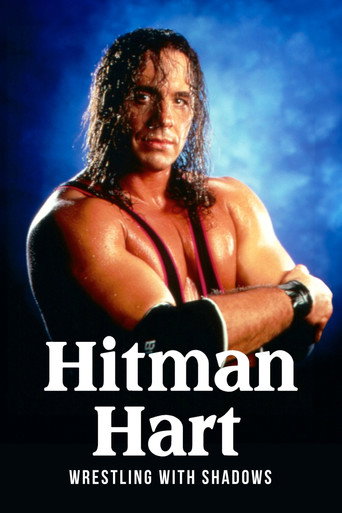
This documentary follows superstar Bret Hart during his last year in the WWF. The film documents the tensions that resulted in The Montreal Screwjob, one of the most controversial events in the history of professional wrestling, in which Vince McMahon, Shawn Micheals, and others, legitimately conspired behind the scenes to go against the script and remove Bret Hart as champion.

Director Michael Apted revisits the same group of British-born adults after a 7 year wait. The subjects are interviewed as to the changes that have occurred in their lives during the last seven years.

A filmmaker is granted unprecedented access to a political candidate and his family as he runs for President.
Go behind the scenes with stars, puppeteers and creators as they bring Jim Henson's magical world of Thra back to life in a sweeping fantasy series.

A documentary on the expletive's origin, why it offends some people so deeply, and what can be gained from its use.
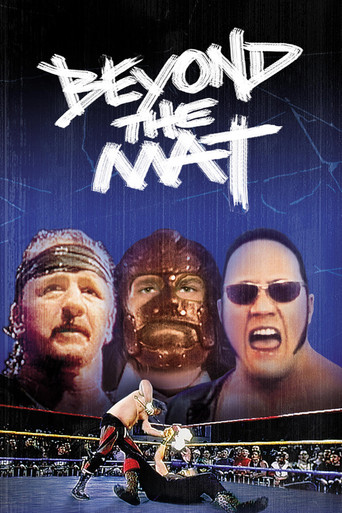
A heartfelt documentary focusing on the day-to-day lives of professional wrestlers, some on the rise, some on the wane, and others fighting for their lives.
Similar titles

Australian filmmaker Sophia Turkiewicz investigates why her Polish mother abandoned her and uncovers the truth behind her mother's wartime escape from a Siberian gulag, leaving Sophia to confront her own capacity for forgiveness.

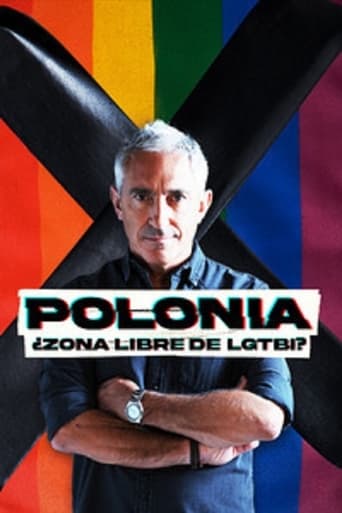
Jon Sistiaga takes an immersive trip to Poland, a country divided into two zones: on the one hand, the urban and pro-European, and on the other, the rural and ultra-Catholic, still anchored in the traumas of the war and the post-war period. Is Poland a homophobic country or does it have a homophobic government? How does the European Union allow this situation?
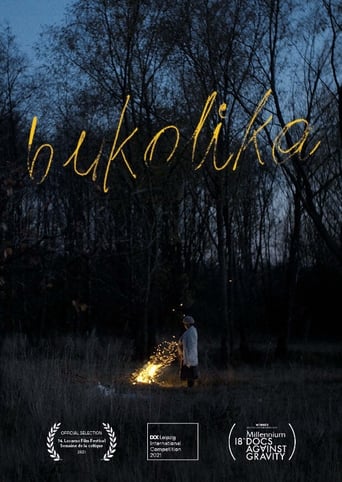
Danusia and her daughter Basia live far away from the modern world, in tune with the rhythm and laws of nature, among animals and the spirits of the dead. The peace and sense of security offered by their enclave come at a price - the women increasingly long for contact with other people. Bucolic is an affectionate observation of people who live in a different way. It evokes a curiosity about their world and a desire to take a closer look.
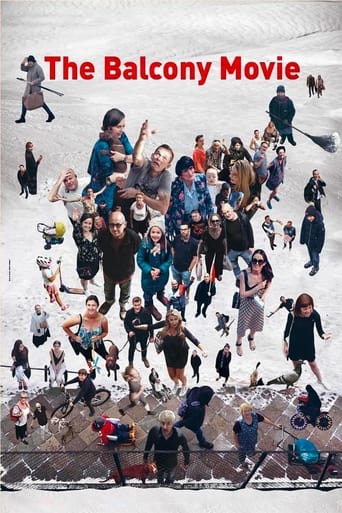
Composed from the conversations that the director holds with people passing by in the street under his Warsaw apartment, each story in 'The Balcony Movie' is unique and deals with the way we try to cope with life as individuals. All together, they create a self-portrait of contemporary human life, and the passers-by present a composite picture of today's world.
A hasidic jew goes to eastern europe to discover the jewish history of the region.
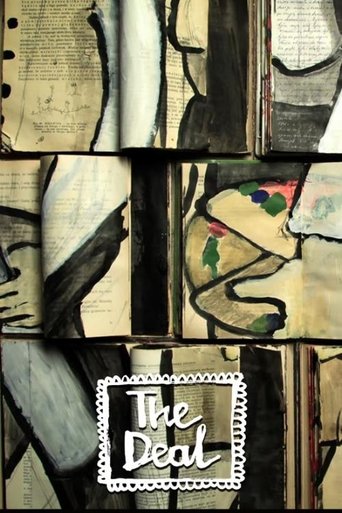
Stop-motion animation on the arranging of marriages in 1950/60s set in the Eastern-Polish borderland. The script is based on a part of Mikołaj Smyk's diary, the director's grandfather. The biographical objects used in the animation, such as an authentic headscarf, Polish and Russian books, the copy of Mikołaj Smyk's diary and photographs help situate the story in its original environment.
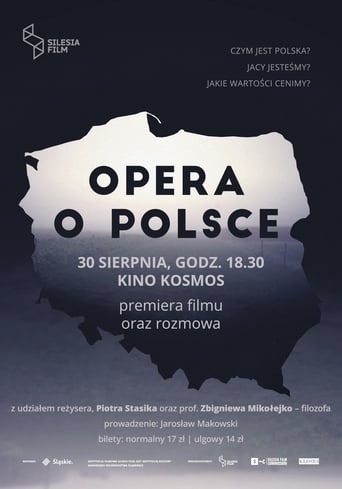
Pole, who are you? This film collage that combines archival and contemporary materials, documentary and staged pictures, press reports, social announcements, sale offers and speech excerpts is an attempt to answer this question. Referring to the Polish tradition of a creative documentary in the style of Wojciech Wiszniewski, the film presents various manifestations of Polishness: patriotic and religious rituals, everyday traditions as well as characteristic landscapes or intimate memories from childhood.
Warsaw is becoming a meeting place for people from different corners of the world, of different ages, with different life stories. What they have in common is a feeling of being lost and a dire need to run away from their solitude. The film shows an image of a contemporary city from couchsurfers’ perspective.
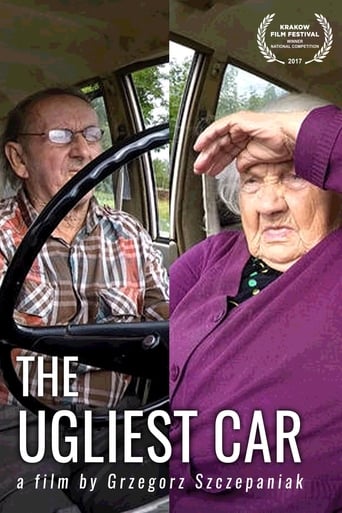
The youngest protagonist of the documentary is Wartburg, an automobile over 50 years of age. The car is still on the road, driven by Bogdan, a 70-year-old who is taking his mother to visit the German factory where she was forced to work during WWII. In this road movie which takes place between Majdanpek and Germany, the trip becomes a journey into the past, retracing memories from the war and revealing a unique relationship between an old son and his elderly mother.
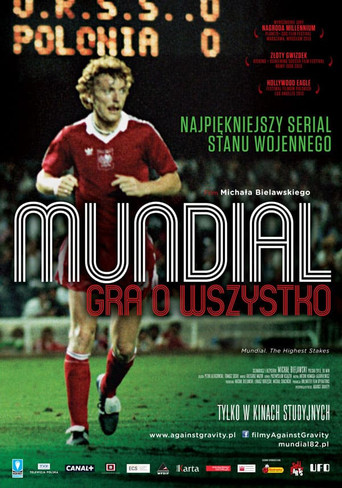
A documentary tale about sport and politics under martial law. All of Poland saw the great goals of Boniek and Smolarek during the Espana '82 championships. For a moment, it was forgotten that the background of the sporting performance was martial law, censorship, an army on the streets, prisons filled with oppositionists. The performance of the players was so successful that it was called "the most beautiful series of martial law". The game is watched by interned activists of "Solidarity", sports journalists and censors, cutting out all manifestations of the opposition from television broadcasts. We also get to know the performance in Spain from the perspective of the players, trying to meet not only their ambitions but also to bear the burden of fans' expectations and regime propaganda.
The documentary takes the viewer to the Polish countryside of the mid-1970s. Andrzej, Leszek, Eugeniusz, Ryszard and Jerzy are young men who dream of finding their other half. The film's protagonists have advertised in newspapers and talk frankly and without inhibition about their search and the dilemmas it involves. The picture is complemented by the statements of their parents, who watch their sons' efforts to start a family with love but also concern. The film also gives an insight into the problems farmers face - not only love but also hard work on the land awaits the chosen one of their hearts. "Either get married or quit this farm", "What's one to do on a farm?" - say the characters in the film. The countryside is not a place made for living alone.
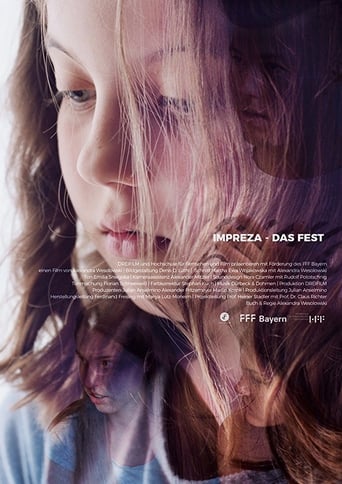
The whole family is helping with preparations for Danuta and Maciej’s golden wedding anniversary party. Danuta knows exactly what she wants and delegates her wishes to those around her. Her German niece Alexandra, the maker of this film, has travelled to Warsaw to take part. Barely has she sat down at the kitchen table when a heated discussion ensues. Be it abortion or migration, it soon dawns on Alexandra that her view of the world could not be more different from that of her right-wing conservative relatives in Poland. Alone in her ‘liberal’ view Alexandra is mocked as a victim of western propaganda… Filmmaker Alexandra Wesolowski uses a family gathering as an opportunity to portray her own family and allows us intimate insight into Polish society and the populist national-conservative Europe of today.

Marzena Sowa is a quintessential contemporary European: independent, aware of how the world works—or should work—and single. After her mother’s death, she is consumed by longing and sets off for her distant homeland, a Polish village where her beloved aunt Niuszka—an embodiment of joie de vivre and peace with herself—lived her entire life under the heavy weight of patriarchy. The film becomes a collision of social models, resolved with an open ending.

This movie is about the visit of Clive Harris, the famous healer, to Warsaw. Incredible crowds gather before the entrance and Harris "heals" thousands of people by briefly touching them. Tireless on his stand, he fulfills his duty for 24 hours a day.
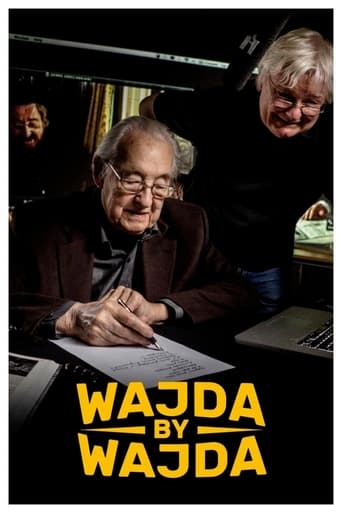
A few months before his death, Polish filmmaker Andrzej Wajda (1926-2016) revisited his work in an assembly room of the Andrzej Wajda Master School of Film Directing, established in Warsaw in 2002.
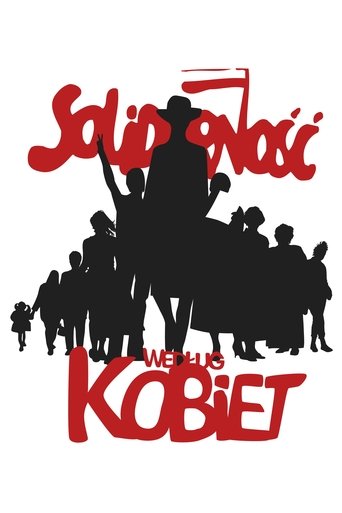
It was women who closed the gates and launched the Solidarity strike when, on a Saturday in August 1980, workers, satisfied with a raise, stopped their protest and wanted to leave the Gdansk shipyard. If it had not been for the initiative of several determined women, perhaps there would not have been any August 1980 in Polish history. Under martial law, with the men in prisons, the women took on their role. They were not interested neither in joining the union’s power structure, nor in particular posts. The most important thing was their work and its results. When communism in Poland came to an end on June 4, 1989, the vast majority of women in Solidarity disappeared from the political stage. They let themselves be forgotten when their colleagues were taking over the most important posts in power in a free Poland. This documentary by Marta Dzido and Piotr Śliwowski reminds us about these forgotten heroines, giving us a new perspective on the last 30 years of Polish history.