
Where There's a Will, There's a Way!
1931-02-05 · 96 min · Not rated
"Where There's a Will, There's a Way!" is a Dutch fiction film from 1931, directed by Willy Mullens and Herman Bouber, and produced by Haghe Film. It is an educational film about the fight against tuberculosis, centering on the Verhulst family as they make the move to a modern, airy home.
Trailers are previews, not full movies.
No authorized playback source configured. Use the legal watch options below.
Production details
- Directors
- Willy Mullens
- Production companies
- Haghe Film
- Countries
- Netherlands
- Status
- Released
Top Cast
 Aaf Bouber
 Jan Lemaire Sr.
 Herman Bouber
 Annie Verhulst
Title information and images are supplied by TMDb. Explore our discovery guide for advice on comparing metadata and legal viewing options.
Where to watch
Availability provided by JustWatch via TMDb. Offers can change. Provider links are listed on TMDb; full playback requires a separately authorized source.
Availability not listed for this country.
Seasons & episodes
Recommendations

A string of threatening emails escalates into a revenge plot involving a newly married US marshal and his ex-girlfriend.

In an intimate and joyful story of love in the face of loss, celebrated poets Andrea Gibson and Megan Falley find strength—and unexpected hilarity—in what might be their final year together.

Against the darkening backdrop of New Delhi's apocalyptic air and escalating violence, two brothers devote their lives to protecting one casualty of the turbulent times: the bird known as the black kite.

A documentary about the life and films of director John Ford.

Director Michael Apted revisits the same group of British-born adults after a 7 year wait. The subjects are interviewed as to the changes that have occurred in their lives during the last seven years.

An inside look at one of the most anticipated movie sequels ever with James Cameron and cast.

Documentary filmmaker Amy Berg investigates the life of 30-year pedophile Father Oliver O'Grady and exposes the corruption inside the Catholic Church that allowed him to abuse countless children. Victims' stories and a disturbing interview with O'Grady offer a view into the troubled mind of the spiritual leader who moved from parish to parish gaining trust ... all the while betraying so many.

This revealing documentary honors the legendary Sidney Poitier—iconic actor, filmmaker, and civil rights activist. Featuring interviews with Denzel Washington, Spike Lee, Halle Berry, and more.

Through deeply personal interviews with her siblings and an examination of the photographs, letters, and belongings left behind, Mariska assembles a new portrait of her mother Jayne Mansfield, an extraordinary and complex woman.

In the Realms of the Unreal is a documentary about the reclusive Chicago-based artist Henry Darger. Henry Darger was so reclusive that when he died his neighbors were surprised to find a 15,145-page manuscript along with hundreds of paintings depicting The Story of the Vivian Girls, in What is Known as the Realms of the Unreal, of the Glodeco-Angelinnian War Storm, Cased by the Child Slave Rebellion.

Musician and performance artist Laurie Anderson reflects on the deaths of her husband Lou Reed, her mother and her beloved dog.
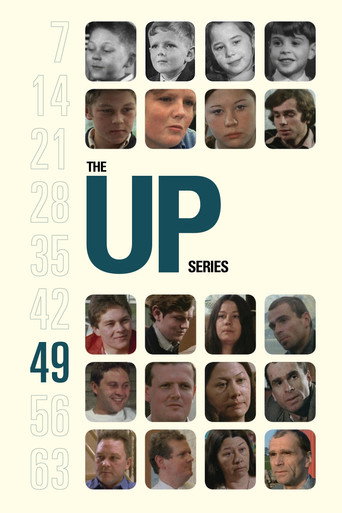
49 Up is the seventh film in a series of landmark documentaries that began 42 years ago when UK-based Granada's World in Action team, inspired by the Jesuit maxim "Give me the child until he is seven and I will give you the man," interviewed a diverse group of seven-year-old children from all over England, asking them about their lives and their dreams for the future. Michael Apted, a researcher for the original film, has returned to interview the "children" every seven years since, at ages 14, 21, 28, 35, 42 and now again at age 49.In this latest chapter, more life-changing decisions are revealed, more shocking announcements made and more of the original group take part than ever before, speaking out on a variety of subjects including love, marriage, career, class and prejudice.
A father-to-be tries to figure out what is happening with all this AI insanity, and explores the most powerful technology humanity has ever created... and what's at stake if we get it wrong.

Director Michael Apted revisits the same group of British-born adults after a 7 year wait. The subjects are interviewed as to the changes that have occurred in their lives during the last seven years.

The incomparable Bruce Springsteen performs his critically acclaimed latest album and muses on life, rock, and the American dream, in this intimate and personal concert film co-directed by Thom Zimny and Springsteen himself.

A detailing of the rise to prominence and global sporting superstardom of six supremely talented young Manchester United football players (David Beckham, Nicky Butt, Ryan Giggs, Paul Scholes, Phil and Gary Neville). The film covers the period 1992-1999, culminating in Manchester United's European Cup triumph.

A documentary chronicling Queen and Lambert's incredible journey since they first shared the stage together on "American Idol" in 2009.
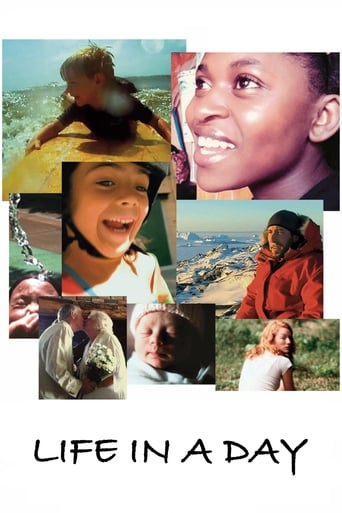
A documentary shot by filmmakers all over the world that serves as a time capsule to show future generations what it was like to be alive on the 24th of July, 2010.

Al Pacino's deeply-felt rumination on Shakespeare's significance and relevance to the modern world through interviews and an in-depth analysis of "Richard III."

A documentary about ten very different lives connected by having appeared onscreen wearing masks or helmets in Star Wars.
Similar titles

From 1910-1972, Arkansas State law mandated that all victims of Tuberculosis (TB) be isolated in the State Sanatorium in Booneville, Arkansas. Some of them returned home free of their symptoms from Sanatorium Hill. Others died there, either of the disease or of the gruesome operations prescribed by the doctors. This documentary tells the story of patients who survived these morbid treatments, recovered from the disease of TB but unable to forget the pain, suffering and despair.
Story of the early life of genius and Nobel Prize-winning physicist Richard Feynman.


Summer 1890. In order to make some money to feed his family, Anton Chekhov, modest physician, wrote short stories for newspapers to sign Antosha Tchékhonté. Important characters, writer and editor, just make him aware of his talent. His situation is improving and Anton Chekhov gets the Pushkin prices and admiration of Tolstoy. But when one of his brothers died of tuberculosis, Anton saw it as a personal failure and wants to escape his fame and his love.
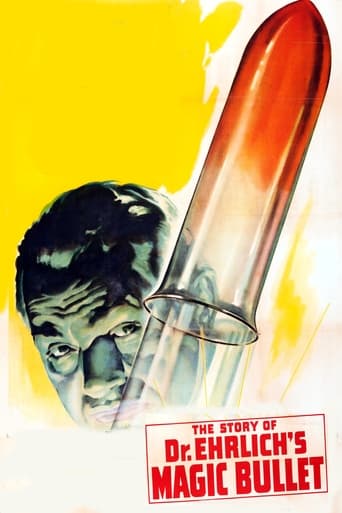
German scientist Paul Ehrlich makes remarkable advancements in the field of medical diagnostics with his research in cellular staining with dyes. His work results in new knowledge about tuberculosis, but also leads to his contraction of the disease. Ehrlich travels to Egypt, where he investigates diphtheria and earns more accolades. Eventually, his research in treating diseases leads to the development of a 'magic bullet' treatment for syphilis.

The movie is based on Iwaszkiewicz's autobiographic story and focuses on main character's (Janek's) close relationship with a woman named Ola and a man named Arek. It takes place in a small village called Marona which is situated by the beautiful lake.

In a small presbytery in Yorkshire, England, living under the watchful eyes of their aunt and father, a strict Anglican pastor, the Bronte sisters write their first works and quickly become literary sensations.

Forced to support herself, her children, her physically incapacitated husband and her obtrusive brother and mother, a downtrodden working woman contracts tuberculosis. She is granted a brief vacation at a health spa, where a whole new world — and potential new life — is opened up to her.
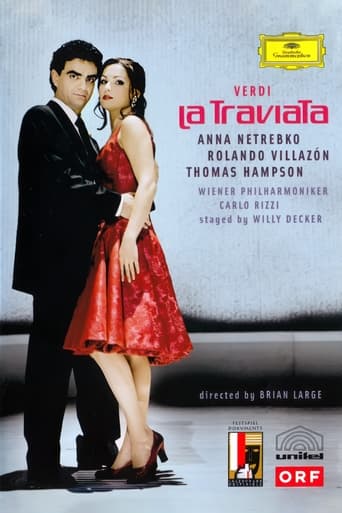
Violetta, a courtesan much wooed by Parisian society, organizes a grand party that is attended, amongst others, by the young Alfredo Germont. He confesses his feelings to Violetta, who is already suffering from consumption. She vacillates between genuine affection and a realistic assessment of her situation as a "fallen woman", which precludes any lasting relationship with a man. The Willy Decker production of La Traviata, recorded live at the Salzburger Festspiele in August, 2005. Anna Netrebko stars as Violetta Valéry, with Rolando Villazón as Alfredo Germont and Thomas Hampson as Giorgio Germont. Carlo Rizzi conducts the Wiener Philharmoniker.
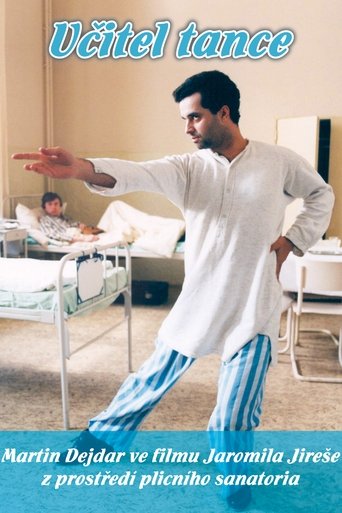
A special story about love, dance, and immortality takes place in the late 1940s. A young man, dance master Mayer, arrives at a pulmonary sanatorium. His diagnosis is serious—tuberculosis. However, he does not give in to his illness and begins to actively fight it with dance and optimism. Gradually, he wins over other patients who had previously resigned themselves to their fate. Soon, however, his illness breaks out in full force and insidiousness. Facing death, he embodies human courage and a positive attitude towards life.

A dramatic comparison between the mating habits of animals and the way humans choose their own partners. The film is now considered to be a lost film.
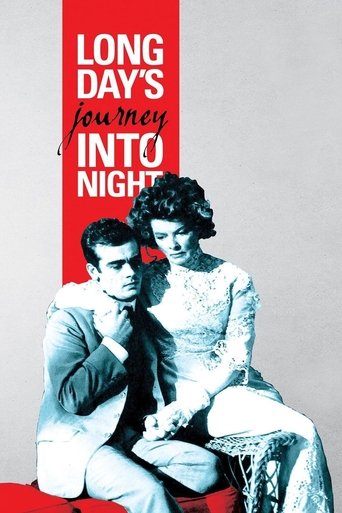
An Irish miser, his morphine addicted wife, their debauched older son, and a gravely ill younger son. A quiet Connecticut vacation home on one foggy day in August 1912 becomes the backdrop for domestic decline.
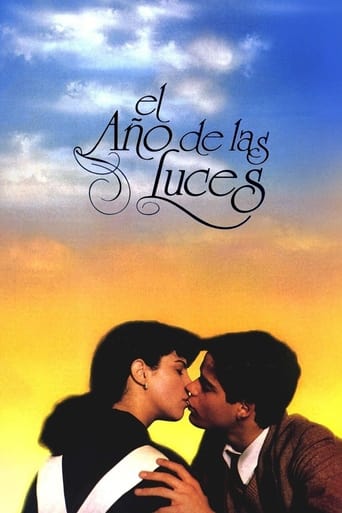
April, 1940. Manolo, 16 years old, and Jesus, who is just 8, are taken by their older brother Pepe, a lieutenant in the Army, to a sanatorium for children suffering from tuberculosis, situated on the border with Portugal. Once in the sanatorium, Manolo, surrounded by boys all much younger than he is, feels a bit like the cock of the walk since the only other man around is the handyman Emilio who looks after the gardens and does whatever needs to be done about the place. His wife, Rafaela, is the cook. Manolo meets Irene, a falangist who runs the sanatorium, and the school teacher, Miss Transito, a crabby spinster. He has his first sexual experience, albeit as a voyeur, with his nurse Vicenta. When she has to leave, her place is taken by a girl from the village, Maria Jesus, with whom Manolo falls hopelessly in love. A relationship grows up between them which will mark them both for ever.

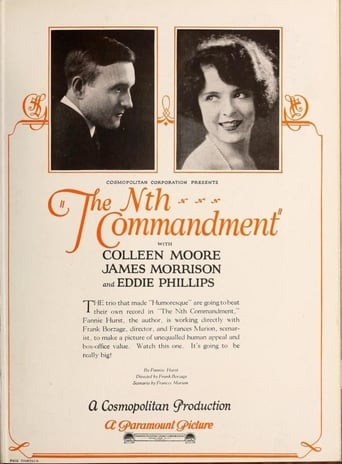
A department store clerk decides to marry a withdrawing colleague with tuberculosis, over another dashing, ambitious suitor, leads to a life of hardship and struggle. Though The Nth Commandment survives incomplete, enough exists of director Frank Borzage’s last film while under contract with William Randolph Hearst’s Cosmopolitan Pictures for scholar Hervé Dumont to declare “it the first truly Borzagian work.”

Based upon the life of activist and trade unionist (and later MP) Sonja Davies. The film covers her life up to 1956, when, at age 33, she was elected to the Nelson Hospital Board. During this period she develops strong socialist beliefs, marries and divorces, at age 17 trains as a nurse, has a romance (and a child) with an American marine who is killed in WWII action. She battles tuberculosis and marries a former boyfriend when he returns from the war. She becomes part of a women's ill-fated campaign to save the Nelson railway line from closure and begins to be elected to political bodies.