
Robespierre
2016-01-06 · 86 min · Not rated
A still drawing film on the personality of Robespierre and the French Revolution.
Trailers are previews, not full movies.
No authorized playback source configured. Use the legal watch options below.
Production details
- Directors
- Anthony Pascal
- Production companies
- Unavailable
- Countries
- France
- Status
- Released
Top Cast
Title information and images are supplied by TMDb. Explore our discovery guide for advice on comparing metadata and legal viewing options.
Where to watch
Availability provided by JustWatch via TMDb. Offers can change. Provider links are listed on TMDb; full playback requires a separately authorized source.
Availability not listed for this country.
Seasons & episodes
Recommendations
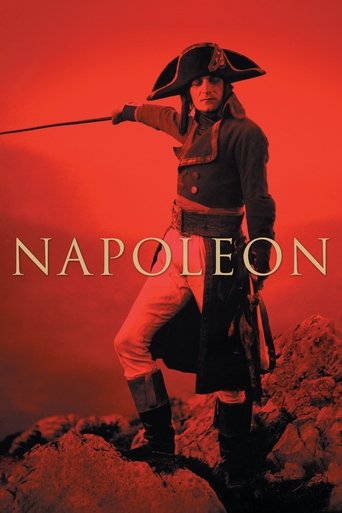
A biopic of former Emperor of France, Napoleon Bonaparte, tracing the Corsican's career from his schooldays (where a snowball fight is staged like a military campaign) to his flight from Corsica, through the French Revolution (where a real storm is intercut with a political storm) and the Terror, culminating in his triumphant 1797 invasion of Italy.
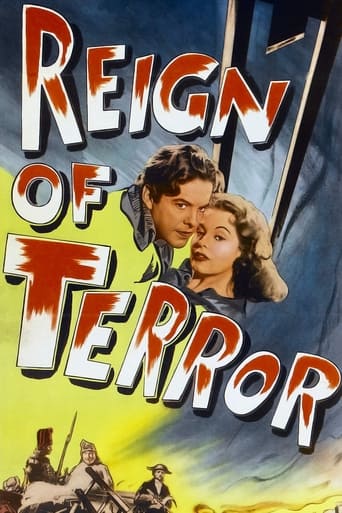
The French Revolution, 1794. The Marquis de Lafayette asks Charles D'Aubigny to infiltrate the Jacobin Party to overthrow Maximilian Robespierre, who, after gaining supreme power and establishing a reign of terror ruled by death, now intends to become the dictator of France.
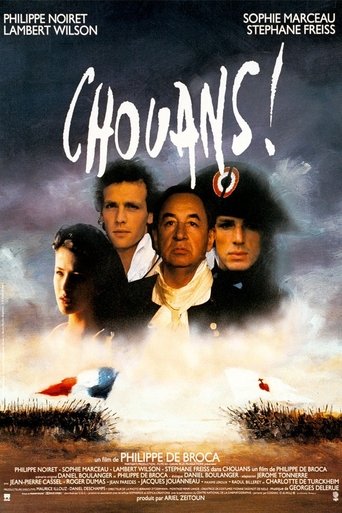
Directed by Philippe de Broca, the film recounts a bloody episode of the French Revolution. 1793, the Terror . In Vendée and in Bretagne, the chouans are revolting against the young Republic and fight for the monarchy restauration. The civil war divides also the family of the Count Savinien de Kerfadec, a liberal and generous noble and a flying machines inventor.
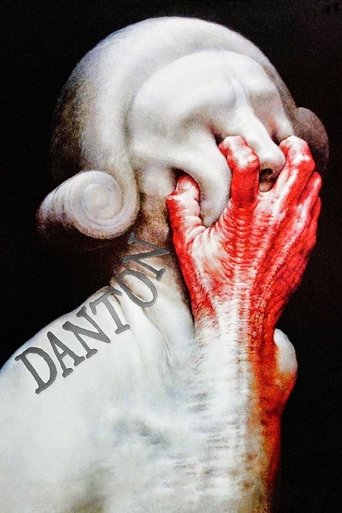
Danton and Robespierre were close friends and fought together in the French Revolution, but by 1793 Robespierre was France's ruler, determined to wipe out opposition with a series of mass executions that became known as the Reign of Terror. Danton, well known as a spokesman of the people, had been living in relative solitude in the French countryside, but he returned to Paris to challenge Robespierre's violent rule and call for the people to demand their rights. Robespierre, however, could not accept such a challenge, even from a friend and colleague, and he blocked out a plan for the capture and execution of Danton and his allies.
In 1973, a young gallery assistant goes on a wild adventure behind the scenes as he helps aging genius Salvador Dali prepare for a big show in New York.
A history of the French Revolution beginning from the decision of the king to convene the Etats-Generaux in 1789 in order to deal with France's debt problem. Part one spans the event until August 10, 1792 (when the King Louis XVI lost all authority and was imprisoned). Part two carries the story through the end of the terror in 1794.
September 1940. Henri Marre arrives alone in Vichy as the authoritarian regime settles in. Broke, estranged from his family, and carrying copies of his self-published manifesto Notre Salut (Our Salvation), the 49-year-old is determined to secure what he believes is his rightful place in the new administration. In his writing, Henri sets out his patriotic convictions and his engineer’s methodology: efficiency above all. Claiming he wants to help save France after defeat, he does whatever is required to remain useful, serving the machinery of the new order with increasing skill. But he may be pursuing something more urgent: escape from his own ruin
In 19th century France, Jean Valjean, a man imprisoned for stealing bread, must flee a relentless policeman named Javert. The pursuit consumes both men's lives, and soon Valjean finds himself in the midst of the student revolutions in France.

Paris, 1964. The Swiss sculptor and painter Alberto Giacometti, one of the most accomplished and respected artists of his generation, asks his friend, the American writer James Lord, to sit for a portrait, assuring him that it will take no longer than two or three hours, an afternoon at the most.
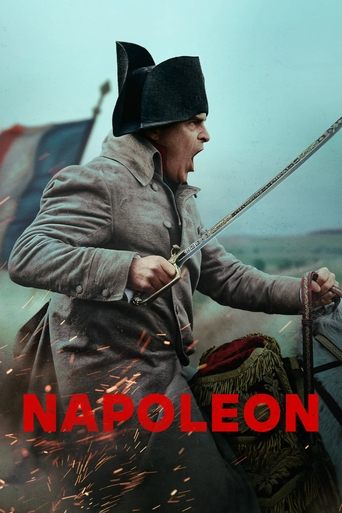
An epic that details the checkered rise and fall of French Emperor Napoleon Bonaparte and his relentless journey to power through the prism of his addictive, volatile relationship with his wife, Josephine.
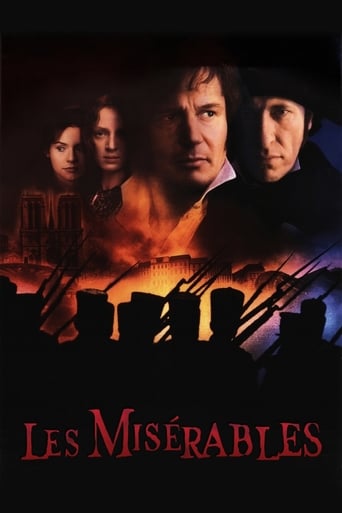
In 19th century France, Jean Valjean, a man imprisoned for stealing bread, must flee a relentless policeman named Javert. The pursuit consumes both men's lives, and soon Valjean finds himself in the midst of the student revolutions in France.
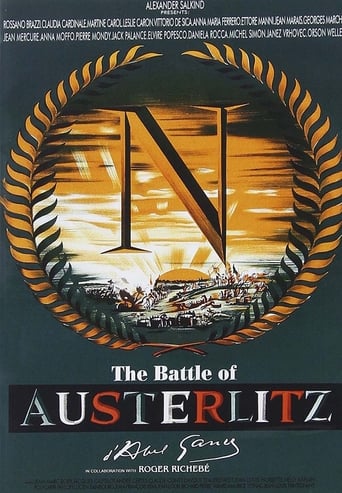
A return to the life of the Little Corporal with a dramatisation of the decisive 1805 conflict between French forces and the armies of Austria and Russia. An epic reconstruction of the battle of Austerlitz, where Bonaparte had the greatest victory of his career.
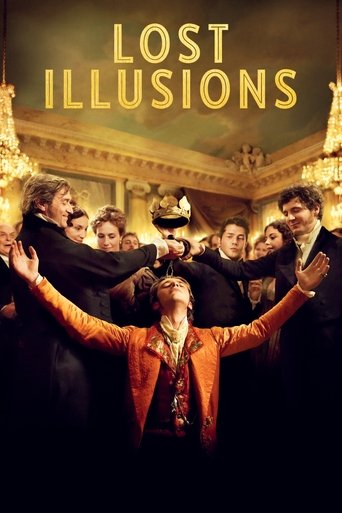
Lucien de Rubempré, a young, lower-class poet, leaves his family's printing house for Paris. Soon, he learns the dark side of the arts business as he tries to stay true to his dreams.
After enduring 19 years in prison for stealing a loaf of bread, Jean Valjean emerges a hardened man. He seeks redemption by reinventing himself as a respected dignitary under a new identity. He promises Fantine, a dying factory worker, to rescue and protect her daughter Cosette, who is being exploited and mistreated by the deceitful Thénardier family. As Valjean raises Cosette as his own, he is relentlessly pursued by Inspector Javert. Admist the social unrest shaking France, the fates of Valjean, Cosette, her lover Marius, and Javert become intertwined in a turbulent, revolutionary Paris. Through struggles, sacrifices, and a deep yearning for justice, Valjean strives to complete his journey of redemption and offer Cosette a future of love and freedom.

France, 1789 - just before the Revolution. When talented chef Manceron is dismissed from his prestigious position by the Duke of Chamfort, he loses the taste for cooking. But when he meets the mysterious Louise, together they decide to create the very first restaurant in France.
In 19th century France, Jean Valjean, a man imprisoned for stealing bread, must flee a relentless policeman named Javert. The pursuit consumes both men's lives, and soon Valjean finds himself in the midst of the student revolutions in France.
June, 1940. France collapses and signs the armistice. In the midst of the chaos, one man refuses to give up. Alone against the odds, this unknown general flees to London to save what remains of freedom.
In Marseilles, France in 1794, Desiree Clary, a young millinery clerk, becomes infatuated with Napoleon Bonaparte, but winds up wedding General Jean-Baptiste Berandotte, an aid to Napoleon who later joins the forces that bring about the Emperor's downfall. Josephine Beauharnais, a worldly courtesan marries Napoleon and becomes Empress of France, but is then cast aside by her spouse when she proves unable to produce an heir to the throne.
Seven years after his triumph in Cuba, Che winds up in Bolivia, where he tries to ignite the same revolutionary fires as before.
Eccentric British painter J.M.W. Turner lives his last 25 years with gusto and secretly becomes involved with a seaside landlady, while his faithful housekeeper bears an unrequited love for him.
Similar titles
In 1609, Henry IV sent Inquisition judge Pierre de Lancre to the French Basque Country to investigate witchcraft. In the trials, 80 people were sentenced to death at the stake. Between the 15th and 17th centuries, a total of between 40,000 and 60,000 people fell victim to such waves of persecution in Europe. How can this phenomenon be explained?


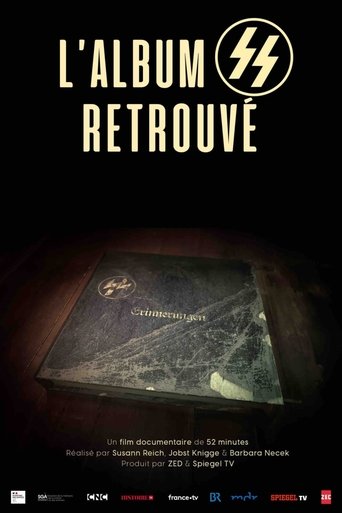
In 2016, an album containing 250 previously unseen photos of Nazi officials was discovered in the USA by Stephan Hördler, a prominent Holocaust historian, who immediately understood the album's inestimable value. The album brings together photographs of a "group of friends," all from the same region of Germany, all of whom became SS men. From 1928 to 1943, the photo album allows us to follow their journey. Hördler conducted the investigation, comparing the photos in the album with other, better-known ones, the faces of these men with those of concentration camp officials, and ultimately revealed that it was at Lichtencburg that these young men were trained, a "school" for future camp executioners, and the bonds of camaraderie and informal network that would allow them to help each other, even after the war.
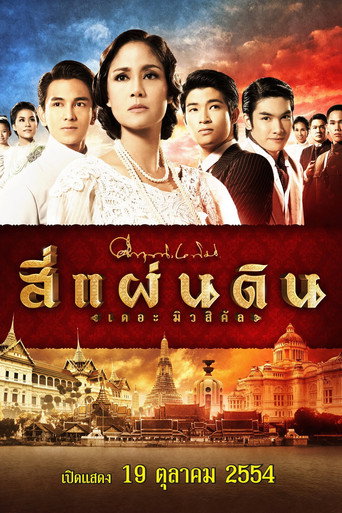
This theatrical production tells the story of a family living through the reigns of four kings, starting from the end of King Chulalongkorn's reign in 1910 to the death of King Ananda Mahidol in 1946. The main character, "Ploy," is a woman from an old noble family who lived within the palace walls and was close to the royal court. After the Siamese revolution of 1932, she marries "Prem" and leaves the palace. Ploy's traditional values are challenged, leading to political conflicts among her three sons. The government later enacts laws to westernize lifestyles. During the war, their home is bombed, forcing them to move back to their ancestral home. Ploy falls gravely ill upon learning of her son's death and eventually passes away with the end of King Rama VIII's reign. This novel is considered influential in creating a positive image of the monarchy.

Ludwig van Beethoven, absorbed in his world, composes in the forest under the snowstorm. In the solitude of this place, his temple, he feels happy, full, fertile. Johanna, his sister-in-law, widow of his brother Caspar, approaches him by surprise and chases him through the trees, trying to reach an agreement with him about the guardianship of his son Karl. In his will, Caspar left his brother Ludwig as the sole guardian of his son Karl. But Ludwig was away for a few hours on Caspar's last night and when he returned in the morning the will had changed... Between them there is more than a hard fight for the child. They are two untamed, wild, asocial beings, fighting for their freedom.
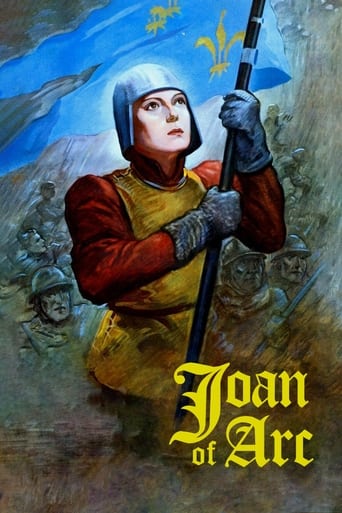
France in the 15th Century: The country is marked by the wars with England and internal power struggles. King Charles sees himself powerless against the state. As emerges from the people suddenly a young woman named Johanna, who claimed that the Archangel Gabriel to be appointed, to save France. First of all doubt the king in their words, but he remembers that the people through this "help of God" is gaining new courage. With the slogan "God and the Virgin!" pulls the revivified victorious army into battle against the English-Burgundian alliance. After Johanna King Charles is crowned at Reims, there breaks the plague over the country in. Now Johanna all the blame on the disaster: God would punish believe in the country for that a heretic; if Johanna were actual a holy, she would deal also with the plague. The waning faith weakens France, England is again on the rise. But Johanna is executed as a witch. Only years later annulled the verdict of the Holy and Johanna explained.


Charles Louis Schulmeister (1770-1853) was a smuggler and a revolutionary, but also a chief of police and Napoleon Bonaparte's favorite spy. A look back on his adventurous life with the purpose of unraveling the many mysteries of his unique path.
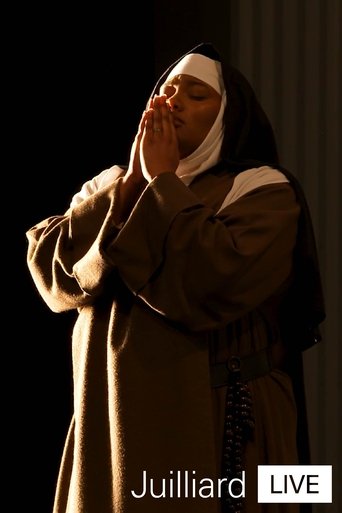
“In a world that often demands certainty, Dialogues des Carmélites invites us to sit with profound questions that have no easy answers: What makes a life worthy? How can we be truly prepared for our inevitable end? What does security mean when everything familiar is threatened? What sustains us when our institutions crumble? … Rather than imposing answers, the opera creates room for reflection on how faith manifests not as abstract doctrine, but as lived experience under extraordinary pressure.” — Louisa Muller, Director’s Note. Juilliard Opera directed by Louisa Muller. Matthew Aucoin conducts the Juilliard Orchestra. Performed and recorded on April 26, 2025 at the Peter Jay Sharp Theater. Dialogues des Carmélites, an opera by Francis Poulenc. Libretto adapted by the composer.
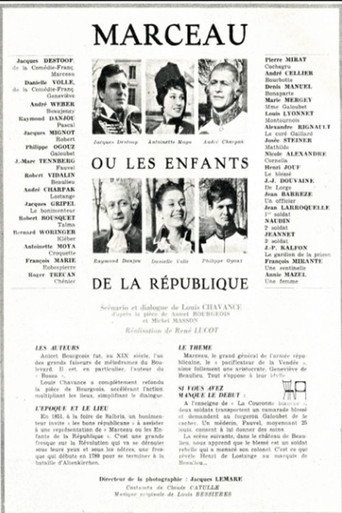
Set during the bloody and turbulent years of the French Revolution, it follows the life and exploits of François-Séverin Marceau, an idealistic and courageous young man who would become one of the most famous generals of the First Republic.
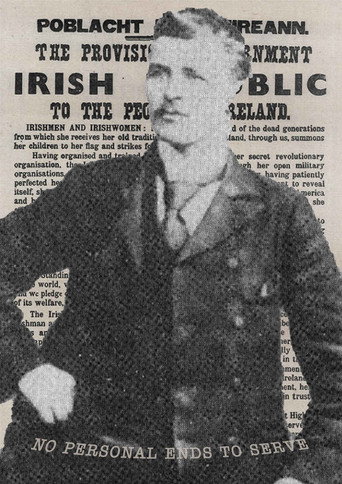
Commandant Patrick Hughes was one of the officers in command in the Louth and Meath area during the 1916 rising. He and his other commanders lead about 100 men from Dundalk to Dublin during Easter week. We will see what led Patrick to this, what happened during and the consequences of these actions.

Lieutenant Keiu Matsuo lost his life in a midget submarine attack at Sydney Harbor during the night of May 31 and June 1, 1942. This short animation film pays homage to Keiu Matsuo and his mother Matsue.

A historical television film directed by Jean‑Dominique de La Rochefoucauld, Richelieu, or The Day of the Dupes recounts the political tensions that came to a head in November 1630, when Marie de’ Medici attempted to remove Cardinal Richelieu from power. Blending court intrigue, the king’s illness, and decisive reversals, the film portrays the struggle for influence that ultimately cemented Louis XIII’s trust in his minister. Led by Didier Sandre, Patrick Raynal, and Dominique Blanchar, the telefilm offers a meticulous reconstruction of the events that shaped the kingdom’s balance of power.

A sound is heard from the depth of the soil as the archeological exploration of the Shahre Sukhte goes on. While following the archeologists to document the explorations, the film in parallel seeks out the sound coming from the depths of the soil and steps deep in history to accompany the ancient citizens of the city. The film depicts the wonderful city of “Shahre Sukhte” (The Burnt City) in Zabol in Iran, which was home to one of the highest civilizations at the dawn of history lasting for over 1400 years. In this city was no central government or leadership in Shahr-e-Sukhte. The government was administered by a group that was matriarchal, meaning that power was in the hands of women. It may be for this reason that we witness no trace of violence and war in this city. Something that the world today desperately needs.
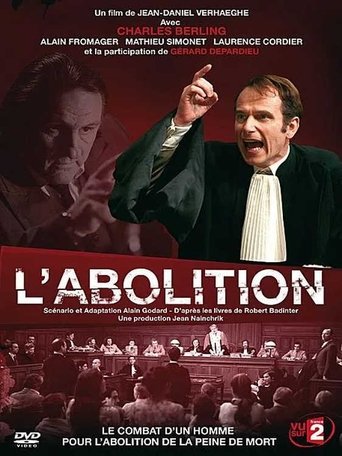
The story of Robert Badinter who was the major architect of the abolition of the death penalty in France .
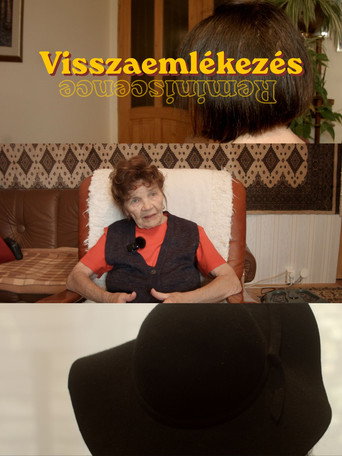
Three generations of Hungarian women talk about their lives.