Salvar Tenerife
2021-01-13 · 44 min · Not rated
Salvar Tenerife shows, like never before, the overexploitation to which the island of Tenerife is submitted. It receives more than 6 million tourists a year and has a population of 930000 inhabitants. These figures are born from the terrible way in which the island has been managed during the last decades and currently. An infinite and untenable growth which is threatening more than ever the natural spaces and biodiversity from Tenerife, more and more deteriorated each day. This documentary seeks to boost a change towards real sustainable development, so we can have a future in which we live alongside nature and we can keep enjoying Tenerife (and the rest of the Canary Islands) in their wild and natural state.
Trailers are previews, not full movies.
No authorized playback source configured. Use the legal watch options below.
Production details
- Directors
- Felipe Ravina
- Production companies
- Especies de Canarias
- Countries
- Unavailable
- Status
- Released
Top Cast
Cast unavailable.
Title information and images are supplied by TMDb. Explore our discovery guide for advice on comparing metadata and legal viewing options.
Where to watch
Availability provided by JustWatch via TMDb. Offers can change. Provider links are listed on TMDb; full playback requires a separately authorized source.
Availability not listed for this country.
Seasons & episodes
Recommendations
David Attenborough and scientist Johan Rockström examine Earth's biodiversity collapse and how this crisis can still be averted.

A documentary about ten very different lives connected by having appeared onscreen wearing masks or helmets in Star Wars.

Performance artist Marina Abramovic prepares for a major retrospective of her work at the Museum of Modern Art in New York.

A visual montage portrait of our contemporary world dominated by globalized technology and violence.

A documentary on why 'Money Heist' sparked a wave of enthusiasm around the world for a lovable group of thieves and their professor.
Coral reefs are the nursery for all life in the oceans, a remarkable ecosystem that sustains us. Yet with carbon emissions warming the seas, a phenomenon called "coral bleaching" -- a sign of mass coral death -- has been accelerating around the world, and the public has no idea of the scale or implication of the catastrophe silently raging underwater.

After another 7 year wait, director Michael Apted revisits the same group of British-born children from Seven Up! and 7 Plus Seven. The subjects are interviewed as to the changes that have occurred in their lives during the last seven years.

The Captains is a feature-length documentary film written and directed by William Shatner. The film follows Shatner as he interviews the other actors who have portrayed starship captains in the Star Trek franchise.

A documentary on the expletive's origin, why it offends some people so deeply, and what can be gained from its use.
Driven by passion fed from a life-long fascination with sharks, Rob Stewart debunks historical stereotypes and media depictions of sharks as bloodthirsty, man-eating monsters and reveals the reality of sharks as pillars in the evolution of the seas.

Al Pacino's deeply-felt rumination on Shakespeare's significance and relevance to the modern world through interviews and an in-depth analysis of "Richard III."

A purely observational non-fiction film that takes viewers into the ethically murky world of end-of-life decision making in a public hospital.
A documentary focused on plastic pollution in the world's oceans.

A feature length, theatrical documentary on the life of Paul Gascoigne, one of the greatest footballers that ever lived: delving deep into his psyche, vulnerabilities, fears and triumphs.

A documentary about how a dominant cultural and demographic institution both sustains their traditional activities and adapts to the digital revolution.

Director Michael Apted revisits the same group of British-born adults after a 7 year wait. The subjects are interviewed as to the changes that have occurred in their lives during the last seven years.
Deep Blue is a major documentary feature film shot by the BBC Natural History Unit. An epic cinematic rollercoaster ride for all ages, Deep Blue uses amazing footage to tell us the story of our oceans and the life they support.

A portrait of the day-to-day operations of the National Gallery of London, that reveals the role of the employees and the experiences of the Gallery's visitors. The film portrays the role of the curators and conservators; the education, scientific, and conservation departments; and the audience of all kinds of people who come to experience it.

A string of threatening emails escalates into a revenge plot involving a newly married US marshal and his ex-girlfriend.

An inside look at one of the most anticipated movie sequels ever with James Cameron and cast.
Similar titles
Author Helen Macdonald follows Britain’s greatest river over four seasons, encountering salmon, beavers and the microscopic creatures helping to answer science's biggest questions.

The American Southwest is a feature length blue chip natural history film narrated by indigenous environmentalist Quannah Chasinghorse. The movie journeys down the mighty Colorado River, examining the astonishing beauty and biodiversity of the region, while confronting the environmental destruction from dams and the perilous fate of the river. The story is told through never-before-seen wildlife sequences such as beavers building wetlands, condors recovering from the brink, and the potential return of Jaguars to American soil. The film beautifully advocates for better management of the river and increased wildlife conservation efforts in the iconic landscapes of The American Southwest.

What happens when a world that relies on traffic and the logistics that allow it comes to a standstill? What happens when sickness and even death are taken from us?

March 27, 1977. At 2:00 in the afternoon, a thick fog rolled into the usually quiet Los Rodeos Airport in Tenerife, in the Canary Islands. On the runway sat two fully loaded jumbo airliners. An explosion at a nearby airport had redirected air traffic to the undermanned airfield at Tenerife. Within three hours 583 people would be dead. This film reconstructs the moments leading up to the tragedy.
High up on the Tibetan plateau. Amongst unexplored and inaccessible valleys lies one of the last sanctuaries of the wild world, where rare and undiscovered fauna lives. Vincent Munier, one of the world’s most renowned wildlife photographers takes the adventurer and novelist Sylvain Tesson (In the Forest of Siberia) with him on his latest mission. For several weeks, they’ll explore these valleys searching for unique animals and try to spot the snow leopard, one of the rarest and most difficult big cats to approach.
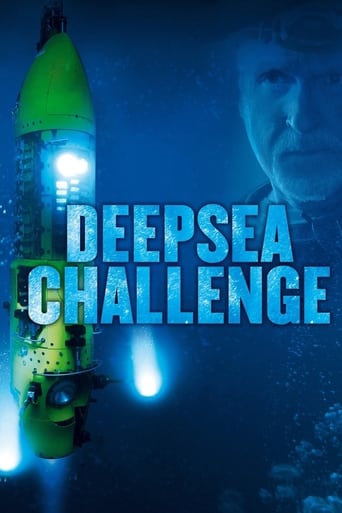
Described as being a film about determination, danger and the ocean’s greatest depths, James Cameron's "Deepsea Challenge 3D" tells the story of Cameron’s journey to fulfill his boyhood dream of becoming an explorer. The movie offers a unique insight into Cameron's world as he makes that dream reality – and makes history – by becoming the first person to travel solo to the deepest point on the planet.

Every year, on the steppes of the Serengeti, the most spectacular migration of animals on our planet: Around two million wildebeest, Burchell's zebra and Thomson's gazelles begin their tour of nearly 2,000 miles across the almost treeless savannah. For the first time, a documentary captures stunning footage in the midst of this demanding journey. The documentary starts at the beginning of the year, when more than two million animals gather in the shadow of the volcanoes on the southern edge of the Serengeti in order to birth their offspring. In just two weeks, the animal herd's population has increased by one third, and after only two days, the calves can already run as fast as the adults The young wildebeest in this phase of their life are the most vulnerable to attacks by lions, cheetahs, leopards or hyenas. The film then follows the survivors of these attacks through the next three months on their incredible journey, a trip so long that 200,000 wildebeest will not reach the end.
India - unique in its diversity and breathtakingly beautiful. The subcontinent is characterized by scenic, cultural and ethnic diversity. After China, India is the second most populous country in the world. Despite growing space needs, there are efforts to preserve the wilderness through nature reserves and protected areas. So India still provides habitat for rare species such as the Bengal tiger or the Indian elephant. The 5-part series "India's wild beauty" leads to the most spectacular and beautiful regions and their inhabitants. The complete series in five parts: 1 The Thar Desert 2 In the jungle, the Ghats 3 Life on the holy river 4 The Himalayas 5 In the land of Naga

Our National Parks takes you on a journey through the four seasons and the many faces of our scenic national parks. Experience an array of lands and waters from Alaska's glacier-clad Denali to the turquoise coves and coral reefs of the Virgin Islands; from the fire of Hawaii Volcanoes to the coolness of Kentucky's Mammoth Cave; from the moonscapes of South Dakota's Badlands to the granite shores of Maine's Acadia. With award-winning filmmaker Wolfgang Bayer you get an in-depth tour of nine of the most popular national parks plus a seasonal overview of many more.
The Arctic is accessible to man only because of ice dogs. As hunters, haulers, and guardians, they have been our vital link to nature for thousands of years. Dogs led the Sarqaq people out of Siberia and, a millennium later, led explorers to the North Pole. As the light returns to Greenland, we arrive in Scoresbysund with a troop of the only companions worth having in this harsh environment.
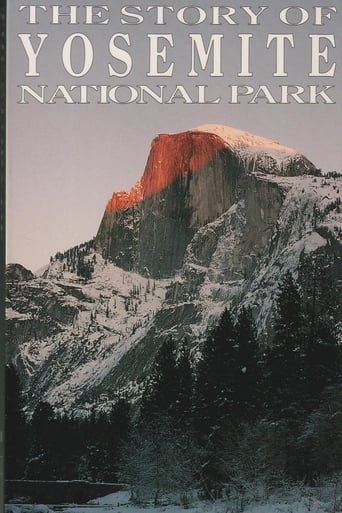
Mountain men Joseph R Walker was probably the first non-Indian to see Yosemite, in 1833, but not until the California militia entered the valley rounding up the Ahwahneechee Indians was the region discovered. In June, 1864, President Abraham Lincoln signed the Yosemite Grant, making it a California State Park. It became famous through the writings of Horace Greeley and the efforts of John Muir. Cinematographer Dennis Burkhart captures in this video the magnificence of Yosemite Valley (El Capitan, Bridalveil Fall, Half Dome), the High Sierra (John Muir Trail, Tuolumne Meadows, Tioga Pass) and the Mariposa Grove of giant sequoias. The camera catches the wildlife that roams the 1,1170 square miles of Yosemite, i.e. the mule deer, mountain lion, black bear, coyotes, bighorn sheep, and the rare peregrine falcon. This video reveals why 3.8 million visitors come each year and stand before awe-inspiring panoramas they will never forget.
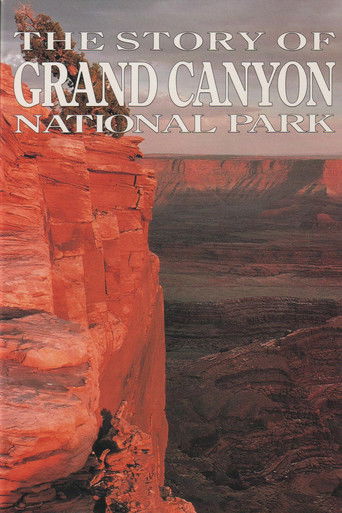
Two thousand square miles, a mile deep, approximately 10 miles wide- no geological feature on earth evokes a wider spectrum of human emotions than does the Grand Canyon of Arizona. It is impossible not to be profoundly moved when confronting such immensity. But it is more than a chasm, it is alive with mule deer, mountain lions, coyotes, bighorn sheep, wild turkeys, blue grouse, blue heron, desert tortoises, and the rare kaibab squirrel, found only in the Grand Canyon. Long before the Spanish arrived, the Anasazi (Ancient Ones) lived here. Included is an exclusive segment, never before filmed, of Shaman's Gallery, a significant Anasazi find of rock paintings in the Grand Canyon area, dating between 2000 B.C., and A.D 1. Established in 1908, Theodore Roosevelt proclaimed the Grand Canyon a parkland and said "do nothing to mar its grandeur, keep it for your children, your children's children, and all who will come after you."

Steve Backshall visits a hedgehog rescue centre in Surrey founded by Brian May. He meets the dedicated staff and discovering the stories behind some of the animals being treated, helps to release a successfully treated hedgehog back into the wild, and offers advice on how to make a garden into a welcoming environment for the creatures.
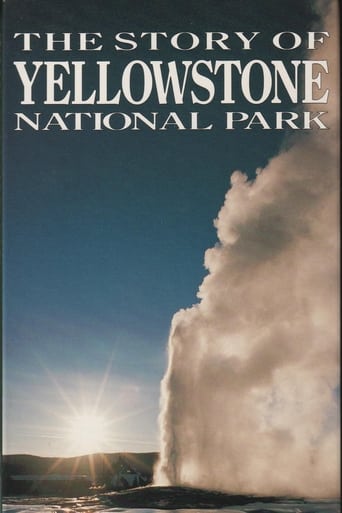
Marvel at "Old Faithful" erupting, vast rolling forests, abundant wildlife, thundering waterfalls, gurgling hot springs and mud pots, and the beautiful, haunting wilderness. Over 2.2 million acres located in the northwest corner of Wyoming, the great Yellowstone National Park was founded in 1872. The superb camera work of Dale Johnson and Bob Landis captures the natural wonders that captivated the early mountain men of the 1840s: petrified forests, mountains of glass and rivers that cooked fish. Thrill to rare and dramatic wildlife action; an antelope doe chasing a coyote from her young, a grizzly pursuing an elk in a life and death chase, a coyote matching wits with an otter; northern elk migrating in deep snow and bighorn sheep in mating battles. See the Yellowstone fire of 1988, and the charred land in full bloom. Ride with a park range into the backcountry. Enjoy a stagecoach ride to a sunrise cookout. It's all here, the magic of the great Yellowstone.
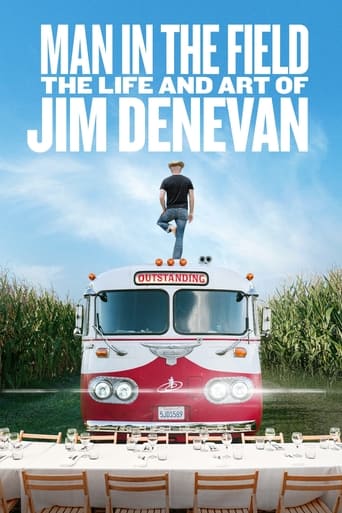
In this graceful study of the balance between solitude and community, artist and chef Jim Denevan roams across the US, transforming landscapes into breathtaking, sustainable dining experiences framed by ephemeral installation art.

A 59 minute video displaying beautiful tropical fish and reefs set to relaxing music

We can't address the environmental crises of climate change and biodiversity loss if people don't care about nature, and it all starts with stepping outside and looking up. Through the lens of four inspiring women, The Birdwatchers aims to explore and break down some of the barriers preventing people from accessing nature. This film is a love letter to the world of birds, and a rallying cry for people to protect it.