
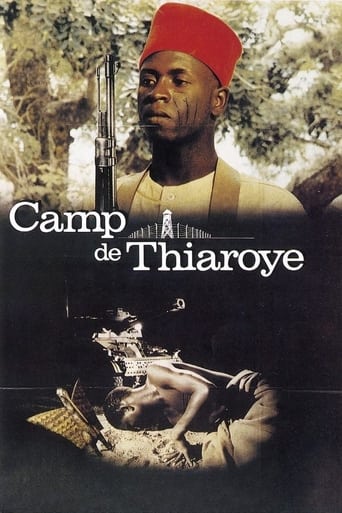
Camp de Thiaroye
1988-09-06 · 154 min · ★ 7.5
A Senegalese platoon of soldiers from the French Free Army return from combat and are temporarily held in a military encampment with barbed wire fences and guard towers in the desert. Among them are charismatic Sergeant Diatta, educated in Paris and has a French wife and child, and Pays, a soldier left in a state of shock who can only communicate in guttural screams and grunts.
Trailers are previews, not full movies.
No authorized playback source configured. Use the legal watch options below.
Production details
- Directors
- Thierno Faty Sow, Ousmane Sembène
- Production companies
- Films Kajoor, ENAPROC - Entreprise Nationale de Production Cinématographique, Filmi Domirev
- Countries
- Algeria, Senegal, Tunisia
- Status
- Released
Top Cast
 Sidiki Bakaba
 Marthe Mercadier
 Pierre Londiche
 Thierno Ndiaye Doss
 Jean-Daniel Simon
 Gustave Sorgho
Title information and images are supplied by TMDb. Explore our discovery guide for advice on comparing metadata and legal viewing options.
Where to watch
Availability provided by JustWatch via TMDb. Offers can change. Provider links are listed on TMDb; full playback requires a separately authorized source.
Availability not listed for this country.
Seasons & episodes
Recommendations
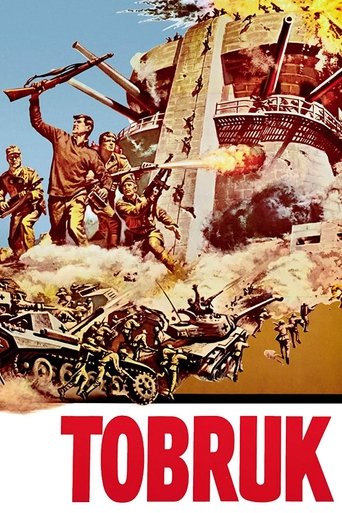
In September 1942, the German Afrika Korps under Rommel have successfully pushed the Allies back into Egypt. A counter-attack is planned, for which the fuel dumps at Tobruk are a critical impediment. In order to aid the attack, a group of British commandos and German Jews make their way undercover through 800 miles of desert, to destroy the fuel dumps starving the Germans of fuel.
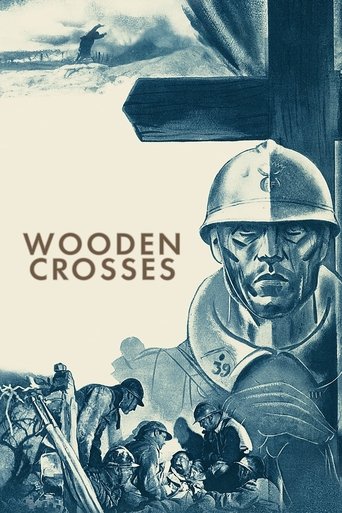
The young and patriotic student Demachy joins the French army in 1914 to defend his country. But he and his comrades soon experience the terrifying, endless trench war in Champagne, where more and more wooden crosses have to be erected for this cannon fodder.

A WWII veteran escapes his care home in Northern Ireland and embarks on an arduous but inspirational journey to France to attend the 75th anniversary of the D-Day landings, finding the courage to face the ghosts of his past.

Based on a true story, during World War II, four Jewish brothers escape their Nazi-occupied homeland of West Belarus in Poland and join the Soviet partisans to combat the Nazis. The brothers begin the rescue of roughly 1,200 Jews still trapped in the ghettos of Poland.
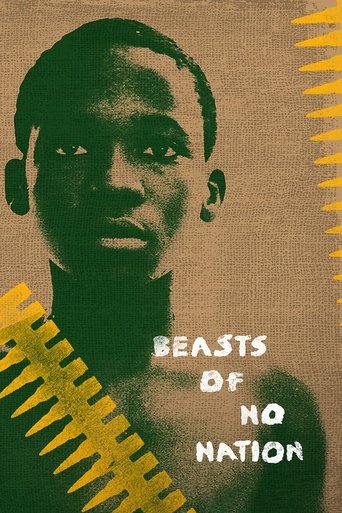
Based on the experiences of Agu, a child fighting in the civil war of a West African country. Follows Agu's journey as he's forced to join a group of soldiers. While he fears his commander and many of the men around him, his fledgling childhood has been brutally shattered by the war raging through his country, and he is at first torn between conflicting revulsion and fascination.

A cast of unknown performers are used in this drama about child soldiers fighting a war in an unnamed African country.
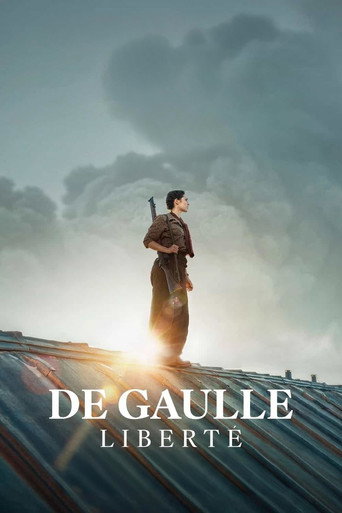
Part two of a two-part biopic following French army officer Charles De Gaulle's life and political commitment between 1940 and 1945, and trace his development towards a political career.

A conflict develops between a troubled Vietnam veteran and the sister he lives with when she becomes involved romantically with the army buddy who reminds him of the tragic battle they both survived.

In may 1940, the German troops enter France. Frightened by the progress of the enemy, the people of a small village of Pas-de-Calais decide on the recommendations of the prefecture, to give up everything to go on the road, fleeing to the coast.

A group of U.S. soldiers returning from Iraq struggle to integrate back into family and civilian life, while living with the memory of a war that threatens to destroy them long after they've left the battlefield.

In 1911, a willful and determined man from peasant stock named Charles Saganne enlists in the military and is assigned to the Sahara Desert under the aristocratic Colonel Dubreuilh.
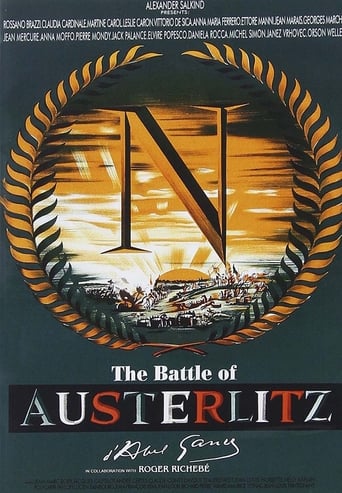
A return to the life of the Little Corporal with a dramatisation of the decisive 1805 conflict between French forces and the armies of Austria and Russia. An epic reconstruction of the battle of Austerlitz, where Bonaparte had the greatest victory of his career.
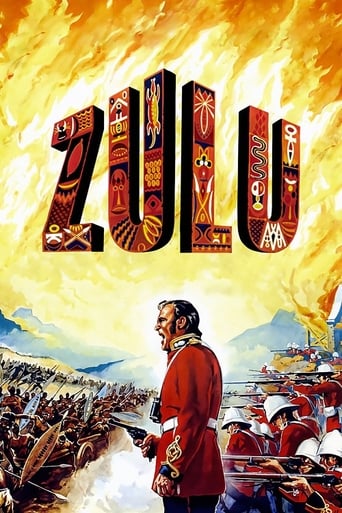
In 1879, during the Anglo-Zulu War, man-of-the-people Lt. Chard and snooty Lt. Bromhead are in charge of defending the isolated and vastly outnumbered Natal outpost of Rorke's Drift from tribal hordes.
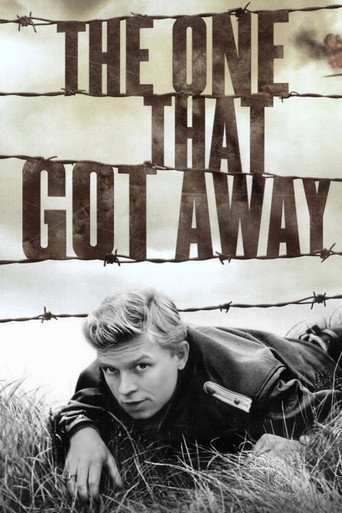
Based on the true story of Oberleutnant Franz von Werra, the only German prisoner of war captured in Britain to escape back to Germany during the Second World War.

The adventures of the Lafayette Escadrille, young Americans who volunteered for the French military before the U.S. entered World War I, and became the country's first fighter pilots.
During World War II, French Commandos join forces with a German officer in order to survive the African desert.
When Singapore surrendered to the Japanese in 1942, the Allied POWs, mostly British but including a few Americans, were incarcerated in Changi prison. Among the American prisoners is Cpl. King, a wheeler-dealer who has managed to establish a pretty good life for himself in the camp. King soon forms a friendship with an upper-class British officer who is fascinated with King's enthusiastic approach to life.
The true story of Australia's cat-and-mouse underground mine warfare—one of the most misunderstood, misrepresented and mystifying conflicts of WW I. It was secret struggle BENEATH the Western Front that combined daring engineering, technology and science. Few on the surface knew of the brave, claustrophobic and sometimes barbaric work of these tunnellers.

War correspondent Ernie Pyle joins Company C, 18th Infantry as this American army unit fights its way across North Africa in World War II. He comes to know the soldiers and finds much human interest material for his readers back in the States. Preserved by the Academy Film Archive in partnership with The Film Foundation in 2000.
Directed by Philippe de Broca, the film recounts a bloody episode of the French Revolution. 1793, the Terror . In Vendée and in Bretagne, the chouans are revolting against the young Republic and fight for the monarchy restauration. The civil war divides also the family of the Count Savinien de Kerfadec, a liberal and generous noble and a flying machines inventor.
Similar titles

Israel, 1956: Jewish teacher Rachel Stein rather unexpectedly meets an old friend at the kibbutz. It brings back memories of her experiences in the Netherlands during the war, memories of betrayal. In September 1944, Rachel's hiding place is bombed by Allied troops; she makes contact with a resistance member and joins a group of Jews to be smuggled across the Biesbosch to the freed South Netherlands. Only Rachel escapes a massacre by patrol Germans, and is rescued by a resistance group under the leadership of Gerben Kuipers, whose son is captured trying to smuggle weapons. Kuipers asks Rachel to seduce SS-hauptsturmführer Ludwig Müntze, a mission that she will soon learn that the boat attack wasn't a coincidence.
A cast of unknown performers are used in this drama about child soldiers fighting a war in an unnamed African country.

The retelling of June 6, 1944, from the perspectives of the Germans, US, British, Canadians, and the Free French. Marshall Erwin Rommel, touring the defenses being established as part of the Reich's Atlantic Wall, notes to his officers that when the Allied invasion comes they must be stopped on the beach. "For the Allies as well as the Germans, it will be the longest day"

These are the first images shot in the ALN maquis, camera in hand, at the end of 1956 and in 1957. These war images taken in the Aurès-Nementchas are intended to be the basis of a dialogue between French and Algerians for peace in Algeria, by demonstrating the existence of an armed organization close to the people. Three versions of Algeria in Flames are produced: French, German and Arabic. From the end of the editing, the film circulates without any cuts throughout the world, except in France where the first screening takes place in the occupied Sorbonne in 1968. Certain images of the film have circulated and are found in films, in particular Algerian films. Because of the excitement caused by this film, he was forced to go into hiding for 25 months. After the declaration of independence, he founded the first Algerian Audiovisual Center.

The Tóth family resides in Northern Hungary. The couple has a daughter and a son, the latter a member of the armed forces. When his weary major is ordered to take a vacation, the son talks him into a visit to his family home. Hilarity ensues when the Tóths go overboard trying to make things pleasant for the visiting major in hopes of an easier life for their son, the soldier.
The dramatic story of the life of Slovak boatmen on the Danube during World War II is depicted through the eyes of a six-year-old boy who is forced by the events of the war to spend a dark time with his grandparents in the village. Despite the fairy-tale-sounding title, this film takes place at the end of the war in the Slovak countryside during World War II, and its child hero is the son of a Danube boatman who experiences incredible adventures. The Little Lifeguard's Lamp ranks among children's films that seek speciality in the realities of war. It explores both a children's world with a shifted lens of perception and the impact of battles interfering in the lives of the youngest.

Gunman Flame and his partner Citron assassinate Nazi collaborators for the Danish resistance. Assigned targets by their Allies-connected leader, Aksel Winther, they relish the opportunity to begin targeting the Nazis themselves. When they begin to doubt the validity of their assignments, their morally complicated task becomes even more labyrinthine.

A USSR animated short adapted from one of Jomo Kenyatta's fables.
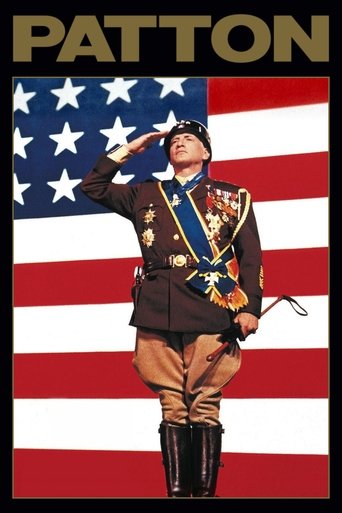
"Patton" tells the tale of General George S. Patton, famous tank commander of World War II. The film begins with Patton's career in North Africa and progresses through the invasion of Germany and the fall of the Third Reich. Side plots also speak of Patton's numerous faults such his temper and habit towards insubordination.
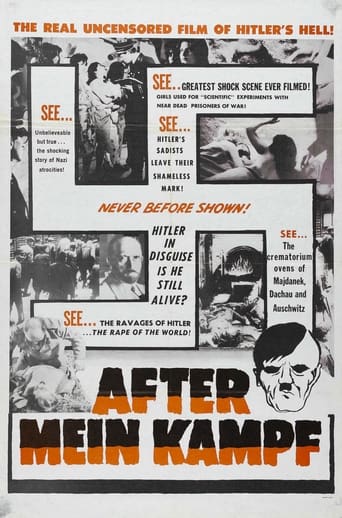
By combining actual footage with reenactments, this film offers both a documentary and fictional account of the life of Adolf Hitler, from his childhood in Vienna, through the rise of the Third Reich, to his final act of suicide in the waning days of WWII. The film also provides considerable, and often shocking, detail of the atrocities enacted by the Nazi regime under Hitler's command.

After a series of traumatic childhood events, a psychosomatically deaf, dumb and blind boy becomes a master pinball player and the object of a religious cult.
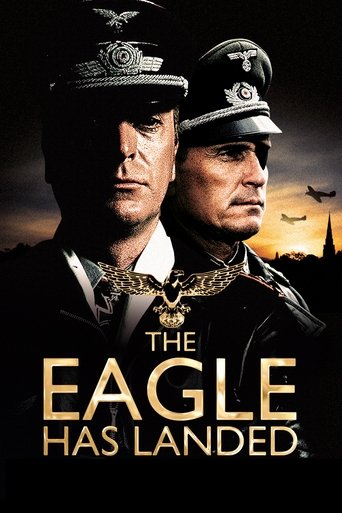
When the Nazi high command learns in late 1943 that Winston Churchill will be spending time at a country estate in Norfolk, it hatches an audacious scheme to kidnap the prime minister and spirit him to Germany for enforced negotiations with Hitler.
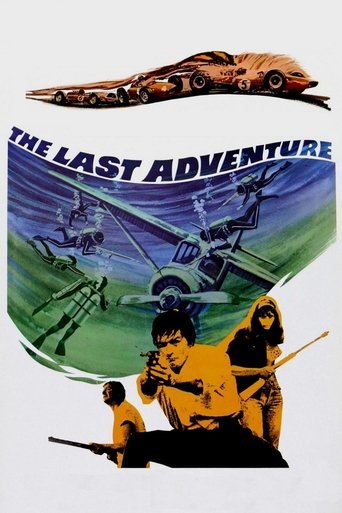
Two adventurers and best friends, Roland and Manu, are the victims of a practical joke that costs Manu his pilot's license. With seeming contrition, the jokesters tell Roland and Manu about a crashed plane lying on the ocean floor off the coast of Congo stuffed with riches. The adventurers set off to find the loot.

A German Platoon is explored through the brutal fighting of the Battle of Stalingrad. After half of their number is wiped out and they're placed under the command of a sadistic captain, the platoon lieutenant leads his men to desert. The platoon members attempt escape from the city, now surrounded by the Soviet Army.

In the summer of 1941, the United States and Japan seem on the brink of war after constant embargos and failed diplomacy come to no end. "Tora! Tora! Tora!", named after the code words used by the lead Japanese pilot to indicate they had surprised the Americans, covers the days leading up to the attack on Pearl Harbor, which plunged America into the Second World War.


While Nazi ideology dominated Europe, Adolf Hitler used all dogmas to his advantage and fed the cult of his personality. How did the Führer manage to transform the Bible, the Church and the symbols of Christianity into instruments of power, winning the support of the Germans? This documentary traces the rise of a little-known theological organization: the “German Christians”, which became the most powerful propaganda tool of the Third Reich.