

Pam Kuso Kar (Breaking Pam's Vases)
1974-01-01 · 12 min · ★ 9.0
In February 1974, Pam Sambo Zima, the oldest of the priests of possession in Niamey, Niger, died at the age of seventy-plus years. In his backyard, the followers from the possession cult symbolically break the dead priest's ritual vases and cry for the deceased while dividing up the clothes of the divinities.
Trailers are previews, not full movies.
No authorized playback source configured. Use the legal watch options below.
Production details
- Directors
- Jean Rouch
- Production companies
- CNRS Images, Comité du film Éthnographique
- Countries
- France, Niger
- Status
- Released
Top Cast
Title information and images are supplied by TMDb. Explore our discovery guide for advice on comparing metadata and legal viewing options.
Where to watch
Availability provided by JustWatch via TMDb. Offers can change. Provider links are listed on TMDb; full playback requires a separately authorized source.
Availability not listed for this country.
Seasons & episodes
Recommendations

An intimate portrait of the small shops and shopkeepers of the Rue Daguerre in Paris, a picturesque street that has been the filmmaker’s home for more than 50 years.

A detailing of the rise to prominence and global sporting superstardom of six supremely talented young Manchester United football players (David Beckham, Nicky Butt, Ryan Giggs, Paul Scholes, Phil and Gary Neville). The film covers the period 1992-1999, culminating in Manchester United's European Cup triumph.

A documentary on the expletive's origin, why it offends some people so deeply, and what can be gained from its use.

A documentary about how a dominant cultural and demographic institution both sustains their traditional activities and adapts to the digital revolution.

While in San Francisco for the promotion of her last film in October 1967, Agnès Varda, tipped by her friend Tom Luddy, gets to know a relative she had never heard of before, Jean Varda, nicknamed "Yanco". This hitherto unknown uncle lives on a boat in Sausalito, is a painter, has adopted a hippie lifestyle and loves life. The meeting is a very happy one.

From the heights of her modeling fame to her tragic death, this documentary reveals Anna Nicole Smith through the eyes of the people closest to her.

Alexander McQueen's rags-to-riches story is a modern-day fairy tale, laced with the gothic. Mirroring the savage beauty, boldness and vivacity of his design, this documentary is an intimate revelation of McQueen's own world, both tortured and inspired, which celebrates a radical and mesmerizing genius of profound influence.

Documentary filmmaker Amy Berg investigates the life of 30-year pedophile Father Oliver O'Grady and exposes the corruption inside the Catholic Church that allowed him to abuse countless children. Victims' stories and a disturbing interview with O'Grady offer a view into the troubled mind of the spiritual leader who moved from parish to parish gaining trust ... all the while betraying so many.

Film adaptation of French economist Thomas Piketty's ground-breaking global bestseller of the same name: an eye-opening journey through wealth and power.

Cristiano Ronaldo: The World at His Feet follows the footballer from his beginnings in Portugal, breakthrough start with Manchester United and current career at Real Madrid.

A night of drunken chaos rocks a quiet Dutch town in this shocking documentary about a teen's birthday invite that accidentally went viral on Facebook.
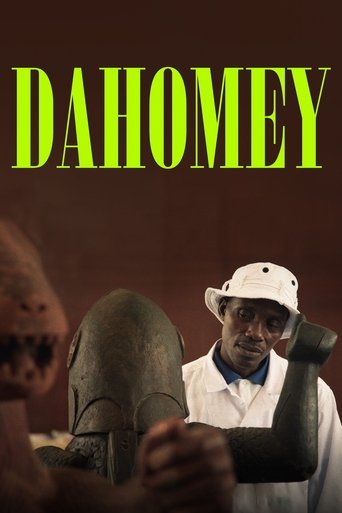
Thousands of royal artifacts of Dahomey, a West African kingdom, were taken by French colonists in the 19th century for collection and display in Paris. Centuries later, a fraction returned to their home in modern-day Benin. This dramatized documentary follows the journey of 26 of the treasures as told by cultural art historians, embattled university students, and one of the repatriated statues himself.

A documentary on the modeling industry's 'supply chain' between Siberia, Japan, and the U.S., told through the experiences of the scouts, agencies, and a 13-year-old model.
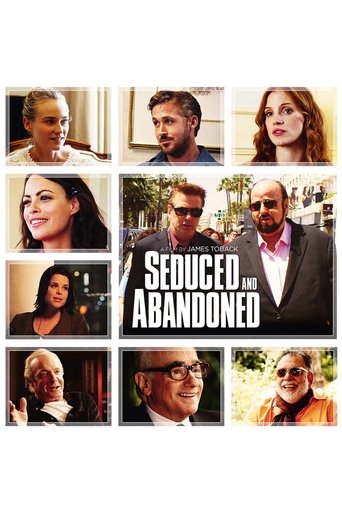
SEDUCED AND ABANDONED combines acting legend Alec Baldwin with director James Toback as they lead us on a troublesome and often hilarious journey of raising financing for their next feature film. Moving from director to financier to star actor, the two players provide us with a unique look behind the curtain at the world's biggest and most glamourous film festival, shining a light on the bitter-sweet relationship filmmakers have with Cannes and the film business. Featuring insights from directors Martin Scorsese, 'Bernando Bertolucci' and Roman Polanski; actors Ryan Gosling and Jessica Chastain and a host of film distribution luminaries.

The film is based on interviews with 2,000 women from 50 countries, and covers the status of women all over the world. The topics covered include forced marriages, sexual assault, female genital mutilation, acid attacks, motherhood, sexuality, menstruation, education and the professional success of women.

In an intimate and joyful story of love in the face of loss, celebrated poets Andrea Gibson and Megan Falley find strength—and unexpected hilarity—in what might be their final year together.

This documentary revisits the French football team's controversial 2010 World Cup and the bus strike that sparked global headlines and national outrage.

Ranjit, a farmer in India, takes on the fight of his life when he demands justice for his 13-year-old daughter, the victim of a brutal gang rape. His decision to support his daughter is virtually unheard of, and his journey unprecedented.

A compilation of over 30 years of private home movie footage shot by Lithuanian-American avant-garde director Jonas Mekas, assembled by Mekas "purely by chance", without concern for chronological order.

Stars of "The Walking Dead," Andrew Lincoln and Danai Gurira, walk down memory lane and visit iconic locations where pivotal moments between their characters, Rick and Michonne, were filmed.
Similar titles

A collection of seven little stories about Niger and its Sahara desert from the illustrated book by Hideko Fukuda & Masanori Inui.

Rites and operation of the circumcision of thirty Songhai children on the Niger. Material of this film has been used to make "Les Fils de l'Eau".
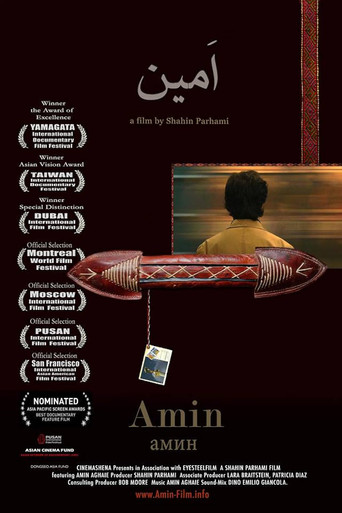
AMIN portrays Qashqai musician Amin Aghaie, a young modern nomad and his family who despite facing steep financial, cultural and political obstacles are dedicated to their art and culture. Amin travels to remote towns and villages to record the music of the surviving masters whose numbers decline each year. His nomadic family are selling their meager belongings to help support their son's education in performance and ethnomusicology at Tchaikovsky's Conservatory in Kyiv, Ukraine, but it is not enough. Amin, desperate to finish his academic education, sells his violins one at a time just to pay for his tuition.

On Sept. 11, 2001, deep inside a White House bunker, Vice President Dick Cheney was ordering U.S. fighter planes to shoot down any commercial airliner still in the air above America. At that moment, CIA Director George Tenet was meeting with his counter-terrorism team in Langley, Virginia. Both leaders acted fast, to prepare their country for a new kind of war. But soon a debate would grow over the goals of the war on terror, and the decision to go to war in Iraq. Cheney, Defense Secretary Donald Rumsfeld, and others saw Iraq as an important part of a broader plan to remake the Middle East and project American power worldwide. Meanwhile Tenet, facing division in his own organization, saw non-state actors such as Al Qaeda as the highest priority. FRONTLINE’s investigation of the ensuing conflict includes more than 40 interviews, thousands of pages of documentary evidence, and a substantial photographic archive.
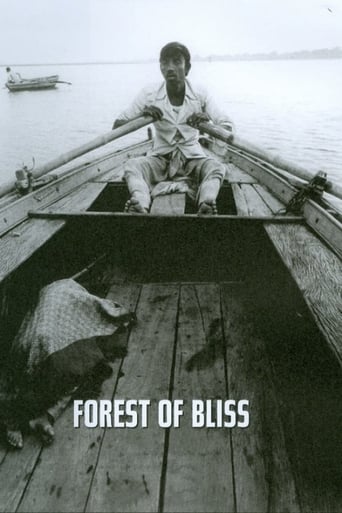
Forest of Bliss is an unsparing yet redemptive account of the inevitable griefs, religious passions and frequent happinesses that punctuate daily life in Benares, India's most holy city. The film unfolds from one sunrise to the next without commentary, subtitles or dialogue. It is an attempt to give the viewer a wholly authentic, though greatly magnified and concentrated, sense of participation in the experiences examined by the film.
Founding father of Anthropology, Bronislaw Malinowski's work raises powerful and disturbing questions today. This is a look at his legacy and the imprints it has made on the generations that followed.

Commemorative celebrations of the independence of the Republic of Niger filmed in December 1961 and 1962.


The Reef Islands Ethnographic Film Project was started in 1994 by the two anthropologists, Jens Pinholt and Peter I. Crawford, and village communities in Bekapoa, Ngasinue/Fenualoa and Vaiakau. Field and film visits took place in 1994, 1995-1998, 2005, 2010, 2015 and 2017. This film is based on one such visit in June 2015, by Peter I. Crawford and Birgitte Hansen, a nutrition expert. The focus was on a diachronic study of nutrition, collecting information in three villages and comparing it with material from the 1970s and the 1990s. Pileni was one of the villages.

On the night of 3 August 1996 a school of striped dolphins ran ashore near the village of Tuo on Ngasinue/Fenualoa Island in the Reef Islands (Solomon Islands). Dolphins have a special kinship-related link to the Aiwoo-speaking people in Tuo. Moffat Bonunga tells the legend or so-called local kastom story that explains why. Moffat's explanations are linked with those of another local expert, Commins Veio, who tells his version of the story to Nathaniel Meningi inside the men's house (sapolau) in Tuo. The night the dolphins run ashore, Moffat immediately contacts the film crew - the villagers want the crew to film this peculiar phenomenon. Although the film focuses on the kastom story and the villagers' re-enactment of the hunt, it also documents the villagers' joy that the sea once again has proved an important source of food.

The film follows a group of Nenets women gathering firewood in a snow-covered tundra. This film is part of a larger Yamal Nenets Series, which explores the daily life of nomadic reindeer pastoralists on the Yamal peninsula in Western Siberia during the calving period in the spring. The footage for the series was captured during a three-month period of ethnographic fieldwork in 1999.
Portrays the Nuer, Nilotic herdsmen of the Nile basin. Shows how their daily lives revolve about their cattle, and depicts the psychological bonds between them. Includes extensive use of Nuer music and poetry.
A ritual vase, the hampi, is placed in the center of the Musée de plein air de la République du Niger in Niamey, during a ritual ceremony featuring possession dances. With this film, Jean Rouch continues his ethnological and cinematographic study of Songhay ritual objects. He demonstrates that, in a particular context, the transfer of a hampi vase to a museum requires the organization of a ritual ceremony to obtain the gods' approval. At the time, however, reservations about filming a possession dance for the opening of a shrine in a museum made the move "questionable from a museological point of view".
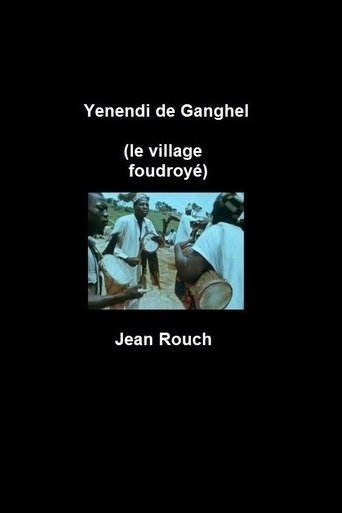
Lightning struck the hut of a Fulani shepherd near a village of settled fishermen, Ganghel, in Niger. A yenendi, a purification ceremony to obtain "water from the sky but not fire from the sky", is organized, with Sorko priests, ritual musicians and dancers, and the faithful from Niamey. The musicians call on Dongo, god of storms, and his brother Kirey, god of lightning. To the rhythm of the orchestra, a man goes into a trance, becoming Dongo's horse and at the same time the riding genie. Then a woman is possessed by Kirey. When the riding gods have mastered their horses, the gods visit the men. Dongo purifies the lightning-struck land and the oldest fisherman prepares the purification vessel, addressing Dongo.

In front of Jean Rouch's camera, Germaine Dieterlen recalls her ethnographic itinerary, at the Musée de l'Homme, in Mali and in the Paris of the 1930s.
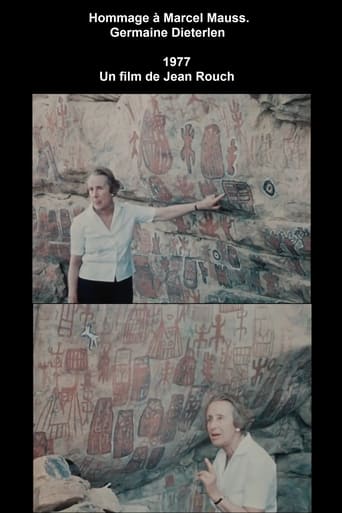
Germaine Dierterlen talks about Dogon mythology at a conference on the Bandiagara cliffs. The Songo canopy is a sacred site in Bandiagara. Its walls are covered with paintings depicting the different phases of creation. A little further on, in a cave near the village of Bongo, symposium participants are discussing the Tellem, the people who lived in the houses built into the cliffs before the arrival of the Dogon. The archaeological remains and migratory movements of these two peoples are discussed.

In Sangha, through the window of her house, Germaine greets Djamgouno, her main informant. He then translates for her a conversation she has with a half-blind old man. She recounts her memories of a past party at which Amadigné worked with her as an informant. Later, in front of the cliff, Germaine, Djamgouno and Pangalé are sitting on rocks, and Germaine talks about the many caves that can be visited by climbing small spelunking ladders. Rouch intervenes during the interview, asking the protagonists about the settlement of the cliff by the Dogon, who learned from the Tellem how to climb the cliff. Rouch then asks about the Tellem's predecessors who lived there 2,400 years ago. Germaine admits the ignorance of researchers on the subject, and Rouch concludes by joking about the new task that now falls to Germaine Dieterlen.

This documentary offers an overview of French scientific research in Africa French scientific research in Africa: hydrology, botany, biology oil palm and coconut cultivation, industrial sea fishing and and urban planning. Film montage taking stock of scientific research research in Africa, mainly in the fields of hydrology hydrology, botany, biology and agriculture. The film is a compilation of extracts from several short films made by Jean Rouch in Mali, Niger and Côte d'Ivoire between 1962 and 1963: Abidjan, port de pêche, Le Mil, Le Cocotier and Le Palmier à l'huile. l'huile.